Showing posts with label drinking. Show all posts

Thursday, 19 December 2024

Christmas Spirit$

 Alcoholic Beverages
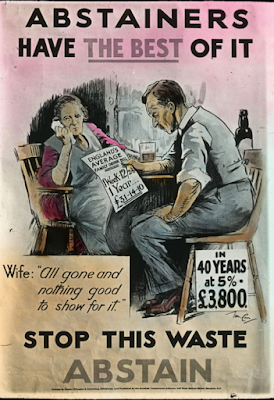
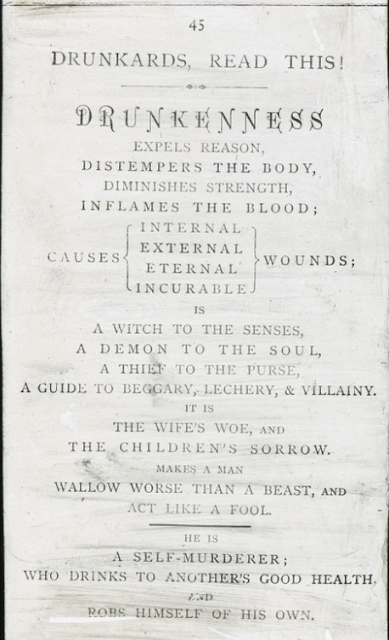
     I looked in MM to see what I have written about booze and I will just say that the MADD members would not approve. Last year, I admitted in "Sober Hypochondria" that I was not able to stay dry, even for just January, and I provided some evidence that perhaps alcohol was not as bad as the health people suggest. The title and sub-title of this post is all you will need to determine where I stand: "Sobriety May Be Overrated: Ammo for Alkies."
   Many of us plan to drink a lot in the next few days and promise not to drink once the bell rings in the new year. Most of us are better at planning, at least about things that are booze-related, than we are at keeping promises. That the promise part is difficult is attested to by a fellow British boozer.
   Although he knew it would be difficult he was determined to limit his consumption to 100 bottles of wine for the year. How difficult that goal is, you abstainers won't appreciate. He thought that if he stayed dry for January, he would have about eight bottles to his credit and only eleven months left. While he did have some alcohol-free days during that dreadful month, "the long and the short of it is I got through my 100-bottle quota in the first three months of the year!" (the exclamation point is provided by me, since I know you sober people probably gasped.)
   
Wait, it gets worse. Having decided to drink less, he also decided to purchase wines of a better quality.  "I immediately splurged on good wine - claret and white Burgundy for the most part - and then guzzled it all by springtime. Some of it was around £75, such as 2009 Domaine de Chevalier, but most of it was in the £30-£40 range, such as 2015 Segla, which worked out at £33.20 a bottle." Note the 
£ symbol. I drink mostly "plonk" as the Brit would say, but I do realize that booze is expensive.


Very Expensive Bottles
  How expensive, you ask? Here are the five most expensive bottles in stock at the LCBO stores here in Ontario. They are all Scotch whiskies. The Scots have to be frugal to afford these.

1. $69,999.95
Coming in at number one is The Dalmore Cask Curation Series: The Sherry Edition.
2. $55,849.95
For nearly $56,000, you can purchase a single 700 ml bottle of The Dalmore Constellation Collection Cask 2 Single Malt Scotch Whisky 1971.
3. $55,000
For $55,000, you can get a 700 ml bottle of Bowmore 1969 Islay Single Malt Scotch Whisky.
4. $47,000
A 700 ml bottle of The Dalmore 45-Year-Old Highland Single Malt Scotch Whisky goes for $47,000.
5. $40,000
At number five, for $40,000 you can buy a 750 ml bottle of Highland Park 50-Year-Old Single Malt Scotch Whisky from Scotland


Booze That People Purchase
   According to the LCBO data, folks here were more likely to buy American whiskey than Scotch, and Tequila is very popular. About 35% of sales was for spirits, 28% for wine and 23% for beer, which is easily purchased elsewhere. The illustrations are from the LCBO Quarterly Update, June 23 to Oct. 12


Sources: "Could I Limit Myself to 100 Bottles of Wine A Year?" Toby Young, The Spectator, Dec. 14, 2024.

"The 5 Most Expensive Bottles of Alcohol at the LCBO in Ontario," Ryan Rocca, Insauga.com, Dec. 4, 2024

P.S. "Both spellings of the word, "whiskey" and "whisky," are correct. The tricky part is matching the right spelling with the right country of origin. If you’re talking about a drink that’s been made in Scotland, Canada, or Japan, use the spelling without the e—whisky. When referring to drinks distilled in the United States or Ireland, use the e—whiskey."

Thursday, 28 September 2023

Water Woes


   Although I would prefer to avoid the awful things now occurring, a recent article compels me to issue this alert: "Our drinking water may soon disappear!"

   I read the article which is the first one listed above and both the graphic and the article are from the New York Times. It was written by a team and the data supporting it were substantial. The other articles pictured above constitute a series and there may be more. If you can access them, do so. "America Is Using Up Its Groundwater Like There's No Tomorrow," is in the Aug. 28 issue. The "Big Farms" one is from Sept.3, the "Colorado City" one from Sept.5 and the "Monster Fracks" from Sept.25.

   I will offer my simple summary of the core article by suggesting that we are all living in Arizona now and that assertion is based on a lot of data. Here are some extracts from the article:

   "Many of the aquifers that supply 90 percent of the nation’s water systems, and which have transformed vast stretches of America into some of the world’s most bountiful farmland, are being severely depleted. These declines are threatening irreversible harm to the American economy and society as a whole. 

   The New York Times conducted a months-long examination of groundwater depletion, interviewing more than 100 experts, traveling the country and creating a comprehensive database using millions of readings from monitoring sites. The investigation reveals how America’s life-giving resource is being exhausted in much of the country, and in many cases it won’t come back. Huge industrial farms and sprawling cities are draining aquifers that could take centuries or millenniums to replenish themselves if they recover at all.

“There is no way to get that back,” Don Cline, the associate director for water resources at the United States Geological Survey, said of disappearing groundwater. “There’s almost no way to convey how important it is.”

   This analysis is based on tens of thousands of groundwater monitoring wells that dot the nation. The Times collected data for these wells, which are widely scattered and often poorly tracked, from dozens of federal, state and local jurisdictions....

   One of the biggest obstacles is that the depletion of this unseen yet essential natural resource is barely regulated. The federal government plays almost no role, and individual states have implemented a dizzying array of often weak rules....

   The federal government sets rules on groundwater, but not its overuse or depletion, although experts say Congress has the constitutional authority to do so. Overall, federal responsibility for water is scattered among a half-dozen different agencies....

   America’s approach to regulating water is “a total mess,” said Upmanu Lall, director of the Columbia Water Center at Columbia University.

   “From an objective standpoint, this is a crisis,” said Warigia Bowman, a law professor and water expert at the University of Tulsa. “There will be parts of the U.S. that run out of drinking water.”

   In the very near future, thirsty people will be found throughout the country. Minnesota, the "Land of 10,000 Lakes" is not excluded, nor is Maryland, the state in which I grew up. Charles County, "which contains fast-growing suburbs of Washington, has used most of its groundwater for homes and agriculture. And, it isn't coming back anytime soon."

Canadian Content

   Canada is not mentioned, but it is not difficult to find articles that indicate concerns about this commodity in our country. Tofino, one of the wettest places I have been, has nearly a dry reservoir and has issued water restrictions and this headline indicates lack of water is a problem elsewhere: "Gulf Islands Water Woes an Ominous Omen For the Rest of B.C." Also in that province, there are major issues between the U.S. and Canada involving the Columbia River and the water in it and it is not too difficult to imagine that there will soon be increased demands in the U.S. from some of the Great Lakes, one of which supplies water to London. Let's hope that Line 5 does not burst under the Straits of Mackinac.

Post Script:
 
The water-related news continues to be bad, which is one reason I decided to bring up an issue we would rather not think about. When you do think about it, you realize that it is rather amazing that we plop down housing developments and assume that water will magically come up to supply the residents. Among the news stories one learns that the folks living in New Orleans soon may run out of drinking water, although they generally have to worry about having too much water, and salt water intrusion is a problem in many coastal areas. (see, for example, "A Saltwater Wedge Climbing the Mississippi River Threatens Drinking Water: New Orleans Mayor Latoya Cantrell Signed an Emergency Declaration Friday as Saltwater Threatens the City," Brady Dennis, Washington Post, Sept. 22, 2023.)


Even the Panama Canal is 'Thirsty.'
   The picture above shows ships waiting to enter the Panama Canal. Who knew that it takes 50 million gallons of fresh water from the Gatun Lake to move one ship through the canal and that daily the Panama Canal uses three times as much water as all of New York city? If you are still waiting for that fridge to come from the Far East, it may be delayed because of a lack of water. (The NASA photograph is found in this article where you can learn more about another cause for supply chain interruptions: "Panama Canal Traffic Backup.")
   

Monday, 23 January 2023

Sober Hypochondria


  I was feeling bad enough about not "staying dry" for even a few days in January when these headlines began pouring from various media sources. You will have seen them as well: "It's Time to Put Cancer Warning Labels on Alcohol, Experts Say;" Canada's New Guidelines For Alcohol Say 'No Amount' Is Healthy;" "Even a Little Alcohol Can Harm Your Health" and "Yes, Even if it's a Bloody Caesar With Extra Celery: Why Even Just a Little Alcohol is a Risk." Sobering news indeed, especially since we would have to be less prideful about having invented the "Bloody Caesar."

  Readers of MM will know that I tend to be contrarian, and many of them are likely to be drinkers, so they will not be surprised if I take the side of the imbibers on this issue, and are likely to be pleased, as well, if they are drinkers themselves. Apart from arguing that, while alcohol may be bad for us, it does make us feel better, I will provide an article that you may have overlooked because of all those others which tended to be on the front page. 

   It would be unfortunate if all of this negative publicity forced the L.C.B.O. stores to return to the establishments they once were, or if we were to lose their magazine. I recall what they were like and a description was recently provided, so I don't have to come up with one:
  "Looking back, I’m struck by how Canada’s approach to alcohol and cigarettes has almost reversed since I was a student back in the late 1970s.
  At that time, I worked part-time in the last of what the Liquor Control Board of Ontario called conventional stores. Back then, the L.C.B.O. took the “control” part of its name seriously. Its older stores did everything possible to make people avoid them. Aside from some dusty display bottles of selected wines, all of the merchandise was hidden away behind a counter. Customers had to search out what they wanted to buy on lists of everything in the store that were behind glass panels, and write down the product’s name, brand number (Mateus rosé was 1086 B) and price. Then shoppers passed their slips to a cashier who, after receiving payment, turned it over to a clerk like me who fetched and bagged the goods.
   I must confess that my colleagues and I were sometimes less than friendly. We were also repeatedly reminded not to give recommendations or advice to customers — they were strictly on their own.
   But, conversely, smoking in offices and shops, including L.C.B.O. stores, was rampant at that time. Cigarette makers sponsored sports and cultural events, and their ads and products dominated corner stores and even some pharmacies.
  Now it’s cigarettes that are hidden away in stores behind blank cabinets, and they come in generic, government-mandated packaging with gruesome photos of tobacco’s health effects. All forms of advertising by the tobacco advertising are a distant memory."


An Alternative Account

 The article that was buried under all of the temperance ones is a temperate one arguing that the suggestions offered by the  sermonizers need to be subjected to some scrutiny. It is found in the Globe and Mail, which is more expensive than MM, so you may not have seen it. The author of it will, I hope, forgive me for reproducing portions of it. He is a professor at Brock University and the article is found here: "Canada's Drastic New Alcohol Guidelines Demand a Closer Look," Globe and Mail, Jan. 20, 2023. You should have a closer look and not rely on my snippets.

   Professor Malleck begins by noting that he is not a generally a critic of public health measures, but that he is "wary of generalized recommendations of behaviour change based upon narrowly selected evidence from a cohort that sounds increasingly like the 19th-century temperance movement." He also raises some issues about the 6,000 studies that were used, and notes as well: 

"Often, too, these kinds of studies involve looking at a broad cohort of people and seeing if those with a certain condition were more likely to have been drinkers. If researchers are only looking for drinking as a factor, it can be easy to miss other potential contributors. We don’t know, for instance, whether they spent their time drinking in smoky bars or restaurants (back when that was allowed), or did so while eating less healthy foods; these factors are often marginalized when alcohol becomes the focus."

"The CCSA also presents the relative risk, rather than the absolute risk, of developing the various conditions. According to its data, consuming three and a half drinks a day increases your risk of developing larynx cancer by nearly 100 per cent, which sounds shocking, and is presented in a table with scary red shading. But larynx cancer, which is mostly related to smoking, was diagnosed in roughly 0.0197 per cent of Canadians in 2022. Many of the other cancers the CCSA associates with alcohol also have low incidence rates. And everyone has a different level of risk for various conditions, based on factors including lifestyle and genetics."

  He also hints that perhaps one should consider that the results provided by the CCSA, might be like the ones about alcohol we would expect if they were coming from MADD.

"We should also consider researcher perspective. The CCSA is focused on harm-first, which is less a criticism than a fact: Although its name emphasizes “substance use and addiction,” its focus is on the negative side of “use.” Its job is to look for harm in the name of health. Through this lens, potential benefits don’t track."

And indeed, the CCSA made its recommendations without consideration of the potential (and well-documented) positive effects of alcohol on the lives of individuals, nor the potential harms caused by excessive and patronizing recommendations in the name of “for your own good” science.

These are important considerations, because human research on a population level (as compared with studies where all complicating factors are controlled in a lab, something you can’t do with long-term human research for legal and ethical reasons) is a point of contention among scholars. Although the CCSA does mention, near the end of the report, the considerable limitations to its conclusions, they do not seem to affect the urgency or excessiveness of its recommendations.

There is more, but because of copyright restrictions, I will just note his conclusion:

"Without considering the potential dangers of such advice, and the potential benefits around moderate drinking, the CCSA recommendations seem worse than useless. They’re reckless."

If the prohibitionists have their way, we may all have to head to the new cannabis dispensaries.

Sources:
Here is the report, "Canada's Guidance on Alcohol and Health," by the Canadian Centre on Substance Use and Addiction. 

Here is an article about the new guidelines: "Canada's New Alcohol Guidelines Advise Fewer Drinks," Wency Leung, Globe and Mail, Jan. 17, 2023.
The description of what it was like to buy alcohol in Ontario in the 1970s, is by Ian Austen, a Canadian reporter for the New York Times. It is in his "Canada Letter" - "Pushing Alcohol While Health Experts Say Risk-Free Drinking is a Risk," Jan. 21.

Friday, 7 January 2022

The Cold Turkey Question


 We are six days into the new year and I am not my usual garrulous self, since I have "gone cold turkey." Finding myself in a situation where such a term is applicable, I thought I would try to find out what it meant.  Basically, going ""Cold turkey" refers to the abrupt cessation of a substance dependence and the resulting unpleasant experience, as opposed to gradually easing the process through reduction over time or by using replacement medication. That is the first sentence from the Wikipedia entry and I agree that it is an "unpleasant experience." The entry is a good one, including a bit about the etymology of the words and I will say no more about it, except that it can also be a term of exclusion, as in "giving someone the cold turkey treatment."
   The question is, when you go cold turkey, are you on or off the wagon? I knew what "cold turkey" meant, although I wasn't sure where the expression came from. I was less sure about the wagon issue and also didn't know about its origin. Since I am sober, I will keep this short: if you are "on the wagon", you are sober; if you are "off the wagon" you are drinking. Perhaps thinking of it this way, will help: "A cold turkey is on the wagon."
   I am not talking turkey here (i.e speaking with little preparation) and will say a bit more about now being on the wagon since there was no Wikipedia entry for that expression. Here is an explanation straight from the horse's mouth (Hendrickson's, The Encyclopedia of Word and Phrase Origins:
The original version of this expression, 'on the water wagon' or 'water cart,' which isn't heard anymore, best explains the phrase. During the late 19th century, water carts drawn by horses wet down dusty roads in the summer. At the height of the Prohibition crusade in the 1890s men who vowed to stop drinking would say that they were thirsty indeed but would rather climb aboard the water cart to get a drink than break their pledges. From this sentiment came the expression 'I'm on the water cart,' I'm trying to stop drinking, which is first recorded in, of all places, Alice Caldwell Rice's Mrs. Wiggs of the Caggage Patch [1901], where the consumptive Mr. Dick says it to old Mrs. Wiggs. The more alliterative 'wagon' soon replaced cart in the expression and it was eventually shortened to 'on the wagon.' 'Fall off the (water) wagon' made its entry into the language almost immediately after its abstinent sister."

Six days is a long time and I am sure that soon I will be three sheets to the wind. 


Sources:
 
It was unfair to end it there. Those of you interested in idioms should look at the U.K.s,  The Phrase Finder, or read this short explanation for, "three sheets to the wind."
The term comes from sailing ships and refers to the sheet, or rope, that controls the sail. If a sheet is allowed to flap freely in the wind, the sail also flaps about and the vessel proceeds on a tottering course, like that of an intoxicated person. The more sheets are loose, the shakier the course. Dickens used the expression figuratively in Dombey and Son (1848): “Captain Cuttle, looking . . . at Bunsby more attentively, perceived that he was three sheets in the wind, or in plain words, drunk."

Saturday, 25 September 2021

Hydration: Going Against the Current


  The cartoon above arrived today, courtesy of the New Yorker.  That fact, plus the fact that it is pouring outside, reminded me of a "FAD" which I have wondered about over a number of years. It has to do with the consumption of water. The need for humans to drink huge amounts of it; people doing little physical work at all in comfortable, climate controlled buildings. I recall going to meetings where the participants looked like they were heading off on a safari. To ascend to the second floor, elevator buttons had to be pushed for those carrying  enough water bottles to get them through the hour.  Had I been as smart then as I now am, I surely could have convinced the folks at "The Bay" to start selling colourful canteens to match the work gear.

   It is lucky for me that the answer to the question, "How Much Water Do You Actually Need?" arrived just prior to that cartoon.  The answer to the question is basically, "Not Much." Here is the recent article, as well as another one which determines that this whole myth began in 1945. You should look at the articles and additional literature since I am not providing all the stuff about electrolytes. Still, you are more likely to be waterlogged than dehydrated.

"How Much Water Do You Actually Need? Here’s how to know when you truly need to hydrate," Christie Aschwanden, New York Times, September 17, 2021. 

If you’ve spent any time on social media or visited an athletic event lately, you’ve surely been bombarded with encouragements to drink more water. Celebrity influencers lug around gallon-sized water bottles as the hot new accessory.... 
The purported benefits of excess water consumption are seemingly endless, from improved memory and mental health to increased energy to better complexion. “Stay hydrated” has become a new version of the old salutation, “Stay well.”...

We’ve all been taught that eight 8-ounce glasses of water per day is the magic number for everyone, but that notion is a myth, said Tamara Hew-Butler, an exercise and sports scientist at Wayne State University.

….Do I have to drink water to stay hydrated?

Not necessarily. From a purely nutritional standpoint, water is a better choice than less healthy options like sugary sodas or fruit juices. But when it comes to hydration, any beverage can add water to your system, Dr. Hew-Butler said.... One popular notion is that drinking beverages with caffeine or alcohol will dehydrate you, but if that’s true, the effect is negligible, Dr. Topf said. A 2016 randomized controlled trial of 72 men, for instance, concluded that the hydrating effects of water, lager, coffee and tea were nearly identical....
You can also get water from what you eat. Fluid-rich foods and meals like fruits, vegetables, soups and sauces all contribute to water intake. Additionally, the chemical process of metabolizing food produces water as a byproduct, which adds to your intake too, Dr. Topf said....
But drinking more water, even when I’m not thirsty, will improve my health, right?No. Of course, people with certain conditions, like kidney stones or the more rare autosomal dominant polycystic kidney disease, may benefit from making an effort to drink a little more water than their thirst would tell them to, Dr. Topf said.
But in reality, most healthy people who blame feeling ill on being dehydrated may actually be feeling off because they’re drinking too much water....

The Source of the Myth

"No, You Do Not Have to Drink 8 Glasses of Water a Day," Aaron Carroll, New York Times, Aug. 24, 2015
If there is one health myth that will not die, it is this: You should drink eight glasses of water a day.
It’s just not true. There is no science behind it.
I was a co-author of a paper back in 2007 in the BMJ on medical myths. The first myth was that people should drink at least eight 8-ounce glasses of water a day. This paper got more media attention (even in The Times) than pretty much any other research I’ve ever done.
It made no difference. When, two years later, we published a book on medical myths that once again debunked the idea that we need eight glasses of water a day, I thought it would persuade people to stop worrying. I was wrong again.

Many people believe that the source of this myth was a 1945 Food and Nutrition Board recommendation that said people need about 2.5 liters of water a day. But they ignored the sentence that followed closely behind. It read, “Most of this quantity is contained in prepared foods.”....
Water is present in fruits and vegetables. It’s in juice, it’s in beer, it’s even in tea and coffee. Before anyone writes me to tell me that coffee is going to dehydrate you, research shows that’s not true either.
Although I recommended water as the best beverage to consume, it’s certainly not your only source of hydration. You don’t have to consume all the water you need through drinks. You also don’t need to worry so much about never feeling thirsty. The human body is finely tuned to signal you to drink long before you are actually dehydrated.
Contrary to many stories you may hear, there’s no real scientific proof that, for otherwise healthy people, drinking extra water has any health benefits. For instance, reviews have failed to find that there’s any evidence that drinking more water keeps skin hydrated and makes it look healthier or wrinkle free. 

A Bonus Source:


This Question and Answer article is from the University of Virginia. Here is a sample. You can read the complete article by clicking on this link:
January 27, 2020 UVA. 

Perhaps, more important than the conflicting scientific evidence is the strong marketing effect for sports beverages and bottled water that began in the 1990s, along with a recommendation from the American College of Sports Medicine in 1996 that focused on higher fluid intakes and drinking as much as tolerated. This recommendation also popularized the claim that you should drink before exercise and stay ahead of dehydration. The marketing efforts have been highly effective and I think are likely the greatest contributor to current behaviors. 

Q. Is there a recommended amount of water that a person should drink on a daily basis? Do how much you weigh and your overall level of physical activity play into it?

A. I am always hesitant to give a specific amount of fluid intake that is “right” for someone.  There are so many variables involved, such as your activity level, fitness, ambient temperature and sweat rate, that blanket recommendations don’t make much sense.

More important, we should recognize that dehydration is not a disease. If you are exercising or doing other daily activities and you are not drinking then, at some point, you get thirsty. Thirst is our bodies’ way of telling you to drink. Thirst has evolved in the animal kingdom over millions of years and is a very effective way to prevent dehydration.

The notion that you should drink to prevent thirst makes no sense. Humans don’t need to be told when and how much to drink (except in rare medical circumstances). Thirst is our innate hydration sensor.

The End. 


Tuesday, 29 June 2021

Sobriety May Be Overrated

 Ammo for Alkies

  
    I read a book review this morning that provides me with an opportunity to break free from a minor case of "blogger's block" which, like many cases of "writer's block", is symptomatic of nothing more than nice summer weather. This will be kept short and I will make clear that the sage wisdom offered is meant for those who: 1) prefer not to be sober; 2) like to consume alcoholic beverages; 3) need a better rationale for doing so; 4) need one quickly for the approaching holiday and 5) want to feel less guilty when leaving the LCBO store or pub. 

  If you incline toward intoxication, you would have been intrigued, as I was, by the title of a review that reads: "A History of Getting Hammered, and Why Some of Us Should Keep Doing It," by Zoe Lescaze, New York Times, June 19, 2021. I realize that those of you on the far right side of things, think that the New York Times is not to be trusted, so I will quickly add that the book under review was written by a university professor. I suppose that doesn't help much for those of you in that category, but I will quickly add again, for my Canadian readers, the fact that the professor resides at a respected Canadian university (UBC.) The title of the book is, for us boozers, as compelling as the title of the review; it is: Drunk: How We Slippped, Danced and Stumbled Our Way to Civilization.  The author is Professor Edward Slingerland and he is a Distinguished University Scholar, whose skills are appreciated in different departments, even in different faculties. He is also a PHILOSOPHER, so if you buy this book, you will be looking at an academic treatise that helps you justify your alcohol consumption, plus you will be the only one at the beach not reading a book by James PATTERSON.
  

   Happy hour approaches, so I will now turn this over to the reviewers and sources, and highlight the bits that you need if you are drinking too much and don't have time to actually read the book. 

   After noting that, even Frederick the Great of Prussia recognized "that beer was a uniquely powerful bonding agent, and key to morale,"the reviewer, Ms Lescaze, goes on to offer the following points:
For thousands of years cultures around the world have “implicitly understood that the sober, rational, calculating individual mind is a barrier to social trust,” Edward Slingerland writes in “Drunk: How We Sipped, Danced, and Stumbled Our Way to Civilization,” an effervescent new study that’s equal parts anthropology, psychology and evolutionary biology. Drawing on recent experiments, Neolithic burials, eclectic myths and global literature, Slingerland teases out the evolutionary advantages and enduring benefits of getting blitzed. It’s a rowdy banquet of a book in which the ancient Roman historian Tacitus, Lord Byron, Timothy Leary, George Washington, the Chinese poet Tao Yuanming and many others toast the merits of drowning Apollonian reason in Dionysian abandon..."
"For our ancestors, inebriation was especially essential, “a robust and elegant response to the challenges of getting a selfish, suspicious, narrowly goal-oriented primate to loosen up and connect with strangers.” This is why hunter-gatherers likely began producing beer and wine before bread...."
“It is no accident that, in the brutal competition of cultural groups from which civilizations emerged, it is the drinkers, smokers and trippers who emerged triumphant,” Slingerland writes: Human society would not exist without ample lubrication..."

Disclaimer Alert

   I realize it is a little late and I should have provided this warning at the beginning.  But, in my defence, I only realized that such a warning is now required, when I saw one at the beginning of a CBC report about an upcoming quilting convention in Moose Jaw.  I did not risk reading on, in that case and am not sure what was upsetting, or who was being offended.  Perhaps the quilters simply forgot to ask the Indigenous for permission to temporarily occupy their space. 
   I hope you have not been made anxious or traumatized  by what has been written here so far, but I suggest you have a drink if you want to continue.

An Additional Warning

   Everyone now is rather 'touchy' and as a society we are tending toward temperance, so to protect myself and Professor Slingerland from those such as the MADD people, it should be noted that excessive alcohol consumption has been associated with some health concerns. Even my drinking buddies know that and practice moderation in some matters and generally avoid butter on their toast and salt on their eggs. The professor acknowledges this issue:
Slingerland is adamant that chemically induced communion is just as valuable (and perhaps particularly necessary) in modern times, but he does address alcohol’s more obvious medical and economic costs, the devastating effects of addiction and the subtle, pernicious ways in which drinking can alienate and exclude outsiders. Some readers might find the treatment cursory given the gravity of these issues, but Slingerland simply argues that they have been well documented, whereas serious scholarly work on the value of intoxication is surprisingly scant. As a result, poor alcohol stands “defenseless” against doctors and government policymakers who paint it as pure vice. Slingerland takes up the cause with all the chivalry of a knight-errant, and his infectious passion makes this book a romp as well as a refreshingly erudite rejoinder to the prevailing wisdom.

   Additional information is provided by the publishers, Hachette Book Group, where this blurb is found: 
A "entertaining and enlightening" deep dive into the alcohol-soaked origins of civilization—and the evolutionary roots of humanity’s appetite for intoxication. (Daniel E. Lieberman, author of Exercised)

  Another review is found in the New Scientist and this is found in it:
Slingerland, a philosopher at the University of British Columbia in Canada, has a novel thesis, arguing that by causing humans “to become, at least temporarily, more creative, cultural, and communal… intoxicants provided the spark that allowed us to form truly large-scale groups”. In short, without them, civilisation might not have been possible.
See: "Drunk Review: Could Alcohol-induced Creativity Be Key to Civilisation?" June 2, 2021.

   See also the review in the New York Journal of Books:
Slingerhand does not defend alcohol, but he does point out that it has positive benefits from the past to the present. Alcohol serves as a disinfectant (including for water) and as an anti-parasite medicine, including anti-fungal protection.
“Drunken words are spoken straight from the heart” and Slingerhand devotes much space to the many different dimensions of social drinking. “Sobriety diminishes, discriminates, and says no; drunkenness expands, unites, and says yes.” “The political function of alcohol is practical as well as symbolic.”

   For more, go directly to:
The Wikipedia entry for Professor Slingerland.
The website for the book:  

The Bonus:
Professor Slingerland has authored other works including: Tying Not To Try. Perhaps he is a better professor than some found on the other side of campus. Our granddaughter is enrolled at UBC. Maybe I will encourage her to stroll over there when an actual visit is allowed. 
In Trying Not To Try, Edward Slingerland explains why we find spontaneity so elusive, and shows how early Chinese thought points the way to happier, more authentic lives. We’ve long been told that the way to achieve our goals is through careful reasoning and conscious effort. But recent research suggests that many aspects of a satisfying life, like happiness and spontaneity, are best pursued indirectly. The early Chinese philosophers knew this, and they wrote extensively about an effortless way of being in the world, which they called wu-wei (ooo-way). They believed it was the source of all success in life, and they developed various strategies for getting it and hanging on to it.