Sunday, 16 August 2020

For The Birds

       I have a new e-bike which allows me to roam farther with less effort. Apart from the bike paths along the Thames, the campuses of Western and the Affiliated University Colleges provide good places to ride, particularly during the pandemic.

   Although I essentially resided on the Western campus for years, I can't say that I ever explored the areas on the west side of Western Road over where the Saugeen-Maitland and Bayfield Halls are located. Near them, down behind the Support-Services Building is where I found the building pictured above. It is the home of the Advanced Facility for Avian Research (AFAR). 

 Sparrows in a Coal Mine
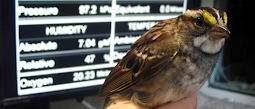
   
   
   The campus is quiet and there are not many people around. Still, there is some activity and research continues to be done. Earlier this month there was an interesting article in Western News about a sparrow study conducted at the AFAR. The facility is a unique one where various climate conditions can be simulated. In this case, the sparrows were subjected to 'storms' in an attempt to determine how they may adjust to the changing climate. (For you bird lovers: Perhaps 'subjected to' sounds a little too severe; it is pointed out that the sparrows were not subjected to a great deal of suffering.)

   After discovering the AFAR and reading about the sparrow study, I did a bit more research. It is clear that Western is lucky to have such a facility and the very talented researchers working within it. Although there are not many students on campus, one hopes they read the article from afar or learn more about it upon returning. 

Sources:
   The article about the study is done by Debora Van Brenk, "Sparrows' Storm Stress a Harbinger of Climate-Change Impact," Western News, August 7, 2020.
   The study was conducted by Andrea Boyer and Scott A. Macdougall-Shackleton. See:
"High Rates of Exposure to Simulated Winter Storm Cues Negatively Affect White-Throated Sparrow Energy Reserves," Front. Ecol. Evol., July 14, 2020.
FROM AFAR - see these very useful links:
Check out the Facilities - https://birds.uwo.ca/facilities/index.html (be sure to look at the FLIER - Field Laboratory for Integrative Ecological Research).
AFAR is a world-class facility at the University of Western Ontario for interdisciplinary studies of bird physiology, neurobiology and behaviour.
Researchers at AFAR come together from a variety of disciplines to explore how birds work, and how they respond to their environment. 
AFAR is home to the world’s first hypobaric climatic wind tunnel for bird flight - allowing research into the physiology and fluid dynamics of bird flight in high altitude conditions.  In combination with specialized indoor and outdoor holding rooms and cutting edge experimental and analytical facilities, AFAR is a leading centre for the study of avian neurobiology, physiology and behaviour.
There have been some articles in the LFP. See, for example, this earlier study about sparrows and fear: John Miner, "Being a Sparrow is No Cakewalk," LFP, Dec. 9, 2011. 
For an early article about the funding of the AFAR see: "McGuinty Government Supports Cutting-Edge Research," Canada Newswire, April 24, 2007.

Information about the various activities at the AFAR is readily found in academic journals.

Bonus Information:
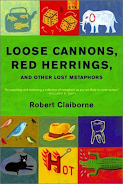
   The expression "For the Birds" is generally a negative one and the origin of it is found in this book. My use of it is more positive, in that I am suggesting that this research is done for the benefit of the birds (and the rest of us). 
"According to Robert Claiborne in Loose Cannons and Red Herrings, it refers to city streets as they were before cars. "When I was a youngster on the streets of New York, one could both see and smell the emissions of horse-drawn wagons. Since there was no way of controlling these emissions, they, or the undigested oats in them, served to nourish a large population of English sparrows. If you say something's for the birds, you're politely saying it's horseshit."

Chimney Swift Factoids
  I just received an email (Aug.15) from the folks at Nature London. Here is what they had to say about the Swift situation here in London: 
Chimney Swifts Take Flight
 For Chimney Swifts, fall migration is now in full swing and Nature London volunteers are tracking their numbers. We encourage club members to visit a swift chimney and enjoy the spectacle of large numbers of twittering, swirling swifts descending into a chimney.  Most swift entries occur between 10 mins before sunset and 20 mins after. Find a safe public place where you can view the swifts from your car or lawn chair.  Enjoy!  On August 4, 402 swifts entered 13 chimneys for the night; on August 11, the total was 542.  On August 11, three London chimneys held more than 100 swifts each.
         Smith Fruit: 22 Maitland Street (south end of street near the river)
         Huron College, O’Neil/Ridley Hall: 1349 Western Rd (big octagonal chimney, best seen from west/rear of building)
         Old Hunt’s flour mill behind Nova Craft Canoe: 471 Nightingale Ave(east London near old Kellogg’s plant)
Since swifts sometimes switch roost chimneys, visit soon while these chimneys are still their favourites.  For more information about Swifts and Nature London’s program click the link:  http://www.naturelondon.com/chimney-swifts-resources/

Monday, 3 August 2020

Contrarian News For Old Codgers (OATS1)

The News Is Not Good
   

   I hate to be the bearer of bad news, since there is enough of it, but being contrarian I must counter all the good news about old age that is now being published. "Fake News" must be combatted even when we would like to believe it. That positive propaganda about the elderly would be produced in great quantities was predicted by the prescient Russell Baker over 30 years ago in an article in the New York Times which began like this:

“We will soon be inundated with nonsense about how wonderful it is to be old. The baby-boom generation now becoming long in the tooth, thick in the middle and sparse on the top will demand it.”

  He refers to the land we inhabit as "Old Crockdom".  The article prompted this letter:

Russell Baker suggests that ''we will soon be inundated with nonsense'' as more and more of my fellow boomers get gray and ''long in the tooth'' and endure other calamities of aging too painful for me to repeat. Yet this graying, long-haired, reading-glassed boomer ''kid'' wonders if some benevolent astigmatism isn't keeping Mr. Baker from seeing the bit of dismal nonsense that is already in his hands: our age demanded -- and got -- large-print $20 bills. With laser surgery available to restore eyesight and erase expression lines, does Mr. Baker really expect ''this vast army of demanders'' to go kindly without as it slouches toward Old Crockdom?

   The trend continues into this century and was commented upon in a review of Michael Kinsley's book, Old Age: A Beginner's Guide. The reviewer notes that “Kinsley is intent on being wryly realistic about coping with illness and the terminal prospects ahead.” [He suffers from Parkinson's]. He continues:

“Longevity breeds literature. As people (including writers) live longer thanks to medical advances, we can expect many more books contemplating the vicissitudes of aging, illness and dying. These topics, previously thought uncommercial, not to mention unsexy, have been eloquently explored recently by Diana Athill (“Somewhere Towards the End”), Roger Angell (“This Old Man”) and Christopher Hitchens (“Mortality”), among others. Now that the baby boom generation, defined as those born between 1946 and 1964, “enter life’s last chapter,” Michael Kinsley writes, “there is going to be a tsunami of books about health issues by every boomer journalist who has any, which ultimately will be all of them.” Hoping to scoop the others, he has written “Old Age,” a short, witty “beginner’s guide,” with an appropriate blend of sincerity and opportunism...."
He is equally sardonic on the prospect of losing one’s marbles. “Of the 79 million boomers, 28 million are expected to develop Alzheimer’s or some other form of dementia. . . . That adds up to about 35 percent, or one out of three.” Lest the vain ones think they can better their odds by living right, he adds: “They are jogging every day but will get Alzheimer’s anyway.” 

   Perhaps that is enough bad news for now. 

Sources: 
   The review of the Kinsley book is from "Michael Kinsley’s ‘Old Age: A Beginner’s Guide’, Phillip Lopate NYT, April 18, 2016.
   I did not write down the complete information for the Russell Baker article, but you will find it in the New York Times on Nov. 20, 1988.
   Back when Mr. Baker turned 91, I wrote about it and within that piece you will find an eloquent description of his visit to see his mother in a nursing home. See Russell Baker's Birthday.   He died last year. See: "Russell Baker (Aug.14, 1925 - Jan. 21, 2019).

About OATS1
OATS is my acronym for "Old Age Themes" and I intend for this to be a series about the realities of the aging process. If you really wish to believe that old age is fantastic you might want to avoid any posts containing OATS.

Bonus Information:
   You happy codgers who read this far by mistake, need not read further. If you are going to live well into the three digits you will need all the money you have. If you have a more realistic view and are wondering what to do with all the money you have and the additional bit you just received from the Canadian government, and probably don't deserve, then follow Michael Kinsley's suggestion and give it back. The reviewer obviously does not think that is such a good idea:
   
“He [Kinsley] almost ruins it all with a conclusion recommending that the boomers redeem themselves with a final sacrifice — wiping out the nation’s debt. By having the money they leave behind sufficiently taxed when they die, he argues, they could leave a legacy that parallels the Greatest Generation’s achievement in World War II. “Boomers, those lazy, self-indulgent bums, those drugged-out draft dodgers, those mincing flower-power hippies who morphed into Wall Street greedheads with nothing left of their culture of peace and love except a paisley tie: We may not have the opportunity to save the world like our predecessors did, but we can save the American economy from the mess our predecessors are leaving.” Backtracking a bit from this cockamamie scheme, he nevertheless takes it seriously enough to devote the whole last chapter to it. The real mistake, economic realities aside, is to have abandoned the more charmingly intimate, skeptical persona he had so meticulously built up beforehand, trading it in for a pundit’s robes.”

Periodical Ramblings (9)

Arizona Highways

   I post occasionally about magazines and journals and the last one was about a genre of periodicals devoted to individuals (see Single Author Journals). That I would now choose to write about what would seem to be such a pedestrian publication may seem odd, but I am sure you are familiar with Arizona Highways. Although I grew up on the East Coast, I recall seeing a copy in the last century, probably in the office of my dentist or some other waiting room. It circulated widely and still does in this century. 

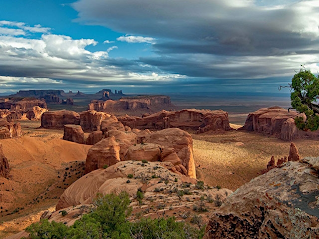
   There is no need for me to write much about it since so many others have. Plus, the publication is perhaps best known for the paintings, photographs and other illustrations contained within it and it will be more useful to simply direct you to them. The one above is of Monument Valley, which you probably remember well from the many Westerns filmed there. Who knew that it snowed there? When John Wayne first visited he supposedly said, "So this is where God put the West!"
(Although John Wayne is now persona non grata, I chose not to erase his quote).

   To see more photographs go to the Arizona Highways website. You will find a blog there as well and you can do some shopping. The Grand Canyon calendars look beautiful and you can get some postcards and pretend you have been there. 

 The Bonus Information:
   Although it is not obvious from the Arizona Highways website, you can access most of the beautiful issues through the Arizona Memory Project which contains  the Collections pictured above. Among them you will find digitized issues of Arizona Highways. I will give no further directions since you really should subscribe to the magazine.

provides access to the wealth of primary sources in Arizona archives, museums, libraries, and other cultural institutions. Visitors to the site will find some of the best examples of government documents, photographs, maps, and multimedia that chronicle Arizona's past and present.
   I wish Ontario had such an archival project in place.

Sources:
  There have been anniversary issues in the publication which provide the information you need. I picked up the "Special 90th Anniversary Issue: A Look Back at Our First Nine Decades" while in Arizona.  It is the April 2015 issue and you can find the digitized version on the AMP. 

For the 95th anniversary see this ADOT article: "Arizona Highways Magazine Celebrates 95 Years With Special Issue" which looks at the landscape photography over the years. 

There is even an article in the Globe and Mail. See: "Arizona Magazine Published 60 Years," Edwin McDowell, Sept. 28, 1985. 

A more recent piece is found here: "Praising Arizona," by Kyle Paoletta, Columbia Journalism Review, June 20, 2020.
Today, Highways is the most beloved publication in Arizona. It has become an institution in a state too young to have many, as likely to be cited by historians and policymakers as any newspaper. For residents, the magazine is a talisman of their state’s particular allure. I’ve seen bundles of meticulously maintained back issues at a library sale in Flagstaff and vintage covers framed on the walls of an Airbnb in Phoenix. The reverence Arizonans have for the magazine is rooted in its upward trajectory over the course of the twentieth century, one that matches the rise in stature of the state itself from an obscure wasteland to a place of universally acknowledged natural splendor and cultural vibrancy. Robert Stieve, the current editor of Highways, calls it an “anomaly.” No other state-operated tourism magazine has reached the same heights of national influence, nor spawned as many imitators.


The Cannonball Run

During COVID


  The rain continues so I will continue posting. Some people do far more adventurous things. Like get a highly modified vehicle and hop in it in New York and see how fast they can get to California. Realizing that traffic is down considerably during this time of Covid, a few fellows decided to go for the record recently and did break it. The former record holders can surely argue that an asterisk needs to be placed next to the new one since the holders of the current one had an unfair advantage. 

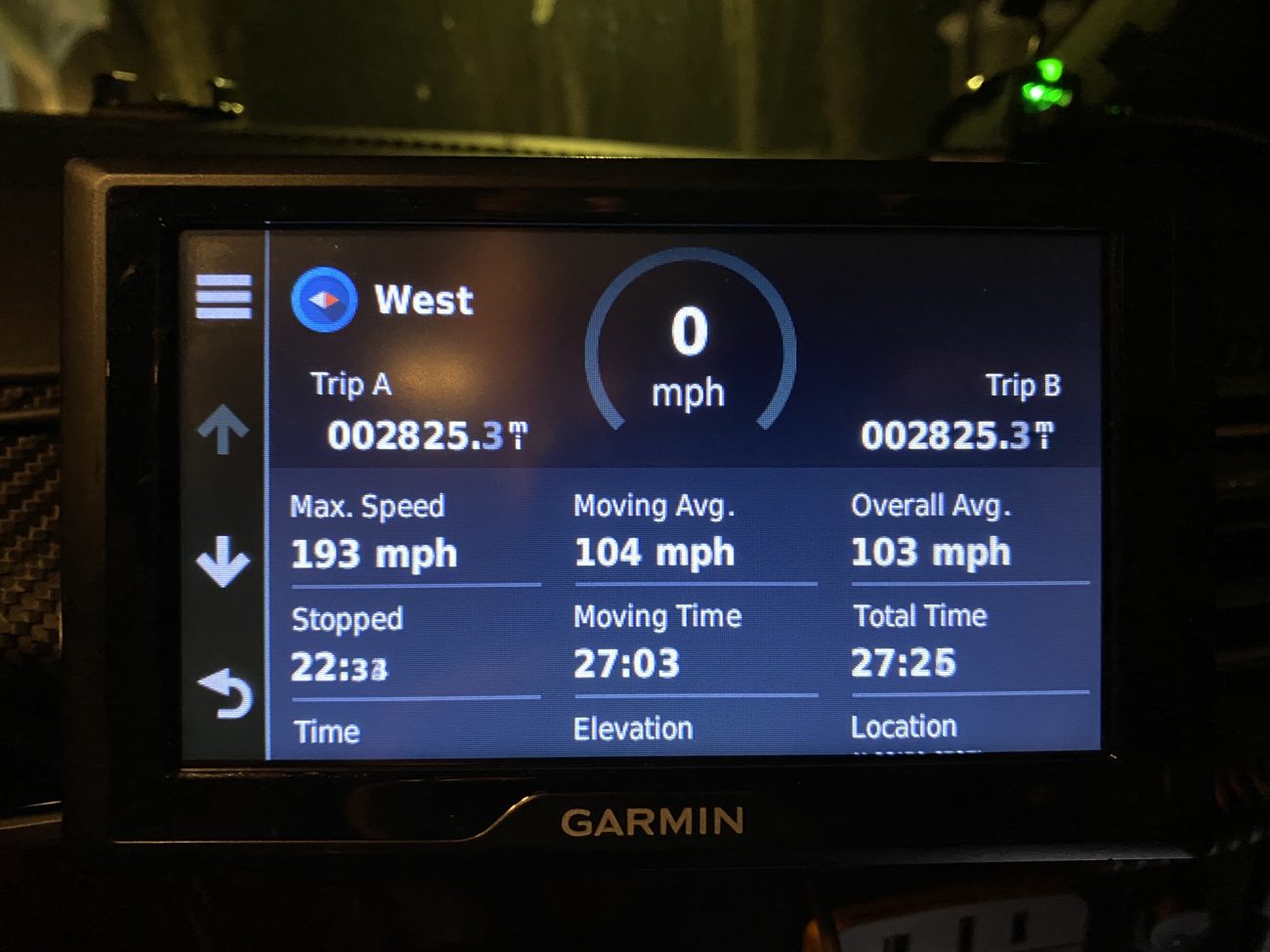
   The new record is contained in the image above. It took the racers less than 26 hours to travel across the continent since their average speed was 108(MPH)/ 174(KPH).


   I recently posted about the earlier, pre-covid record which is noted above and was taken from the GPS device on the dashboard of the car. It took those fellows over 27 hours, even though they only stopped for 22 minutes.

Sources:
   See my earlier post which also provides information about the cross-continental record by bicycle - Racing Across America. 
   There are many articles about the very illegal race, but start with the Wikipedia entry for 

P.S.
   Clearly this is one of those "Don't Try This At Home" events. For the answer to the question you likely want to ask me, see: "Why Are We Glorifying Cannonball Runs, the Illegal Pastime of Thrill-Seeking Drivers?", Petrina Gentile, The Globe and Mail, July 21, 2020.

Slavery

  It is still raining and I will move from the safe subject of cycling to the much more controversial one of slavery. This post, should not be controversial, however, since I will state clearly that, I am against it. 

   There have been many articles about slavery recently, generally in relation to statues. I will not talk about statue removal, yet again, but I will point you to two articles which suggest that the number of problematic statues is likely much larger than you would think and not all of them are carved in white marble. The point is, that not all slavers were white Americans or Englishmen. 

   The first article is a syndicated one by Gwynne Dyer which appeared in many papers on July 30, 2020. Here is how it begins and in it he is attempting to make the point that slavery was not restricted to the American south:

“Assessing the people of America’s past by today’s standards would compel us to cast the majority of our heroes as villains.”

That might seem to be the line taken by Sen. Tom Cotton of Arkansas last week in his opinion piece for the New York Times. It caused great outrage, the opinion editor had to resign, and Cotton was roundly abused for “defending slavery.....”

The point is that I [Dyer] changed one word in that quote, and it wasn’t Cotton who said it. It was Nigerian journalist and novelist Adaobi Tricia Nwaubani, and what she actually said, in an opinion piece for the BBC, was this: “Assessing the people of Africa’s past by today’s standards would compel us to cast the majority of our heroes as villains.”

"She was talking specifically about her great-grandfather, Nwaubani Ogogo Oriaku, who was a widely respected trader in tobacco, palm oil, and slaves in southeastern Nigeria in the early 20th century. The Atlantic slave trade had been banned by the European empires a century before, but slavery was still a flourishing domestic business in Nigeria and many other African countries.

Her great-grandfather became famous by defying the British colonial authorities, who were trying to stamp out slavery in Nigeria. They had confiscated some of his slaves, and he marched right up and demanded them back, waving a trading licence that dated back to the previous century.

The British were taken aback, apologized and returned his slaves. Indeed, they were so impressed by his boldness and self-confidence that they subsequently appointed him paramount chief of his region. So he became a local hero in his own day, and is still a hero to the Nwaubani family.

Slavery was normal in most pre-modern societies, including almost all the kingdoms and ethnic groups of sub-Saharan Africa. Africans had sold slaves north to various Islamic empires in the Middle East for centuries before Europeans showed up on the coast in ships. They were just another set of customers buying in the same market.
Most enslaved Africans didn’t travel more than a few hundred kilometres from home. It is estimated that in the 18th century one-third of the people in what is now Senegal were slaves who belonged to other Senegalese. But the ones who were sold to foreigners probably suffered more.

Historians believe around one-fifth of the 10 million Africans transported to the Americas over more than three centuries died on board ship. The fatalities among the estimated 17 million African slaves sold to Arab traders and forced to walk across the Sahara or carried around the India Ocean in ships during 10 centuries were probably just as high. What awaited the survivors when they arrived was pretty appalling, too."

   The second article was reprinted recently in The New York Review of Books. It had originally appeared in TNYRB in 1994 and was written as a letter rebutting the notion that large numbers of Jews were involved in the slave trade. The point again, is that many different peoples and religions participated in slavery, even some ex-slaves.

   The participants in the Atlantic slave system included Arabs, Berbers, scores of African ethnic groups, Italians, Portuguese, Spaniards, Dutch, Jews, Germans, Swedes, French, English, Danes, white Americans, Native Americans, and even thousands of New World blacks who had been emancipated or were descended from freed slaves but who then became slaveholding farmers or planters themselves. Responsibility, in short, radiated outward to peoples of every sort who had access to the immense profits generated from the world’s first system of multinational production for a mass market.

“In the American South, in 1830, there were only 120 Jews among the 45,000 slaveholders owning twenty or more slaves and only twenty Jews among the 12,000 slaveholders owning fifty or more slaves.” David Brion Davis noted in 1994, on the question of Jewish involvement in the slave trade. “No one should defend the small number of Jews who bought and sold slaves,” he writes. “No one should defend the infinitely larger number of Catholics and Protestants who built the Atlantic slave system, or defend the Muslims who initiated the process of shipping black African slaves to distant markets, or defend the Africans who captured and enslaved perhaps twenty million other Africans in order to sell them to European traders for valuable and empowering goods. But while posterity has the right and even duty to judge the past, we must emphatically renounce the dangerous though often seductive belief in a collective guilt that descends through time to every present and future generation.”
(David Brion Davis, "The Slave Trade and the Jews," NYRB, Dec. 22, 1994)

The Bonus:

Peonage on the PGA Tour


   It is still raining and I will likely watch some golf.  Whenever I do, I am often irritated when I see the golfer holding his club out behind him, without looking behind him, fully expecting the caddy to be there to grab and clean it. When I went looking for a picture to illustrate all of this, I didn't find one, but I did find the one above that leads us back to the subject of slavery.
   The kind of behaviour that irritates me also upset the caddy of a famous golfer.  The caddy, who is white, said that the famous golfer, who is black, treated him like a "slave." Given that the caddy was white and had been made very wealthy by his black  'master', he was subjected to considerable criticism.
  Here is how the word was used by Steve Williams (the caddy) in his biography -Out of the Rough. 
"One thing that really pissed me off," he writes, "was how he would flippantly toss a club in the general direction of the bag, expecting me to go over and pick it up. I felt uneasy about bending down to pick up his discarded club - it was like I was his slave."

If you don't believe me see, for example: "Caddie Steve Williams Defends Using 'Slave' to Describe Working for Tiger," The Hamilton Spectator, Nov. 11, 2015. Also: "Caddie's Slave Comment Provokes Widespread Ridicule," Dominion Post, Nov. 5, 2015.

P.S. I suppose this last part could provoke some ridicule and controversy given that discussing slavery in relation to the PGA, which is the whitest sport on the planet, does not seem appropriate.


Cycling


The Dirty Kanza

   It is still raining. Before I did the last post on Inbreeding, which is also about cycling, I was reading a major U.S. newspaper when the image above popped up. I realize that the sudden appearance of such things is usually related to searches one has done when shopping. But, not having requested a tourist brochure from Kansas, I was curious about events in Emporia and had a look. I suppose now I will be getting more ads from that state.  One does have to acknowledge the Jayhawks for their marketing creativity.

   The adventure has to do with cycling and I guess I should have thought of that since I recently did do some online shopping for a bike. I really can't travel there at this time and you probably can't either, but if you can, here is what is going on in the Gravel City. 

Cycling
Emporia, Kansas is home to an avid cycling community, and the surrounding Flint Hills offer some of the best and most challenging gravel cycling opportunities in the nation. We’re nicknamed Gravel City for a reason! Emporia also hosts the Dirty Kanza, known as the “World’s Premier Gravel Grinder” each year on the Saturday after Memorial Day. More than 2,000 riders come from all over the United States and many foreign countries to race through 200 miles in the beautiful Flint Hills.

Ride the Flint Hills
Whether you’re training for a gravel cycling competition like the Dirty Kanza 200, or you want to take a leisure ride and just enjoy the outdoors, the beautiful Flint Hills of Kansas is the place to be. While traveling through the Flint Hills you can enjoy 40 grass species, native stone fences, hundreds of wildflowers, 150 species of birds, barns, bridges, historic towns, breathtaking views, and quiet serenity.

Inbreeding


   It is a rainy day and I just read these sentences: 

"With a bicycle, the world would have expanded dramatically for fin-de-siecle Victorians, particularly as bikes became increasingly affordable, bringing new experiences and opportunities, and perhaps even new romantic liaisons. Sociologists now credit the bicycle with a decrease in genetic faults associated with inbreeding in the U.K. , and as early as 1900, the U.S. Census Office identified the invention as a game-changer: 'Few articles ever used by man have created so great a revolution in social conditions as the bicycle."

   I thought the comment about inbreeding an interesting one and had never associated cycling with consanguinity, so I went looking for some of the 'sociologists' who have found a relationship between the rise in cycling and the decline in sexual activities among those who are related. The search turned out to be more difficult than I thought and the subject of inbreeding, like just about any subject these days, is not without its controversial aspects. 

   I did find some support, however, and have no reason to doubt that cycling, like the back seats of cars, may have affected sexual relationships. William Manners writes in The Guardian about how cycling changed society: 
One unexpected way it did this was in the field of genetics. For the majority of those living in rural areas, owning a bicycle dramatically increased the number of potential marriage partners, as for the first time they possessed their own means of travelling beyond their local communities. The widening of gene pools which resulted from this process means that the biologist Steve Jones ranks the invention of the bicycle as the most important event in recent human evolution.

     I did track down Professor Jones, a well-respected geneticist, and, indeed, he does write  in The Language of Genes that, There is little doubt that the most important event in recent human evolution was the invention of the bicycle.

    Although it is still raining, I decided to stop searching and write this. If you need more proof, have a look yourself.

Sources:
   The sentences which led to the search are found in: Revolutions: How Women Changed the World on Wheels, by Hannah Ross.
    The article by Mr. Manners: "The Secret History of 19th Century Cyclists: The Early Days of the Modern Bicycle Brought Not Just Joyful Escape for the Masses, But Proved a Catalyst for Wider Social Change, The Guardian, June 9, 2015.

The Bonus: 
  In The Guardian article one also finds these quotes:
Hobsbawm wrote:
If physical mobility is an essential condition of freedom, the bicycle has probably been the greatest single device for achieving what Marx has called the full realisation of being human invented since Gutenberg, and the only one without obvious drawbacks.

And H.G. Wells said:
Every time I see an adult on a bicycle, I no longer despair for the future of the human race.