Showing posts with label old age. Show all posts

Wednesday, 7 January 2026

OATS (6)

          I suppose I should really get back to blogging, although I can't say I have been deluged with queries about my absence, or noticed a demand for new posts in MM. Right now I am feeling like those people who aren't ready to return to the office. Actually, I have far less motivation than they, since I don't get paid. Still, it is depressingly dreary outside and I might as well do this since there is nothing else I can do for which I might be paid.
   Apart from lacking in motivation, I am also lacking in both intelligence and imagination and am having difficulty in coming up with a topic, although maybe all I need to do is ask the AI guy: "What should I write about?" The answer, however,  might be something difficult, about which I know nothing, so I will now try to come up with something. 
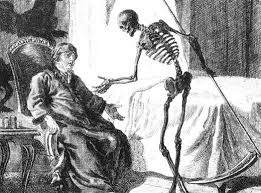
   I have decided to remain contrarian and will revive an old series, even though the subject is not a positive one, especially at the beginning of a new year. It is basically about getting old and dying, which many people do, even those who think 80 is the new 50. 
   The series is called "OATS" and that is an acronym for OldAgeThemeS. It was originally undertaken to irritate a couple who I will describe as "never-deathers", in denial of the existence of doom. "OATS" is, in other words, not for those who are feeling their oats and don't want to be reminded of mortality, or for those wasting their time at the gym.
   I see that the first "OATS" was done five years ago and I confess that the couple for whom it was intended is still around. About four of those years, however, were spent by them, not me, in abstinence and the gym and they will be irritated to be reminded of that. That first post has the title "Contrarian News For Old Codgers: The News Is Not Good", and it consist of a discussion of Michael Kinsley's book, Old Age: A Beginners Guide. 
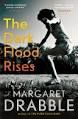
   The second "OATS" post, does what this one will also do -- offer you better writing that is provided by someone else. The writer in the first post is Margaret Drabble and you are presented with some of her thoughts which were found in, The Dark Flood Rises. For her comments see: "More Contrarian News for Old Timers." 
   Now, finally, here is some good prose about the bad subject of old age.
   This is from Staring At the Sun by Julian Barnes.

  “Jean had often wondered what it would be like to grow old. When she had been in her fifties, and still feeling in her thirties, she heard a talk on the radio by a gerontologist.”Put cotton wool in your ears’, he had said, ‘and pebbles in your shoes. Pull on rubber gloves. Smear vaseline over your glasses, and there you have it: ‘instant ageing’. 
  It was a good test, but it naturally contained a flaw. You never did age instantly; you never did have a sharp memory for comparison. Nor, when she looked back over the last forty of her hundred years, did it seem initially, or even mainly, a matter of sensory deprivation. You grew old first not in your own eyes, but in other people’s eyes; then, slowly, you agreed with their opinion of you. It wasn’t that you couldn’t walk as far as you used to, it was that other people didn’t expect you to; and if they didn’t, then it needed vain obstinacy to persist.”....
 “ She lived increasingly inside her head, and was content to be there. Memories, there were far too many memories; they raced across her sky like Irish weather. Her feet with each succeeding year, seemed a little farther away from her hands; she dropped things, stumbled a little, was fearful; but mostly what she noticed was the smirking paradox of old age; how everything seemed to take longer than it used to, but how, despite this, time seemed to go faster.”
[Jean above is 100, but this is a fictional work.]

Sources for the Morbidly Curious:
 
The third OATS discusses MAID, a subject to which I will soon return.
  The fourth OATS suggests that all that brain exercise may not be good for you. 
  The fifth OATS is about Barbara Ehrenreich's book, Natural Causes, of which she died.

Saturday, 29 August 2020

More Contrarian News for Old Timers (OATS2)

The News is Not Good

   
   This is the second post in a series related to Old Age Themes. Contrary to everything you read elsewhere, you will learn here that old age is not great. 

Drabble on Dying

   Additional examples in support of my belief that decrepitude is depressing is found in this book by Margaret Drabble. The main character, Fran Stubbs, is a septuagenarian who inspects old age homes so she has a couple of good reasons to be suspicious of the claims about the good things to be found in "Old Crockdom". 

   The quotations below are all from the Canongate Books 2017 edition of The Dark Flood Rises, if you wish to see if I am being honest. By the way, I enjoyed the book as did the reviewer who wrote this:

"Ageing and dying in style...Margaret Drabble’s sharply drawn characters look back on lives lived and forwards to achieving a good death.” Observer.

Pp. 29-30 
“She cannot help but see a lifespan as a journey, indeed as a pilgrimage. This isn’t fashionable these days, but it’s her way of seeing. A life has a destination, an ending, a last saying. She is perplexed and exercised by the way that now, in the twenty-first century, we seem to be inventing innumerable ways of postponing the sense of arrival, the sense of arriving at a proper ending. Her inspections of evolving models or residential care and care homes for the elderly have made her aware of the infinitely clever and complex and inhumane delays and devices we create to avoid and deny death, to avoid fulfilling our destiny and arriving at our destination. And the result, in so many cases, has been that we arrive there not in good spirits, as we say our last farewells and greet the afterlife, but senseless, incontinent, demented and medicated into amnesia, aphasia, indignity. Old fools who didn’t have the courage to have that last whisky and set their bedding on fire with a last cigarette.”

P.44.
“We can all expect to live longer, but it’s recently been claimed that the majority of us can expect to spend the last six years of our prolonged lives suffering from a serious illness, in some form of pain and ill health.”
   Fran found this statistic, true or false, infuriating. Longevity has fucked up our pensions, our work-life balance, our health services, our housing, our happiness. It’s fucked up old age itself.”

Pp.50-1.
“There just aren’t enough younger people around these days to infuse the energy into the elderly. The feeble, as never before in society, in history, are outweighing the hale. The balance is wrong. The shape of the bell curve is a disaster. It’s a dystopian science fiction scenario, a disaster movie.”
The hunter-gatherers wouldn’t have let themselves get into this kind of predicament. They abandoned the elderly, or drowned them, or clubbed them to death, or exposed them on snowy mountainsides. They kept on the move.”

Bonus Information:
   Drabble is the sister of A..S. Byatt the novelist, and the wife of Michael Holroyd, the biographer of Lytton Strachey and Augustus John, among others. If Drabble and Holroyd were interviewed via ZOOM during this pandemic, you would find the following author well represented on their extensive bookshelves.

"We are in the first-floor drawing room of Sir Michael Holroyd's enormous house in north Kensington. Drabble used to have a home in Hampstead and continued to live in it for several years after they married, but when Holroyd was very ill with cancer, in 2013, she finally moved in with him and sold her home, which she says she still misses. They also have a house in Somerset, near Porlock, where she goes to write. The north Kensington house is shabby chic (perhaps more shabby than chic), with some very good paintings — Augustus John, Gwen John and a portrait of Lytton Strachey by Dora Carrington — but hung seemingly at random....
But what really surprised me were the bookshelves — proper built-in, wall-to-wall bookshelves, as you'd expect from two famous authors, but containing not the complete works of Holroyd and Drabble, but the complete works of Lee Child. Lee Child ? I squawked. "Oh yes, haven't you read them? They're totally gripping," Drabble says equably.

"I think I was recommended them by Antonia Fraser, who herself is a detective writer, and I just read my way through the entire lot. I read them on the Kindle and persuaded Michael into them when he was ill, but of course he can't read a Kindle so we had to buy them twice over."

Source: 
"I Absolutely Love the Premier Inn: I Just Felt Completely Free and Happy There," Lynn Barber, The Sunday Times, Dec. 11, 2016.
   For the first post in this series see: Contrarian News For Old Codgers (OATS1)

Post Script:
   Those of you who are depressed by all this, will feel better when you consider that Drabble was born in 1939 and Holroyd in 1935. 


Monday, 3 August 2020

Contrarian News For Old Codgers (OATS1)

The News Is Not Good
   

   I hate to be the bearer of bad news, since there is enough of it, but being contrarian I must counter all the good news about old age that is now being published. "Fake News" must be combatted even when we would like to believe it. That positive propaganda about the elderly would be produced in great quantities was predicted by the prescient Russell Baker over 30 years ago in an article in the New York Times which began like this:

“We will soon be inundated with nonsense about how wonderful it is to be old. The baby-boom generation now becoming long in the tooth, thick in the middle and sparse on the top will demand it.”

  He refers to the land we inhabit as "Old Crockdom".  The article prompted this letter:

Russell Baker suggests that ''we will soon be inundated with nonsense'' as more and more of my fellow boomers get gray and ''long in the tooth'' and endure other calamities of aging too painful for me to repeat. Yet this graying, long-haired, reading-glassed boomer ''kid'' wonders if some benevolent astigmatism isn't keeping Mr. Baker from seeing the bit of dismal nonsense that is already in his hands: our age demanded -- and got -- large-print $20 bills. With laser surgery available to restore eyesight and erase expression lines, does Mr. Baker really expect ''this vast army of demanders'' to go kindly without as it slouches toward Old Crockdom?

   The trend continues into this century and was commented upon in a review of Michael Kinsley's book, Old Age: A Beginner's Guide. The reviewer notes that “Kinsley is intent on being wryly realistic about coping with illness and the terminal prospects ahead.” [He suffers from Parkinson's]. He continues:

“Longevity breeds literature. As people (including writers) live longer thanks to medical advances, we can expect many more books contemplating the vicissitudes of aging, illness and dying. These topics, previously thought uncommercial, not to mention unsexy, have been eloquently explored recently by Diana Athill (“Somewhere Towards the End”), Roger Angell (“This Old Man”) and Christopher Hitchens (“Mortality”), among others. Now that the baby boom generation, defined as those born between 1946 and 1964, “enter life’s last chapter,” Michael Kinsley writes, “there is going to be a tsunami of books about health issues by every boomer journalist who has any, which ultimately will be all of them.” Hoping to scoop the others, he has written “Old Age,” a short, witty “beginner’s guide,” with an appropriate blend of sincerity and opportunism...."
He is equally sardonic on the prospect of losing one’s marbles. “Of the 79 million boomers, 28 million are expected to develop Alzheimer’s or some other form of dementia. . . . That adds up to about 35 percent, or one out of three.” Lest the vain ones think they can better their odds by living right, he adds: “They are jogging every day but will get Alzheimer’s anyway.” 

   Perhaps that is enough bad news for now. 

Sources: 
   The review of the Kinsley book is from "Michael Kinsley’s ‘Old Age: A Beginner’s Guide’, Phillip Lopate NYT, April 18, 2016.
   I did not write down the complete information for the Russell Baker article, but you will find it in the New York Times on Nov. 20, 1988.
   Back when Mr. Baker turned 91, I wrote about it and within that piece you will find an eloquent description of his visit to see his mother in a nursing home. See Russell Baker's Birthday.   He died last year. See: "Russell Baker (Aug.14, 1925 - Jan. 21, 2019).

About OATS1
OATS is my acronym for "Old Age Themes" and I intend for this to be a series about the realities of the aging process. If you really wish to believe that old age is fantastic you might want to avoid any posts containing OATS.

Bonus Information:
   You happy codgers who read this far by mistake, need not read further. If you are going to live well into the three digits you will need all the money you have. If you have a more realistic view and are wondering what to do with all the money you have and the additional bit you just received from the Canadian government, and probably don't deserve, then follow Michael Kinsley's suggestion and give it back. The reviewer obviously does not think that is such a good idea:
   
“He [Kinsley] almost ruins it all with a conclusion recommending that the boomers redeem themselves with a final sacrifice — wiping out the nation’s debt. By having the money they leave behind sufficiently taxed when they die, he argues, they could leave a legacy that parallels the Greatest Generation’s achievement in World War II. “Boomers, those lazy, self-indulgent bums, those drugged-out draft dodgers, those mincing flower-power hippies who morphed into Wall Street greedheads with nothing left of their culture of peace and love except a paisley tie: We may not have the opportunity to save the world like our predecessors did, but we can save the American economy from the mess our predecessors are leaving.” Backtracking a bit from this cockamamie scheme, he nevertheless takes it seriously enough to devote the whole last chapter to it. The real mistake, economic realities aside, is to have abandoned the more charmingly intimate, skeptical persona he had so meticulously built up beforehand, trading it in for a pundit’s robes.”