Showing posts with label old age themes. Show all posts

Wednesday, 5 May 2021

More Contrarian News For Old Codgers (OATS5)

 Still Not Whistling Past the Graveyard

   Our Old Age Theme today is presented in the form of a book review. Unfortunately the topic is still the depressing one of old age and the concomitant one of death. Although the word 'concomitant' is used deliberately, I am aware that many of the elderly colleagues in my cohort are now beginning to think that old age can be dramatically extended until all the "natural causes" of death are eliminated --- or defeated by the rigid application of a spartan and healthy lifestyle.  The question is, I suppose, how much of your life do you wish to sacrifice to delay death?


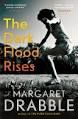
   The book under review is Natural Causes by Barbara Ehrenreich.  They are both pictured above. You are likely to recognize her name since she has authored many books. You are also likely to assume that she is a progressive cultural critic who perhaps tackles too many topical topics to be taken seriously. Only the first part of the assumption is correct. 

   From the Introduction we learn why she questions much medical advice and also that she has the credentials to do so. It was upsetting for her to learn that it has been discovered that "the immune system actually abets the growth and spread of tumors, which is like saying that the fire department is indeed staffed by arsonists." That such a "paradoxical" finding could be disturbing is understandable, particularly since she had studied the macrophages which are now seen to be sabotaging the immune system. They were the focus of her study when she earned a PhD in cellular immunology. 

   The title of the first chapter is, "Midlife Revolt" and from these sample sentences you will be able to figure out what she is revolting against. The first sentence is: 

"In the last few years I have given up on the many medical measures -- cancer screenings, annual exams, Pap smears, for example -- expected of a responsible person with health insurance...."

Followed by: 

"I knew I was going against my own long-bias in favor of preventive medical care as opposed to expensive and invasive high-tech curative interventions...."
"I also understood that I was going against the grain for my particular demographic. Most of my educated, middle-class friends had begun to double down on their health-related efforts at the onset of middle age, if not earlier...."

"I had a different reaction to aging: I gradually came to realize that I was old enough to die, by which I am not suggesting that each of us bears an expiration date...."

"Once I realized I was old enough to die, I decided that I was old enough not to incur any more suffering, annoyance, or boredom in the pursuit of a longer life.

She gives good reasons for the decision to avoid such procedures as a colonoscopy and points out that "there are even sizable constituencies for discredited tests."

   If you are believer in "Successful Aging", then you shouldn't be reading this post and you definitely don't want to read the chapter about it in Natural Causes.  The chapter title, "Successful Aging" is in quotes, because Ehrenreich realizes there is no such thing and she takes issue with drivel such as this, which is apparently found in a book with the title, Younger Next Year, under this subhead: "Normal Aging Isn't Normal:" The more I looked at the science, the more it became clear to me that such ailments and deterioration [heart attacks, strokes, the common cancers, diabetes, most falls, fractures] are not a normal part of growing old. They are an outrage.
Naturally, Ehrenreich disagrees with the above and asks: And who is responsible for this outrage? Well, each of us is individually responsible. All of the books in the successful aging literature insist that a long and healthy life is within the reach of anyone who will submit to the required discipline.
At this point, unfortunately I suppose, I believe it is far more likely that I will die of natural causes than it is that I will be younger next year, even if I work out much more and drink much less. Some reviews follow for those who wonder if I make all of this up:

The Opinions of Others:

"Ditch the Quest for Eternal Life and Just Enjoy the Days You Have, "By Rachel Newcomb, Washington Post, May 4, 2018.
Americans have a history of obsession with fads designed to help us live forever. But to what end? Death, notes Barbara Ehrenreich in her new book, “Natural Causes,” still awaits us all. In this lively cultural history of our attempts to control our fate, she details the extreme lengths we will go to keep from dying.

"Barbara Ehrenreich Urges Us to Accept, Accept the Dying of the Light," Parul Sehgal, New York Times, April 10, 2018.
Barbara Ehrenreich wants you to know that you are going to die. Get used to it, and get beyond it... Targets include unnecessary medical tests, notably annual physical exams. The fitness craze is an easy mark — though she herself is a gym rat, Ehrenreich looks askance at workouts that suck hours of valuable time out of a person’s day and, longevity wise, have a low cost-benefit ratio.

"Your Body is a Teeming Battleground: It’s time to rethink the quest to control aging, death, and disease—and the fear of mortality that fuels it, "Victoria Sweet, The Atlantic, May 2018.
In her new book, Barbara Ehrenreich ventures into the fast-growing literature on aging, disease, and death, tracing her own disaffection with a medical and social culture unable to face mortality. She argues that what “makes death such an intolerable prospect” is our belief in a reductionist science that promises something it cannot deliver—ultimate control over our bodies. The time has come to rethink our need for such mastery, she urges, and reconcile ourselves to the idea that it may not be possible.
She starts by looking at the many preventive medical procedures we are encouraged, even badgered, to undergo—those regular physical exams, colonoscopies, blood tests, mammograms. She had always pretty much done what doctors advised (she underwent chemotherapy), figuring that it made sense to treat disease before illness overwhelmed the body. But after watching many fitness-obsessed people die early, and realizing that she herself is now “old enough to die,” she questions that premise. Where is the evidence that all the effort at prevention saves lives or delays death?

"Calm Down, We're All Going to Die, Lewis Jones, The Times, April 14, 2018.
Ehrenreich is on surer ground with her objections to the modern regime of needless, painful and even dangerous screening and testing, such as mammograms and colonoscopies (a "kinky procedure"), which appear to be chiefly for the benefit of insurance and drug companies. Those for thyroid cancer are particularly worrying. "An estimated 70 to 80 per cent of thyroid cancer surgeries performed on US, French and Italian women in the first decade of the 21st century," she tells us, "are now judged to have been unnecessary....Ehrenreich concludes her frankly dystopian survey by remarking that the diseases of ageing "clear up the clutter of biologically useless older people", and that without them "we might have to turn to euthanasia". Still, we should avoid the horrors of a "medicalised death". Some of the physicians who routinely inflict drastic end-of-life measures on their patients are so anxious to avoid them themselves that they get tattoos saying "DNR" (Do Not Resuscitate).

"A Scalpel-sharp Dissection of What it is to be Human; Barbara Ehrenreich Ambitiously Traverses the Sciences and the Humanities in Her Investigation of the Body and Human Nature," Paul D’Alton, The Irish Times, May 26, 2018.
That said, this is a book that makes a fine contribution to an essential dialogue on what it means to be human. Such a dialogue is in itself both humanising and civilising. This type of dialogue is under threat in democratic societies where policy concerning complex social issues is reduced to pronouncements on Twitter, and where dialogue concerning what it means to be human is often dismissed as a liberal-elite indulgence.
Ehrenreich's capacity to consider the complexities, contradictions and paradoxes inherent in the human condition is significant and humbling. She displays a regard and appreciation for the intellectual ground she stands on. This ground, kindly gifted through the generous curiosity of our predecessors, is a form of intellectual inheritance. Ehrenreich also recognises the ephemeral nature of this intellectual knowing, but there is nothing romantic or vague about this: her grasp of the ephemeral is muscular and delicate.

"Natural Causes by Barbara Ehrenreich review – Wise Words on Real Wellness," Yvonne Roberts, The Observer, April 9, 2018.
You may view your body as a temple – particularly if you exercise ferociously, detox regularly, desist from alcohol, tobacco, sugar and all processed foods and positivity seeps out of every pore – but the indefatigable Barbara Ehrenreich has news for you. No amount of mindfulness, self-discipline and denial can spare you from your macrophages, the large white blood cells in your tissues that are found especially at the site of infection. They are out to get you. If they so choose, you will depart this world early and possibly painfully; control is an illusion....
This book is joyous. It is neither anti-medicine nor anti-prevention; it is pro-balance, pro-scepticism and pro-perspective. And it asks us to show a little humility. The gurus of Silicon Valley may believe they can become immortal – Ray Kurzweil, AI expert, is “reprogramming” his body by taking 150 pills a day – but death always trumps self-mastery. So, Ehrenreich argues, replace isolating self-absorption and the rejection of small pleasures with a collective celebration of what life, in all its arbitrariness, has to offer.

"Barbara Ehrenreich Contemplates Successful Aging in Her New Book Natural Causes,"
Alex Good, Toronto Star, July 13, 2018.
It may seem obvious to say that death is inevitable, but that hasn't stopped whole industries cropping up dedicated to forestalling death as long as possible and even trying, in some cases, to deny it entirely. Indeed finding a “cure for death” has become a hobby of American billionaires. It seems unfair that people with so much money should still have to die.
Despite being a bit of a gym rat herself, Ehrenreich sees a lot of these projects as misguided. Wellness has its limits. In the case of the spread of some cancers, for example, our own cells may be working against us. Most of Natural Causes is taken up with a discussion of these matters, and how wrong-headed it is to think of our bodies as holistic systems whose malfunctioning can be cured with better programming or technology.

"Living Longer a Miserable Undertaking, " Julie Kentner, Winnipeg Free Press, April 14, 2018.
Every day, people make choices to help them live longer, healthier lives. We run. We place restrictions on what we do and do not eat. We prescribe the ideal amount of sleep, take supplements and generally make living longer our life's work.
But is it truly possible for us to influence our own health against forces that deny the control we seek? “We would all like to live longer and healthier lives; the question is how much of our lives should be devoted to this project, when we all, or at least most of us, have other, often more consequential, things to do."

"Natural Causes by Barbara Ehrenreich Review – Against Health Sages and Fitness Gurus: A Great Iconoclast Has Written a Polemic About Ageing That Sends Up New Age Platitudes and is Full of Scepticism of the Wellness Industry, The Guardian, April 12, 2018.
“Old age isn’t a battle,” she says, quoting Philip Roth, “old age is a massacre.” In the past few years, she has given up on screenings and scans. Not that she is lazy or suicidal. But at 76, she considers herself old enough to die. All the self-help books aimed at her age group tell her otherwise; they talk of “active ageing”, “productive ageing”, “anti-ageing”, even “reverse-ageing”, with a long life promised to anyone who makes an effort, regardless of factors such as genetics or poverty. But to her, ageing is “an accumulation of disabilities”, which no amount of physical activity or rigorous self-denial can prevent. If she has symptoms, she’ll have them investigated. But when a doctor tells her there could be an undetected problem of some kind, she won’t play along.
Experience has taught her that standard health checks are at best invasive and at worst a scam. Over diagnosis has become an epidemic. Bone density scans, dental x-rays, mammograms, colonoscopies, CT scans: she questions them all."

Post Script:
Stay tuned. I plan to write soon about the more upbeat and scintillating subject of SUBTITLES. The book discussed above, for example, has two of them, which is not untypical. The U.S. version: Natural Causes: An Epidemic of Wellness, the Certainty of Dying, and Killing Ourselves to Live Longer.
The U.K. version: Natural Causes: Life, Death and the Illusion of Control.
Why is that? 

The Bonus:


   This is not the first time that Ehrenreich has attempted to reduce the number of smiling emojis. Here is a review of her, Bright-Sided:

"Happy Days," Hanna Rosin, New York Times, Nov.5, 2009. 
I must confess, I have waited my whole life for someone to write a book like “Bright-Sided.” When I was a young child, my family moved to the United States from Israel, where churlishness is a point of pride. As I walked around wearing what I considered a neutral expression, strangers would often shout, “What’s the matter, honey? Smile!” as if visible cheerfulness were some kind of requirement for citizenship.
Now, in Barbara Ehrenreich’s deeply satisfying book, I finally have a moral defense for my apparent scowl. All the background noise of America — motivational speakers, positive prayer, the new Journal of Happiness Studies — these are not the markers of happy, well-adjusted psyches uncorrupted by irony, as I have always been led to believe. Instead, Ehrenreich argues convincingly that they are the symptoms of a noxious virus infecting all corners of American life that goes by the name “positive thinking.”


Tuesday, 29 December 2020

More Contrarian News For Old Codgers (OATS4)


      I would not ordinarily post another item in my series on Old Age ThemeS at this time of year since they are generally negative in tone. That is because my approach is an evidence-based one and the evidence overwhelmingly indicates that it is better to be younger. My intention here is positive, however, in that I simply want to wish you a Happy New Year and suggest that you Relax, Rest and Lighten-Up. The data suggest such an approach could be good for you, so perhaps you should have a drink and slow down on the puzzling and gaming. Those of you who know me are likely to question my judgement and ignore my advice, for many good reasons, so here are the studies you will not have read in those sunny CARP and AARP publications.

   The headline here should be enough: "Excessive Brain Activity Linked to a Shorter Life." That probably does not suffice and you are probably thinking I made it up or grabbed it from The Onion. I didn't. It is at the top of an article in The Washington Post that you will find in the Oct.16, 2019 issue. It was written by Carolyn Y. Johnson. That also is probably not good enough since it is just a newspaper article, so you will be saddened to learn that she is reporting on the results published in a respected journal. But, actually you should be happy since you don't have to exercise your brain so hard. Here is all you need to know:

One key to a longer life could be a quieter brain without too much neural activity, according to a new study that examined postmortem brain tissue from extremely long-lived people for clues about what made them different from people who died in their 60s and 70s.
“Use it or lose it” has dominated thinking on how to protect the aging brain, and extensive research shows there are many benefits to remaining physically and mentally active as people get older. But the study, published in the journal Nature, suggests more isn’t always better. Excessive activity — at least at the level of brain cells — could be harmful.
“The completely shocking and puzzling thing about this new paper is … [brain activity] is what you think of as keeping you cognitively normal. There’s the idea that you want to keep your brain active in later life,” said Michael McConnell, a neuroscientist at the Lieber Institute for Brain Development, who was not involved in the study. “The thing that is super unexpected is … limiting neural activity is a good thing in healthy aging. It’s very counterintuitive.”

   If you bothered to read that you will know that the findings are found in Nature and if you want to see if I have doctored the findings, you can read "Regulation of Lifespan by Neural Excitation and REST," in Vol. 575 on p.359. The first sentence from the abstract may suffice: The mechanisms that extend lifespan in humans are poorly understood.

   I will offer additional evidence that suggests you can cut back on your puzzling and gaming. It comes from Western University which is close by.  I don't want to overwork my brain so I will just copy some of the points. Once again, the headline should suffice:
"Study: Brain Game Doesn’t Offer Brain Gain,"Debora Van Brenk, Western News, July 30, 2018.

A new Western-led study has debunked claims that getting better at a brain-training game can translate to improved performance in other games and tasks. The newest findings add fuel to previous research that showed brain-training doesn’t make a person smarter, but merely improves their abilities in those specific games.
The study, Targeted training: Converging evidence against the transferable benefits of online brain training on cognitive function, published in the journal Neuropsychologia, tested whether hours of training in one game could give someone an edge in a second game that exercises the same area of the brain.
There was also an earlier study:

In 2010, Western neuroscientist Adrian Owen and an international team of researchers conducted the largest trial to date of brain-training computer games. Their findings showed zero transfer effects from the training tasks to more general tests of cognition. A paper based on their findings, "Putting Brain Training to the Test,"was published in Nature in June 2010.
Those findings, yet again, found no significant improvement on any of the tests.
You are better off to just:
“Sleep better. Exercise regularly. Eat better. Education is great. That’s the sort of thing we should be focused on. If you’re looking to improve your cognitive self, instead of playing a video game or playing a brain-training test for an hour, go for a walk, go for a run, socialize with a friend. These are much better things for you.”

Sources: For additional gerontological wisdom from this series see:
Contrarian News for Old Codgers (OATS1)


Monday, 19 October 2020

More Contrarian News for Old Codgers (OATS3)

 The News Continues to Be Bad

(The Death of Elaine)

   Loyal subscribers will know that OATS is an acronym for Old Age ThemeS and the themes are typically negative in tone. It is produced to offset the propaganda to which you are otherwise subjected. If, like most of my friends, you are determined to avoid decrepitude and are going to live healthily and happily until you die while exercising at the age of 110, give or take a few years, you should stop reading now.

MAID

   MAID is a Canadian acronym for Medical Assistance in Dying.  Those of us codgers who have a more realistic view of our future generally welcomed the news back in 2016 when it was decided that we had a constitutional right to determine when we might choose to leave. There were those, however, who disagreed and were determined to erect speed bumps so we could not exercise too quickly the right we were granted. The number of obstacles that were to be encountered if you were attempting to pull the plug, were so numerous that you were more likely to die of old age than you were from having a last shot of Single Malt and an injection from your doctor. Even as I type, Bill C-7 is being re-considered in an attempt to make dying easier. But not too easy. 

No Way To Go

   I am actually feeling well and had not been thinking about MAID until I remembered an article from a few months ago. It was about an 83 year old gentleman from Nova Scotia who was suffering from COPD and had had enough. He did all the hard work that is required to overcome the obstacles constructed by those who did not want him to have an easy passage. His MAID request was finally approved, however, and he was good to go. Although it is difficult for Canadians to choose to die, what made this story newsworthy was the fact that another hurdle was erected right before the finish line and placed there by his wife and her lawyers.

Husband Wins - He Dies

   The article from a few months ago which caught my attention was about the efforts of the wife of the gentlemen above, who initiated court proceedings to prevent his passing. About this, he was not happy and they stopped speaking after nearly 50 years of marriage. It was one of those 'He said', 'She said' situations. He said he was suffering and suffocating, she said he was anxious and mentally incapable of making such a decision. More important, one suspects, were her moral objections to MAID. He moved out. I wondered what happened.

  In this case, the husband did have the last word. After a few months of legal proceedings, the wife's request was denied. He pulled the plug. It is a sad story. The ones included in OATS usually are.

Sources:

  "Husband, 83, Dies With Medical Assistance After Wife's Court Bid To Stop Him Fails: Jack Sorenson of Bridgewater, N.S., Died on Saturday Following Legal Battle With Wife Over MAID," Taryn Grant, CBC News, Oct. 6, 2020.

  For Bill C-7 see this recent G&M editorial: "Reasonably Forseeable Litigation," Oct.16, 2020. 

   Given that the Bill attempts to make dying a little easier, there are many who are opposed. See, for example, this statement from the Canadian Conference of Catholic Bishops:
"Today, more than 50 religious leaders from across Canada released an open letter to all Canadians in opposition to Bill C-7 An Act to amend the Criminal Code (medical assistance in dying). This ecumenical and interfaith message is a response by religious leaders to the legislation introduced by the federal government on 5 October 2020 which seeks to expand the eligibility criteria for euthanasia and assisted suicide (euphemistically called “medical assistance in dying”) by removing the “reasonable foreseeability of natural death” criterion currently in the Criminal Code, and by loosening some of the existing “safeguards” allowing patients whose death is “reasonably foreseeable” to waive final consent to receiving euthanasia by making an advance directive."

   If you think MAID is a good idea, support for making the process easier is found here:
Dying With Dignity: It's Your Life. It's Your Choice. 

For the official government web site see MAID

For more postings in the OATS Series see here and here

The Bonus:
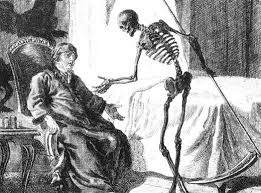
  Usually the OATS postings are accompanied by this image:

  The new one at the top is a painting by Homer Watson, The Death of Elaine. Now you know who the boulevard in Kitchener is named after. The image is from Homer Watson: Life & Work, by Brian Foss. Both the image and the biography are found on the website of the Art Canada Institute.

Saturday, 29 August 2020

More Contrarian News for Old Timers (OATS2)

The News is Not Good

   
   This is the second post in a series related to Old Age Themes. Contrary to everything you read elsewhere, you will learn here that old age is not great. 

Drabble on Dying

   Additional examples in support of my belief that decrepitude is depressing is found in this book by Margaret Drabble. The main character, Fran Stubbs, is a septuagenarian who inspects old age homes so she has a couple of good reasons to be suspicious of the claims about the good things to be found in "Old Crockdom". 

   The quotations below are all from the Canongate Books 2017 edition of The Dark Flood Rises, if you wish to see if I am being honest. By the way, I enjoyed the book as did the reviewer who wrote this:

"Ageing and dying in style...Margaret Drabble’s sharply drawn characters look back on lives lived and forwards to achieving a good death.” Observer.

Pp. 29-30 
“She cannot help but see a lifespan as a journey, indeed as a pilgrimage. This isn’t fashionable these days, but it’s her way of seeing. A life has a destination, an ending, a last saying. She is perplexed and exercised by the way that now, in the twenty-first century, we seem to be inventing innumerable ways of postponing the sense of arrival, the sense of arriving at a proper ending. Her inspections of evolving models or residential care and care homes for the elderly have made her aware of the infinitely clever and complex and inhumane delays and devices we create to avoid and deny death, to avoid fulfilling our destiny and arriving at our destination. And the result, in so many cases, has been that we arrive there not in good spirits, as we say our last farewells and greet the afterlife, but senseless, incontinent, demented and medicated into amnesia, aphasia, indignity. Old fools who didn’t have the courage to have that last whisky and set their bedding on fire with a last cigarette.”

P.44.
“We can all expect to live longer, but it’s recently been claimed that the majority of us can expect to spend the last six years of our prolonged lives suffering from a serious illness, in some form of pain and ill health.”
   Fran found this statistic, true or false, infuriating. Longevity has fucked up our pensions, our work-life balance, our health services, our housing, our happiness. It’s fucked up old age itself.”

Pp.50-1.
“There just aren’t enough younger people around these days to infuse the energy into the elderly. The feeble, as never before in society, in history, are outweighing the hale. The balance is wrong. The shape of the bell curve is a disaster. It’s a dystopian science fiction scenario, a disaster movie.”
The hunter-gatherers wouldn’t have let themselves get into this kind of predicament. They abandoned the elderly, or drowned them, or clubbed them to death, or exposed them on snowy mountainsides. They kept on the move.”

Bonus Information:
   Drabble is the sister of A..S. Byatt the novelist, and the wife of Michael Holroyd, the biographer of Lytton Strachey and Augustus John, among others. If Drabble and Holroyd were interviewed via ZOOM during this pandemic, you would find the following author well represented on their extensive bookshelves.

"We are in the first-floor drawing room of Sir Michael Holroyd's enormous house in north Kensington. Drabble used to have a home in Hampstead and continued to live in it for several years after they married, but when Holroyd was very ill with cancer, in 2013, she finally moved in with him and sold her home, which she says she still misses. They also have a house in Somerset, near Porlock, where she goes to write. The north Kensington house is shabby chic (perhaps more shabby than chic), with some very good paintings — Augustus John, Gwen John and a portrait of Lytton Strachey by Dora Carrington — but hung seemingly at random....
But what really surprised me were the bookshelves — proper built-in, wall-to-wall bookshelves, as you'd expect from two famous authors, but containing not the complete works of Holroyd and Drabble, but the complete works of Lee Child. Lee Child ? I squawked. "Oh yes, haven't you read them? They're totally gripping," Drabble says equably.

"I think I was recommended them by Antonia Fraser, who herself is a detective writer, and I just read my way through the entire lot. I read them on the Kindle and persuaded Michael into them when he was ill, but of course he can't read a Kindle so we had to buy them twice over."

Source: 
"I Absolutely Love the Premier Inn: I Just Felt Completely Free and Happy There," Lynn Barber, The Sunday Times, Dec. 11, 2016.
   For the first post in this series see: Contrarian News For Old Codgers (OATS1)

Post Script:
   Those of you who are depressed by all this, will feel better when you consider that Drabble was born in 1939 and Holroyd in 1935. 


Monday, 3 August 2020

Contrarian News For Old Codgers (OATS1)

The News Is Not Good
   

   I hate to be the bearer of bad news, since there is enough of it, but being contrarian I must counter all the good news about old age that is now being published. "Fake News" must be combatted even when we would like to believe it. That positive propaganda about the elderly would be produced in great quantities was predicted by the prescient Russell Baker over 30 years ago in an article in the New York Times which began like this:

“We will soon be inundated with nonsense about how wonderful it is to be old. The baby-boom generation now becoming long in the tooth, thick in the middle and sparse on the top will demand it.”

  He refers to the land we inhabit as "Old Crockdom".  The article prompted this letter:

Russell Baker suggests that ''we will soon be inundated with nonsense'' as more and more of my fellow boomers get gray and ''long in the tooth'' and endure other calamities of aging too painful for me to repeat. Yet this graying, long-haired, reading-glassed boomer ''kid'' wonders if some benevolent astigmatism isn't keeping Mr. Baker from seeing the bit of dismal nonsense that is already in his hands: our age demanded -- and got -- large-print $20 bills. With laser surgery available to restore eyesight and erase expression lines, does Mr. Baker really expect ''this vast army of demanders'' to go kindly without as it slouches toward Old Crockdom?

   The trend continues into this century and was commented upon in a review of Michael Kinsley's book, Old Age: A Beginner's Guide. The reviewer notes that “Kinsley is intent on being wryly realistic about coping with illness and the terminal prospects ahead.” [He suffers from Parkinson's]. He continues:

“Longevity breeds literature. As people (including writers) live longer thanks to medical advances, we can expect many more books contemplating the vicissitudes of aging, illness and dying. These topics, previously thought uncommercial, not to mention unsexy, have been eloquently explored recently by Diana Athill (“Somewhere Towards the End”), Roger Angell (“This Old Man”) and Christopher Hitchens (“Mortality”), among others. Now that the baby boom generation, defined as those born between 1946 and 1964, “enter life’s last chapter,” Michael Kinsley writes, “there is going to be a tsunami of books about health issues by every boomer journalist who has any, which ultimately will be all of them.” Hoping to scoop the others, he has written “Old Age,” a short, witty “beginner’s guide,” with an appropriate blend of sincerity and opportunism...."
He is equally sardonic on the prospect of losing one’s marbles. “Of the 79 million boomers, 28 million are expected to develop Alzheimer’s or some other form of dementia. . . . That adds up to about 35 percent, or one out of three.” Lest the vain ones think they can better their odds by living right, he adds: “They are jogging every day but will get Alzheimer’s anyway.” 

   Perhaps that is enough bad news for now. 

Sources: 
   The review of the Kinsley book is from "Michael Kinsley’s ‘Old Age: A Beginner’s Guide’, Phillip Lopate NYT, April 18, 2016.
   I did not write down the complete information for the Russell Baker article, but you will find it in the New York Times on Nov. 20, 1988.
   Back when Mr. Baker turned 91, I wrote about it and within that piece you will find an eloquent description of his visit to see his mother in a nursing home. See Russell Baker's Birthday.   He died last year. See: "Russell Baker (Aug.14, 1925 - Jan. 21, 2019).

About OATS1
OATS is my acronym for "Old Age Themes" and I intend for this to be a series about the realities of the aging process. If you really wish to believe that old age is fantastic you might want to avoid any posts containing OATS.

Bonus Information:
   You happy codgers who read this far by mistake, need not read further. If you are going to live well into the three digits you will need all the money you have. If you have a more realistic view and are wondering what to do with all the money you have and the additional bit you just received from the Canadian government, and probably don't deserve, then follow Michael Kinsley's suggestion and give it back. The reviewer obviously does not think that is such a good idea:
   
“He [Kinsley] almost ruins it all with a conclusion recommending that the boomers redeem themselves with a final sacrifice — wiping out the nation’s debt. By having the money they leave behind sufficiently taxed when they die, he argues, they could leave a legacy that parallels the Greatest Generation’s achievement in World War II. “Boomers, those lazy, self-indulgent bums, those drugged-out draft dodgers, those mincing flower-power hippies who morphed into Wall Street greedheads with nothing left of their culture of peace and love except a paisley tie: We may not have the opportunity to save the world like our predecessors did, but we can save the American economy from the mess our predecessors are leaving.” Backtracking a bit from this cockamamie scheme, he nevertheless takes it seriously enough to devote the whole last chapter to it. The real mistake, economic realities aside, is to have abandoned the more charmingly intimate, skeptical persona he had so meticulously built up beforehand, trading it in for a pundit’s robes.”