Showing posts with label marketing. Show all posts

Sunday, 7 September 2025

Back To Books


   To push the post about movies down the page, here is one about books, a frequent subject. The picture below is from a two page advertisement in The New Yorker, Sept. 1&8, 2025. It is typical of many ads these days, in that, for me at least, it is not clear what is being sold. I suppose, however, that more fashionable readers will recognize, right away, that "BRUNELLO CUCINELLI" is not a bookseller, but a purveyor of very expensive apparel. To shop, click here. 


   According to the BC website, the marketing campaign behind the books and other of their ads is that: "The images and words that over the years have accompanied our company’s communication are inspired by our philosophy and the ethical values that are most important to us: the principles of Humanistic Capitalism and Human Sustainability, living in harmony with nature and all its creatures, the preservation and transmission of culture, the commitment to always respect human dignity." There is more. 
  You might think that is mere marketing hype, but Mr. Cucinelli, is actually a lover of books. This is what I found in: "A Day In the Life of Brunello Cucinelli," by Lauren McCarthy, in Harper's BAZAAR, Sept. 27, 2016:

"I like to sit on the couch, surrounded by all of my books. I have 5,000 books in my home, 1,000 of which I feel are close to my heart. They have always shown me the way. Books are my great passion; I could not live without them. If I were to pick a couple out of the 1,000, I would choose Meditations, by Marcus Aurelius. That really showed me the way ahead, as has Plato's Symposium, which is a dialogue on love that was written in the fourth century B.C. in Athens. When my older daughter got married, I gave her my 1,000 favorite books, and I've prepared the same thing for my younger daughter. And now I am preparing 1,000 books for my granddaughter."
  The image above also contains this caption: "Books showed me the way of life." Emperor Hadrian. It does not indicate, however, where such an array of books can be found. 

Sunday, 2 June 2024

Travel Marketing


   This morning I received an email from Travelzoo for which I am grateful because it gave me an excuse to avoid doing anything other than sitting around on a rainy day reading emails. Until now. The email suggested a detour I shouldn't miss -- Northern Virginia -- which is dubbed "Virginia's Cultural Region." Perhaps it is because I grew up on the Eastern Shore of Maryland, which back then was regarded as a rather uncivilized place, that I perceived a slight to those who live in the very large southern part of Virginia, which apparently lacks culture, or at least the culture one associates with the arts and intellectual achievements. I suppose it won't matter because those living in Virginia  far below Fairfax have the closer option of going to North Carolina, which is also better in that it is farther from Washington. 

"Virginia is For Lovers"
   I don't want to pick on the marketing people at Virginia tourism, but I never liked that one which has been around for over 50 years and has earned its own Wikipedia entry and is as well known and liked as the Budweiser Clydesdales. If it is raining where you are, read that entry, where you will learn that the slogan is "iconic" and was inducted into the Madison Avenue Advertising Walk of Fame. Earlier suggestions - "Virginia is for History Lovers," "Virginia is for Mountain Lovers," and "Virginia is for Beach Lovers" - were rejected as being too limiting. More recently the vagueness of "Virginia is For Lovers" proved useful in the promotion of LGBT tourism and the possibilities are endless. 
   
The Bonus:
   We recently chose to stay in Virginia, the more southern part, and it is not without culture. See, Staunton, where you will find the American Shakespeare Center, the Heifetz International Music Institute and the Staunton Music Festival. If it is still raining, read about Russell Baker who was born in Loudon County. 

Saturday, 25 September 2021

Hydration: Going Against the Current


  The cartoon above arrived today, courtesy of the New Yorker.  That fact, plus the fact that it is pouring outside, reminded me of a "FAD" which I have wondered about over a number of years. It has to do with the consumption of water. The need for humans to drink huge amounts of it; people doing little physical work at all in comfortable, climate controlled buildings. I recall going to meetings where the participants looked like they were heading off on a safari. To ascend to the second floor, elevator buttons had to be pushed for those carrying  enough water bottles to get them through the hour.  Had I been as smart then as I now am, I surely could have convinced the folks at "The Bay" to start selling colourful canteens to match the work gear.

   It is lucky for me that the answer to the question, "How Much Water Do You Actually Need?" arrived just prior to that cartoon.  The answer to the question is basically, "Not Much." Here is the recent article, as well as another one which determines that this whole myth began in 1945. You should look at the articles and additional literature since I am not providing all the stuff about electrolytes. Still, you are more likely to be waterlogged than dehydrated.

"How Much Water Do You Actually Need? Here’s how to know when you truly need to hydrate," Christie Aschwanden, New York Times, September 17, 2021. 

If you’ve spent any time on social media or visited an athletic event lately, you’ve surely been bombarded with encouragements to drink more water. Celebrity influencers lug around gallon-sized water bottles as the hot new accessory.... 
The purported benefits of excess water consumption are seemingly endless, from improved memory and mental health to increased energy to better complexion. “Stay hydrated” has become a new version of the old salutation, “Stay well.”...

We’ve all been taught that eight 8-ounce glasses of water per day is the magic number for everyone, but that notion is a myth, said Tamara Hew-Butler, an exercise and sports scientist at Wayne State University.

….Do I have to drink water to stay hydrated?

Not necessarily. From a purely nutritional standpoint, water is a better choice than less healthy options like sugary sodas or fruit juices. But when it comes to hydration, any beverage can add water to your system, Dr. Hew-Butler said.... One popular notion is that drinking beverages with caffeine or alcohol will dehydrate you, but if that’s true, the effect is negligible, Dr. Topf said. A 2016 randomized controlled trial of 72 men, for instance, concluded that the hydrating effects of water, lager, coffee and tea were nearly identical....
You can also get water from what you eat. Fluid-rich foods and meals like fruits, vegetables, soups and sauces all contribute to water intake. Additionally, the chemical process of metabolizing food produces water as a byproduct, which adds to your intake too, Dr. Topf said....
But drinking more water, even when I’m not thirsty, will improve my health, right?No. Of course, people with certain conditions, like kidney stones or the more rare autosomal dominant polycystic kidney disease, may benefit from making an effort to drink a little more water than their thirst would tell them to, Dr. Topf said.
But in reality, most healthy people who blame feeling ill on being dehydrated may actually be feeling off because they’re drinking too much water....

The Source of the Myth

"No, You Do Not Have to Drink 8 Glasses of Water a Day," Aaron Carroll, New York Times, Aug. 24, 2015
If there is one health myth that will not die, it is this: You should drink eight glasses of water a day.
It’s just not true. There is no science behind it.
I was a co-author of a paper back in 2007 in the BMJ on medical myths. The first myth was that people should drink at least eight 8-ounce glasses of water a day. This paper got more media attention (even in The Times) than pretty much any other research I’ve ever done.
It made no difference. When, two years later, we published a book on medical myths that once again debunked the idea that we need eight glasses of water a day, I thought it would persuade people to stop worrying. I was wrong again.

Many people believe that the source of this myth was a 1945 Food and Nutrition Board recommendation that said people need about 2.5 liters of water a day. But they ignored the sentence that followed closely behind. It read, “Most of this quantity is contained in prepared foods.”....
Water is present in fruits and vegetables. It’s in juice, it’s in beer, it’s even in tea and coffee. Before anyone writes me to tell me that coffee is going to dehydrate you, research shows that’s not true either.
Although I recommended water as the best beverage to consume, it’s certainly not your only source of hydration. You don’t have to consume all the water you need through drinks. You also don’t need to worry so much about never feeling thirsty. The human body is finely tuned to signal you to drink long before you are actually dehydrated.
Contrary to many stories you may hear, there’s no real scientific proof that, for otherwise healthy people, drinking extra water has any health benefits. For instance, reviews have failed to find that there’s any evidence that drinking more water keeps skin hydrated and makes it look healthier or wrinkle free. 

A Bonus Source:


This Question and Answer article is from the University of Virginia. Here is a sample. You can read the complete article by clicking on this link:
January 27, 2020 UVA. 

Perhaps, more important than the conflicting scientific evidence is the strong marketing effect for sports beverages and bottled water that began in the 1990s, along with a recommendation from the American College of Sports Medicine in 1996 that focused on higher fluid intakes and drinking as much as tolerated. This recommendation also popularized the claim that you should drink before exercise and stay ahead of dehydration. The marketing efforts have been highly effective and I think are likely the greatest contributor to current behaviors. 

Q. Is there a recommended amount of water that a person should drink on a daily basis? Do how much you weigh and your overall level of physical activity play into it?

A. I am always hesitant to give a specific amount of fluid intake that is “right” for someone.  There are so many variables involved, such as your activity level, fitness, ambient temperature and sweat rate, that blanket recommendations don’t make much sense.

More important, we should recognize that dehydration is not a disease. If you are exercising or doing other daily activities and you are not drinking then, at some point, you get thirsty. Thirst is our bodies’ way of telling you to drink. Thirst has evolved in the animal kingdom over millions of years and is a very effective way to prevent dehydration.

The notion that you should drink to prevent thirst makes no sense. Humans don’t need to be told when and how much to drink (except in rare medical circumstances). Thirst is our innate hydration sensor.

The End. 


Wednesday, 17 February 2021

The Library Business


   I worked in some libraries and in the "About This Blog" section of this blog, promised that I would write about them.  Making such a promise indicates I wouldn't have done well in a career in Marketing. Realizing that libraries are not the most marketable of subjects is the reason I put the alluring photo at the top to lure you in.  Having checked to see why I am blogging, I also learned that I am not good at keeping promises since I promised a post a day and now owe you 1,350, a deficit unlikely to be overcome. I have even fallen behind in posting about libraries, so here goes. If you would rather read about more interesting things, my first post was about SEX and I did write about the DIRTY BOOKS sometimes found in libraries. 

   Although you have become used to not paying for information and are aggrieved when obstructed by the increasing number of firewalls, you should know that information is not free. Libraries have to pay a lot for it.  I thought about this recently when I received a couple of library-related emails from a market research firm offering advice about how do deal with the fact that there is not enough in the budget to purchase all of the material requested by  those who can be very demanding, even though they are not paying directly for the book or magazine they wish to borrow.

The Library Business is Tougher Than You Think - The University Library

  In this case, the emails had to do with the very big problem faced by academic institutions which have to purchase subscriptions to journals with very big price tags covering a wide variety of disciplines, all of which are supremely important, if only to the enraged faculty member who thinks the periodical absolutely essential to the mission of the university. The first market research report has the title - "Survey of Academic & Research Library Plans for Journal Subscription Cancellations".  It noted that: "These subscriptions are the heart of a research library’s scholarly services and often constitute the majority of materials spending, making them particularly vulnerable in an economic downturn." The second report was for those librarians who have to deal with the the serial cancellations: "Survey of Academic & Research Library Plans for Ala Carte Purchases of Scholarly Journal Articles." Among the few things revealed is that the libraries will have to pay thousands of dollars to retrieve the articles required by faculty that were in the journals to which they no longer have subscriptions. To learn more, the librarian will have to pay $129 for the 52 page report.

The Public Ones

    The budgets for public libraries are limited as well and the demands of the tax-paying citizen are likely just as tough to deal with as those of the faculty member. The decisions that need to be made are also tough ones. I thought of this recently when I looked at some recent purchases made by our local public library system (London Public Library) - purchases I am not criticizing. I suppose it is simply a question of supply and demand and definitely not quality. I would think, however, that some of the librarians who had to make these decisions, wish they could have bought more books rather than more copies of some books. Still even when multiple copies of some books were purchased, the demand outstripped the supply and I am sure the complaints outstripped the compliments. 

   The authors of those books which were purchased in large quantities are likely happy, although not as happy as they would be if consumers bought rather than borrowed the books. It is also good to be able to provide books to those who can't afford them, particularly during a pandemic. On the other hand, it might be better to have more good books on the shelves than lots of copies of mediocre ones.  That there are not is not because of the librarian. 

   For those interested, here are some numbers based on searches of the catalogue of the London Public Library. About the billionaire author, James Patterson, who often does not write 'his' books I will only offer a summary.  I just looked at the first fifteen of his titles (there would be many, many more) and there were 462 copies of those fifteen books. It looks like usually about 30 copies of each title are purchased.  Here are some more examples and in all of them you will see that the demand still far exceeds the supply:
Troubled Blood - Robert Galbraith - 78 holds on first copy returned of 47 copies.
One by One - Ruth Ware - 207 holds on first copy returned of 70 copies.
Invisible Girl - Lisa Jewell - 184 holds on first copy returned of 70 copies.
A Song For the Dark Times, Ian Rankin, 54 holds of first copy returned of 38 copies.
Daylight, David Baldacci,  211 holds on first copy returned of 25 copies

  These are just numbers and others could have been chosen. They do indicate that the demand is high for some titles and there is no reason to blame the librarian for ordering them or the reader who has chosen them, unless one wants to tackle the larger issues related to the purpose of the public library.


The Marketing of Library Services - The Public Ones

   Apparently public libraries have been busier than usual because of the pandemic and the few statistics above offer some support for that notion. Although the libraries are closed right now, one can sit at home and order a book from any library in the city and it will be delivered to the one closest to you. I have no doubt that those employed within them have plenty to do.

  That has not prevented them from offering to do more.  In the last email a new "Pick" service was offered as were the services of a staff member who will assist you in finding more books in the category you choose and then deliver them to you.  Also promoted was a new magazine platform and one can use it to get popular magazines that are behind firewalls erected to keep out non-subscribers.


 Other services are offered and apart from ordering films and music one will soon be able to borrow an Ontario Parks pass, the demand for which is likely to be high if spring ever comes.


The Academic Ones

   It is more difficult to determine what is going on in university libraries. The few libraries still remaining at Western are closed, but they were well-positioned for the pandemic. For the past few years the library leaders have been deemphasizing the libraries as places to study or facilities in which to store printed matter, in favour of making the material available online. The digital books and periodicals still have to be purchased and some of the packaged digital products costs thousands of dollars - for annual subscriptions.  That there is not much time left for promotion and marketing is understandable. They are also likely spending a lot of time explaining to a student or faculty member why they can't order a particular book or journal and pointing out that good information is expensive.

Post Script:
   When I did work in libraries, I often took positions that were contrary to those held by colleagues, a tendency which can probably be explained by the facts that what I lacked in proper training was made worse by poor judgement.  And, perhaps even before I grew old, I was old-fashioned about some things. For example, I like libraries that are vast edifices full of books and magazines (see, for example, my series - "Periodical Ramblings.")
   Among public librarians there is now floating, what appears to be a contagious idea, with which I do not agree. I am old fashioned and think that, given that books are expensive, one should have to sign them out of the library. As well, one should have to return them on time and be penalized for not doing so. I addressed the first issue in a very long post which you can read here: The Mystery of the Missing Books.  I understand the sentiment behind the elimination of fines - poor people can't afford them - but I am not convinced eliminating them is a good idea. I will leave it up to you to debate the issue and come up with a better alternative.

Monday, 3 August 2020

Cycling


The Dirty Kanza

   It is still raining. Before I did the last post on Inbreeding, which is also about cycling, I was reading a major U.S. newspaper when the image above popped up. I realize that the sudden appearance of such things is usually related to searches one has done when shopping. But, not having requested a tourist brochure from Kansas, I was curious about events in Emporia and had a look. I suppose now I will be getting more ads from that state.  One does have to acknowledge the Jayhawks for their marketing creativity.

   The adventure has to do with cycling and I guess I should have thought of that since I recently did do some online shopping for a bike. I really can't travel there at this time and you probably can't either, but if you can, here is what is going on in the Gravel City. 

Cycling
Emporia, Kansas is home to an avid cycling community, and the surrounding Flint Hills offer some of the best and most challenging gravel cycling opportunities in the nation. We’re nicknamed Gravel City for a reason! Emporia also hosts the Dirty Kanza, known as the “World’s Premier Gravel Grinder” each year on the Saturday after Memorial Day. More than 2,000 riders come from all over the United States and many foreign countries to race through 200 miles in the beautiful Flint Hills.

Ride the Flint Hills
Whether you’re training for a gravel cycling competition like the Dirty Kanza 200, or you want to take a leisure ride and just enjoy the outdoors, the beautiful Flint Hills of Kansas is the place to be. While traveling through the Flint Hills you can enjoy 40 grass species, native stone fences, hundreds of wildflowers, 150 species of birds, barns, bridges, historic towns, breathtaking views, and quiet serenity.

Monday, 27 May 2019

Satan In Cincinnati

The Devil is in the Details

[Additional proof that stupidity and silliness were around before this century and prior to the invention of the Internet]


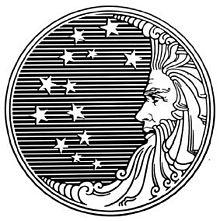
   While waiting in a line recently I noticed the logo above that you will recognize and remembered the other one which you probably don't. For years it was the trademark of the Procter & Gamble Company which is based in Cincinnati. Supposedly it represented the man in the moon and the cluster of stars stood for the 13 colonies. In the 1980s, however, it looked sinister to some, particularly if you stared at the logo in a mirror and saw 666 in the curls of the moon man's beard. This symbol of Satanism and the sign of the Antichrist was found throughout households on products ranging from Pampers to the box of Ivory Snow and clearly there was reason for concern.  The Satanic rumour spread quickly and people were urged to boycott P&G, which apparently many at the competitor Amway thought was a great idea. The switchboard in Cincinnati was receiving 5,000 queries a month about the logo and although P&G fought hard and spent a lot of money, it was ultimately abandoned.

Sources: [for those who think I make stuff up]
   Most of what you will want to know is found in the Wikipedia entry for P&G under "Logo Myth".

"P&G Drops Logo: Cites Satan Rumors: Man in the Moon Loses Job" Sandra Salmans, New York Times, April 25, 1985.
"P&G Trying to Exorcise the Devil Rumor," Pamela Moreland, Los Angeles Times, Jan. 22, 1982.
"Rumor in Minnesota Says 'Moonies' Run Procter & Gamble,"Lawrence Ingrassia, The Wall Street Journal, Mar. 26, 1980.

I could go on. The marketing nightmare lasted into this century: "Amway Loses Appeal in Case With Rival P&G," The Globe and Mail, Oct. 2, 2001.

There are also rumours about the Siren in the Starbucks logo, but I will leave it to you to find them. If you go to Snopes and search for Starbucks you will see they have suffered a number of their own marketing nightmares.

Post Script: (the spot reserved for editorializing)
Peeing in Philly: 
Among the  Starbucks marketing problems there is the one that arose in Philadelphia when two black men were arrested in a Starbucks for doing nothing. They were waiting for a friend and asked to use the bathroom. As an elderly white guy, I would probably not have been arrested, but I don't think they would have let me use the facilities. Perhaps the Starbuck's staff overreacted to the black men's request just as Starbucks overreacted in their response to the bad publicity. They said that they now would treat anyone who walked in as a customer even if they did not buy anything (as if there were already not enough of them sitting there using their laptops.) And, they closed stores for employee training which, one imagines, might have upset many of the employees who were already 'woke' and some of whom would have been 'of colour'. Bad ideas, both of them.
"Mandatory Implicit Bias Training Is a Bad Idea: It's All the Rage. And It's Seriously Counterproductive," Lee Jussim, Psychology Today, Dec. 2, 2017.
  As an old white guy with an aging bladder, I admit I am likely to benefit from all of this and look forward to the elimination everywhere of signs such as this one.
Image result for no public restroom sign