Showing posts with label angling. Show all posts

Wednesday, 23 September 2026

The Great Outdoors - and Libraries

    Those who work in many university libraries are no longer much interested in the gathering and collecting of books, particularly those which are printed. The stacks are being removed and the spaces are now often simply auditoriums to which students can go to watch their screens. I have suggested before that it might be better for the librarians if they collected something - see, for example, "Libraries As Cabinets of Curiosities." It would also likely be better for the students since surely the collection of just about anything would be more interesting than a gathering of students looking at their laptops. Well, maybe not, but at least the librarians would have something to do and the place could legitimately be called a "Library."

Utah State University's Outdoor Recreation Archive

  Utah State's ORA is a good example of an interesting collection and the purpose of it is explained in the mission statement:
  "The mission of the Outdoor Recreation Archive is to document the history of the people, products, and brands of the outdoor industry through unpublished documents, published materials and audio/visual materials. We strive to make those materials widely accessible to the public, including Outdoor Product Design and Development students, academics, enthusiasts, industry (including marketing and design), and others with interest in the history of outdoor gear."

  Catalogues are collected and while students might not be interested in the older ones, they may be attracted to the more recent examples. 


   There are also posters, and periodicals ranging from the Atlantic Coast Kayaker to Washington Trails. 
   Even the books would attract browsers, for example: Life Lived Wild: Adventures at the End of the Map; Mountain Girl: From Barefoot to Boardroom and A Mountaineer's Life. 


  Click on the link provided above to examine the collection. I noticed when looking through the ORA books that they had a copy of Simple Fly Fishing. That reminded me of the collection of "Angling Books" held by the Western Libraries and Harvard, Princeton, the University of Alberta and UBC also have a lot of books about fish and fishing. Perhaps some libraries will continue to be interesting places to visit.

CANCON - A Camping Collection That is not Campy
 
For a Canadian outdoor collection, visit Trent University in Peterborough. In the Trent University Archives they have gathered, since 1968, books about camping, brochures and pamphlets about camps, as well as the magazines and newsletters they produced. If you want to read a digitized version of Canadian Camping, you can, without actually going to Peterborough. 
  Since 1925, Camp Tanamakoon in Algonquin Park has operated a summer camp for girls. It is likely that this book in the Trent collection would be both interesting and useful: 
Camp Tanamakoon, 1925-2024 : a collection of stories from Alumni to celebrate 100 years!

   If libraries are repositories rather than sheds for students, perhaps both the Aesthetes and the Hearties and the Athletes and the Arties will continue to be attracted to them.

Post Script: 
 
If you are interested in literature relating to the outdoors and forests and streams and mountains, check the university library near you. While they may not have a special archival collection, they may be able to offer access to related material. For example, EBSCO offers a digital archive of over 1,000 issues of Outdoor Life Magazine, from 1898 to 2010. (Not all libraries can afford such purchases or repurchases and use may be restricted.)


The Bonus:  
 
One of the largest "outdoor" libraries is available to you over the internet. Visit: Biodiversity Heritage Library  It contains thousands of titles, including: Forest and Stream. The birds above are found in the BHL.


Monday, 3 August 2026

Guy Tudor - Bird Illustrator

 Another Passing Worth Noting
   I did not recognize the name "Guy Tudor", but the headline above his obituary caught my eye and he is worth our attention.


"Guy Tudor, Whose Art Brought Obscure Birds to Life, Dies at 91," Guy Trebay, New York Times, July 25, 2026.
   "Guy Tudor, a self-taught ornithologist, wildlife illustrator and MacArthur fellow whose field guides to birds trained generations of naturalists and citizen scientists about how to distinguish a Rufous-breasted Leaftosser from a Lesser Hornero, died on July 14 in Greenport, N.Y. He was 91.
   Digital avian databases like eBird were far in the future when Mr. Tudor first set about documenting swaths of the avian world in watercolors and gouaches renowned for their delicacy and precision, and for the artist’s singular knack for capturing the quiddities of winged creatures with paint and brush….
   It was Mr. Tudor’s ability “to capture the unique behavior, motion and exact plumage of obscure species” that earned him a MacArthur fellowship in 1990, said Terence Clarke, an artist and naturalist who was a friend of Mr. Tudor’s....
   “People claim Guy was a curmudgeon, but it’s really that he was alarmed — and rightly so — by what is happening to the natural world,” Mr. Gwynne added. “He always used to say, ‘The infidels have invaded my church, and they’ve almost reached the altar.’”

   I wondered if the Western Libraries had any of his books and took a look. Here are some works where you can find Tudor's illustrations:

1.The Birds of South America
2.Field Guide to the Songbirds of South America: The Passerines
3.A Guide to the Birds of Columbia
4.A Guide to the Birds of Venezuela
5.Ornithology
and there is even one about butterflies- 
6.Butterflies of the East Coast : An Observer's Guide.
   "Here is an accessible, informative, and highly illustrated book that offers a fresh view of butterflies in America's Ease Coast states, from the Atlantic seaboard to the Appalachians. In addition to providing a wealth of facts and photos, this book is the first to furnish detailed and up-to-date photo-illustrated information on the host plants favored by particular species. With 234 full-page species accounts and accompanying range maps, plus nearly 900 large-size color photos, it is an essential reference work for field observers, gardeners, educators, and conservation managers - or anyone interested in appreciating the lepidopteran world close at hand."
   Check the catalogue of the Western Libraries. These books are either in the Taylor Library or the storage facility. 
   I have written other posts about bird books that can be found in the Western Libraries. (Once again, check before you go to campus.)
Bird Art - John Gould
Bird Illustrators - Louis Agassiz Fuertes
 
If you are more interested in FISH have a look at Western's ANGLING BOOKS.

The Bonus: Don't Forget About AFAR - The Advanced Facility for Avian Research-


Sunday, 29 October 2023

B.C. Tidbits or Titbits: Take Your Pick


 This blog was abandoned over three weeks ago because I was in British Columbia for part of that time and have been experiencing trip-lag during the rest of it. Now the weather has turned and I am inside, without excuses, although I may have to come up with some if I can't increase my blogging output. 

  B.C. is a marvelous and scenic place and many interesting things happened there while I was in it, but not to me. Unless I include items relating to my children and grandchildren about whom you are not interested. Therefore, I will simply present past material about British Columbia, which is very interesting, but which you will likely not have read. In the academic world, where I was a minor citizen, presenting links to past work is known as "self-citation", and I am guilty of it here, but only for the legitimate reasons hinted at in this definition: "Self-citation occurs in an article when an author references another of their own publications. This can be a legitimate way to reference earlier findings; but self-citations can sometimes be unduly made in an attempt to inflate an individual's citation count."

 
The good news for an increasingly small number of us is that British Columbia is still called "British Columbia." I had suggested that it was likely (and likely still is) to be given a new shiny name or a duller, pre-colonial one. See: "British Columbia or Sasquatchia? There is more good news (for a few) in that, although the elementary school which the grandchildren attend was retrofitted to withstand the coming earthquake, the name was not changed and remains as, "David Livingstone Elementary School." The Vancouver School Board "Archives & Heritage Blog," indicates that it was named for that David Livingstone, but apparently no one has read it or thought much about the name of the school. If they do, there will be a call for a change since it is now known that Livingstone should never have been on the African continent and Stanley should never have bothered looking for him. As an aside, it should be noted that the folks in London are perhaps more progressive than those in Vancouver. The father of the children who go to David Livingston, attended "Ryerson Public School" in London, which has now the very imaginative moniker, "Old North Public School."

  My post about B.C. last year was titled, "The Left Coast", not for political reasons, but because residents there once drove on the left-hand side of the road as a result of the retrograde attitudes of the British colonialists. Another, "Notes From the Coast", describes the "atmospheric rivers', which were flowing again this year.

  The crows which darken the often dark sky over Vancouver were still able to fly against the flow of the atmospheric rivers. See, a "Murder of Crows."

   Although we did not go to the Van Dusen Botanical Gardens and the Yosef Wosk Library located there, you can learn more about the philanthropist, Mr.,Dr.,Dr.,Rabbi Wosk by reading "Unexpected Libraries" or the section about him in, "Olde Posts Addenda."

  We also did not make it up to UBC, but I am sure it is still the "University of Beautiful Cars," since we saw many on the streets close by. I did not notice any 
Cullinans, but I did see a few Rivians. Other evidence of opulence abounds even though one sees many people apparently without homes. Back in the early years of the last century one could get a piece of property in B.C. by subscribing to a magazine, see: "Property in British Columbia."

  We did see the sculptures of Parviz Tanavoli at the Vancouver Art Gallery, but, being white, were made to feel somewhat guilty by another exhibition, "Conceptions of White" which was designed to help "viewers grapple with contemporary configurations of White identity." Those who created the rather crude collage probably aren't aware of "A Black Sculpture" found in a back yard elsewhere in the city. It was based on an event that happened many years ago on the Eastern Shore of Maryland where I grew up and which I would have more reason to feel guilty about if I thought guilt was heritable and that I was accountable for the historical acts of others.

   This has been a useful exercise for me, if not an enjoyable reading experience for you. I often don't properly "tag" posts in MM and had difficulty finding some of these that relate to B.C. There may be more. For example, you will learn about the "British Columbia Food History Network" in my post about "Food History." and about the "Angling Books" found in the "Harry Hawthorn Foundation Collection" at UBC.

The Bonus:
   If you want more old news from British Columbia, be sure to visit "BC Historical Newspapers" where you will find hundreds of digitized newspapers dating from the mid-1850s. Unfortunately there will be fewer of them in the future. Both the Alaska Highway News and the Dawson Creek Mirror recently stopped publishing. See:"As B.C. Communities Lose TheIr Last Newspapers, Hope Emerges For Locally Owned Publications," Kate Partridge, CBC News, Oct. 18, 2023.

Tuesday, 19 September 2023

Fishing For Money


The White Marlin Open

   This is not a fish story. "The White Marlin Open" which has been open and ongoing for 50 years, really is the "World's Largest & Richest Billfish Tournament." The port from which the contestants venture forth is Ocean City, Maryland. When we visited back in early April, there were many signs promoting the tournament which has now been completed. I thought I would take a look and see what happened. While I am looking and you are waiting, you can read or re-read my earlier account about visiting Ocean City in "Blogging While Travelling." 


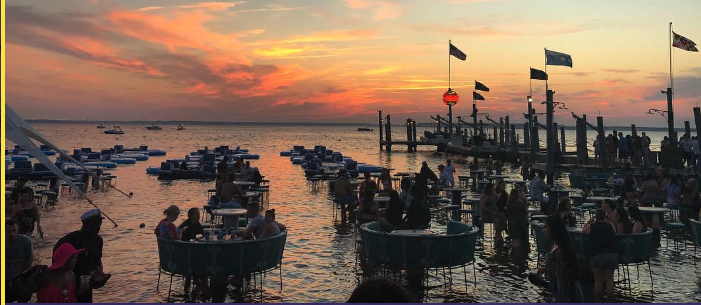
  In that post, I did not focus on the rowdier aspects of the resort since we deliberately went before Memorial Day to enjoy the unoccupied ocean beach. From then until Labour Day, the place is a festive one and I suppose the reporting during that period would be more exciting, but I can assure you that this account about the fishing tournament is likely to be more rewarding than you might think. If you would like a sample of the more raucous side, simply visit the website of SEACRETS. It is a mini-Jamaica on the bay side where there are 15+bars and a distillery. Palm trees are trucked in every spring, but if you don't want to drink under them or in one of the many bars, you can drink right in the Isle of Wright Bay. 

   Rather than focus on the summer-long, "Spring Break" atmosphere and those people who spend a great deal of money drinking, I will now report on the fisherpeople who win large sums of money fishing (and likely drink some while doing so.) Here are some of the results which were taken from the WMO site or other sources. The prize amounts will seem confusing since someone in fourth may have won more than someone in second. That has to do with things like the type of contestant and the fish. The WMO rule book is 12 pp. of small type and that does not include the IFGA rules. As well, there is an additional information sheet where you can find out if it is legal to use a "FLIPPY FLOPPY" or a "STINKY TINKY." And, if you win a large amount, you may be asked to take a polygraph test. 


Blue Marlin
John Ols of Laytonsville, Md., was this year's big money winner, reeling in a 640.5-pound blue marlin aboard the Floor Reel out of Ocean City to take home $6,200,000.

Tuna
First place: Brian Stewart of Shady Side, Md., reeled in a 265-pound tuna aboard the Reel Tight out of Ocean City to take home $1M.
Second place: Chris Mentlik of Street, Md., reeled in a 221.5-pound tuna aboard the Fishlik out of Chincoteage to take home $360,000.
Third place: John Zimmerman of Boynton Beach, Fla., reeled in a 221.5-pound tuna aboard the Game Over out of Ocean City to take home $160,000.
Fourth place: Rusty Shriver of Leonardtown, Md., reeled in a 215-pound tuna aboard the Ro Sham Bo out of Ocean City to take home $1,700,000.


Wahoo
First place: John Harris of Boyertown, Pa., reeled in a 57-pound wahoo aboard the "Shooting Star" out of Indian River to take home $2,000.
Second place: Chad Jackson of Fory Myers, Fla., reeled in a 55-pound wahoo aboard the Captain Deadley out of Ocean City to take home $28,000.
Third place: Matthew Gessler, 15, of Chadds Ford, Pa., reeled in a 46-pound wahoo aboard the Boy's Toy out of Indian River to take home $26,000.


Dolphin
First place: Andrew Spangenberger of New Freedom, Pa., reeled in a 50.5-pound dolphin aboard the Roncito out of Ocean City to take home $25,000.
Second place: Timothy Goodman of Palm Beach, Fla., reeled in a 32-pound dolphin aboard the Aquila out of Beach Haven, N.J., to take home $78,000.
Third place: Will Mcateer of Kent Island, Md., reeled in a 31-pound dolphin aboard the Maverick out of Ocean City to take home $27,000.


White Marlin
  Ironically enough, there were no White Marlin caught at this year's White Marlin Tournament. But, the total payout was around $10.5 MILLION. 

The Bonus:


   Michael Jordan often competes in this tournament and did so again this year. Just about all you need to know is found in this title: "Michael Jordan Took His $8 Million Fishing Boat, Catch 23, to the White Marlin Open Competition: The 84-Foot-Long Vessel, Wrapped in Elephant Print, Costs a Whopping $1 Million Annually to Operate," Neha Tandon Sharma, Luxurylaunches.com, Aug. 14, 2023.
   I followed him farther north to the "Midatlantic Fishing Tournament" and learned this: "In total, the tournament paid out $5.79 million to 35 boat crews. Jordan's boat Catch 23, by the way, took home $462,318 for a 75-pound white marlin, good for third in that category."
The person who chose the name for Jordan's boat also deserves some credit.

Sources:
To prove that this is not just a fish story, here are some sources. 
   The website of "The White Marlin Open" contains all the rules and regulations and you will also find some archival issues of the White Marlin Open magazine. The recent issue has this article: "How OC Became the White Marlin Capital of the World." For another history of the event see: "The White Marlin Open: A History Lesson," Jan Fogt, Marlin Magazine, March 6, 2015.
  For coverage of this year's WMO see: "White Marlin Open 2023 Final Leaderboard: A $6.2M Blue Marlin is Big Winner," Keith Demko, Delmarva Now, August 12, 2023.
   The "Midatlantic Tournament" numbers were found in: "Sports Outdoors: Pipe Dreamer Wins $1.18M in MidAtlantic With Blue Marlin Catch," Dan Radel, Asbury Park Press, August 30, 2023.

  The more sensitive readers of MM may be disappointed that I did not mention the more serious subjects related to fishing, namely overfishing and endangered species. The issue of "conservation" is raised on both the website of the WMO and in the article about the history of the event. Many of the fish caught are released, although admittedly the process is not painless.  In short, industrial fishing is more problematic than sports fishing and those engaged in the sport are often ardent protectors of the things they wish to fish or hunt. Sushi eaters should be reluctant to throw stones, and appreciate the irony.

Some Perspective: 
   Perspective is somewhat difficult to apply when you compare fishing to putting or angling to golfing, but in the most recent PGA Fortinet Championship which was held on a golf course, Sahith Theegala won and received $1.512 million. If you weren't reading carefully the bit above, you may not have noticed that the winner of the WMO received $6,200,000 and another guy got $1,700,00 for catching a tuna.

Sunday, 3 November 2019

ANGLING BOOKS


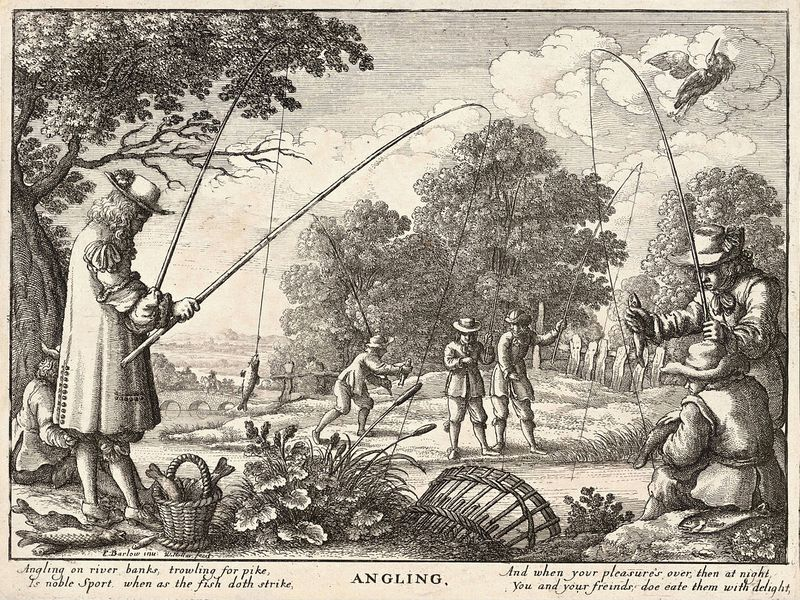
      I suppose the title 'Angling Books' is slightly more alluring than 'Books About Fishing', and I am sure that the number of readers likely to be lured by either title is rather small. Given the 'long tail' principle, however, perhaps this post will be snagged by someone casting from way out there who is interested in the subject. Especially if I bait the post with words like 'piscatorial', 'ichthyology', 'salmon', 'whales', 'sharks' and throw in some additional chum by mentioning the movie 'Jaws'.
     Books about angling are often beautiful and very valuable and generally are pursued  more avidly by book collectors than by those who actually fish. Sometimes such collections are donated to libraries, much to the chagrin of the librarians and administrators of libraries who would rather have the money than the information such books contain. Just a few years ago, a collection valued at almost $2 million was given to Washington State University (see: "Classic Angling Books Featured in 1.8 Million Gift to WSU," Rich Landers, The Spokesman-Review, August 31, 2011).
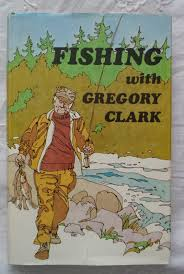
     I will mention some major collections below which are held by university libraries and direct you to some information about them. My main purpose, however, is to introduce you to a collection about which not much is known. It is The Gregory Clark Piscatorial Collection located in the Archives and Special Collections at Western University.


Selected Piscatorial Collections

          
     Since this post is about the collection held at Western University and since the collections elsewhere are well-described this will be brief.

Harvard University
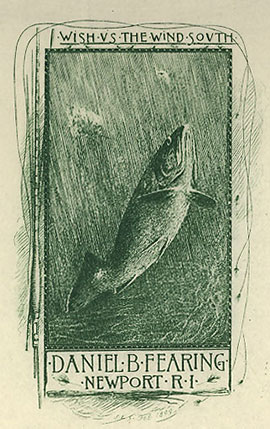
     Harvard has a whale of a collection and it even has a huge collection of bookplates about angling. The basis for the collection was a donation by Daniel B. Fearing back in 1918. It looks as though the collection has been dispersed and much is probably in storage. See: "Fearing Library Given to Harvard," Christian Science Monitor, July 19, 1918; "Harvard's 21, 800 Books About Fishing," Ronald Kriss, Boston Globe, Mar. 28, 1954 and "New Collection for Widener: D.B. Fearing '82 Willed His Entire Library to University, Harvard Crimson, Sept. 24, 1918. The Fearing Bookplates are found in the Houghton Library Bookplate Collection.

Princeton University
     For information about how Princeton became a "repository for one of the finest angling collections in the world" see: "Angling Books", J.I. Merritt, The Princeton University Library Chronicle, Vol.41, No.1, Autumn, 1979, p.30. (Available via JSTOR).

   In Canada, there are good collections at the University of Alberta and the University of British Columbia.

The University of Alberta 
“The Dancik Collection consists of more than 3,000 books and an equal number of ephemeral publications. Many are titles of extreme rarity, often illustrated with woodcuts, copper or steel engravings, chromolithographs, and photo engravings. Beyond documenting the history and practice of angling, the collection is a significant research resource for freshwater biologists, limnologists, and ichthyologists, and for the study of ecology and wildlife resource management.”
The collection was featured in an exhibition “A Contemplative Angler”.
A story about the award-winning catalogue for the exhibition is found in the University of Alberta publication Folio March 1, 2019 “Fish Stories: Rare Collection of Angling Lore Featured in Popular U of A Exhibit”.

The University of British Columbia
"The Library of the University of British Columbia has an excellent collection of books on angling and fly-fishing, known as the Harry Hawthorn Collection. At present it totals more than 2200 books, including many rare and valuable items. This Collection came about as the result of a fishing holiday in 1953 by eight UBC professors and Roderick Haig-Brown at Upper Campbell Lake."
See also: A Brief History of the Harry Hawthorn Foundation. A bibliography relating to this collection is found among the books in the Clark Collection described below. See the entry for: The Contemplative Man's Recreation....


   For additional angling collections see:  Backcasts: A Global History of Fly Fishing and Conservation, edited by Samuel Snyder, Bryon Borgelt, Elizabeth Tobey.
See the: "Appendix: Research Resources: A List of Libraries, Museums, and Collections Covering Sporting History, Especially Fly Fishing”. p.317. Additional details are available at the publisher, the University of Chicago Press.


The Gregory Clark Piscatorial Collection


   This collection of angling books is held in the Archives and Special Collections at Western University. At this time (c2019) there does not appear to be any information about the Gregory Collection provided by the Western Libraries (or I could not find any). My purpose here is to provide some. I have assembled the information and am alone responsible for it.

     For additional details, I have attached the following pdf file: The Gregory Clark Piscatorial Collection. (50+pp)