 Let me be clear, this post is for readers and lovers of books, not for you prurient practitioners of exotic sexual practices searching for additional advice. Nor is it another cheap trick to attract readers, which admittedly my first post about “Sex” was. That didn’t work, but there is some consolation in knowing that I do not have to worry about inadvertently offending a member of some movement by broaching a subject such as this one.
I came to this subject honestly by stumbling upon a review of a new book, which is a supplement to a thick older one, about THE PRIVATE CASE. The contents of these books are about the contents contained in The Private Case, which actually consists of more than one case or cabinet. Located in the Reading Room of the British Museum Library, The Private Case held, what was believed to be, a huge collection of erotica and other books and pamphlets which needed to be locked and hidden behind cabinet doors. I wrote, ‘believed to be’, because such material also was not suitable to be listed in the Library’s General Catalogue. If you were a scholar researching a variety of touchy historical subjects, or simply someone who wanted to see some dirty pictures or books, you had to submit a written request. If the material was found, it had to be read under supervision at what was referred to as “the desk of shame” or “wanker’s desk.”
By the 1960s, hiding such a collection in the Library was rather ludicrous, given that one could read (or simply look at) all kinds of naughty material outside of it. There were demands made to make the collection more accessible and to catalogue it so researchers knew what the Library held. One of the people making such demands was Peter Fryer and his book is where you should start your search. The title and the table of contents are here:
Private Case-Public Scandal, Peter Fryer
“A Short History of the Private Case”
“Sexology, Dictionaries and Books about Books”
“Erotic Classics and Autobiographies”
“Hard Core Pornography”
“Homosexual and Sado-masochistic Literature”
“Secrets of the S.S." [These are books that have been suppressed for a variety of reasons: political, religious, obscenity, illegal, libellous, military secrets, blasphemous; here is one example: The Truth About the Civilisation in Congoland.]
If you wish to graduate to a much higher level you can read this analysis of what was contained in the collection, which has been made more accessible and was catalogued:
The Private Case: An Annotated Bibliography of the Private Case Erotica Collection in the British (Museum) Library, compiled by Patrick J. Kearney. (1981). If you desire a handy list of salacious items that were suppressed in the past, consult this book (be warned, there are hundreds of entries in languages other than English.) For most of you, reading the very interesting seventy page introduction by Gershon Legman will be enough.
It is this book that has now been updated and about which I read a review. The book: The Private Case: A Supplement. Notes towards a Bibliography of the Books that used to be in the Private Case of the British (Museum) Library. Comp. by Patrick J. Kearney and Neil J. Crawford. Berkeley, CA: Ian Jackson. 2016. The review concludes: “Kearney’s bibliography provides an invaluable opportunity to consider the ways in which that boundary [ for obscenity] has been constructed, reinforced and undermined in British culture. Both as an aid to literary critics and historiographers and as a bibliographic curio in its own right, it is strongly recommended.” (Lloyd Houston, TLS, Sept. 15, 2017, p.30.)
I am pleased to report that the library in which I used to work (and roam) has a copy of the Fryer book and the first Kearney one, if not the supplement. I recall, also, that when ‘bad’ books were discovered, they were kept and protected. Librarians have been on the right side in this battle. When books are locked away it is usually to protect the books from the readers. When censors ban them it is to protect the readers from the books. There is also now within that library, a Resource Centre (the 'Pride Library'), that contains a considerable collection that would have been off limits not that long ago.
Sources:
Western Library also has a book which contains this essay: “The Private Case: A History,” by Paul J. Cross in The Library of the British Museum: Retrospective Essays on the Department of Printed Books, ed. By P.R. Harris.
If you want examples of filthy books in the Western Libraries, here are two. Don’t ask me how I know: Les onze mille verges or the Amorous Adventures of Prince Mony Vibescu by Apollonaire and Verlaine’s, Femmes/Hombres: Women/Men. According to a review of the Apollonaire work, “The rutting is non-stop.”
The website at the British Library provides a good description of The Private Case.
You can purchase an electronic version of The Private Case and several thousand other erotic items to view in the comfort of your own home. Gale International has digitized them and they are available in the collection: The Archives of Sexuality & Gender. You can read about it at this Gale Blog. The Western Libraries has purchased Pt.1, LGBTQ History and Culture Since 1940. That Pt.3, Sex and Sexuality, Sixteenth to Twentieth Centuries, has not been acquired is probably because of the large price attached to such a collection. Content from The Private Case would be found in this part.
For erotica closer to home, the New York Public Library has a huge collection. For details see: "Lifting the Veil on the New York Public Library's Erotica Collection," Elain Sciolino, NYT, Jan. 1, 2016. As one might expect, France's National Library has a large amount which is referred to as L'Enfer. Ms Sciolino has written about that as well: "A Library Exhibition Not For the Children's Room," NYT, Jan. 16, 2008.
Lest you think that your hard earned tax dollars or donations are being used to purchase porn, that is not the case. National libraries typically try to collect the documents produced and are expected to receive them, while other collections often receive such material as bequests.
Lest you think that your hard earned tax dollars or donations are being used to purchase porn, that is not the case. National libraries typically try to collect the documents produced and are expected to receive them, while other collections often receive such material as bequests.
Post Script:
 The usual bonus stuff.
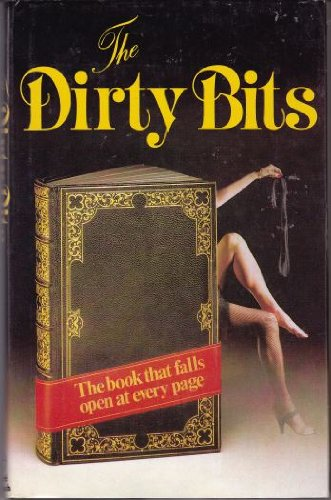
If you are too lazy to read a whole book and want to go directly to the "Dirty Bits," buy the book with that title which finds them for you. It was co-authored by Lesley Cunliffe, apparently a stunning flower-child, who married Marcus Cunliffe, the English-born author of The Literature of the United States, who was 23 years her senior and then Professor of American Studies at Sussex University. Erotica is now tolerated, but such a relationship would not be. For the very interesting obituary see: "Leslie Cunliffe" by Mary Killen in the Independent, April 2, 1997.
Guillaume Apollinaire’s real name is: Wilhelm Albert Włodzimierz Apolinary Kostrowicki. Had I known that at the time I would have included it in my post about Very Long Names.