Showing posts with label Rivers. Show all posts

Tuesday, 24 September 2024

Olde Posts Addenda (3)

     More "Breaking News" to add to the older news items already provided in Mulcahy's Miscellany. 

New Dead Fish
 
Back in June 2023, I offered you many "Dead Fish Headlines" (too many) which I suggested were, "More Signs of the Times." I will offer only one more now, but it is a big one:
"Iowa Fertilizer Spill Kills Nearly All Fish Across 60-Mile Stretch of Rivers: Officials in Iowa and Missouri estimated that nearly 800,000 fish had died in waters that flow into the Missouri River," By Mitch Smith and Catrin Einhorn, NYT, March 29, 2024.
   “I refer to this one as ‘the big one,’” said the official, Matt Combes, an ecological health unit science supervisor for the Missouri Department of Conservation. He added: “Calling something a near-total fish kill for 60 miles of a river is astounding and disheartening.” The latest die-off started, Iowa officials said, when a valve was left open over a weekend on a storage tank at NEW Cooperative, an agricultural business in Red Oak, in southwestern Iowa. The Iowa Department of Natural Resources, which learned of the spill on March 11, said this week that 265,000 gallons of liquid nitrogen fertilizer spilled into a drainage ditch and into the East Nishnabotna River, which flows into the Nishnabotna River and then the Missouri River."

What Were the Odds?
   
That a lot of people would lose a lot of money when gambling was legalized, wagering made easy over the Internet and actively promoted on your TV. People here in Ontario seem more worried about the selling of six-packs in the 7-Eleven which bothers me not at all. I think, however, that rather than betting you start investing in gambling treatment centres.
  In MM, this subject was discussed in "On Betting" and raised again under the heading "Don't Bet On It" in "Beyond the Palewall (8). Now, in support of my suspicion that things are not going to go well see: "Sport's Betting is Bad for America's Financial Health: New Data Shows It",(sic), By the Editorial Board, The Washington Post, Sept. 14, 2024. Here is the first paragraph:

"The new National Football League season will see plenty of records set on the field — and it’s expected to hit new heights off the field, too: specifically, the American Gaming Association projects that legal wagers on games will reach $35 billion, a 30 percent increase over last season. Most of that betting will involve online betting apps. In part, the growth reflects the fact that three new states — Maine, North Carolina and Vermont — have legalized legal sports betting, raising the total to 38 states and the District. And partly the projected growth reflects new incentives sportsbooks are offering gamblers: in-app live-streaming of games, platform upgrades to allow faster in-play betting, digital wallets and the ability to make multiple bets simultaneously. X is awash with sites offering tips and techniques for increasing the odds."
Here's more:
"In short, legal sports gambling is creating a pathway to financial distress for vulnerable individuals. States that legalized sports betting were often instructed by their legislatures to set aside some funding from the tax receipts to deal with problem gambling and addiction. But reporting and research show a huge disparity between how much states tax the betting industry....
Legal sports gamblers have had their fun for half a decade now — and some have paid a high price. Congress should draw on that experience, and the new data, to design guardrails."

Censorship On Campuses 70 Years Ago
   
I gather that if I was to wander up to the campus close by, that I would have to be careful about what I might say, unless it sounded very much like what everybody else is saying. In a post about "Academic Freedom & Free Speech" I indicated I was in favour of both.
   On another occasion, I wrote about an episode at the University of Western Ontario way back in 1953 when the students heckled and interrupted a speech by (are you ready), the Very Reverend, Dr. Hewlett Johnson, Dean of Canterbury. Back then the students didn't like the "progressive" views of the "Red Dean." (See, "Free Speech & Ontario Universities.")
    I thought of this because I just read about a Republican defending free speech during that same year in the United States. Things have changed. Now, both the conservatives and the progressives want to restrict the expression of ideas with which they do not agree.

"In 1953, President Dwight D. Eisenhower — a Republican — told graduating students at Dartmouth College, “Don’t join the book burners.” 
Referring to Americans drawn to communism, Eisenhower added, “Even if they think ideas that are contrary to ours, their right to say them, their right to record them, and their right to have them at places where they are accessible to others is unquestioned, or it isn’t America.”

   The above was written in relation to "Banned Books Week" in the United States which is about the promotion of banned books rather than the burning of them. It was found here: 
"Banned Books Week Begins on Sunday,  With draconian laws jackbooting across the country to suppress books, intimidate librarians and muzzle teachers, this annual commemoration of our freedom to read has never felt more vital. (A Florida school district banned a book about banned books.)"
From: "The Book Club Newsletter," Ron Charles, The Washington Post, Sept. 20, 2024.
For more olde posts that are related to free speech:
"Cowards in Coventry"
"S.W.I.N.E."  "Students Wildly Indignant About Nearly Everything"

Thursday, 28 September 2023

Water Woes


   Although I would prefer to avoid the awful things now occurring, a recent article compels me to issue this alert: "Our drinking water may soon disappear!"

   I read the article which is the first one listed above and both the graphic and the article are from the New York Times. It was written by a team and the data supporting it were substantial. The other articles pictured above constitute a series and there may be more. If you can access them, do so. "America Is Using Up Its Groundwater Like There's No Tomorrow," is in the Aug. 28 issue. The "Big Farms" one is from Sept.3, the "Colorado City" one from Sept.5 and the "Monster Fracks" from Sept.25.

   I will offer my simple summary of the core article by suggesting that we are all living in Arizona now and that assertion is based on a lot of data. Here are some extracts from the article:

   "Many of the aquifers that supply 90 percent of the nation’s water systems, and which have transformed vast stretches of America into some of the world’s most bountiful farmland, are being severely depleted. These declines are threatening irreversible harm to the American economy and society as a whole. 

   The New York Times conducted a months-long examination of groundwater depletion, interviewing more than 100 experts, traveling the country and creating a comprehensive database using millions of readings from monitoring sites. The investigation reveals how America’s life-giving resource is being exhausted in much of the country, and in many cases it won’t come back. Huge industrial farms and sprawling cities are draining aquifers that could take centuries or millenniums to replenish themselves if they recover at all.

“There is no way to get that back,” Don Cline, the associate director for water resources at the United States Geological Survey, said of disappearing groundwater. “There’s almost no way to convey how important it is.”

   This analysis is based on tens of thousands of groundwater monitoring wells that dot the nation. The Times collected data for these wells, which are widely scattered and often poorly tracked, from dozens of federal, state and local jurisdictions....

   One of the biggest obstacles is that the depletion of this unseen yet essential natural resource is barely regulated. The federal government plays almost no role, and individual states have implemented a dizzying array of often weak rules....

   The federal government sets rules on groundwater, but not its overuse or depletion, although experts say Congress has the constitutional authority to do so. Overall, federal responsibility for water is scattered among a half-dozen different agencies....

   America’s approach to regulating water is “a total mess,” said Upmanu Lall, director of the Columbia Water Center at Columbia University.

   “From an objective standpoint, this is a crisis,” said Warigia Bowman, a law professor and water expert at the University of Tulsa. “There will be parts of the U.S. that run out of drinking water.”

   In the very near future, thirsty people will be found throughout the country. Minnesota, the "Land of 10,000 Lakes" is not excluded, nor is Maryland, the state in which I grew up. Charles County, "which contains fast-growing suburbs of Washington, has used most of its groundwater for homes and agriculture. And, it isn't coming back anytime soon."

Canadian Content

   Canada is not mentioned, but it is not difficult to find articles that indicate concerns about this commodity in our country. Tofino, one of the wettest places I have been, has nearly a dry reservoir and has issued water restrictions and this headline indicates lack of water is a problem elsewhere: "Gulf Islands Water Woes an Ominous Omen For the Rest of B.C." Also in that province, there are major issues between the U.S. and Canada involving the Columbia River and the water in it and it is not too difficult to imagine that there will soon be increased demands in the U.S. from some of the Great Lakes, one of which supplies water to London. Let's hope that Line 5 does not burst under the Straits of Mackinac.

Post Script:
 
The water-related news continues to be bad, which is one reason I decided to bring up an issue we would rather not think about. When you do think about it, you realize that it is rather amazing that we plop down housing developments and assume that water will magically come up to supply the residents. Among the news stories one learns that the folks living in New Orleans soon may run out of drinking water, although they generally have to worry about having too much water, and salt water intrusion is a problem in many coastal areas. (see, for example, "A Saltwater Wedge Climbing the Mississippi River Threatens Drinking Water: New Orleans Mayor Latoya Cantrell Signed an Emergency Declaration Friday as Saltwater Threatens the City," Brady Dennis, Washington Post, Sept. 22, 2023.)


Even the Panama Canal is 'Thirsty.'
   The picture above shows ships waiting to enter the Panama Canal. Who knew that it takes 50 million gallons of fresh water from the Gatun Lake to move one ship through the canal and that daily the Panama Canal uses three times as much water as all of New York city? If you are still waiting for that fridge to come from the Far East, it may be delayed because of a lack of water. (The NASA photograph is found in this article where you can learn more about another cause for supply chain interruptions: "Panama Canal Traffic Backup.")
   

Sunday, 26 June 2022

A Bridge Over Troubled Water

The Victoria Bridge (On Ridout Street)


   We live between two important streets that serve as passages for those going north or south by car here in London. A bottleneck on one of them (Wharncliffe Road) is going to be improved soon, but the improvements have been postponed for a bit while a new bridge is being constructed on the other (Ridout Street.) In early spring, construction began around the bridge on Ridout and the project seemed to proceed rapidly. Then one day, there was silence and the workers disappeared. 


   Although I have lamented the loss of local newspapers, I confess to not subscribing to the one in London since it is no longer a ‘local’ publication. If there was news reported about the stalled project, I missed it.  The rumour was that the city officials had failed to get some sort of permit and it likely spread quickly because of the irony involved, if it was true.


The temporary pedestrian bridge on pause

   The work has been stopped because the Department of Fisheries and Oceans fears that the habitat of two at-risk species (a minnow and a mussel) may be damaged. It is not clear if this problem should have been anticipated and by whom. It is clear that the Thames River is not in good shape, so it is best that the concerns are addressed. The bridge was supposed to be erected by May 2023, but it is unlikely that it will be. Here are some sources to go along with the rumours you may have heard.


Sources:

   This one explains what happened: “Tiny, Rare Fish and Mollusks Halt $23-million City Bridge Project: Federal Fisheries Officials Want the City to Come Up With a Better Way Forward”,  Colin Butler · CBC News · Posted: Jun 22, 2022.

“The presence of rare species of fish and mollusks living in the Thames River near the heart of the city has temporarily halted a $23-million bridge project. 

Construction on Victoria Bridge, more commonly known as the Ridout Street bridge, was supposed to start in the spring, but work has been temporarily halted over concerns heavy construction could disrupt the habitat of at-risk species of fish and mussels living in the water.” 

The presence of rare species of fish and mollusks living in the Thames River near the heart of the city has temporarily halted a $23-million bridge project. 


   Here is what was supposed to happen: “Here's What London's New Victoria Bridge Will Look Like: Work Will Close Ridout Street South of Horton to Vehicles for More Than a Year,” Andrew Lupton · CBC News · Posted: Feb 04, 2022 

“After almost 100 years spent carrying Ridout Street traffic over the Thames River south of Horton Street, the Victoria bridge replacement is set to begin this spring. 


The Upper Thames River Conservation Authority provides a lot of good information about the Thames. See for example these booklets on "Thames Topics." The Thames is a Canadian Heritage River.

Post Script:  
   There was some collateral damage. The tennis courts in nearby Thames Park are serving as the staging area (they are to be improved after the construction of the bridge, but are unusable for this summer.) Also, the Thames pool will remain closed because of an unrelated problem. The homeless people residing along the river will no longer be able brag that they have both a pool and tennis courts in their backyard.

The Bonus:
   
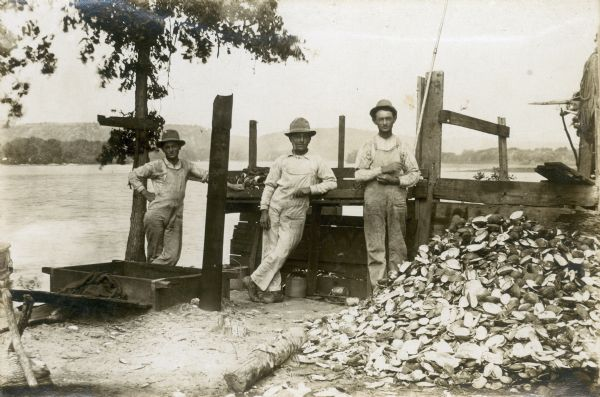
Those of you who think a silver minnow should not swim in the way of your commute,  might benefit from reading this. Once our rivers actually contained fish, mussels and clams and even supplied pearls for a robust button industry. See: Mussels and Other Molluscs. 

Wednesday, 18 December 2019

Mussels and Other Molluscs

[One in a River Series which discusses rivers as they were, not as they now are.]

   One of the advantages of personal blogging is that one doesn't have to spend any time creating a captivating title to satisfy the people in the marketing department. The subject of mussels (and pearls if you are already bored) concerns us today because I just read this article: "Freshwater Mussels are Dying at an Alarming Rate, and Scientists Want to Know Why," Travis Loller, USA Today, Dec. 17, 2019. The report focuses on the Clinch River in Tennessee, but the problem is a global one. “Over the past century, mussel populations everywhere have declined steeply due to pollution, habitat loss and climate change, yet the current decline looks to be something different. Richard and a team of scientists suspect an infectious disease.”

   A few years ago I looked into this subject because of something else I read and I compiled some information about it. Of course, I never did anything with the material which gathered dust while nestled in a cloud somewhere. It was still there so I will provide some of it here because I will never get around to writing about it. The basic points I would have made are that our rivers used to be clean and full of fish and molluscs. Towns along them thrived by harvesting mussels and making buttons and there were even pearl divers.
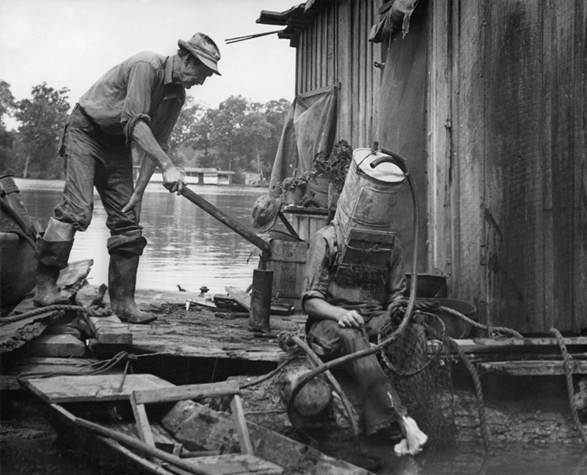

Caption:PEARL STRIVERS
A car's old gas tank and some garden hose compose a homemade helmet for this Mississippi River pearl diver. Notes with the photo claim the apparatus enabled the man to "go down 70 feet, and remain down one and a half hours." He would have needed that much time to find anything. When this photo was taken in 1938, the Mississippi's population of pearly mussels had already been largely depleted for use by button factories. For them, the mussels' shells proved more valuable than the gem sometimes inside. One bivalve could yield 24 buttons punched from its halves—and some six billion buttons were produced in the U.S. in 1916 alone. Though most pearl-button factories did not survive the 1940s rage for plastic buttons (not to mention zippers), the end of the harvests did not bring the Mississippi's mussels numbers back. Dozens of its species are now classified as endangered or threatened. Some might say they're as rare as pearls.— Margaret G. Zackowitz

   We are now far more likely to associate rivers with sewage than with sustenance. That was not the case in 1911 when this book was written: Highways and Byways of the Great Lakes, by Clifton Johnson. It was the book that led me to do a little research from which you will now benefit. The passage the follows relates to the Rock River around Dixon, Illinois. It is the river, by the way, that provided employment for Ronald Reagan as a lifeguard back when one could actually swim in them. Here is Johnson's description of clamming and 'pearlin'.

“But far more important commercially than the fish are the clams that inhabit the river. The clamming season, which lasts from April 1st to October 1st, had recently closed and every little while I observed a great heap of shells on the bank. I learned something of the industry at the hotel in the town where I stopped that night. "If a man wants to go clamming," said the landlord, "he fixes up a lot of four-pronged wire hooks, fastens 'em with short strings to sticks about a dozen feet long — perhaps as many as two hundred hooks to each stick. He goes out in a little flat-bottomed boat, drags down stream, and pulls up his stick and puts it on a rack at the side of the boat. Then he takes off the clams that have clinched onto the hooks and throws 'em into the boat. On the shore he has a tank under which he builds a fire and heats water to put the clams into and make 'em open. As he takes the clams out he feels for pearls, throws the shells in a heap, and saves the clams to give to farmers to feed their hogs. I tell the farmers who use that sort of feed to fat their hogs that I don't want to buy no pork off 'em, but probably it's all right. They feed the hogs corn before they market 'em. 

"The clam-opening job is rather odorous, and pearlin' don't attract very high grade labor. The pearl gatherers are mostly kind of shiftless — too lazy to do anything else, and they only work when they feel like it; but pearl hunting is profitable. A man can get shells enough in a day to net him four dollars, and there's the chance to make a big thing in pearls besides. One fellow in this town got a pearl that sold for eighteen hundred dollars. I've seen 'em clear as glass, and so round that when you put 'em down you could hardly keep 'em from rollin'. One was found, in another part of the state, this year, that was pink in tint and weighed fifty grains and sold for five thousand dollars. I wouldn't give five dollars for all there are in this river for my own use." When I was a boy I used to go pearlin' in a New England river near my home, and I had a whole teacup full of pearls at one time. I took 'em to a jeweler's store, and he said they wasn't any good. I couldn't get a nickel for 'em." 

(pp.288-289).

   Among the many sources (some of which will be provided below) here are some Canadian examples:
“The lumbermen, while sailing down the Canadian rivers on their rafts, collect Unios [a genus of freshwater mussels] for food, by fastening bushes to the rear of the raft, so that when they pass through the mussel shoals, where the rivers are shallow, the bushes touch, the Unios close on the leaves and thin branches, holding to them securely and at intervals the bushes are taken out and the Unios removed. Many brooks and rivers, among them the Olentangy, at Delaware, Ohio, and a number of streams near Columbus, have been completely raked and scraped, often in a reckless manner, and consequently with little result. The general method of collecting shells was for a number of boys and men to wade into the mill-race or into the river to their necks, feeling for the sharp ends of the Unio, which always project. When one was discovered in this manner, the finder would either dive after it or lift it with his feet. It was the custom at that time to open the shells in the water, and once during the process a pearl the size of a pigeon's egg is said to have been dropped into the water and never recovered.”p. 230.

   This happened along the Humber around Toronto as my annotation to this article will show:
"Attention to Toothsome Clam may Become National Sport." The Globe, Sep 20, 1923, 
This one is Canadian and relates to the Old Mill on the Humber. A caterer from Rochester introduced Canadians to the ‘clam-bake’. “It was claimed that this affair was the first “official” clam-bake ever held in Canada, and those concerned, without exception, did the repast justice worthy of the occasion.” It was obviously quite the affair, held in the late afternoon with dancing and a live orchestra.  Clams were served along with with salmon, chicken, lobster and corn on the cob. There is no mention of whether the clams came from the Humber or were brought from NY.  “It was unanimously agreed when the remains were cleared away that, if the custom has only been introduced into Canada, it deserves immediate adoption, eternal preservation, and inclusion in the category of national sports.”

Sources:

   I should be Christmas shopping so I will stop here and provide you with the sources. Towns along major rivers often offer resources- see especially Muscatine ("The Pearl of the Mississippi"), Dubuque and Prairie du Chien. Although I don't usually provide links, I will do so here since they seem to have existed for a while and I will also provide additional information to help you find them. Some article references are also included. 
 

Harvesting the River (Illinois)
Under harvesting, follow the link to the "History of the Pearl Button Business in Meredosia, IL.
Great River - (The Mississippi River)
See especially, "The Clam Lady of America's Rivers: Marian Havlik," which should be here:
http://www.greatriver.com/clam.htm
"Back in the late 1960s Mrs Havlik was attempting to help her daughter with a science project and soon discovered how little (or difficult to find) was information about fresh water mussels. She goes on to become an authority on the subject and works to conserve what remains. The “Clam Lady” can be classified as a Malacalogist. She founded Malacological Consultants, in 1977 and a company with that name is found in La Crosse, WI"- I did not check to see if she is still associated with the company.
This should work for information about Muscatine:http://www.greatriver.com/pearls.htm
"Pearl Clamming and Pearl Button Clamming on the upper Mississippi River", Kari Pearls
For Dubuque: Encyclopedia of Dubuque.
Wisconsin: A Brief History of the Clamming and Pearling Industry in Prairie Du Chien, Eric F. Temte
And even in South Dakota - a very good article: "Clams Once Thrived in the Clean, Steady Waters of the James River," John Andrews, South Dakota Magazine, May/June, 2009.

Selected Newspaper Articles About Clamming - c1900-1980.
(from oldest to latest with some annotations)

"Big Pearl in a Clam Shell," Chicago Daily Tribune. Sep 18, 1900,
This is an example of how lucrative clamming could be . This report is from Winona, Minn and it is reported that a large pearl of “exceptional lustre” was estimated to be worth between $1500 and $2000. The pearl was supposedly the largest seen “in this part of the river”

"American Pearl Fishing." Los Angeles Times, Oct 15, 1900,
A basic description of the pearl fishery on the Mississippi.

"Our Finest Pearl." Los Angeles Times, Jun 28, 1901,
Good piece about a $50,000 pearl. The subtitle is: “Jewel Discovered in a Mississippi River Clam by a Poor Clam Digger Valued at $50,000”. The clam was caught in May 21 in Prairie du Chien and sold to a dealer for $17,500. It was re-sold and is now being offered for the amount above. A description is offered in the final paragraph: “Connoisseurs who have examined the pearl since it was brought to Chicago pronounce it the  most wonderful ever found in America. They also say it is equaled by few in the world. Its weight is 103 grains,while the average pearl weighs from 2 to 5 grains. It is almost a perfect pear shape, measuring over three-quarters of an inch in length and five-eighths of an inch. It is of a pink hue and exceedingly lustrous.”
[Like the other LAT stories this is a reprint - in this case from The Chicago Tribune.]

"Gems in River Clams." The Washington Post, Sep 25, 1904,
This is a very long piece with three pictures  - from the Mississippi in Iowa - 1) Clamtown, Prairie du Chien 2) Clamming Village at York’s Landing and 3) Clamming Scene near McGregor. The article concludes with a discussion of pearl-diving in the Far East and the development of ‘artificial’ pearls by the Chinese. The opening provides a good description of the process and how pearls develop.
"Woman and Boy Drowned Hunting for Pearls in River." Chicago Daily Tribune, Aug 11, 1910,
This event occurred on the Fox River near Wedron, Ill. A woman and her 6 year old grandson stepped in an 18 foot hole.
“Wading around in the river, the woman and boy were picking up clams and putting them into a bag which Mrs. Carter carried. Twice they had filled the bag and the same number of times had gone to the bank and opened them in search of pearls. Each time they were unsuccessful and the last time they walked down stream stepping into an eighteen foot hole”

"How Clams are Planted." Los Angeles Times, Jul 18, 1913,
This is a lengthy piece which provides background for the article immediately above. Because the beds were being over-clammed the federal government undertook artificial propagation by injecting baby clams into fish. This article describes the process thoroughly and is pretty good.

"Farming Clams in Kansas." Los Angeles Times, Nov 6, 1913.
This is taken from  The New York Telegram and the subtitle is “Tons of the Bivalves Gathered in the Rivers for the Pearl in Their Shells to be used as Buttons” Pearl hunting and clam gathering has become a “regular business”. “On a single farm, that of C.M Gregory, which is traversed by the Cottonwood River, no less than 100 tons of clams, it is estimated, have been taken from the riverbed during the last few weeks.” They are shipped in freight cars and each carload will bring $300 to $500 depending upon the quality.
“This is the first time in years that the Cottonwood River had been low enough to enable shell hunters to successfully explore its largest clam beds, which at some points are said to lie so thickly as to cover the river- bed.”

"Pearls in River Clams." The Atlanta Constitution, Nov 9, 1913,
This is reprinted from Leslie’s and discusses briefly the thriving clam industry around Peoria, Ill.

"Fortunes in Clam Shells." Boston Daily Globe, Jul 26, 1914.
The rest of the title is “Mississippi Yields Them by Thousands of Tons for the Maker of Buttons and Ornaments”.
“An industry which now assumes large proportions, and around which clings a peculiar flavor of romance, has developed on the Mississippi River, where hundreds of men are employed in gathering mussel shells in commercial quantities.” That is the opening paragraph and the concluding one: “The supply for a constantly increasing market is almost inexhaustible, the work is easy.

"Rise in Clam Shells." The Washington Post, Nov 12, 1916.
"Mississippi River Clam Diggers." Los Angeles Times , Aug 13, 1922,
This is a short piece indicating that clam digging was resuming after a 5 year moratorium. It mentions that there were factories in La Grange and Canton and that excessive clamming had depleted the beds. Apparently it takes 5 years for clams to mature.

"Scarcity of River Pearls, Clam Beds Worked Out." Boston Daily Globe, May 26, 1925,
This article is about the depletion of clams along the Upper Mississippi and in the Sugar and Rock Rivers and the inland streams of Wisconsin.

"Chasing the Elusive Clam New Way to Pay Way through College." Boston Daily Globe, Aug 15, 1926.
This is an account of three young women in Mass who are clamming on the North River. It does not say exactly what the clams are for but, “The clams meet a ready market and the three girls often total seven bushells in a day’s work.”

"Makes River Clams Grow Fine Pearls." Daily Boston Globe, May 20, 1928.
"Clam Digger Swims to Evade Policemen." Daily Boston Globe, Apr 23, 1930,
Apparently digging was not allowed because of pollution in the Saugus River in
Massachusetts.

Berlin .H.W. "Specimens of Hiawassee River Warty Clams Desired." The Atlanta Constitution, Sep 14, 1930.
Mass."Parker River Clam Diggers to Receive $4 a Barrel." Daily Boston Globe, Aug 2, 1940.
"U. S. Gives Up some Sanctuary Areas, Holds Clam Flats." Daily Boston Globe, Sep 17, 1946, 1946.
Special to The Christian Science Monitor. "Pennsylvania Spurs River Conservation." The Christian Science Monitor, Nov 10, 1948,
This is about the Schuylkill  [sic] which was heavily polluted by coal mining.

“Fall River Recalls Clambake 'Boom'." The Christian Science Monitor , Aug 18, 1956,
“...not only is there  profit in gathering the shells, but occasionally pearls ranging in value from $5 to $20 are found in the mussels. In the last three seasons more than 10,000 tons of shelves have been taken”
"Man, Dig those 16 $100 Clams in that Crazy Niantic River." The Hartford Courant, Jul 29, 1956.
"Ruling Held Up on River Clamming." The Washington Post, Times Herald , Sep 19, 1964.
"Clamming Permits on Sale for River." The Hartford Courant, May 1, 1969.
“Niantic River Clamming Rules Set by Shell Fish Commission." The Hartford Courant, May 2, 1970.
"Harmful Chinese Clam Discovered in River." The Hartford Courant, Apr 4, 1973,
This is another reason why clams declined - in this case the invasive Chinese clam.

"Tiny Clam A Threat to River." New York Times, Mar 1, 1973,
David Bird, Special to The New York Times. "Return of Clams and Even Oysters is also Envisioned." New York Times, Apr 28, 1973,
This is about the Hudson and more about shad which have also largely disappeared.

"River Closed to Clammers." The Hartford Courant , Jul 18, 1976.
"Clamming Closed in Niantic River." The Hartford Courant , Apr 22, 1979.

Post Script:
Apparently one fellow is still in the business:
"How to Dive for Pearls," By Malia Wollan July 23, 2019. NYT
“Run your hands back and forth through the sediment at the bottom of the river,” says Chuck Work, who has spent much of the last 25 years underwater, crawling the muddy bed of the Tennessee River, feeling for mussels with his hands.
When he started diving in the mid-1990s, the booming cultured-pearl industry in Japan meant thousands of boats jockeyed for territory on the river (about 80 percent of the mussel shells exported from the United States come from Tennessee). Back then, you needed a companion onboard to ward off shell thieves. Today only about 20 divers remain. A few years back, he found a pearl almost the size of a quarter, but he had a hard time selling it and now wears it around his neck. “I sure wish people would start wearing more pearls again,” he says."

The clams are now gone, the pearls are cultured, the buttons plastic and the rivers polluted.


Monday, 1 July 2019

'American Rivers' Day

Canadian Rivers Day

    For most of this century there has been a "Canadian Rivers Day" held on the 2nd Sunday of June. I don't think there is an official "American Rivers Day", but I will inaugurate one here since I intend to discuss a few 'local' rivers, some of which are located in the United States. It was my intention to have 'rivers' be a frequent topic in this blog, but I have failed to deliver, just as I have been unable to offer much about anything over the past few weeks.  Here, quickly, I will attempt to catch up by providing mercifully short entries (for a change).

The Cuyahoga River

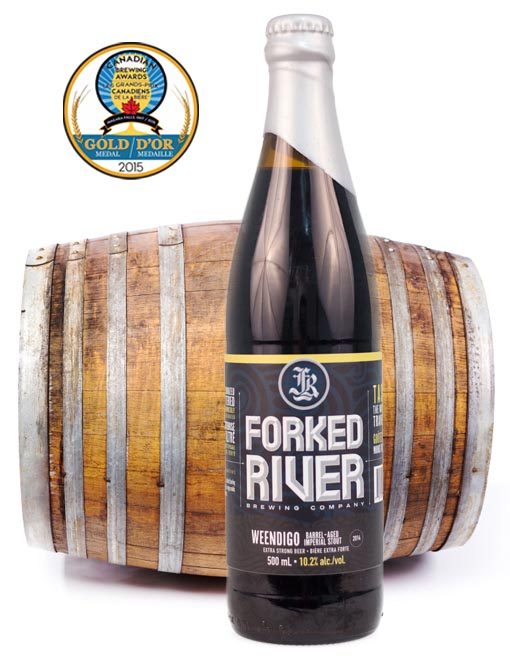
If you look closely at the label above you will see that it is branded as the Burning River Pale Ale which is, it seems to me, an odd choice for the marketing people to make. It was 50 years ago that the Cuyahoga caught fire and for that reason there have been many anniversary articles about the event. 1959 was the year of the last fire on the Cuyahoga so the news is generally good. The marketing people who are attempting to sell Cleveland now have a much easier job.
Sources:
"A Gleaming Cuyahoga River Helps Tourists Flow to Cleveland," Scott Suttell, Cleveland.com June 7, 2019. "Jim Ridge, the founder of Share the River, a nonprofit group that heightens awareness about the Cleveland waterfront, said the Cuyahoga River has achieved something that few could have imagined decades ago. It's a destination. Seeing recreational aspects on the body of water that ignited the environmental movement is a game-changer for locals, but also for folks well beyond our ZIP code who are going, 'Wait, that's not the Cuyahoga River I had in mind,' " he said.

"From 5 Rowers to 1,500, How the Cleveland Rowing Foundation Shares the Cuyahoga River with the City," Laura Johnston, cleveland.com ,June 11, 2019.

"Rough (but clean) Water Ahead: Cuyahoga Falls Embraces Cuyahoga River's Return to Nature," Grant Segall, The Plain Dealer, June 12, 2019.
"Just upstream, high schoolers are sitting along a boardwalk, sketching the scenic river.
Fifty years ago on June 22, Cleveland’s stretch of a gunky, stinky Cuyahoga had its best-known fire, spurring the Clean Water Act and a half-century of cleanup. Now a resurging river and its corridor teem with fish, turtles, herons, paddlers, hikers, diners and more."
"A Cleveland River Once Oozed and Burned. It’s Now a Hot Spot." By Erik Piepenburg June 7, 2019, New York Times.
"Then there's this striking example of how a river that once was so toxic that it bubbled and oozed like a caldron is producing edible marine life: the Ohio E. P. A. announced in March that fish from the Cuyahoga River, including catfish and common carp, are safe to eat."

The Thames River


The riparian situation here in London is rather murkier, both above and below the forks of the Thames. The failure of a dam downriver has reduced the more robust activities of rowing and boating, although the fishing may have improved. The promotion of a waterfront promenade is rather difficult given that it will overlook not much more than a muddy stream because of the dam upriver. In terms of the health of the river it can be said that: "While combined efforts in the watershed have been great over the past two decades, the outcome has shown only small environmental improvement."
Sources:
You locals will not need any. For the quote above see the report card offered by The Upper Thames River Conservation Society,

The Chicago River

 
The recent reviews about the Chicago River are somewhat mixed. Reports from upstream are better, which is usually the case. The river is green in the above picture because it was taken around Saint Patrick's Day when the water is dyed that colour. The good news here is that everyone everywhere agrees that that holiday is one that should be celebrated.
Sources:
"In Chicago, A River Revitalized — But Not for Everyone," Kari Lydersen June 22, 2019, Washington Post.
"The river’s water is cleaner than it has been in decades. New amenities, including four new boat houses, riverside restaurants and the Riverwalk, a pedestrian promenade downtown, line its banks. Revitalizing the river was a major priority of Mayor Rahm Emanuel (D), who left office May 20. The spot in the river where the rowers launch could be seen as the dividing point between the two sides of the Chicago River system. Just upstream is a lush park with a Chinese pagoda, and beyond that, the skyscrapers of downtown. Downstream, the river becomes increasingly industrial and filled with detritus...[it gets worse].

The Buffalo River


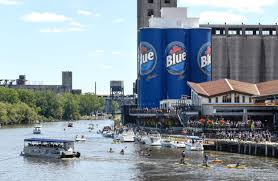
The situation in Buffalo is so good along the rivers that some Canadian beer marketing folks obviously thought old industrial silos were perfect platforms for their brand. The city promoters say that Buffalo should be your "Port of Call" and that Canalside is a good place to kayak and party. They can also say "Sail Into Summer" and "Make a Splash in Buffalo" because there is another river - the Niagara River - and Lake Erie is close by as is the Canal. The water resources so important for trade and industrialization are being revitalized for recreational purposes.
Sources:
See: The Buffalo Touring Guide.

Fishing (!/?)

We were in Buffalo in early May, allured by the arts not the water. It was still a little chilly for waterfront wandering, but I did notice in the Buffalo paper an entire page devoted to fishing and the major headline was: "WNY[Western New York] Fisheries Show Off for National Media" and apart from two pictures of huge fish (a lake trout and a king salmon) there were remarks such as these: "Outdoor media from around the country arrive every spring to take advantage of the world class bass and walleye fishing on Lake Erie. The Niagara River spring trout fishery is outstanding too...." "Being from Michigan, I was a little slow to discover the world class trout and salmon fishery Lake Ontario offers...." "Lake Erie's Eastern Basin is well known as a walleye destination...." Year end and year out, spring offers some of the best multi-species fishing in the Lower 48 in and around the Niagara River." Buffalo News, May 9, 2019.
I was surprised by the extent of the fish coverage and the apparent success of the fisherpeople. I live on a river between Lake Erie and Lake Huron and don't read much about fishing and I don't think one reads much about the subject in the Toronto press. A quick search of Toronto-area papers didn't catch much. A short one for the Cleveland area landed:"If You Aren’t Catching Walleye on Lake Erie, You Aren’t Trying:" June 14 Fishing Report, Cleveland.com May 14 and "Anglers Eager for 2019 Lake Erie Fishing Season: Ohio Anglers, Get Ready for Another Phenomenal Lake Erie Fishing Year." Laura Johnston, Jan. 25, 2019.
   My impression about the fish coverage may be incorrect, but, if not, among the questions that could be asked are these two: Is the fishing better below the invisible border line in the lakes or are the Americans just better at fishing (or marketing)?

Post Script:
   Near the end of the 19th century the flow of the Chicago River was reversed and no longer emptied into Lake Michigan which provides Chicagoans with their drinking water. The sewage is now sent south. 
  Not all the news is good. The Maumee River which empties into Lake Erie at Toledo is a major reason for the algae bloom the develops in that lake. The Cleveland slogan "A Green City on a Blue Lake" may soon need a slight change.
  Bonus tourist tip. If you are going to Buffalo I recommend that you stay in the insane asylum, now known as The Richardson Hotel (formerly The Henry.) From there you can walk to the Albright-Knox Art Gallery and the Burchfield Penney Art Center.

Friday, 21 April 2017

Polluted Rivers


Tennessee Rivers
    It was my intention to write often about rivers in this blog, but I just haven’t gotten around to it. I will pause here, however, to post a short note about one river since I was reminded of it by a recent article in the New York Times. The article was a depressing one and the number of such articles is likely to increase as the funding to the EPA decreases.
   It had to do with coal ash and the toxic sludge that seeps into the ground or escapes from the coal ash disposal ponds into rivers. The piece was mainly about the Gallatin Fossil Plant on the Cumberland River, pollution and lawsuits. There was also mention of an earlier episode in 2008 when  “an ash pond dike at its Kingston Fossil Plant in eastern Tennessee collapsed, releasing just over a billion gallons of coal ash water into the Emory River, which flows into two other rivers, including the Tennessee. The slurry released in that spill, which has been called the largest environmental disaster of its kind, buried 300 acres of land in toxic sludge. That sludge was taken to an unlined landfill in Alabama, just outside a predominantly African-American community, prompting challenges under federal civil rights law.”

The Emory RIver
    I recently read a book which mentions the Emory River and describes it just about 150 years ago. The following description is taken from a book by John Muir - A Thousand-Mile Walk to the Gulf. I will say more about the book and rivers later.

This will serve to remind us of what we have lost:
September 12.[1867] Awoke drenched with mountain mist, which made a grand show, as it moved away before the hot sun….Obtained fine views of a wide, open country, and distant flanking ridges and spurs. Crossed a wide cool stream [Emory River], a branch of the Clinch River. There is nothing more eloquent in Nature than a mountain stream, and this is the first I ever saw. Its banks are luxuriantly peopled with rare and lovely flowers and overarching trees, making one of Nature’s coolest and most hospitable places. Every tree, every flower, every ripple and eddy of this lovely stream seemed solemnly to feel the presence of the Creator. Lingered in this sanctuary a long time thanking the Lord with all my heart for his goodness in allowing me to enjoy it.

Sources: The current article: “2 Tennessee Cases Bring Coal’s Hidden Hazard to Light,” Tatiana Schlossbergapril, NYT,  April 15, 2017. The 2008 article: “Coal Ash Spill Revives Issue of Its Hazards”
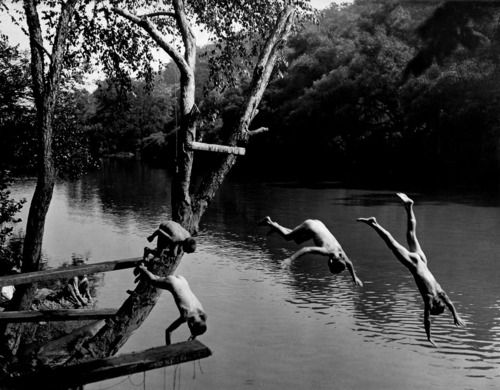
By Shaila Dewan, NYT  Dec.. 24, 2008. (Christmas eve, no less). The photograph is by Aubrey Bodine who worked for the Baltimore Sun. The Patapsco River is surely poisoned as well.