Wednesday, 24 June 2020

The Old Sam Shitstorm

   
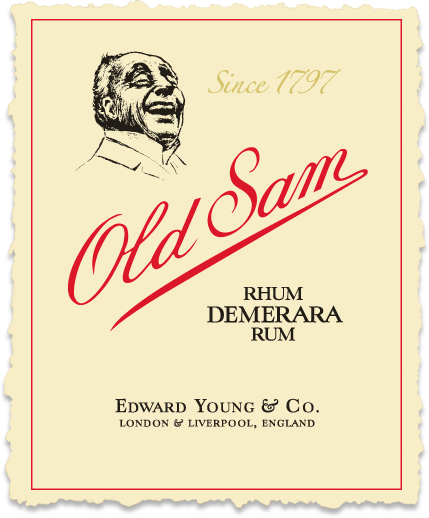
   The folks at the far eastern tip of the continent have 'awakened' and some of them who are employed by The Newfoundland and Labrador Liquor Corporation decided that Old Sam needed a closer look. The image is "commonly perceived to be a laughing, elderly Black man", which doesn't seem offensive to me and I have noticed more smiling Black people in commercials lately, which I thought was a good thing. When I looked at the Old Sam company website, I found that "Sam was a man who demanded much of himself, his workers and his rums, but brimmed with generosity for guests and friends." 
   I recognize, however,  that the illustrations per se, of Aunt Jemima and Uncle Ben are also not offensive and that context is everything, and just about everything is offensive these days.  As this is being written, the employees of the NLC are "exploring the history of the product and whether changes are needed." I am sure they are.
   Our colonial past is soaked in rum and we probably shouldn't drink any brand of it. Plus, Captain Morgan is surely problematic and I imagine horrors happened at Appleton Estates. Mount Gay appears to be okay since the name relates to the Mount Gilboa Plantation, but then again, it was a plantation.
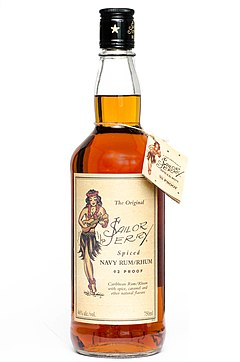


   I have my own reasons for being upset about Sailor Jerry and the employees at the NLC may object to the improperly appropriated hula person pictured. They will need a very strong drink if they investigate further. The current company website shows a black woman blowing a bubble announcing that the new "Savage Apple" Rum is now available. If other brands and types of liquor are studied, it is likely that only a few bottles of Screech will be left on the shelves.

  I suppose it is a good thing to have socially conscious employees determining what it is that those of us who are less enlightened can drink. Recently I recall that some other progressive staff members here on the mainland made a decision about something we should not see. It was a documentary about Jordan Peterson.

Post Script:
   I should stay away from these current controversies and I am sure you agree. Before I return to obscure and obsolete matters I cannot resist making another contrarian observation.
  I do so only because of an accidental discovery. When I thought of the Peterson documentary controversy, I decided I would check and see how he is doing since I recalled reading about his recent health problems. It seems he is okay, or at least he is still writing.

   Unfortunately I read his recent, rather robust piece which is the reason I am straying further into current and controversial territory.  I also just read portions of another recent report that issued from Western University: The President's Anti-Racism Working Group Final Report.  It is instructive to read the two reports together.

   According to the Western Report, things are grim at that institution. Here is how bad it is:

"For the past four months, we have heard from hundreds of community members about the insidious, often violent, nature of racism at Western and its devastating impact on their mental and physical health, and on their sense of well-being and belonging. The stories we heard and the data we gathered affirmed for us that there are systemic problems embedded within the University’s colonial history, traditions, structures, practices and policies that normalize “whiteness,” that “other” racialized groups, and that perpetuate racism."

   It may even be worse:

"Contrary to the principles of a meritocracy, we heard stories that point to
an institutional 
culture that privileges certain groups over others. 

We wonder about the stories we did not hear—but know are out there—
because some people 
are too fearful to speak up."

   I was surprised that the racism is systemic, was unaware of the violent nature of the environment and disappointed to learn that people without merit were successful generally because of their 'privilege'. I used to study and work there, but am white and generally oblivious to what is really going on.

  Then I read Professor Peterson's report which relates very much to the issues of diversity and merit in the university setting. Although it is not about Western, I do think that Peterson would very likely be highly skeptical of the conclusions reached in the Western report. There may also be some at Western who feel that way, but "are too fearful to speak up." 

  The title of the Peterson report may be all you need to read, but I will offer a bit of the introduction:

                "Missives of Appalling Idiocy and Envy Embarrassing to Behold"

"I have observed the colleges and universities of the Western world devour themselves in a myriad of fatal errors over the last two decades, and take little pleasure in seeing what I knew was inevitably coming manifest itself in an increasingly comprehensive manner. It is of course a self-destructive and unfortunate tendency of human reason, with all its limitations—as well as ego, with all its pretensions—to wish or otherwise agree to serve as Cassandra, and to derive a certain satisfaction in watching the ship whose demise was foretold breach its hull on rocks hidden from all other observers. The self-righteous pleasure of “I told you so,” is, however, of little comfort when the icy water wends its way around ankle, knee and thigh, threatening to swamp everything still retaining its incalculable and unlikely value, even if it simultaneously makes short shrift of the ignorance and willful blindness that is frequently part and parcel of the death of something once great.

It is also necessary to note that the catastrophic failures of process and aim which I am about to relate were by no means hidden from the public view by the persons and institutions in question. They were instead positively trumpeted to all by multiple attempts to harness the powers of social media and announced, more traditionally, in press releases designed to indicate the success of some great and laudable moral striving. It is nothing less than a dire day when the proud revelation of vices of deadly and multifarious seriousness serve to substitute for announcements of genuine and valuable achievement, but that is where we are at—make no mistake about it."

The entire report can be read here and it is worth doing so, even if you don't agree with it. That used to be what people did - read something in order to be able to discuss it.

Sources:
   I don't usually use slang obscenities (in this blog), but "shitstorm" does seem appropriate here. It occurred around the middle of June and plenty of articles can be found. Here is one:
"Newfoundland and Labrador Liquor Corp. Reviewing Old Sam Rum Over Racist Branding Concerns," By The Canadian Press, Fri., June 19, 2020.

  A link is provided to the Jordan Peterson website and the Western report is easily found at Western and much more will certainly be written about the horrors that exist there.

  Although there is considerable contrarian content in the Peterson article, here I will provide another contrarian source, which is about gender, but relates to race and quotas.  That's my job. Here are some snippets from:
"Stop Counting Women:Quotas and Tallies Won't Bring Real Progress on Gender Parity,” Katherine Mangu-Ward, New York Times, Feb.23, 2019.
 "However, the notion that the lack of perfectly equal representation is obvious evidence of injustice is wrongheaded and counterproductive.
"By focusing on having equal numbers [or erasing images] you  -are more likely to provoke resentment than to convert the reluctant."
Keeping those running tallies of gender [racial] imbalance is like other emotional labor: It’s exhausting and distracts from more substantive work, and some people are skeptical it needs to be performed at all.
 

Sunday, 21 June 2020

Campuses, Creative Destruction and the Coronavirus

    We are in the midst (we hope) of the Great Flu and are all wondering when, how, or if we will recover. Those most anguished seem to be the individuals who have been unable to get a pedicure, tattoo or good workout at their health club. There are also very real concerns that many small businesses might not reopen, large malls may stay closed and that many jobs will be lost. This angst is being felt even in the academies of higher learning. No one knows for sure what the fall will bring or if the students will return.

   While I have not been blogging much I have been reading some. Trying to avoid politics, about which we know too much, and articles about the coronavirus, about which we know too little, I rely on a bespoke site which unfailingly directs one to material that is worth reading. While I was just typing up the post about some small liberal arts colleges in Canada and the problems they may face because of the current pandemic, I was reminded of a very good piece about higher education that was recommended.


   The point being made is that the pandemic will cause considerable disruption, if not disaster, for many colleges and universities. The person making it is Scott Galloway. Rather than risk corrupting his thoughts and ideas, I will provide examples and sources so you can decide for yourself.

   The first article I was led to is by James D. Walsh and it appears in New York magazine on May 11, 2020 and has the title: "The Coming Disruption Scott Galloway Predicts a Handful of Elite Cyborg Universities will soon Monopolize Higher Education."

 Prior to asking Mr. Galloway some questions, one finds this brief introduction:

   "In 2017, Scott Galloway anticipated Amazon’s $13.7 billion purchase of Whole Foods a month before it was announced. Last year, he called WeWork on its “seriously loco” $47 billion valuation a month before the company’s IPO imploded. Now, Galloway, a Silicon Valley runaway who teaches marketing at NYU Stern School of Business, believes the pandemic has greased the wheels for big tech’s entrĂ©e into higher education. The post-pandemic future, he says,  will entail partnerships between the largest tech companies in the world and elite universities. MIT@Google. iStanford. HarvardxFacebook. According to Galloway, these partnerships will allow universities to expand enrollment dramatically by offering hybrid online-offline degrees, the affordability and value of which will seismically alter the landscape of higher education. Galloway, who also founded his own virtual classroom start-up, predicts hundreds, if not thousands, of brick-and-mortar universities will go out of business and those that remain will have student bodies composed primarily of the children of the one percent.

At the same time, more people than ever will have access to a solid education, albeit one that is delivered mostly over the internet. The partnerships he envisions will make life easier for hundreds of millions of people while sapping humanity of a face-to face system of learning that has evolved over centuries. Of course, it will also make a handful of people very, very rich. It may not be long before Galloway’s predictions are put to the test."

The first question asked and part of the answer:
Colleges and universities are scrambling to figure out what to do next year if students can’t come back to campus. Half the schools have pushed back their May 1 deadlines for accepting seats. What do you expect to happen over the next month?

   "There’s a recognition that education — the value, the price, the product — has fundamentally shifted. The value of education has been substantially degraded. There’s the education certification and then there’s the experience part of college. The experience part of it is down to zero, and the education part has been dramatically reduced. You get a degree that, over time, will be reduced in value as we realize it’s not the same to be a graduate of a liberal-arts college if you never went to campus. You can see already how students and their parents are responding."

More samples:
When will there be a reckoning? It has to come before classes begin this fall?

   "Over the next six weeks, when we realize that the deposits and registrations for the fall are down 10 to 30 percent. The better universities are fine in the short term because they just fill spots from the waiting lists. The kid who’s going to Boston College will get into MIT. But if that snakes down the supply chain, and you start getting to universities that don’t have waiting lists, those are the ones that get hit."

How many schools will collapse between now and next year?

"It will be like department stores in 2018. Everyone will recognize they’re going out of business, but it will take longer than people think. There will be a lot of zombie universities. Alumni will step in to help. They’ll cut costs to figure out how to stay alive, but they’ll effectively be the walking dead. I don’t think you’re going to see massive shutdowns, but there’s going to be a strain on tier-two colleges."

Who Is Scott Galloway?
    Naturally, Galloway's views attracted considerable attention and that question was asked by those at The Chronicle of Higher Education. Here is a portion of the article:

"Higher Ed’s Prickliest Pundit: Scott Galloway is Suddenly Everywhere, Slaying Academe’s Sacred Cows," By Tom Bartlett June 12, 2020.

Scott Galloway believes higher education is overdue for a reckoning. Sky-high tuition leaves too many students drowning in debt. Tenure guarantees lifetime appointments to subpar professors. Elite colleges hoard their vast endowments and brag about how many applicants they reject, while kids from humble backgrounds are left behind...."

  Lately Galloway’s stock seems to be on the rise. The Wall Street Journal recently profiled him, noting his ambition to become “the most influential thought leader in the history of business.” At the end of an interview on CNN, Anderson Cooper declared Galloway’s insights on the coming reshuffling in higher ed “the most interesting five minutes I’ve had in a long time.” He has a new show on Vice TV, which is essentially Galloway ranting and gesticulating against a white background. The show's title matches the vibe: No Mercy/No Malice.

What has the pandemic exposed about higher education?

  "It's pulled back the curtain. Like any consumer product, it's created additional transparency around the value-to-price ratio, what people are actually getting for their money. You could have 50 percent of international students not show up and 20 percent of domestic students not show up in the fall. So it's demand destruction. These Zoom classes that everyone has been doing, I would argue it's not as much that people are disappointed in the Zoom classes, it's that they're disappointed in what the Zoom classes have revealed. Everyone knows that Zoom classes are not as good as the real thing, but people understand we're in a crisis. I think what people are most disappointed in, as parents have collectively said, "That's what I've been paying for?"

   ...So it's created two things: demand destruction and a moment in time where families are pausing and asking tough questions about whether or not pricing has finally escalated to the point where many college experiences are no longer worth it."

Sources:
   The profile in the Wall Street Journal: "Prof. Scott Galloway Wants to Be 'the Most Influential Thought Leader in the History of Business", Lane Florsheim, WSJ: The Magazine From the Wall Street Journal, June 8, 2020.

   The CNN interview is very interesting: "Prof. Scott Galloway Talks to Anderson Cooper: How the Pandemic Could Disrupt Higher Education," May 22, 2020. You can watch it on YouTube.

There is a Wikipedia entry for Mr. Galloway and he does podcasts and Ted Talks.
The image above is from his blog - No Mercy/No Malice.

Bonus Material:
   Galloway was asked about Tenure:
Tenure is easy to attack. The reality is, though, that the majority of real cost explosion has happened at the administration level, in what I call positions and centers and classes around things like leadership and ethics that have absolutely no measurable outcome.

  He was also asked this question. You have to like the guy!
Is there anything you do to prevent burnout or does that not really affect you?
"Alcohol and exercise. I think alcohol gets a bad rap. I think that we assume that the entire world is bad drinkers, that everyone who drinks is bad at it. I'm very good at it. It is a feature in my life, not a bug. It helps me relax. I'm a better version of me after a few drinks. So I'm very good at drinking and I use it to my advantage. And I also try and exercise everyday."


Canadian Maple League Universities

    
   I realized that I have not posted in just over a month, so I will begin with a short one about a Canadian higher education entity of which I was unaware. It exists in the eastern part of the country in four locations in three different provinces and is known as the "Maple League of Universities." Perhaps you also did not know about it.

  The League members are: St. Francis Xavier, (Antigonish, Nova Scotia); Mount Allison, (Sackville, New Brunswick); Acadia, (Wolfville, Nova Scotia) and Bishop's University, (Sherbrooke, Quebec). The Maple League moniker is somewhat catchier than "The U4", which is how they were referred to in years past. 

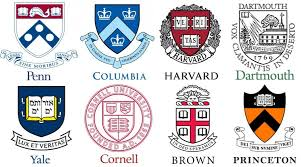
   You may have guessed that these universities are consorting not because of a shared interest in the academic discipline of botany, but rather because the new brand under which they are united reminds you of the elite institutions located farther to the south. There are eight of them, which are identified here:
   

   I read about the members of the Maple League in an article which discusses the difficulties they are likely to face in the post-pandemic period, whenever that may be. The headline and opening paragraph indicate the source of their concerns: 

“For Maple League Universities, Shift to Online Education Threatens Close-Knit Appeal That They Rely On,” Joe Friesen, The Globe and Mail, June 2, 2020.
“The universities of the Maple League, with their historic red brick architecture and wide lawns, have long based their appeal on small classes,  a close-knit campus of dorms and clubs, and a level of attention from professors not always available at larger institutions.” 
   
   The concerns have spread beyond the campuses: “A fall without students could pose a grave threat to the local economy in university towns.” Such concerns have also spread like Covid across the country and are not restricted to the small liberal arts colleges.

Sources:
  The place to begin is at the website of the Maple League of Universities where links are provided to the four universities involved.  There is a short Wikipedia entry.
  There is a good piece in University Affairs, from which the following is taken. See" "Four Small Universities in Eastern Canada Rebrand as The Maple League," Moira MacDonald, Nov. 6, 2016.

"First coming together in 2013 under the less catchy banner of the “U4,” Acadia, Bishop’s, Mount Allison and St. Francis Xavier universities are now touting their pastoral, “small by design” campuses more loudly as an alternative to the larger, urbanized university experience many Canadians are familiar with.
The new name is “a little bit of a nod at the Ivy League,” acknowledged Michael Goldbloom, president of Bishop’s in Quebec’s Eastern Townships. “We’re not claiming that we’re Harvard or Princeton or Yale. But we do think that we share that same aspiration for excellence.”

"Why a Group of Small Universities Believes the Future is Theirs: Known as The "Maple League", the Four Universities Promote the Advantage They Have Over Big-City Schools: An Intimate Undergraduate Experience," Jennifer Lewington, Maclean's, March 14, 2017.

There are also some articles to be found at the institutions. See:
From Bishop's - "The Four Maple League Universities Sign Historic Agreement That Encourages Inter-Institutional Student Mobility," Bishop's University.
From Mount Allison - "What is the Maple League?" Laura Skinner, The Argosy, Feb. 6, 2019.
"Dr. James Devine, department head of politics and international relations at Mt. A, said that the Maple League shows potential: “It’s building a brand about small, primarily undergraduate institutions, which I think in Canada are a bit of a rarity.”

The Bonus Stuff: 
   You already know enough about the Ivy League. Perhaps you know less about the 
Public Ivies or the Hidden Ivies.  
    There is an Ivey here in London, but it is in a different league.
     There is also a university for women here in London - Brescia. It appears to be doing quite well and is apparently the only such institution of higher education in Canada. If, at some point, more aggressive 'branding' is required they could follow the example of the Maple Leaguers and try to figure out some way to associate themselves with  the "Seven Sisters",  which essentially were the elite, 'Ivey League-type' schools for women. It seems that only five of them continue to serve females only - Barnard, Bryn Mawr, Mount Holyoke, Smith and Wellesley. 

Monday, 18 May 2020

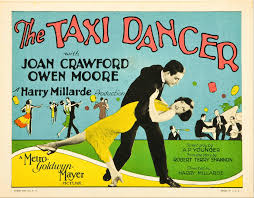
Taxi Dancer


   It is still raining and I happened to run across the term "Taxi Dancer" when reading about Henry Miller. He is the fellow who wrote those naughty books which you read when you were pretending to study for a geography exam (remember, Tropic of Cancer and Tropic of Capricorn.) He was also the kind of guy who would marry a "taxi dancer"; a girl he rented at a dance hall.

   Since I was unfamiliar with the term, I thought I would learn more about it for you and then tell you about it.  It is the case, yet again, that there is no need for me to do so since the Wikipedia entry is a very good one. So, I will pivot to a topic that is not unrelated and which is a more timely one than taxi dancers, who apparently went out of style a while back (I don't think the gentlemen hired to dance with women on cruise ships are given that name.)

Anti-Asian Racism
   
   We are still locked down because of the Great Flu, which according to a rapidly spreading number of people, is caused by the Chinese or other Asians. There has been a corresponding increase in anti-Asian sentiment, even in Canada where everyone is welcome. Anti-Asian sentiment is not new, however, and existed even back in the time of the taxi dancer. It was even expressed by some judges who were appointed before the current U.S. administration took over. Here is the story from the San Francisco Chronicle back in May of 1936:

May 17: A vehement condemnation of dance hall operators who make white girls dance with Filipinos was hurled from the bench yesterday by Municipal Judge Lazarus. He had just held Terry Santiago, 22, to answer a charge of assault with intent to murder. Brought to court by ambulance, Norma Kompisch, 22-year-old taxi dancer, had given from the stand the story of how she was pursued by Santiago, and how he had driven an 8-inch-blade butcher knife into her body 22 times, despite her cries for mercy. In his chambers, Norma had assured Judge Lazarus that she was like any girl whose family had been caught in the pinch of the Depression and that she had gone out to find a job. She became taxi dancer in a place that required her to dance with Filipinos. Said Judge Lazarus, who last month was mentioned in a national news weekly in consequence of having called Filipinos "savages": "I have become nationally known as commenting on conditions that bring about these instances. A small, little, insignificant judge in San Francisco would have to make a national feature to bring public attention to this very real evil. I once referred to Filipinos as savages. There was never a more typical case than this to justify my statement. The Filipinos are not at fault. They are vainly attempting to adjust themselves to civilization, but haven't the training or education. They are only one jump from the jungle. It is our fault for bringing them here. And what about dance hall operators that compel white girls to dance with Filipinos? Nearly all the robbery and shooting involving Filipinos is directly attributable to their association with white girls." Judge Lazarus ordered a transcript of testimony sent to Philippine Commissioner Parades in Washington, to whom he recently apologized for calling Filipinos savages.

   Although anti-Asian sentiment may be on the rise, I do think that our behavior has improved and the words like 'savages" and phrases like 'one jump from the jungle' would not be countenanced by even the current administration in Washington and certainly would be problematic if spoken before one of our Human Rights Tribunals.

Sources:
   A quick search will yield many examples of anti-Asian sentiment, here and elsewhere. 
    This headline is from Human Rights Watch, May 12, 2020: Covid-19 Fueling Anti-Asian Racism and Xenophobia Worldwide: National Action Plans Needed to Counter Intolerance." 
   Filipinos have been targeted so much there is a Wikipedia entry for "Anti-Filipino Sentiment."

The bonus:
   The Wikipedia entry for "Taxi Dancer" is so good it even has a section devoted to "Taxi Dancers in Popular Culture" which includes movies, songs, books, tv, etc. It does not yet include the new Canadian album, Taxi Dancers by the Tragically Hip's Gord Sinclair. Here is his explanation for the choice of the title:
Q. It's a lovely record. Before you go, can you tell me what Taxi Dancers means?

A. Yeah, it's a very old phrase. Back in the Dust Bowl days, these rural communities would have Saturday socials a couple times a year and invariably there were not enough dance partners for the guys that were working the farms. They would fill up taxi cabs from the nearest major centre and the young ladies would travel out. I always thought it was just this amazing metaphor for what we do in this country as performers. We wheel into town, dance around for a bit and then we move on to the next gig. We were throwing out album titles, sitting around my place — and I credit John-Angus [MacDonald] and his brother Colin — they just thought it was cool.
"Sinclair's Debut Solo Album, Taxi Dancers, Will Be Released on Friday," CBC Radio, Feb. 26, 2020.

Great Lakes Pollution

Downstream News

   Great Lakes - Wikipedia 

   It is raining here on "Victoria Day" and I gather this storm came to us by way of Chicago where "two days of rain overwhelmed Chicago’s underground labyrinth of sewers Friday, forcing a noxious mix of sewage and stormwater into local waterways and Lake Michigan. At 2:30 a.m., the Metropolitan Water Reclamation District opened a sluice gate separating the lake from the North Shore Channel in Wilmette, allowing millions of gallons of human and industrial waste to flow with runoff into the water supply for 7 million people in Chicago and the suburbs." The Chicago River and its sewage used to flow east into Lake Michigan, but it was reversed over a century ago so the sludge would head west and then south. With the overflow, the stuff just flowed everywhere and some will find its way toward us.

   That recent story reminded me of one from earlier this year when it was announced that London is also contributing to the rising lake levels. In January 68 million litres of sewage was sent into the Thames after we had considerable rainfall. While no one will be heading to the beach today, it is worth noting that we get our water from both Lake Huron and Lake Erie.

Bonus Information


   Heading to the beach is problematic these days and not just in the Great Lakes area. Here is a headline from across the Atlantic Ocean: Apparently a "Massive Sea Foam Wave Kills Five Experienced Surfers Who Went Out During a Storm in the Netherlands. It was reported that "five surfers who knew the sea like the back of their hand, died after a huge layer of foam in the water hampered efforts to rescue them. While some sea foam develops naturally, the addition of sewage to the water is reported to not help.

Sources: 
   The Chicago story is found in The Chicago Tribune on May 16, 2020.
   For London see: "January's Record Rain Exposes London's Dirty Sewage Secret," by Megan Stacey in the LFP on Jan.20, 2020.
“It’s the dirty secret of a lot of the cities on the Great Lakes,” said Mark Mattson, head of Waterkeeper, a Canadian charity advocating for clean water....
“A major city like London discharging raw sewage into the Thames River . . . that’s a terrible thing. We live in the freshwater capital of the world. We’re blessed to have it. The idea that we’re polluting it to the degree we do is really unacceptable,” he said.
   For the story from Europe: "Five Surfers Die in the Netherlands After Huge Layer of Sea Foam Hampers Rescue,"By Lianne Kolirin, CNN
The group ran into difficulties at the northern harbor head of the Scheveningen district of The Hague in the Netherlands on Monday evening.
A statement issued online by the rescue service said its efforts were "complicated by the man-sized foam layer at sea and on the beach," while "strong winds and high waves also made it very difficult to provide relief from the harbor pier."
Police, firefighters, the coastguard, units from KNRM and other emergency workers were all involved in the rescue operation, in which a helicopter was used to try to blow away the foam and improve visibility.
   The picture above is from:  The BBC
    Sea foam is a growing global mess: "How Frothy Waves of Sea Foam Coated the Coast of Chennai: Don't Play in the Bubbles." Atlas Obscura, Jessica Leigh Hester, Dec. 5, 2019.

Sunday, 10 May 2020

Clifton Johnson

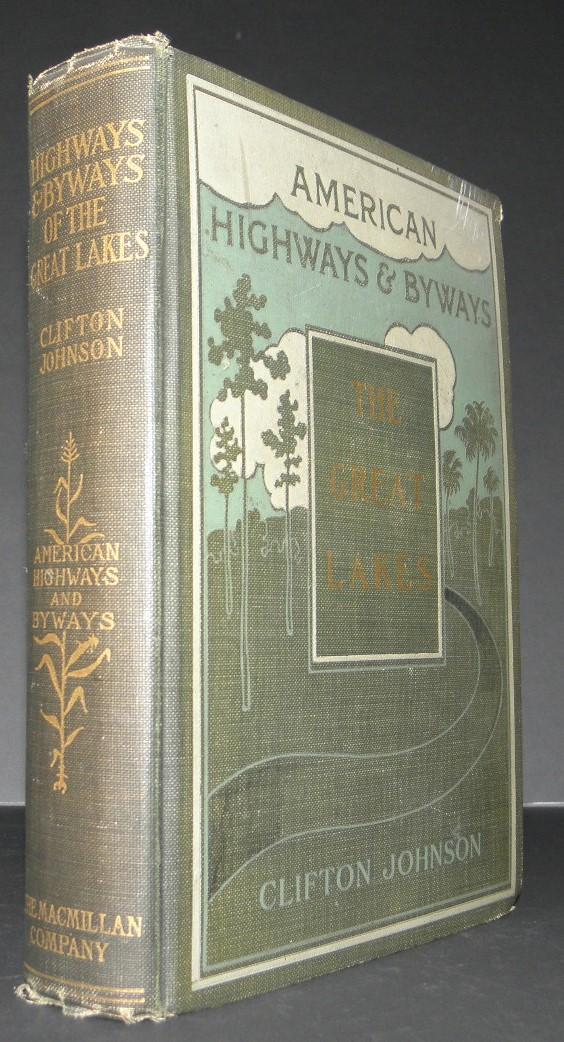
   Clifton Johnson wrote many books, some of which are about rambling along roads in the United States and abroad. The subtitle of one book about travelling in Florida early in the last century includes these words: "... human interest information for travellers in Florida; and for those other travellers who are kept at home by chance or necessity, but who journey far and wide on the wings of fancy."

More Reading For the Recumbent

   Since we are kept indoors and have to remain in-country because of the Great Covid Flu, here are some more books which you can read from the comfort of your couch. Although some 'publisher' on Amazon will offer to print and then sell you these books, you can read them for free since they are in the public domain. If you want to buy a copy, purchase a real one from AbeBooks. 

Highways and Byways of America

   Here are the titles in this series:
Highways and Byways of the South
Highways and Byways of the Mississippi Valley
Highways and Byways of the Rocky Mountains
The Highways and Byways of the Pacific Coast
Highways and Byways of the Great Lakes
Highways and Byways from the St. Lawrence to Virginia
Highways and Byways of New England
Highways and Byways of California
Highways and Byways of Florida

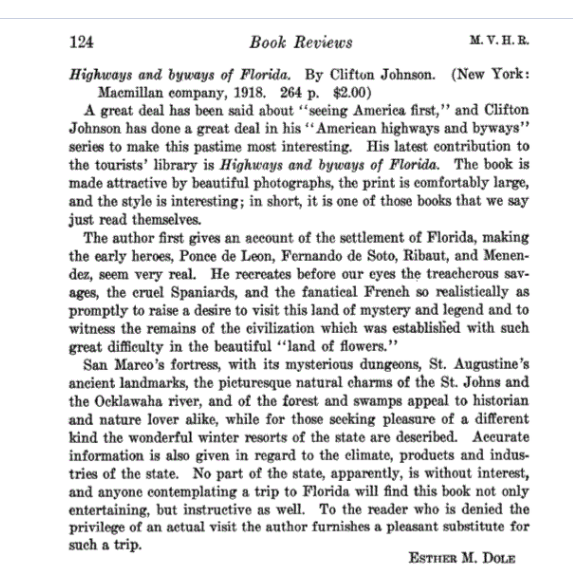
   If you choose to go to Florida since we are having snow flurries on Mother's Day eve, here is a review of the book about that state:

(The review is from the Journal of American History, Vol.6, No.1, June, 1919.) Copies of books such as these can be found in different places on the Internet. As mentioned, he wrote books about other countries, for example: Along French Byways and Along English Hedgerows. He also wrote about rivers: The Picturesque St. Lawrence and The Picturesque Hudson. These books are also available for free. Sources: Johnson was an interesting fellow as you will learn from the good Wikipedia essay about him. His archives are located at the Jones Library in Amherst where there is also another biographical profile. The Library up at Western University has a few of his books and that is where I got the copy of Highways and Byways of Florida. I recently posted about a related series: Historic Highways of America, by Archer Butler Hulbert. The Bonus: Surely Clifton Johnson must have had an interesting life travelling along all those roads. Perhaps his son had a more exciting one since he and his wife Electa "Exy" Search, sailed around the world several times. If you are too busy to start reading the books recommended, simply go to the Wikipedia entry for Irving Johnson. Their archives are, suitably enough, at the Mystic Seaport Museum.

Highways and Byways of Britain

   Having just posted about the new coastal paths that will soon allow you to circumnavigate all of England, here is some information for those who might want to learn what it was like to ramble about the country during the early years of the last century.
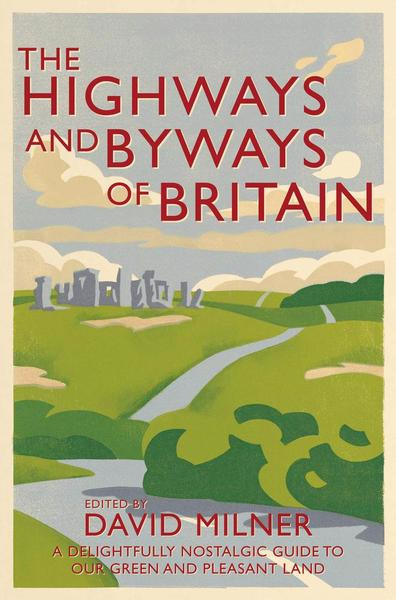
   MacMillan & Company published this "Highways and Byways" series from around 1907 to the 1940s. The volumes typically contained illustrations and maps and many of them are found on AbeBooks and some are now in the public domain and can be accessed over the Internet. The recently published book contains selections from some of the volumes and a list of those volumes is provided below.

 "Between the end of the nineteenth century and the Second World War Macmillan published a much-loved and extremely successful series of books under the title of 'Highways and Byways'. In them, the authors took readers on a delightful guided tour of the country, county by county, pointing out places of interest, key historical events and local lore and legend. Now, Macmillan is reissuing - in one beautifully designed volume - a selection of those highways and byways, which affords contemporary readers both a charming period piece and a wonderful glimpse of the very best of Britain." Here is a list of the books in the series.
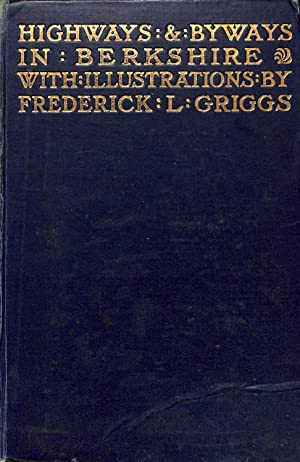
Highways and Byways in Berkshire (1906) by J. E. Vincent
"The book will certainly serve as an invaluable companion to the reader who decides to explore Berkshire for himself, telling him what spots to seek diligently and indicating the districts that may be treated lightly. The indolent man, who eschews travel as troublesome, will be able, without leaving his armchair by the fire, now that he can have the assistance of Messrs. Vincent and Griggs, thoroughly to enjoy Berkshire scenes, make the acquaintance of Berkshire men and women, and learn the importance of the county in English history." Nature, Dec. 13, 1906
Highways and Byways in Buckinghamshire (1910) by Clement King Shorter
Highways and Byways in Cambridge and Ely (1910) by Rev. Edward Conybeare
Highways and Byways in Devon and Cornwall (1911) by Arthur H. Norway
Highways and Byways in Donegal and Antrim (1899) by Stephen Gwynn
Highways and byways in Dorset (1906) by Sir Frederick Treves
Highways and byways in East Anglia (1901) by William A. Dutt
Highways and Byways in Essex (1939) by Clifford Bax
Highways and Byways in Galloway and Carrick (1916) by Rev. C. H. Dick (Charles Hill Dick)
Highways and Byways in Gloucestershire (1932) by Edward Hutton
Highways and Byways in Hampshire (1908) by D. H. Moutray Read
Highways and Byways in Hardy's Wessex (1913) by Hermann Lea
Highways and Byways in Hertfordshire (1902) by Herbert W. Tompkins
Highways and Byways in Kent (1907) by Walter Jerrold
Highways and Byways in Leicestershire (1926) by J. B. Firth
Highways and Byways in Lincolnshire (1914) by Willingham Franklin Rawnsley
Highways and Byways in London (1902) by Mrs. E. T. Cook
Highways and Byways in Middlesex (1909) by Walter Jerrold
Highways and Byways in Normandy (1900) by Percy Dearmer
Highways and Byways in Northamptonshire and Rutland (1918) by Herbert A. Evans
Highways and Byways in Northumbria (1920) by P. Anderson Graham
Highways and Byways in North Wales (1898) by A. G. Bradley
Highways and Byways in Nottinghamshire (1910) by J. B. Firth
Highways and Byways in Oxford and the Cotswolds (1905) by Herbert A. Evans
Highways and Byways in Shakespeare's Country (1914) by W. H. Hutton
Highways and Byways in Somerset (1912) by Edward Hutton
Highways and Byways in South Wales (1903) by A. G. Bradley
Highways and Byways in Surrey (1908) by Eric Parker
Highways and Byways in Sussex (1904) by E. V. Lucas
Highways and Byways in The Border (1913) by Andrew Lang and John Lang
Highways and Byways in the Central Highlands (1948) by Seton Gordon
Highways and Byways in the Lake District (1901) by A. G. Bradley [Arthur Granville Bradley]
Highways and Byways in the Welsh Marches (1939) by S. B. P. Mais
Highways and Byways in the West Highlands (1935) by Seton Gordon
Highways and Byways in Wiltshire (1917) by Edward Hutton
Highways and Byways in Yorkshire (1899) by Arthur H. Norway


(From a review in The Geographical Teacher, Autumn, 1923)