Wednesday, 4 December 2019

Factlet (3)


   You are probably relaxing and when you finally get around to Christmas shopping you will likely do so online. Who wants to face the bad weather, bad traffic and the other bad-mannered shoppers at some god-awful mall where there is also bad music playing. It is my duty, however, to spoil your day by providing this internet shopping alert which I noticed in a recent headline and which is presented as Factlet (3): "90,000 Packages Disappear Daily in N.Y.C."
   Package theft is also up in other American cities and one assumes that is the case even here. The article offers some remedies. In one apartment building a retired person who is always around accepts all the packages and apparently corporate mailrooms are packed because shoppers are sending the items ordered to their workplaces. Of course, one can shop (at the store, of course) for a camera like the one pictured above.

Sources: "90,000 Packages Disappear Daily in N.Y.C. Is Help on the Way?", Winnie Hu and Matthew Haag, New York Times, Dec. 2, 2019.
"In New York City, where more orders are delivered than anywhere else in the country, over 90,000 packages a day are stolen or disappear without explanation, up roughly 20 percent from four years ago, according to an analysis conducted for The New York Times.
About 15 percent of all deliveries in urban areas fail to reach customers on the first attempt because of package theft and other issues, like deliveries to the wrong house, according to transportation experts."
"Concerns about package theft have helped push video doorbell camera sales to about 1.2 million cameras nationally this year from less than 100,000 cameras sold in 2014, according to Jack Narcotta, a senior analyst for Strategy Analytics."

Post Script:
While I may have spoiled your day, I have provided a solution if you are wondering what to buy. A surveillance camera is a good option although the recipient may not get overly excited.

If you have forgotten what a Factlet is I will provide here the explanation offered when I told you what a Bee Gee was:
What's a Factlet?
     Almost daily I come across very interesting facts of which you are unaware and I thought it would be good for you and great for me if I just posted such information to avoid having to think and actually create content myself. This was going to be the first sample of what I was going to call a 'Factoid' which I thought was just a trivial bit of interesting information. But, I made the mistake of looking up the word which was coined by Norman Mailer back in the early '70s. Originally a 'factoid' was not something that was true, but rather information that was accepted as fact because it had been repeated or appeared in print. Given that there is so much 'fake news' around I thought it best to use the word suggested by William Safire so that you can be sure that the future factlets on this blog will be true trivia.
(For the source for this just see the Wiki entry for 'Factoid'.)


Tuesday, 19 November 2019

The Cundill History Prize


  Looking For A Good History Book or For Good News For History Majors?

The winner was just announced - she is Julia Lovell for Maoism: A Global History
"Julia Lovell’s Maoism: A Global History has won the Cundill History Prize. The nearly $100,000 prize ($75,000 U.S.), administered by McGill University, is awarded to the best English-language history writing.
Lovell is a British writer and translator and a professor on modern China at the University of London. In Maoism, she writes about the impact of the political ideology around the world and how it continues to influence China.
In his citation, historian Alan Taylor, the jury chair, called Maoism a “revelation” for the way in which it demonstrates the ideology’s influence on disparate societies including Peru, Indonesia, Europe, and the U.S."

A couple of years ago I called to your attention the Cundill Prize in my post, Christmas Shopping for Historians where I discussed the prize and some of the past winners. The winner for this year has just been announced. For more details about the prize and Mr. Cundill see this website at McGill University. Here are some data about the 2019 nominees.


THE LONGLIST FOR THE 2019 CUNDILL HISTORY PRIZE
The 14 titles chosen were announced June 25, 2019. On Sept. 20, the nominees were reduced to 8. On October 17th it was revealed that the 3 finalists were all women: Mary Fulbrook, Jill Lepore and Julia Lovell.

Sunil Amrith
Unruly Waters: How Rains, Rivers, Coasts, and Seas Have Shaped Asia's History
Basic Books (US), Allen Lane (UK)
(Chosen as one of the top 8 on Sept. 20, 2019)

Helen Berry
Orphans of Empire: The Fate of London's Foundlings
Oxford University Press (UK)
(Chosen as one of the top 8 on Sept. 20, 2019)

David Blight
Frederick Douglass: American Prophet
Simon & Schuster (US)
(Chosen as one of the top 8 on Sept. 20, 2019)

Mary Fulbrook
Reckonings: Legacies of Nazi Persecution and the Quest for Justice
Oxford University Press (UK)
(Chosen as one of the top 8 on Sept. 20, 2019)
"In Reckonings: Legacies of Nazi Persecution and the Quest of Justice (Oxford University Press), the Professor of German History at UCL Mary Fulbrook explores the lives of both the victims and the perpetrators of the Holocaust. A lifetime achievement by one of the most renowned experts in the field, this encompassing work – which won the UK’s Wolfson History Prize earlier this year – expands our understanding of the Holocaust, and its lingering aftermath."

Jay Geller
The Scholems: A Story of the German-Jewish Bourgeoisie from Emancipation to Destruction
Cornell University Press (US)

Toby Green
A Fistful of Shells: West Africa from the Rise of the Slave Trade to the Age of Revolution 
The University of Chicago Press (US), Allen Lane (UK)
(Chosen as one of the top 8 on Sept. 20, 2019)

Ramachandra Guha
Gandhi: The Years That Changed the World, 1914-1948 
Random House Canada (Canada), Allen Lane (UK), Penguin Random House (US), Penguin India (India)

Victoria Johnson
American Eden: David Hosack, Botany, and Medicine in the Garden of the Early Republic
Liveright Publishing (US)
(Chosen as one of the top 8 on Sept. 20, 2019)

Jill Lepore
These Truths: A History of the United States 
W. W. Norton & Company (US)
(Chosen as one of the top 8 on Sept. 20, 2019)
"With These Truths: A History of the United States (W. W. Norton & Company), the Harvard Professor and New Yorker staff writer Jill Lepore delivers an ambitious one-volume history of the United States which places truth itself – a devotion to facts, proof, and evidence – at the centre of the nation’s history. Taking the reader up to the election of Donald Trump, this magisterial account is a reckoning with the beauty and tragedy of American history."

Julia Lovell
Maoism: A Global History 
The Bodley Head (UK), Knopf (US)
(Chosen as one of the top 8 on Sept. 20, 2019)
"From the tea plantations of north India to the sierras of the Andes, from Paris’s fifth arrondissement to the fields of Tanzania, Julia Lovell, Professor of Modern China at Birkbeck College, University of London, delivers a re-evaluation of Maoism as a significant global force in her sweeping Maoism: A Global History (The Bodley Head, Knopf). This landmark history arrives at a time when disagreements and conflicts between China and the West are on the rise, and the need to understand the political legacy of Maoism is urgent and growing."

Steve Luxenberg
Separate: The Story of Plessy v. Ferguson, and America's Journey from Slavery to Segregation
W. W. Norton & Company (US)

Jonathan Phillips
The Life and Legend of the Sultan Saladin 
The Bodley Head (UK), Yale University Press (US)

Alexandra Popoff
Vasily Grossman and the Soviet Century
Yale University Press (US)

Sue Prideaux
I am Dynamite! A Life of Friedrich Nietzsche 
Faber & Faber (UK), Tim Duggan Books (US)


Thursday, 14 November 2019

The Dreaded N-Word

Bowdlerizers at the Barricades

    
    Up at the Odditorium (Western University) there was recently a horrific, terrible and traumatic incident in a classroom in the Arts & Humanities Department. An instructor uttered the “N-word” in a classroom.

   As an older white fellow I admit that I don’t quite understand what happened and am reluctant to write about it. I do so only because I am trying to come up with the answer to two questions: Was the magnitude of the crime that great and is there not anyone on campus who will come to the defence of the poor chap (I hope that word is okay) who uttered the word?

  I also don’t understand why the focus of the seminar, in which the word was mentioned, was on the TV show The Fresh Prince of Bel-Air, but as an occasional reader of The Journal of Popular Culture, I will let that pass. But, if the instructor was, as he says, attempting to demonstrate “how a prime-time television sit-com achieved significant critiques of both class and race in America”, I find it difficult to believe that he spoke the word in a hateful way. Was his face painted black?

  If the unfortunate fellow (I hope that word is okay) has made it this far in University College, I doubt that he (if that word is okay) is likely to be a member of the Klan. I noticed that the guy (okay?) is also a part-time faculty member, which means that he is probably an adjunct, which suggests that he should have some awareness of the notion of servitude. He did apologize quickly and profusely and you can read his complete confession below. Let us hope that he is not punished further by having to teach a course next year on either Twain or Conrad.

   Perhaps the crime is greater than I thought since the President quickly appointed an anti-racism working group “reporting directly to him, after a professor’s use of the N-word in a lecture caught media attention and wide condemnation from major student groups at Western University.” 

   Some students have suggested that that is not enough.  “Western needs to be doing more. Screening speeches prior to convocation ceremonies or, in the most recent case, educating professors on what they can and cannot say in a classroom setting are preventative measures Western could, and should, be taking to ensure everyone feels comfortable on our campus.”
  
    It is likely that the working group will become a fully fledged task force requiring a new Vice President to police what professors say in seminars and that new counsellors will be required to deal with those students suffering from PTSD. 

   Judging from the student publication, The Gazette, Mr. Wenaus probably doesn’t feel very safe. As far as I can tell his fellow professors have been less than generous (one could have said niggardly) in offering support, but then the principle of tenure was not threatened and there was no need to come to his defence. 

   I gather that the student who initiated the complaints has received some obnoxious anonymous emails. Perhaps that is because those who might wish to discuss the incident openly don’t feel safe and comfortable in doing so. 

   Here is the complete apology. Decide for yourself.

          English Lecturer Issues Apology for Using Racist Language in Class

During a class earlier this week, Department of English lecturer Andrew Wenaus chose to use language that was offensive to those in attendance and not in keeping with Western’s values. Mr. Wenaus has expressed his regrets to the university and has requested that the following letter of apology be shared with the campus community. Any students who would like to discuss this further are encouraged to contact Michael Milde, Dean of the Faculty of Arts and Humanities. 

Dear Western Community, 

On Wednesday 23 October, our class watched the first episode of The Fresh Prince of Bel-Air. The purpose of the lecture was to demonstrate how a prime-time television sit-com achieved significant critiques of both class and race in America. 

I wanted to demonstrate how the writing of the show is haunted by a history of exploitation, violence, and terror. Near the opening of the episode, Will Smith encounters Geoffrey the butler. Geoffrey customarily refers to Will as “Master William” which causes Will discomfort, reminding him of the history of plantations and slavery. Later in the episode, Will refers to Geoffrey as a “home butler.” Given Will’s discomfort with Geoffrey serving him and the reference to plantations earlier in the episode, I mentioned that, aside from a play on the term “homeboy”, he may be expressing an insult that historically instigated “class divisions” between slaves who worked the fields and slaves who worked in the house. In articulating this historical context that was used to refer to one of these two classes of slaves, I used the term “House N*****” to inform the students of the disturbing terminology that was used during slavery.  

While the term had been referred to as “N” when it came up in class prior, my use of the full term came spontaneously. I immediately regretted my words and there was some discussion of my choice in class, but I could have handled the situation more thoughtfully. After the class, I discussed the incident further with a couple students and I have since reached out to some other students as well to express my regret and apologize. 

I extend my sincerest apologies to all my students, the Department of English and Writing Studies, Western, and the London community. I recognize that my use of the word, regardless of context and intention, is unacceptable in all instances. 

I want my courses to be places where students feel respected, safe, and dignified. As such, I have reached out to services at Western to discuss how I might better handle sensitive and serious material in the classroom. I pledge to do better and I am committed to doing everything I can to regain the trust of my students. 

Sincerely, 
Andrew Wenaus

Sources:
“Prof's N-word Incident Sparks New Anti-racism Group under Shepard,” Emily Tayler, The Gazette, Nov 6, 2019
“Editorial: Days since Western's last Bigoted Incident? Zero.” The Gazette, Oct. 29, 2019.

Post Script:
Unquestioned and unqualified support for the forces of wokeness can be costly. If you don’t believe me, ask the administrators at Oberlin.
So far, those on the right who like to use egregious incidents such as this one to embarrass universities, appear not to have heard about the terrible Western University tragedy. Let us hope they do not find out. 

Georges Simenon

          Prolific Prodigious Promiscuous Prurience
   
    Those words come to mind when one reads about Georges Simenon. I knew nothing about him, but now know a little since I stumbled upon a recent essay written to mark the 30th anniversary of his death. Here is what I learned. You will be impressed.

He Wrote a Lot
   As someone who has been unable to deliver a daily post consisting of a few paragraphs, I am  impressed that Simenon would typically write 20,000 words per day and often ended up with 80 pages. He wrote hundreds of books across a variety of genres using many noms de plume. A publisher could count on a book every few weeks. It is reported that when someone rang up Simenon and was told that he was in the middle of a novel and could not be interrupted, the caller supposedly responded, “I’ll wait”. He produced almost 500 books. Many  have been translated into 50 languages and 600 million have been published worldwide. Penguin books is currently publishing 75 of his ‘Maigret’ books and the New York Review of Books has issued some of his classics. There are also the films and TV series.

He Moved Around a Lot
   Early in his career he lived on a boat and sailed on rivers and canals throughout Europe. He resided in Paris and had a mansion on Lake Geneva. He also lived in Florida and Arizona and, for a while, around Montreal where he apparently had time to not only write, but begin an affair with a much younger woman.

He Fooled Around a Lot
    And that brings me to the promiscuous and prurient part of this post. Perhaps it is more appropriate to say that you will be appalled rather than impressed by this next statistic. There is no need to incur the wrath of the #MeToo Movement by seeming to imply that one is envious of Simenon’s next ‘accomplishment’. I also hope I have no Incel readers since they might be triggered by the unfairness of the magnitude of the number about to be presented.
    In 1977 (when he was 74) Simenon said that he had slept with 10,000 women and it is estimated that about 8,000 were prostitutes.  Someone noted that he used prostitutes at the rate that Parisians smoked Gitanes. His wife thought the number closer to a modest 1,200. I am not sure what the score was for the remaining twelve years of his life.


Speaking of Scoring


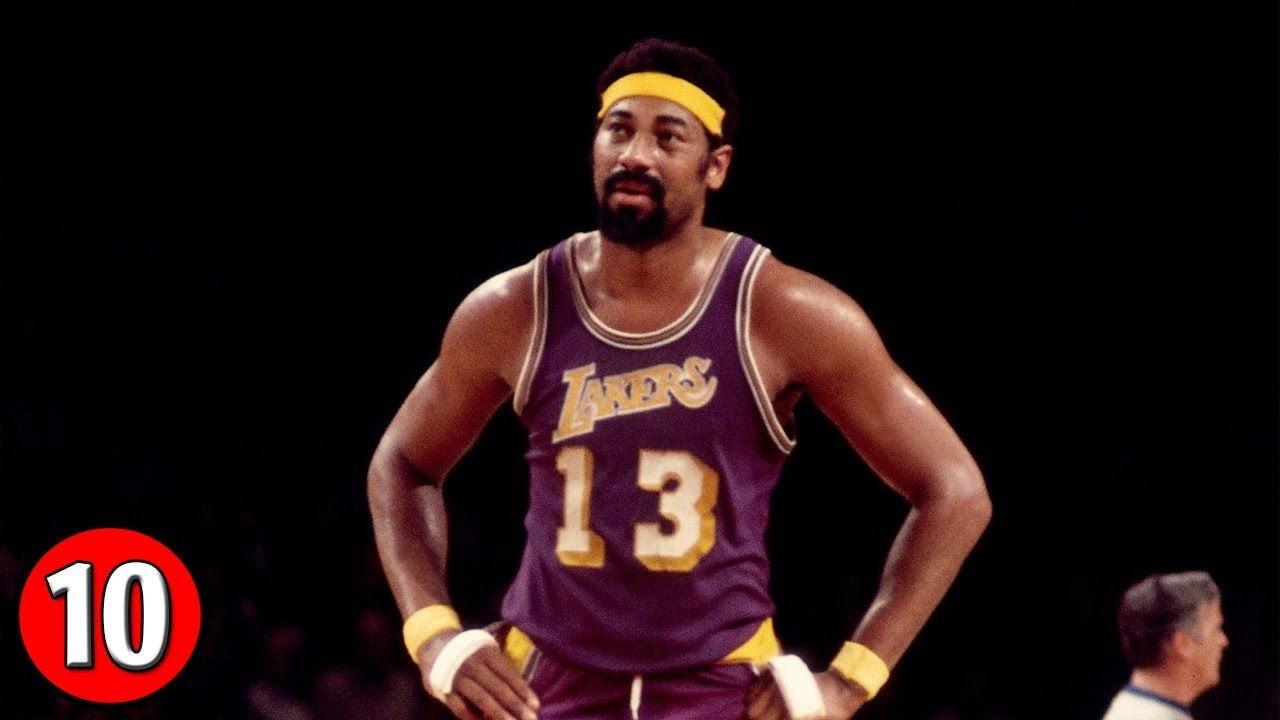
    As soon as I saw 10,000 I was reminded of another great scorer, “Wilt the Stilt”. I knew that he had scored 100 points in a basketball game, but I could not remember his off court stats. I quickly found the number which is presented in his biography, A View From Above (a nice double entendre, don’t you think?). He claims to have slept with 20,000 DIFFERENT women.
    The arithmetic involved with such large numbers is beyond me. Someone did suggest that it is estimated that Simenon averaged 160 women over 60 years and more involved calculations are found in one of the sources listed. Luckily for you, someone has done a careful analysis for Wilt. See: “Did Wilt Chamberlain Really Sleep With 20,000 Women?”, Eddie Deezen, Feb. 6, 2018, MentalFloss.com. In any case, apparently both men “got lucky” many times even though Simenon was born on Friday the 13th and Wilt wore ‘13’ on his uniform.

Sources:
Apart from the Wikipedia entries see:
“It’s True, My Father Really Did Sleep With 10,000 Women,” Damian Whitworth, The Times, May 26, 2015.
“John Simon Interview: Maigret’s The Man My Father Wanted to Be,” Jake Kerridge, The Telegraph, August 31, 2019
“The Dilemma of Georges Simenon,” Joan Acocella, The New Yorker, Oct. 3, 2011
"We shouldn’t be too impressed by this.[the big number]. In 1968, Simenon, with his usual indiscretion, allowed himself to be interviewed by a panel of five doctors. One of them later said that the group was struck by his unromantic approach to sex. He told them that he limited the contact to two minutes. Reportedly, he also kept his clothes on (he just unzipped). One day, when Denyse was in her study conferring with one of her assistants, Joyce Aitken, Simenon entered the room, wanting to have sex. “You don’t have to leave, Aitken,” Denyse said, and she and Simenon got down, briefly, on the rug. If you followed such procedures, you, too, could have twelve hundred sexual partners.”
“The Unlikely Life of Belgium's Greatest Sex Machine," Michael Deacon, The Daily Telegraph, June 2, 2017.
"Still, if true, hats off to the man. All the same, you do have to wonder how he maintained such a gruelling schedule. Take the women. Simenon died aged 86. If he started at 16, he must have been sleeping with 142.8 women a year. Yet he had two marriages: the first when he was aged 20-47, the second when he was aged 47-61. Which means that, unless he was quite spectacularly unfaithful, he had only 29 years (when he was aged 16-20 and 61-86) in which to sleep with 9,998 women. That's 344.8 women a year. Almost one a day."


Post Script:
But What About Warren Beatty?      No Wonder He Is So Vain!
The number is 12,775 and one supposes that he stopped after he married Annette Bening in 1992. Review of: Star: How Warren Beatty Seduced America by Peter Biskind by Euan Ferguson, The Guardian, Jan. 10, 2010.
Among his conquests: Natalie Wood, Leslie Caron, Julie Christie and Cher when she was 16.
“He’s So Vain", Vanessa Grigoriadis, New York Times, Feb. 5, 2010.

The Bonus:
Unsure about the exact meaning of "Incel", I looked it up and was surprised to learn that the term was coined by a Canadian woman! See the Wikipedia entry.


Sunday, 3 November 2019

ANGLING BOOKS


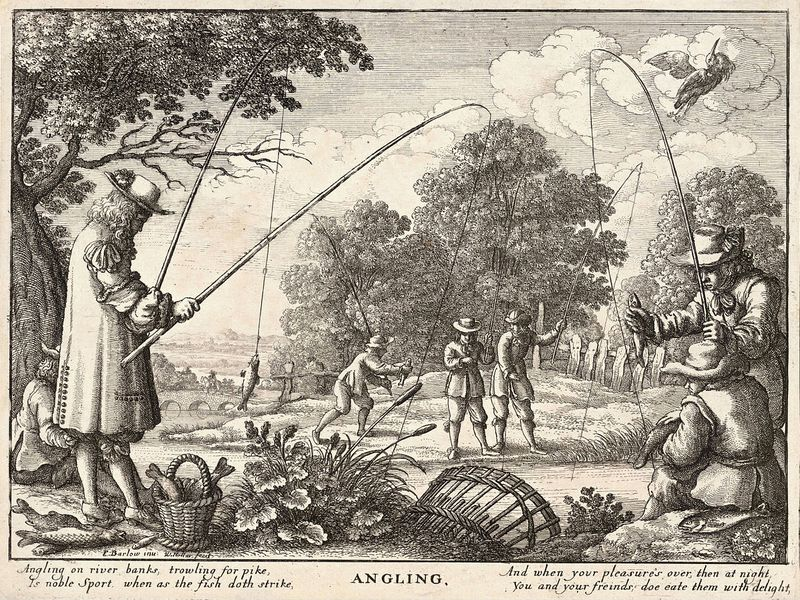
      I suppose the title 'Angling Books' is slightly more alluring than 'Books About Fishing', and I am sure that the number of readers likely to be lured by either title is rather small. Given the 'long tail' principle, however, perhaps this post will be snagged by someone casting from way out there who is interested in the subject. Especially if I bait the post with words like 'piscatorial', 'ichthyology', 'salmon', 'whales', 'sharks' and throw in some additional chum by mentioning the movie 'Jaws'.
     Books about angling are often beautiful and very valuable and generally are pursued  more avidly by book collectors than by those who actually fish. Sometimes such collections are donated to libraries, much to the chagrin of the librarians and administrators of libraries who would rather have the money than the information such books contain. Just a few years ago, a collection valued at almost $2 million was given to Washington State University (see: "Classic Angling Books Featured in 1.8 Million Gift to WSU," Rich Landers, The Spokesman-Review, August 31, 2011).
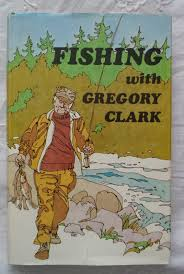
     I will mention some major collections below which are held by university libraries and direct you to some information about them. My main purpose, however, is to introduce you to a collection about which not much is known. It is The Gregory Clark Piscatorial Collection located in the Archives and Special Collections at Western University.


Selected Piscatorial Collections

          
     Since this post is about the collection held at Western University and since the collections elsewhere are well-described this will be brief.

Harvard University
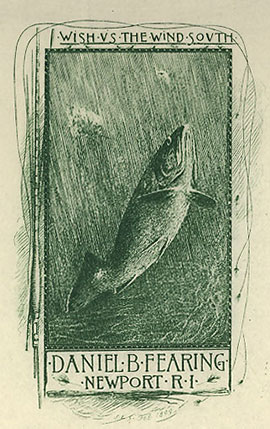
     Harvard has a whale of a collection and it even has a huge collection of bookplates about angling. The basis for the collection was a donation by Daniel B. Fearing back in 1918. It looks as though the collection has been dispersed and much is probably in storage. See: "Fearing Library Given to Harvard," Christian Science Monitor, July 19, 1918; "Harvard's 21, 800 Books About Fishing," Ronald Kriss, Boston Globe, Mar. 28, 1954 and "New Collection for Widener: D.B. Fearing '82 Willed His Entire Library to University, Harvard Crimson, Sept. 24, 1918. The Fearing Bookplates are found in the Houghton Library Bookplate Collection.

Princeton University
     For information about how Princeton became a "repository for one of the finest angling collections in the world" see: "Angling Books", J.I. Merritt, The Princeton University Library Chronicle, Vol.41, No.1, Autumn, 1979, p.30. (Available via JSTOR).

   In Canada, there are good collections at the University of Alberta and the University of British Columbia.

The University of Alberta 
“The Dancik Collection consists of more than 3,000 books and an equal number of ephemeral publications. Many are titles of extreme rarity, often illustrated with woodcuts, copper or steel engravings, chromolithographs, and photo engravings. Beyond documenting the history and practice of angling, the collection is a significant research resource for freshwater biologists, limnologists, and ichthyologists, and for the study of ecology and wildlife resource management.”
The collection was featured in an exhibition “A Contemplative Angler”.
A story about the award-winning catalogue for the exhibition is found in the University of Alberta publication Folio March 1, 2019 “Fish Stories: Rare Collection of Angling Lore Featured in Popular U of A Exhibit”.

The University of British Columbia
"The Library of the University of British Columbia has an excellent collection of books on angling and fly-fishing, known as the Harry Hawthorn Collection. At present it totals more than 2200 books, including many rare and valuable items. This Collection came about as the result of a fishing holiday in 1953 by eight UBC professors and Roderick Haig-Brown at Upper Campbell Lake."
See also: A Brief History of the Harry Hawthorn Foundation. A bibliography relating to this collection is found among the books in the Clark Collection described below. See the entry for: The Contemplative Man's Recreation....


   For additional angling collections see:  Backcasts: A Global History of Fly Fishing and Conservation, edited by Samuel Snyder, Bryon Borgelt, Elizabeth Tobey.
See the: "Appendix: Research Resources: A List of Libraries, Museums, and Collections Covering Sporting History, Especially Fly Fishing”. p.317. Additional details are available at the publisher, the University of Chicago Press.


The Gregory Clark Piscatorial Collection


   This collection of angling books is held in the Archives and Special Collections at Western University. At this time (c2019) there does not appear to be any information about the Gregory Collection provided by the Western Libraries (or I could not find any). My purpose here is to provide some. I have assembled the information and am alone responsible for it.

     For additional details, I have attached the following pdf file: The Gregory Clark Piscatorial Collection. (50+pp)

Tuesday, 29 October 2019

Halloween Sadism

There Should be No Orange Alert

Image result for pumpkin carving designs 
    I have been away and am behind in my postings so I will make this short Public Service Announcement: Enjoy Halloween and Let Your Kids Eat the Treats!

    The subject of pins and razor blades in Halloween candy came up when we were visiting the grandkids. Apparently it is a problem even in Lotusland (Vancouver). Back here in the mid-west, where it is also a huge issue,  my wife is carefully packaging "Goodie Bags" which consist only of sealed sanitized items without peanuts and gluten which are wrapped in a related article from Consumer Reports endorsing the contents.
     Trust me. Tampered treats are not something to worry about. Rather than worrying next year, spend your time baking and making the kids some homemade goodies.

Sources:
     There is no reason you should trust me. You can trust this credentialed academic who has been studying 'Halloween Sadism' for over 30 years. From this attached report you will learn that it is not a problem. Apart from a table listing "Reported Incidents" for over 60 years you will find a thorough bibliography. Halloween Sadism: The Evidence, Joel Best.

Post Script: If you are still scared sh...less about all the other things that are likely to kill or injure your child, read his book: Threatened Children: Rhetoric and Concern About Child-Victims.


Monday, 23 September 2019

QUENTIN REYNOLDS


 Reynolds and the University of Western Ontario

     I ran across Reynolds when I was reading about Ernie Pyle, about whom I just posted. Like Pyle he was, for a portion of his career, a war correspondent and they both reported from London during the Blitz. Pyle went on to win a Pulitzer and was awarded honorary degrees from Indiana University and the University of New Mexico before he was killed in the war. Reynolds continued on as a writer and he also was awarded an honorary degree - from the University of Western Ontario. 
     An account of the conferral is provided below and within it there is an indication that the choice of Reynolds was controversial. The writer of the account (President Fox of Western) thinks that the citizens of Western Ontario were misguided in their opinion of Reynolds and suggests that some members of the UWO Senate were equally ill-informed. 
     I have no idea what would have been controversial about the choice of Reynolds to be honored by Western. At the end of the excerpt below it appears that the residents of St. Thomas, at least, were enthusiastic when Reynolds arrived there and President Fox was obviously impressed. University records and publications probably provide some answers, but they are not readily accessible, nor are the local newspapers from that time. I did find one article in the Globe and Mail, but there is no hint of any controversy. You are welcome to dig deeper.
     Twice there are mentions below of a trial involving Quentin Reynolds and Westbrook Pegler, but it was the latter who was more controversial. More information is provided.
     About a decade after the degree was granted, Mr. Reynolds was involved in a Canadian Hoax, but even that does not reflect negatively upon him. The details are provided after the Western story.
     Here it is:
     At the autumn convocation, November 26, 1943, the University conferred the honorary degree of Doctor of Laws upon the famous United States war correspondent, Quentin Reynolds. The action had been preceded by considerable adverse criticism from citizens of Western Ontario -- an attitude that was not in accord with the high acclaim given to Quentin Reynolds in Britain, from such men as Winston Churchill and from high ranking naval officers as well as from the British public in general. Reynolds’ fearless reporting of the famous Dieppe raid and other war activities of the Allies was counted as tightening the bonds of understanding amongst the Allies and especially between Britain and the United States. Reynolds’ whole record confirms the soundness of that judgement. It was doubly confirmed by the evidence that was brought out in the famous suit for libel and slander instituted in 1949 against Westbrook Pegler and the Hearst Syndicate.
Now it will be interesting for the alumni and students of Western to know how the nomination of Quentin Reynolds for the Doctoral honour came about. Usually such nominations originate in the University Senate. In this case, however, it was the chairman of the Board of Governors, Mr. Arthur Little, who made the suggestion that Reynolds’ name be laid before the Senate. When I had succeeded in getting the Committee on Honorary Degrees to endorse Mr. Little’s suggestion, I found the same ignorance prevailing in the Senate as among the general public of Western Ontario. Thus I had considerable difficulty  in persuading the Senate to permit the Secretary of the Senate, the Registrar of the University, to offer Quentin the degree.
After several days, we received a letter of acceptance from Reynolds who asked that he be met at the Michigan Central Station in St. Thomas at a certain hour. There the Chairman of the Board and myself met him. Pending the day of his arrival (November 26, 1943) we had been deluged by requests by the people of St. Thomas to be given the opportunity to have their copies of Reynolds’ books autographed by him. So large did this company become that the gathering for the autographs was arranged for, together with a luncheon, to take place at the Air Force Station several miles south of St. Thomas (now the Ontario hospital). The proceedings were made as concise as possible. Reynolds spoke briefly about his experience at Dieppe and then the autographing fest began.
In the evening the Convocation ceremony was held in the auditorium of the H.B. Beal Technical School. It was honoured by the presence of the Lieutenant Governor of Ontario, my old friend Mr. Albert Matthews, whose aide-de-camp for the occasion was his own son, General Bruce Matthews.
May I close by adding that during the several hours I had in London and St. Thomas in 1943 with Quentin Reynolds, I found him the same friendly, generous spirit that was brought out in the trial of his famous suit in 1954.
(from: Sherwood Fox of Western. Chapter XIX, “The War Years and After,” pp. 211-213).

Quentin Reynolds vs Westbrook Pegler

     Reynolds sued Pegler for libel and won, BIG. The $175,000 awarded was the largest libel judgement up to that time. See: "Quentin Reynolds Wins Libel Action: Court Awards $175,001 in Suit Against Pegler and Two Hearst Concerns," New York Times, June 29, 1954. The Supreme Court refused to review the case: "High Court Declines Pegler Trial Review," New York Times, Oct. 11, 1955. Louis Nizer defended Reynolds and wrote about the case in My Life in Court. The story of the trial later became a Broadway play and was adapted for the movies.

The Canadian Hoax

The Man Who Wouldn't Talk: The Heroic True Story of 'The Gentle Spy'


     That is the title of a book by Quentin Reynolds. The "Man Who Wouldn't Talk" was George DuPre, an Albertan who served with British Intelligence in France where he  remained silent even after being tortured by the Gestapo. He did talk a lot after the war. He talked to service clubs, business groups and toured the country with the Canadian Forestry Association where "he spoke mostly on his sensational career as a saboteur and of arranging escapes for Allied airmen." Readers Digest and Random House became interested and Reynolds wrote the book.
     The "heroic true story" turned out not to be true. No one had checked. The story had been universally accepted. About two weeks after the book was published someone who had served with DuPre showed up at the Calgary Herald and the hoax was exposed.
     Poor DuPre had just wanted to impress his wife and the small lies he told became bigger ones told to larger audiences. Apparently money was not the motive and DuPre was apologetic: "I am truly sorry that I misled Quentin Reynolds and the editor's of Reader's Digest. These men were kindness itself to me and believed in me."
     Reynold's remarked "that this may turn out to be my first novel." Bennet Cerf, the president of Random House came up with an ingenuous solution. The book was simply re-classified as "Fiction".

Sources:
   The quotations in the section about the hoax are from: "Calgarian's Spy Role Is Exposed as Big Hoax," Globe and Mail, Nov. 16, 1953 or from the very thorough account: "Story Too Good To Be True," Joseph F. Dinnen, Boston Globe, Nov. 22, 1953. 
    Here is a short review of The Man Who Wouldn't Talk written before the hoax was exposed:
KIRKUS REVIEW
"An undemonstrative narrative of a Canadian born, British agent during the war is grave rather than dashing- and tells of George Dupre, a gentle, quiet, and deeply religious man who spent more than four years along side of the French underground and endured the brutalized inquisition of the Gestapo without betraying his identity. An intensive period of training in England groomed him for the alias of Pierre Touchette, an idiot, and he returned to Touchette's native town- Torigni- as a garage helper. His imbecility of speech and gesture gave him a certain immunity from the Germans as during the years ammunition was stolen as well as cars, installations dynamited, and British pilots rescued. But aged Madame Bouvot, who worked along with him, was to use her own life as a means of taking that of several German officers; and Armand, a boy of 14, was shot by a firing squad before his eyes. During the ordeal of questioning, his nose was broken and ""reset"" twice by the same fist; boiling water was poured down his throat; and hypodermics applied the final torture from which he emerged damaged in body but unbroken in spirit. He then went to Hamburg as forced labor in a plant where they sank ""the subs before they got wet""; returned to Torigni, and finally to England where he experienced a delayed reaction to the experiences endured and witnessed..... A plain clothes, not cloak and sword, version of the foreign agent- whose survival depends on a sober, steady, precise obedience to his superiors and his orders and takes its stamina from an inner faith. The Quentin Reynolds name will help to carry this to a wide audience." Pub Date: Oct. 23rd, 1953


Post Script:
One of those odd coincidences - this article just appeared in the New York Times: "It's a Fact: Mistakes are Embarrassing the Publishing Industry," Alexandra Alter, Sept. 22, 2019.

Bibliography of Books by Quentin Reynolds

Britain Can Take It, Dutton, 1941.
The Wounded Don't Cry, Dutton, 1941.
A London Diary, Random House, 1941.
Convoy , Random House, 1942 (published in England as Don't Think It Hasn't been Fun)
American Arms, Todd, 1942.
Only the Stars are Neutral, Random House, 1942.
Dress Rehearsal: The Story of Dieppe, Random House, 1943.
The Curtain Rises, Random House, 1944.
Officially Dead: The Story of Commander C.D. Smith, Random House, 1945.
70,000 to 1: The Story of Lieutenant Gordon Manuel, Random House, 1946.
Leave It to the People, Random House, 1949.
The Wright Brothers, Pioneers of American Aviation, Random House, 1950.
Courtroom: The Story of Samuel S. Leibowitz, Farrar, Straus, 1950, 
Custer's Last Stand, Random House, 1951.
The Man Who Wouldn't Talk, Random House, 1953.
I, Willie Sutton, Farrar, Straus, 1953.
The Battle of Britain (illustrated by Clayton Knight), Random House, 1953.
The Amazing Mr. Doolittle: A Biography of Lieutenant General James H. Doolittle, Appleton-Century, 1953.
The F.B.I., Random House, 1954, reprinted, 1963.
The Life of Saint Patrick, Random House, 1955.
Headquarters, Harper, 1955, reprinted, Greenwood Press, 1972 
The Fiction Factory; or, From Pulp Row to Quality Street: The Story of 100 Years of Publishing at Street & Smith, Random House, 1955.
Operation Success, Duell, Sloan, 1957.
They Fought for the Sky: The Dramatic Story of the First War in the Air, Rinehart, 1957.
Known but to God, J. Day, 1960.
Minister of Death: The Adolf Eichmann Story , Viking, 1960.
By Quentin Reynolds (autobiography), McGraw-Hill, 1963.
Winston Churchill, Random House, 1963 (published in England as All about Winston Churchill, W.H. Allen, 1964 ).
With Fire and Sword: Great War Adventures, Dial Press, 1963.
Macapagal, D. McKay, 1965.