Showing posts with label Sherwood Fox. Show all posts

Friday, 1 July 2022

Pawpaw Redux


The Groves of Academe


   I just wrote about the Pawpaw tree ( in, Edible and Available in Ontario), knowing that the subject of pawpaws is very popular and will attract readers. Overlooked in the sources and references provided were some which were found close by,  along with some actual pawpaw trees! I am pleased that the campus at Western now has some, along with additional sources you should now consult. 
   I happened to visit the campus by bike recently and noted all the construction activity. That led me to search the Western website to see what was going on. That is when I discovered the pawpaw sources and trees of which I was unaware. It appears that the Western landscaping crews are as active as the construction ones. 

   Start with this good article from Western News: "Indigenous Tree Bears Rich History, Culture for Western: Rare Pawpaw Brings Hope For Healthy Ecosystem on Campus," Mari-Len De Guzman, Sept. 30, 2021. Since the article came out at the beginning of the academic year it may have been overlooked. Here are some bits; read the entire piece.
"A new set of pawpaw (Asimina triloba) trees have been planted on UC Hill near the Physics and Astronomy Building recently, in the hopes of increasing the campus’s biodiversity and promoting a healthier natural ecosystem....
The five pawpaws planted this past summer, each measuring about a metre in height, add to the unnumbered pawpaw trees already growing on campus, mostly in the Middlesex College area....
As stewards of the campus landscape, Western’s landscape services plants about 200 Carolinian or native trees on campus each year. The pawpaws were among 203 trees planted this year, including bitternut, black gum and other....
Enriching plant biodiversity across campus is part of Western’s commitment to sustainability outlined in its new strategic plan. Western is also home to thousands of tree species and has been officially designated as an arboretum.
The image above is from the article. Thanks should be offered to Mr. Vanden Huevel and the landscaping crews the next time you visit Western. 
For additional background see: "Planting the Seeds of Sustainability: New and Enhanced Gardens Build on Western's Natural Beauty and Biodiversity," Keri Ferguson, Western News, June 24, 2021. 

The Sherwood Fox Arboretum was established in 1981 and more can be learned about it by clicking on the link provided.  And, even more is offered by the Department of Biology. 

Post Script: 
    Dr. Sherwood Fox was a president of UWO and a classicist as well as a naturalist. I have mentioned him before. You will find him in the post about John Muir since President Fox wrote about Muir's time in Canada. He also wrote about "The Old Grand Bend Cut" and is mentioned in the post about "Parks Along the Great Lakes." He also wrote about the BATS in his Muskoka cottage and the large flocks of PASSENGER PIGEONS which used to exist and President Fox is found in those posts. 

The Bonus:
   The Groves of Academe seems like a suitable subtitle for this post. Doubly so, since it is also the title of one of the most famous 'campus novels.' The son of the author of it taught for years at Western and is now retired.
 

Monday, 23 September 2019

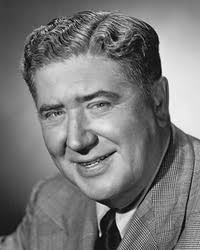
QUENTIN REYNOLDS


 Reynolds and the University of Western Ontario

     I ran across Reynolds when I was reading about Ernie Pyle, about whom I just posted. Like Pyle he was, for a portion of his career, a war correspondent and they both reported from London during the Blitz. Pyle went on to win a Pulitzer and was awarded honorary degrees from Indiana University and the University of New Mexico before he was killed in the war. Reynolds continued on as a writer and he also was awarded an honorary degree - from the University of Western Ontario. 
     An account of the conferral is provided below and within it there is an indication that the choice of Reynolds was controversial. The writer of the account (President Fox of Western) thinks that the citizens of Western Ontario were misguided in their opinion of Reynolds and suggests that some members of the UWO Senate were equally ill-informed. 
     I have no idea what would have been controversial about the choice of Reynolds to be honored by Western. At the end of the excerpt below it appears that the residents of St. Thomas, at least, were enthusiastic when Reynolds arrived there and President Fox was obviously impressed. University records and publications probably provide some answers, but they are not readily accessible, nor are the local newspapers from that time. I did find one article in the Globe and Mail, but there is no hint of any controversy. You are welcome to dig deeper.
     Twice there are mentions below of a trial involving Quentin Reynolds and Westbrook Pegler, but it was the latter who was more controversial. More information is provided.
     About a decade after the degree was granted, Mr. Reynolds was involved in a Canadian Hoax, but even that does not reflect negatively upon him. The details are provided after the Western story.
     Here it is:
     At the autumn convocation, November 26, 1943, the University conferred the honorary degree of Doctor of Laws upon the famous United States war correspondent, Quentin Reynolds. The action had been preceded by considerable adverse criticism from citizens of Western Ontario -- an attitude that was not in accord with the high acclaim given to Quentin Reynolds in Britain, from such men as Winston Churchill and from high ranking naval officers as well as from the British public in general. Reynolds’ fearless reporting of the famous Dieppe raid and other war activities of the Allies was counted as tightening the bonds of understanding amongst the Allies and especially between Britain and the United States. Reynolds’ whole record confirms the soundness of that judgement. It was doubly confirmed by the evidence that was brought out in the famous suit for libel and slander instituted in 1949 against Westbrook Pegler and the Hearst Syndicate.
Now it will be interesting for the alumni and students of Western to know how the nomination of Quentin Reynolds for the Doctoral honour came about. Usually such nominations originate in the University Senate. In this case, however, it was the chairman of the Board of Governors, Mr. Arthur Little, who made the suggestion that Reynolds’ name be laid before the Senate. When I had succeeded in getting the Committee on Honorary Degrees to endorse Mr. Little’s suggestion, I found the same ignorance prevailing in the Senate as among the general public of Western Ontario. Thus I had considerable difficulty  in persuading the Senate to permit the Secretary of the Senate, the Registrar of the University, to offer Quentin the degree.
After several days, we received a letter of acceptance from Reynolds who asked that he be met at the Michigan Central Station in St. Thomas at a certain hour. There the Chairman of the Board and myself met him. Pending the day of his arrival (November 26, 1943) we had been deluged by requests by the people of St. Thomas to be given the opportunity to have their copies of Reynolds’ books autographed by him. So large did this company become that the gathering for the autographs was arranged for, together with a luncheon, to take place at the Air Force Station several miles south of St. Thomas (now the Ontario hospital). The proceedings were made as concise as possible. Reynolds spoke briefly about his experience at Dieppe and then the autographing fest began.
In the evening the Convocation ceremony was held in the auditorium of the H.B. Beal Technical School. It was honoured by the presence of the Lieutenant Governor of Ontario, my old friend Mr. Albert Matthews, whose aide-de-camp for the occasion was his own son, General Bruce Matthews.
May I close by adding that during the several hours I had in London and St. Thomas in 1943 with Quentin Reynolds, I found him the same friendly, generous spirit that was brought out in the trial of his famous suit in 1954.
(from: Sherwood Fox of Western. Chapter XIX, “The War Years and After,” pp. 211-213).

Quentin Reynolds vs Westbrook Pegler

     Reynolds sued Pegler for libel and won, BIG. The $175,000 awarded was the largest libel judgement up to that time. See: "Quentin Reynolds Wins Libel Action: Court Awards $175,001 in Suit Against Pegler and Two Hearst Concerns," New York Times, June 29, 1954. The Supreme Court refused to review the case: "High Court Declines Pegler Trial Review," New York Times, Oct. 11, 1955. Louis Nizer defended Reynolds and wrote about the case in My Life in Court. The story of the trial later became a Broadway play and was adapted for the movies.

The Canadian Hoax

The Man Who Wouldn't Talk: The Heroic True Story of 'The Gentle Spy'


     That is the title of a book by Quentin Reynolds. The "Man Who Wouldn't Talk" was George DuPre, an Albertan who served with British Intelligence in France where he  remained silent even after being tortured by the Gestapo. He did talk a lot after the war. He talked to service clubs, business groups and toured the country with the Canadian Forestry Association where "he spoke mostly on his sensational career as a saboteur and of arranging escapes for Allied airmen." Readers Digest and Random House became interested and Reynolds wrote the book.
     The "heroic true story" turned out not to be true. No one had checked. The story had been universally accepted. About two weeks after the book was published someone who had served with DuPre showed up at the Calgary Herald and the hoax was exposed.
     Poor DuPre had just wanted to impress his wife and the small lies he told became bigger ones told to larger audiences. Apparently money was not the motive and DuPre was apologetic: "I am truly sorry that I misled Quentin Reynolds and the editor's of Reader's Digest. These men were kindness itself to me and believed in me."
     Reynold's remarked "that this may turn out to be my first novel." Bennet Cerf, the president of Random House came up with an ingenuous solution. The book was simply re-classified as "Fiction".

Sources:
   The quotations in the section about the hoax are from: "Calgarian's Spy Role Is Exposed as Big Hoax," Globe and Mail, Nov. 16, 1953 or from the very thorough account: "Story Too Good To Be True," Joseph F. Dinnen, Boston Globe, Nov. 22, 1953. 
    Here is a short review of The Man Who Wouldn't Talk written before the hoax was exposed:
KIRKUS REVIEW
"An undemonstrative narrative of a Canadian born, British agent during the war is grave rather than dashing- and tells of George Dupre, a gentle, quiet, and deeply religious man who spent more than four years along side of the French underground and endured the brutalized inquisition of the Gestapo without betraying his identity. An intensive period of training in England groomed him for the alias of Pierre Touchette, an idiot, and he returned to Touchette's native town- Torigni- as a garage helper. His imbecility of speech and gesture gave him a certain immunity from the Germans as during the years ammunition was stolen as well as cars, installations dynamited, and British pilots rescued. But aged Madame Bouvot, who worked along with him, was to use her own life as a means of taking that of several German officers; and Armand, a boy of 14, was shot by a firing squad before his eyes. During the ordeal of questioning, his nose was broken and ""reset"" twice by the same fist; boiling water was poured down his throat; and hypodermics applied the final torture from which he emerged damaged in body but unbroken in spirit. He then went to Hamburg as forced labor in a plant where they sank ""the subs before they got wet""; returned to Torigni, and finally to England where he experienced a delayed reaction to the experiences endured and witnessed..... A plain clothes, not cloak and sword, version of the foreign agent- whose survival depends on a sober, steady, precise obedience to his superiors and his orders and takes its stamina from an inner faith. The Quentin Reynolds name will help to carry this to a wide audience." Pub Date: Oct. 23rd, 1953


Post Script:
One of those odd coincidences - this article just appeared in the New York Times: "It's a Fact: Mistakes are Embarrassing the Publishing Industry," Alexandra Alter, Sept. 22, 2019.

Bibliography of Books by Quentin Reynolds

Britain Can Take It, Dutton, 1941.
The Wounded Don't Cry, Dutton, 1941.
A London Diary, Random House, 1941.
Convoy , Random House, 1942 (published in England as Don't Think It Hasn't been Fun)
American Arms, Todd, 1942.
Only the Stars are Neutral, Random House, 1942.
Dress Rehearsal: The Story of Dieppe, Random House, 1943.
The Curtain Rises, Random House, 1944.
Officially Dead: The Story of Commander C.D. Smith, Random House, 1945.
70,000 to 1: The Story of Lieutenant Gordon Manuel, Random House, 1946.
Leave It to the People, Random House, 1949.
The Wright Brothers, Pioneers of American Aviation, Random House, 1950.
Courtroom: The Story of Samuel S. Leibowitz, Farrar, Straus, 1950, 
Custer's Last Stand, Random House, 1951.
The Man Who Wouldn't Talk, Random House, 1953.
I, Willie Sutton, Farrar, Straus, 1953.
The Battle of Britain (illustrated by Clayton Knight), Random House, 1953.
The Amazing Mr. Doolittle: A Biography of Lieutenant General James H. Doolittle, Appleton-Century, 1953.
The F.B.I., Random House, 1954, reprinted, 1963.
The Life of Saint Patrick, Random House, 1955.
Headquarters, Harper, 1955, reprinted, Greenwood Press, 1972 
The Fiction Factory; or, From Pulp Row to Quality Street: The Story of 100 Years of Publishing at Street & Smith, Random House, 1955.
Operation Success, Duell, Sloan, 1957.
They Fought for the Sky: The Dramatic Story of the First War in the Air, Rinehart, 1957.
Known but to God, J. Day, 1960.
Minister of Death: The Adolf Eichmann Story , Viking, 1960.
By Quentin Reynolds (autobiography), McGraw-Hill, 1963.
Winston Churchill, Random House, 1963 (published in England as All about Winston Churchill, W.H. Allen, 1964 ).
With Fire and Sword: Great War Adventures, Dial Press, 1963.
Macapagal, D. McKay, 1965.

Wednesday, 17 July 2019

Parks Along the Great Lakes

[Those of you who are not interested in parks, nature, Savannah oaks and things 'Carolinian' can proceed directly to the Post Script where the frivolous material is found.]

Pinery Provincial Park


     A few weeks back we visited the Pinery which is located on Lake Huron a few kilometres south of the tourist resort town of Grand Bend. It is a large 'Carolinian' forest, complete with sand dunes and a long beach that is somewhat diminished given the high water this year. If you enjoy peace and quiet and solitude, but dislike camping and prefer fine dining, then finding a resort or cottage close to a park is a good option when travelling in the Great Lakes area. Gathered here is some information about such parks along the Lakes, on both sides of the border.
     Local readers of this blog (there is one that I know of) will be familiar with "Ontario's West Coast" or, as some brochures call it, "Ontario's Blue Coast" -- the water as you come over the dunes is often very blue. The Ontario Parks web site is the place to start and The Friends of the Pinery is useful. The Lambton Heritage Museum is not far from the gates to the Park.
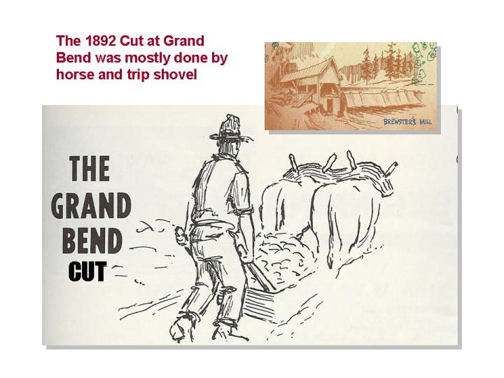
     If you want a little history and some background about the 'Carolinian' nature of the park see these two short works by a classicist who was also a former President of what is now Western University: 'T Aint Runnin' No More: The Story of Grand Bend, The Pinery and the Old River Bed and Some Trees and Shrubs of the Carolinian Zone of Southern Ontario. Both are by Sherwood Fox.
     The title of the first work refers to the Aux Sables River which was damned, detoured and tampered with, like all rivers in pioneer days (remember my recent note about the Chicago River which was made to flow in reverse). One of the 'cuts' is pictured above.


Indiana Dunes National Park

You are probably surprised that there is a U.S. NATIONAL park so close by and that the state of Indiana has a short bit of coast along Lake Michigan. Although a state park survived for years between the abandoned steel mills and new casinos, it just became an actual NATIONAL park very recently (the 61st) even though the Trump administration was opposed. Over the years many were opposed because the sand and steel were more important than a few dunes.

I became aware of the Indiana dunes last year when I began reading some of the books by Edwin Way Teale. He spent his childhood years visiting grandparents who lived close by the dunes and he describes how he became interested in nature in the book Dune Boy.

For a recent article about Indiana Dunes see: "Visiting the Nation's Newest National Park: Indiana Dunes, Michael Schroeder, Washington Post, June, 7, 2019. The park site is here and there is a Wikipedia entry. The picture of the protestors comes from a good blog piece: "The Story Behind Indiana's First National Park", REI Co-op Journal.

Other Great Lakes Parks


Ontario

The drive along Highway 17 near Batchawana Bay offers outstanding views of Lake Superior. And Batchawana Bay Provincial Park is a perfect spot to stop and immerse yourself in this stunning scenery. A plaque erected by the Ontario Motor League highlights Batchawana Bay (at Chippewa Falls) as the mid-point in the longest national highway in the world - the Trans-Canada Highway.

Prized for its sandy beach, dunes and glorious sunsets.
Includes a wetland and a young hardwood forest
Diverse habitat nurtures rare plants and protects many woodland animals and birds.
On Lake Huron north of Kincardine.

Killbear
Kilometres of rugged, rocky shoreline mixed with numerous sand beaches
Beautiful views of windswept pines on rocky islands
6 km recreational trail for hiking and biking
Visitor Centre
Excellent sailing and windsurfing conditions
Georgian Bay sunsets
Parry Sound area

MacGregor Point 
MacGregor Point is one of the most ecologically diverse natural places along the Lake Huron shoreline. A complex ecosystem unfolds at this all-season park on a seven-kilometre stretch of coast, just south of Port Elgin.


Neys Provincial Park 
Enjoy one the finest sand beaches on Lake Superior’s north shore.View a model of a former prisoner-of-war (POW) camp at the Visitor Centre and the actual remains of POW Camp 100.
See Pic Island as it was immortalized on canvas by Lawren Harris of the famous Canadian painting team, The Group of Seven.


Pancake Bay
More than 3 km of beautiful sand beach and Caribbean blue water
Panoramic view of Lake Superior from the Edmund Fitzgerald Lookout hiking trail


The United States


Michigan 
   Isle Royale National Park is located in the northwest corner of Lake Superior. The island contains a roadless backcountry which prohibits the use of all wheeled vehicles and devices (except wheelchairs). Visitors traveling to Isle Royale must arrive by boat or seaplane. There are a variety of transportation services available that depart from Houghton, Michigan, Copper Harbor, Michigan and Grand Portage, Minnesota. Vehicular parking is available at all departure locations.
   Pictured Rocks National Lakeshore is located on the south shore of Lake Superior in Michigan's
Upper Peninsula, between the communities of Munising (west) and Grand Marais (east).
    Sleeping Bear Dunes National Lakeshore is located in Northwestern Lower Michigan along the eastern shoreline of Lake Michigan. The closest city is Traverse City, 25 miles to the east

Wisconsin 
 The headquarters visitor center is one block off Wisconsin Route 13 in the city of Bayfield.

Sources:
If you wish to meander around this area of the Great Lakes, see these useful Michigan web sites:
Great Lakes Circle Tours
Great Lakes Circle Tour 
Pure Michigan Getaways
Post Script:
   When you saw that this post was about the Pinery/Grand Bend area, you probably wondered whether Mitt Romney did actually tie his dog to the top of the car when he drove to visit the family compound which is in the area.  I anticipated such a query and was fully prepared to do some thorough investigative reporting.  It is not necessary. Just see this: "Mitt Romney Dog Incident".

Bonus: If you noticed the Pure Michigan link above you probably thought of those good Michigan ads and "Yes" there is even a Wikipedia entry about them: Pure Michigan. 

Sunday, 4 February 2018

Passenger Pigeons


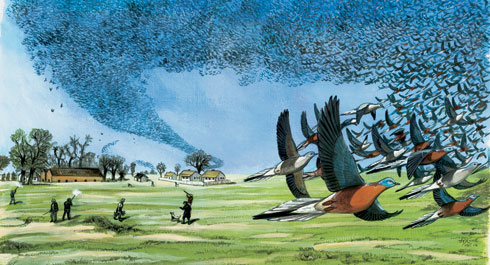
     Back in 2014 the passenger pigeon was much in the news because the last one had died 100 years before. Martha was her name and she died in the Cincinnati Zoo (George was already gone). Like the parrot in the Monty Python sketch, she was dead, deceased, had ceased to be, was bereft of life and was no more. She was an ex-passenger pigeon. They are all extinct and there are no more.

     Even if you are not interested in birds you probably read some of those news accounts or you may have come across stories about how, many years ago, the flocks of passenger pigeons were sometimes so large they blocked out the sun and took days to pass. I just ran across one of those stories and it reminded me of the 2014 centenary of the extinction. This story takes place in Ontario and since I have not seen any references to it, I will present it here.

Pigeons on The Bruce

    W. Sherwood Fox was a classics scholar and a president of the University of Western Ontario. He was also very interested in nature which is why he was mentioned in my recent post about John Muir, about whom he wrote an essay in The Bruce Beckons: The Story of Lake Huron’s Great Peninsula. He also wrote one about the passenger pigeon in the same book - “In the Day of the Wild Pigeon,” (Chapter 9). Here is how it begins: 

     “Of the many gifts that Nature bestowed upon The Bruce [ the Bruce Peninsula] one in particular will never be seen there again. Indeed, it has vanished from the face of the earth. It is known now only in museums, in slim dockets of old records, and in the memories of a very few men of exceedingly great age.( p.94)

    The prevalence of the pigeon is noted by his father who arrived on The Bruce in the early 1870s:

     “A picture of his entry into this frontier household was vividly stamped on his memory by two events of the first day: as he stepped from the steamer to the shore and walked to his summer quarters a vast flock of pigeons were flying from the east to their nesting area on the Peninsula and were casting a dark, swiftly moving cloud over the land. At his very first meal, supper, he was served adult wild pigeon. At breakfast the next morning this was the main dish, and for dinner too and then again for supper; indeed, it was the only piece de resistance - and a tough one at that.” (p.95)
 
     The size of the roost was substantial even if one factors in a bit of local pride:

     “The people of the region took pride in believing that the Peninsula was ideal country for the pigeons. It was common opinion around Colpoy’s [Bay] - an opinion based solely on rumour - that the nesting and roosting colonies were so numerous as to form virtually an unbroken chain running northward to a point not far short of Tobermory. Of course, that was not quite true, but to express doubts about it was counted in the new settlement as disloyalty to the wonderful greatness of the Peninsula. However, the only colony that Father himself saw was very long indeed: it began near Chief’s Point on Lake Huron just north of the Sauble River and extended in a broad sinuous line north to within a couple of miles of Lake Berford. That is, it ran from the west side of Amabel Township to a point two or three miles within Albemarle and slightly less than that distance north of Wiarton….” That the colony covered several square miles was all too obvious, but how many one could only guess without making a special expedition to determine the exact figure.” (pp.95-96)

     Here is how the essay ends:

   “But never again will anyone, in The Bruce or elsewhere in North America, know a surfeit of the passenger pigeon. It has gone forever. In The Bruce its numbers began to dwindle rapidly in the last three years of the seventies; by 1885 the birds were scarce indeed. A resident of Red Bay whom I knew saw his last pigeon near there in 1893. As far as the whole Georgian Bay region is concerned the last word of the race’s obituary is this: in May of 1902 three pigeons - a pair and a single bird - were seen near Penetanguishene, Simcoe County.” (p.106)

Pigeons Over Fort Mississauga

   
    There is another Ontario account that indicates just how plentiful the pigeons were in the late 19th century.  It is easier to understand why there are no longer any passenger pigeons in the areas around metropolitan Toronto, however,  since there is not much evidence now of any nature at all and few trees in which any kind of bird could roost. Around 1860 the area was not so barren. This description is from Ross R. King’s The Sportsman and Naturalist in Canada (1866):

     Early in the morning I was apprised by my servant that an extraordinary flock of birds was passing over, such as he had never seen before. Hurrying out and ascending the grassy ramparts, I was perfectly amazed to behold the air filled, the sun obscured by millions of pigeons, not hovering about but darting onwards in a straight line with arrowy flight, in a vast mass a mile or more in breadth, and stretching before and behind as far as the eye could reach.
     Swiftly and steadily the column passed over with a rushing sound, and for hours continued in undiminished myriads advancing over the American forests in the eastern horizon, as the myriads that had passed were lost in the western sky.
     It was late in the afternoon before any decrease in the mass was perceptible, but they became gradually less dense as the day drew to a close… The duration of this flight being about fourteen hours, viz. From four a.m. to six p.m., the column (allowing a probable velocity of sixty miles an hour) could not have been less than three hundred miles in length, with an average breadth, as before stated of one mile.
   During the following day and for several days afterwards, they still continued flying over in immense though greatly diminished numbers, broken up into flanks and keeping much lower, possibly being weaker and younger.

     There are other accounts of large flocks, so many of them in fact, that at least some of them must have been witnessed by reasonable observers who had no need to dramatically exaggerate. This particular account by King has been subjected to some scrutiny which is provided here:

     King never offered a numerical estimate, but Schorger, assigning two birds per square yard and a speed of sixty miles per hour, concludes that the flight involved an amazing 3,717,120,000 pigeons. At least three different scientists have each worked King’s data in recent years and come up with the same results as Schorger, although doubting that the pigeons would be flying at 60 mph as a normal speed during migration….Ken Brock of Indiana University Northwest created a graph showing the numbers of birds at speeds from 35 to 60 mph. But even at 35 mph, closer to the speed at which mourning doves fly, which is more unlikely given that the passenger pigeon was a far more accomplished flier than the dove , King witnessed over a billion birds passing over Fort Mississauga during the period of his observation.

Sources:

This is the place to begin: Project Passenger Pigeon. It is a tremendous website that is continually updated. There is a map one can click on to find information related to the area in which you reside. Canada is included and I learned that there are passenger pigeon skins, skeletons or mounts nearby at Western University and Medway High School.

This book is as good as its title: A Feathered River Across the Sky: The Passenger Pigeon’s Flight to Extinction. Joel Greenberg. Anyone will find it interesting. I was going to get a copy for my grandkids to show them what has been lost, but the story is too sad and there are too many “carnivals of slaughter.”

The Sportsman and Naturalist in Canada is available in its entirety over the Internet. You will find the Fort Mississauga account at the beginning of Chapter VI, on p.121. See also A Feathered River… where several other descriptions are provided. The analysis of the report by King is found on p.6.

If you are really interested see Margaret Mitchell’s The Passenger Pigeon in Ontario. Although it was published in 1935, the University of Toronto Press has made it available over the Internet. Beginning on p.132 you will find a list of the “Last Reported Appearances in Ontario.” The last passenger pigeon reported in Middlesex County was in 1888 (p.135).


Monday, 29 January 2018

John Muir


     A while back I happened upon A Thousand-Mile Walk to the Gulf, by John Muir. I enjoyed the book and you will as well if chapter headings like, “Kentucky Forests and Caves”, “Crossing the Cumberland Mountains” and “Through the River Country of Georgia”, are appealing. I quoted from the book in a post back in April about what are now  “Polluted Rivers”. 
    I then went on to quote at length from his equally enjoyable book The Story of My Boyhood and Youth. The more I read by him and about him, the more I realized that there was no need for me to carry on about Muir since there are so many good resources available. But, before leaving him I would like to: 1) offer some suggestions about sources; 2) say something about those who followed in Muir’s footsteps and 3) introduce you to material that relates to the time Muir spent in Canada. 
     Given what is going on politically in the United States, it is useful to read about and remember Muir, who played a major role in developing the parks which are now under attack by an unsympathetic Secretary of the Interior and the POTUS.

Basic Muir Sources:
    Muir was a founder of the Sierra Club and you should begin at their website which presents The John Muir Exhibit. It is a model of what a website should be and has been continually updated since 1994. You can read all of his books there as well as most of what has been written about them and him. If you prefer to hold a book, get the Library of America’s - John Muir: Nature Writings.

Walking the Walk


     If you are not convinced by my meagre remarks about A Thousand-Mile Walk then I will introduce you to some people who were so inspired by the book that they undertook the trip as well. I am sure that some of you have felt like striking out for the territories when a scene such as the one above was briefly spotted along an otherwise industrially blighted I 75. Well, these people decided to re-trace Muir’s footsteps which were, at times, near that route.

     Muir begins his walk with a short train ride in Sept. 1867 from Indianapolis. Reaching Louisville, he 
“steered through the big city by compass without speaking a word to anyone. Beyond the city I found a road running southward, and after passing a scatterment of suburban cabins and cottages I reached the green woods and spread out my pocket map to rough-hew a plan for my journey. My plan was simply to push on in a general southward direction by the wildest, leafiest, and least trodden way I could find, promising the greatest extent of virgin forest.” (p.2)

     He does not go as the crow would and veers east to Savannah and takes a steamship from there to Fernandina and then walks west across Florida to Cedar Key (the one on the northwest coast, not any of the ones heading to Key West.) I don’t think it was quite a 1000 miles, but it was still a long trek through the post-Civil War south. (Readers get their money’s worth, however,  since the concluding chapters take him to Cuba, New York, and back across Panama to California.)
     
      Presented here are some energetic and adventurous people who have followed Muir’s walk, although it should be added, that most didn’t walk and most didn’t make the complete trip. If you are thinking about it I suggest beginning with “John Muir’s Walk Across the Appalachians,” by Dan Styer. Styer closely read Muir and then used historical maps and other sources to chart his route through the Appalachians. His work provides a good example of how one should proceed. The text and pictures from Oberlin are available here. As a bonus, if you type in this phrase on the Internet you can see a portion of the route on google maps: “John Muir’s Walk Across the Appalachians”.

The most recent one was just completed in 2017. With the exception of the first one, these are found on the Sierra Club site.

Retracing John Muir’s: Thousand-Mile Walk to the Gulf., Chad Gilpin.
“In 1867 the budding naturalist and future father of our national parks, John Muir, embarked on his thousand-mile walk to the Gulf from Jeffersonville, Indiana, to Cedar Key, Florida. Almost 150 years later I undertook the same journey, retracing the wilderness advocate’s footsteps through the South to catalog all that has changed in a century and a half of progress, to try and better understand the inception of his environmental ethics, and to learn to see the world as he did, harmonious, interconnected, rejuvenating and imbued with a pervasive spirituality. The chapters of this thesis retell selected legs of that journey.
Chad Gilpin - work for a Master of Fine Arts and the University of Kentucky.
[The entire work is available through the University of Kentucky.]

Chuck Roe -A Sesquicentennial Account of John Muir's 1,000 Mile Walk 
 “A review of the landscape 150 years after Muir's walk, with a focus on the progress of land conservation and identification of the many publicly-accessible, protected natural areas now located immediately along Muir's route. Roe's intent was to observe and describe the publicly accessible parks, nature preserves, forests and wildlife management areas, and other recreational areas along Muir's walking route through parts of five southern states, in homage and testimony to the success story of land conservation in the southeastern U.S.”
[ This is a very well-done and a useful resource. From the introduction:
“As 2017 is the sesquicentennial year for John Muir’s thousand-mile walk across the southeastern U.S. (1867-68), it is likely that many people will be attempting to trace his path. After largely retiring from a forty-year career as a land and environmental conservation professional in the same region of our country, I've been inspired to retrace the path of Muir’s long walk myself, but with a different focus—that being by telling the story of land conservation along the route of Muir's Southern Trek.”]

James B. Hunt, Restless Fires: Young John Muir's Thousand-Mile Walk to the Gulf in 1867-68 (Macon, GA: Mercer University Press, 2012). “Provides a detailed rendering of Muir's thousand-mile walk based on both manuscript and published accounts. Hunt particularly examines the development of Muir's environmental thought as a young adult. Includes 14 photographic reproductions of pages from Muir's journal containing Muir's often whimsical drawings; three period photographs; and 1 modern (2011) map of Muir's route. As part of his research for the book, Hunt traveled Muir's route from Louisville, Kentucky, to Cedar Key, Florida beginning on September 1, 2007, discovering major and minor libraries and research institutions all along the route which aided in providing maps, diaries, newspapers, local histories, and other historical material relevant to the social, political, and economic context of Reconstruction of the communities through which Muir passed in 1867. A book jacket summary of this book is available, and an annotation on our Annotated John Muir Bibliography.”[on the Sierra Club website]

Ron "Ramblin" Boone, John Muir's "Thousand Mile Walk to the Gulf" "Revisited". 
“This self-published book relates the author's physical re-tracing of Muir's approximate waking route via a mini-camper. Each chapter includes brief excerpts from Muir identifying the various towns he passed through; Boone then elaborates on the history of each geographic area, both before and after Muir's 1867 journey. Includes a line-drawn map, and 14 sketches of various buildings seen along the route. While not really a scholarly work, the endnotes include references to many reference books which elucidate the history of the places Muir visited on his famous walk. (Washington, PA: "Ramblin" Ron Boone, 2006). ISBN No. 0910042969. 87 pp.; Illustrated, Preface, Endnotes, Index. 

Wil and Sarah Reding - Re-Walking Muir's 1,000 Mile Walk (2006) 
“Wil Reding, an interpretive naturalist, has long dreamed of re-walking Muir's 1,000 mile walk. He and his wife Sarah plan to begin re-tracing Muir's steps from Kentucky to Florida in May, 2006.”
[The Redings are a husband/wife team at “Rent a Rambling Naturalist”. They live close by in Kalamazoo and will for a fee share their walking experiences.]

Michael Muir's Horse Journey Re-Tracing Muir's 1,000 Mile Walk (2003) 
“Michael Muir, the great grandson of America's most famous naturalist, John Muir, was diagnosed with Multiple Sclerosis at the age of 15. He is a passionate believer in what people with disabilities can achieve. He uses Horse Journey to show by example that disability does not mean inability. In 2003, his Horse Journey followed the route taken by John Muir in his first great wilderness adventure, A Thousand-Mile Walk to the Gulf.”

Robert Perkins, "Looking for John Muir" - film documentary (1996) 
“The filmmaker here passed up an excellent opportunity to explore what Muir's 1,000 Mile Walk to the Gulf may look like today, but instead provides little more than scenes of driving a sidecar motorcycle down truck-infested highways; visiting motels and hotels; and finding almost nothing of Muir left in the South. Because Perkins travels with a dog, he cannot even visit the one place Muir visited which is now a National Park - Mammoth Cave National Park. The only bright spot in this dismal documentary is the visit to Bonaventure Cemetery, which appears to be as beautiful today as when Muir slept there in October of 1867.”

Dr. D. Bruce Means retraced Muir's 1,000 walk on the same dates as Muir (leaving Louisville Kentucky on September 2), but in 1984 rather than in 1867, using Muir's journals as a guide. He wrote about it on pages 212-214 (chapter 22 - "Okefenokee Alligators") of his book Stalking the Plumed Serpent and Other Adventures in Herpetology (Pineapple Press, Sarasota, Florida, 2008). Means was heartsick to discover that virtually none of Muir's wilderness remained along the route: "The deep, green sea of bossy oaks and virgin hardwood forests described by Muir were gone from Kentucky and Tennessee. 1 couldn't walk up 'the leafy banks of the Hiawassee ... with its surface broken to a thousand sparkling gems' because that 'most impressive mountain river' had long been drowned behind dams. And more than 90 percent of the vast Coastal Plain longleaf pine forest was clearcut and replaced with agriculture and sterile tree farms."
[For an account of this account see: “Retracing Naturalist’s 1867 Trek Across a Very Changed Southeast,” Robert Press, The Christian Science Monitor, Nov.19, 1984.]

John Muir's Longest Walk: John Earl, a Photographer, Traces His Journey to Florida by John Earl, with Excerpts from Muir's A Thousand-Mile Walk to the Gulf. (1975)
“Photographs of the route of the thousand-mile walk in March of 1973, starting at Cedar Key and retracing Muir's route backward so as to follow spring north. Earl sought out the few places that remain the way they were when Muir first saw them.”

(Another account is mentioned below. See Good’s, On The Trail of John Muir.)

John Muir in Canada

     I always associated Muir with the West and the Sierras. Prior to taking his 1000 mile walk he spent two years in what is now Ontario. From 1864 to 1866 he walked around southern Ontario and worked in Trout Hollow along the Bighead River near Meaford. He was employed at a mill making rakes and broom handles and clearly was very clever and inventive. Evidence of that is found at the Wisconsin Historical Society - have a look.

     Muir did not offer a specific account of his time in Canada and he probably lost most of his notes in the fire that destroyed the mill. What is known is found in letters he wrote while in Canada and, later, to friends in Canada and from the few local sources noted below. 

   As an aside, we often impute motives from the present as explanations for actions in the past and in that context the subject of ‘draft dodging” is raised by some who have studied Muir. He and his younger brother may have ‘skedaddled’ to Canada and there was a draft at the time. It is clear that both temperamentally and religiously John Muir would not have been ‘gung ho’ about the war that was raging. It was the case, however, that the numbers of both brothers were never called.

Sources Related to Canada

gift-shop-john-muir-letters

The Canadian Friends of John Muir
     It is odd that this reference found at the top of a list of resources refers to  a group that no longer exists and to a website which is defunct. The “Friends” are listed first, however, since they were clearly dedicated and produced some very useful information. In 2018 the link to the website created by the group formed in 1998 still works and is found here: http://www.johnmuir.org/canada/.

     It offers “A Bit of Background” and additional information about “The Friends of John Muir”. After accomplishing their mission of making people aware of Muir’s Canadian connection, the group disbanded (exactly when is not clear). Useful material about Trout Hollow, the Trout family and Meaford is provided along with these essays about John Muir.

      1)   “John Muir and His Canadian Friends,” Bruce Cox, Dec. 1998. Mr. Cox was a founding member of the CFJM, who taught history and was a high school principal. The accompanying bibliography is very useful and the essay informative.

     2)  “How John Muir Got to Meaford,” by Scott Cameron. No one knows for sure how exactly Muir got to Canada and where he entered. Mr. Cameron discusses the transportation options and routes available at the time.  He suggests Muir could have come from the “Soo” by boat to Collingwood. He is unlikely to have walked around the east coast of Georgian Bay. Muir could have come by train from Toronto to Collingwood and taken a boat from there to Owen Sound and walked to Meaford.

Meaford Museum
 
     The energy and interest created by “The Friends of John Muir” are maintained by the Museum which promotes a “John Muir Day”. For sale one will find: The John Muir Letters to His Meaford Friends, which consists of five letters from Muir to the Trout family.  In late September, 2017 the Museum was involved in a ceremony when new signage was created for the Trout Hollow Trail. 

    Some articles related to this ceremony are provided below since the contacts mentioned within them will be useful.

“Walk a Trail to the Past With John Muir,” Helen Solmes, The Meaford Independent, Sept. 26, 2017. A portion is provided below:
“More than 20 years have passed since the Canadian Friends of John Muir confirmed the location where the great conservationist and founder of the Sierra Club spent two years as a young man – in Trout Hollow, on the shore of the Bighead River, within the Municipality of Meaford….”
“This year, the Trout Hollow Trail that runs parallel to the Bighead River - from Bakeshop Bridge in Meaford south to the 7th Line and back toward Meaford on the opposite side of the river - has been designated an interpretive trail, with signs that identify points of interest along the way and offer historical information on John Muir’s time living and working in Trout Hollow.
     The trail will be officially opened during a ribbon-cutting ceremony on Saturday, September 30 at 10 a.m. at the Riverside Hall on the 7th Line. Local historian and Muir enthusiast, Robert Burcher, will then lead a hike into the site of the Muir cabin and Trout Sawmill.
     Burcher was a member of the former Canadian Friends of John Muir and the Bighead River Heritage Association and has led several guided tours to the site over the years. He is keen to share his knowledge of Muir based on his personal research retracing Muir’s travels to Canada that led him to Trout Hollow, the Bighead River, and the short two years living there before he began his long journeys on foot throughout the United States. Burcher, like many historians, views Muir’s time in Trout Hollow as the formative years that helped shape Muir’s conservationist views. In later life, Muir founded the Sierra Club that today is recognized as the leading conservation organization worldwide. He is also credited for his work with President Roosevelt in amalgamating the Yellowstone and Yosemite Parks, and for the formation of the American national park system.”

     The following account is provided by the Owen Sound Field Naturalists:

“Nature Club News,” John Dickson,October, 2017
(“A version of this column appeared in the OS Sun Times on Friday October 6, 2017 and in the Owen Sound Hub on Sunday October 8, 2017.”)
“On September 30,Robert Burcher led a tour to the Trout Hollow area of the Bighead River just outside Meaford. OSFN Club member Joe Buchanan reported “We enjoyed a delightful and informative talk and ribbon cutting ceremony held at the Riverside Community Hall followed by a walk-and-talk into Trout Hollow led by local historian (and archeological sleuth) Robert Burcher, all to celebrate the new info-signs locating and describing the mill workings and footsteps of John Muir during his time here. Robert’s enthusiasm is infectious. Although I had walked the area several times, to hear the details while standing in the actual locations was especially refreshing for me. I would also recommend a visit to the Meaford Museum any day as a further source of information re John Muir’s stay in the area.” The OSFN offers our gratitude to the Meaford Museum, and to Ron Knight whose generosity and welcoming hospitality has been key to the success of this historical recognition. Of special note was the opportunity to meet George Trout of Austin, Texas, a direct descendant of the Trout family.”

The Trout Hollow Trail
     See the “Ontario Bluewater Visitor Guide” which includes information about the Trout Hollow Trail & Bighead River Conservation Area.
    The Bighead River Heritage Association offers a map and pictures of the Trout Hollow Trail.
     Another good source is found at the Municipality of Meaford’s website under “Trails”.

The Upper Credit Field Naturalists Club For Nature
     In the newsletter produced by this Club one finds in the August, 2016 issue an unsigned article: “John Muir in our Headwaters Area!” It deals largely (as most Canadian-related accounts do), with Muir’s discovery of the orchid, Calypso borealis (the Hider of the North) in the Holland Marsh. If, like me, you do not usually associate orchids with Ontario, you can learn more (much more) here- Ontario Wildflowers.

Selected Books:
     Most standard biographies contain material about Muir’s travels to Canada. Here are three that specifically discuss the Canadian experience.

     Fox, W. Sherwood. The Bruce Beckons: The Story of Lake Huron’s Great Peninsula.
      Fox was a classicist and former President of the University of Western Ontario (now Western University). Chapter 12 of the book above bears the title “John Muir Was Here”. Here is how it begins:
     “That John Muir, the famous American apostle of conservation, early in his career drew from a prolonged sojourn on the Georgian Bay of Lake Huron a measure of the inspiration that made him what he was, is a bit of history known only to a few. Among the parts of this region in which he fared was the Bruce Peninsula. That fact is enough to entitle him to space in our pages, though he was more familiar with the territory east of Owen Sound. It is an honour to the whole region to have a valid though small claim to a great name, a name that will live as long as the Muir Glacier of Alaska flows and the Yosemite Valley retains unimpaired its imposing nobility and beauty. Of this claim our knowledge has been scant until a friend recently opened the pages of an unpublished manuscript. This, written by one in whose home Muir lived near the Georgian Bay shoreline, tells of a formative stage in Muir’s life about which he himself was strangely silent.” (p. 135.)
      He is using and cites on p.138: William H. Trout, History of the Trout Family. 1910 and  Peter Trout’s handwritten story “What I Know of John Muir”.( p.138)
Fox thinks Muir crossed “form the Michigan “Soo” to the Canadian “Soo” over the St. Mary’s River.” (p.137.) He then says that Muir “crossed the fifteen-mile strait from Manitoulin to the northern tip of the Bruce Peninsula”.... “ It is absurd to think that at time of the year [April] they [he was with his brother, Daniel]  tramped all the way around the east side of the Georgian Bay - a formidable journey of over three hundred miles - to enter the Peninsula from the south”.
     Fox is correct that Muir was “more familiar with the area east of Owen Sound” and he did wander about much of southern Ontario, but not much is known about where he might have been on the Bruce. (Fox’s account is discussed in: “Calypso Trails: Botanizing on the Bruce Peninsula,” Catriona Mortimer-Sandilands.
The Dalhousie Review, Vol. 90, No.1, Spring 2010.)

Gisel, Bonnie G., Nature’s Beloved Son: Rediscovering John Muir’s Botanical Legacy.
     In this beautiful book see Chapter 2: “Canada and Indianapolis”. Gisel thinks that Muir entered Ontario this way: “Leaving Portage, Wisconsin, Muir traveled by train from Chicago, Ann Arbor, and Detroit and then to Windsor, Ontario. In all probability at Windsor, he boarded the Great Western Railway and traveled east into southern Ontario. By April 1864, he was already wading in swamps, and on May 18 he started out on a “three weeks’ ramble through Simcoe and Grey Counties, walking an estimated distance of about three hundred miles.” (p.44) ( For Londoners, a copy is available in the Taylor Library at Western).

Good, Cherry, On the Trail of John Muir.
     Chapter 3 covers “Canada”. Good thinks that Muir crossed into Canada at Sault Ste. Marie. This is from the publisher:
“In this book, each stage of Muir's life and development is set within the context of the places that were special, magical to him - the Canadian forests, the glaciers of Alaska, Arizona's Grand Canyon, and most important of all, the High Sierra of California, where the John Muir Trail now runs for over two hundred miles from Yosemite Valley to the summit of Mount Whitney. By following the directions and maps included in On the Trail, readers are able to participate in Muir's adventures on both sides of the Atlantic, to feel a part of Muir's world as they too experience the beauty of the wilderness and the need to preserve it.” (For locals, there is a copy in the Brescia University Library).