Tuesday, 21 August 2018

The Mystery of the Missing Books


     I read an old review of a book that appeared to be very interesting so I went searching for it and found a copy in the local London Public Library system which, I should mention, is a good one. During the search I learned that the book was out-of-print, but apparently  still much in demand since the price for used copies was in the three figure range. I then found the book in the stacks which is not the same as finding it listed on the online library catalogue. I was somewhat surprised since I noticed a while back that the public library system here does not have either a machine or a person to check to see if you have any library material as you exit. That is, I did not have to sign out the book; I simply could have walked out with it. The book I wanted was there, so there is no mystery involved with it, but still I wondered - What books are not there and are many being stolen?

     Last year the central branch of the public library system in London was undergoing major renovations and I noticed that one could wander from the stacks into the adjacent shopping mall without going through any security. When I asked a staff member about it I was told that I could walk directly out without signing out a book and that that was the case in the branch libraries as well. She trusted the patrons and I felt a little guilty about implying that some of them might not be so trustworthy. Needless to say, her conception of human nature was more positive than mine. That is the reason I did not reveal the title of the book above, since I figured that once you saw how valuable it was and how easy it would be to steal it, you would do so.

     Surely it must be somewhat tempting to forego signing out one of those high-demand books which you happened to see resting very temporarily on the shelf. Or, to perhaps keep a little longer one of those short-loan XXX For Dummies books that you may need for more than seven days. Apart from those hypothetical scenarios I could present some real ones from academic libraries where the security alarms often sounded as forgetful students simply forgot to sign out the books that were hidden in their coats.

     As for the mystery about what is missing I will say that I am sure that the library system here is well-managed. I am also sure the volumes that have gone missing which have been checked out have been tracked, due diligence done and fines levied. I am also certain the costs of machines or people to  prevent theft have been considered. I am not so sure that one can know what is missing until one goes looking for it since it is highly likely that there are not enough staff to do a thorough inventory.

      I have gone on long enough about this and will say only that I do hope that material is not being stolen from our public libraries and that the librarian is a better judge of character than I. As some of the sources below indicate, there may be cause for concern.

Sources:
     It should be remembered that this post is written out of concern and not as a critique. I did not, for example, ask anyone in the LPL system about the security procedures. As well, this is a rather perfunctory search. I went looking for information about public library thefts and, unsurprisingly, found some. I am sure a more thorough search of the library literature would have uncovered many articles  about the steps and methods uses to protect the inventory.
    The items are presented in reverse chronological order. A couple relate to Canada.

I wrote about The Great British Book Burglary last year.

This year there was a big one in Pittsburgh, but perhaps our citizens are more solid:"The Pittsburgh Case  an Inside Job: ‘Greed Came Over Me’: $8 Million in Rarities Stolen From Pittsburgh Library,” Sarah Mervosh, New York Times, July 21, 2018.
“The archivist who oversaw a special collection of rare books at the central library in Pittsburgh walked out of the building with these and other items — sometimes in plain sight — and sold them to a local bookstore owner, the authorities said, in a scheme that lasted nearly 20 years.

“Unsolved Mystery: The Case of 100,000 Missing Library Books,The Daily Gleaner/Telegraph-Journal, Fredericton NB, Mar 21, 2017
[I was unable to access this complete article.]
“Nearly 100,000 books were marked missing from New Brunswick's public libraries from 2007 to 2016, according to data obtained through a …”

“Thousands of Items Taken from Edmonton Public Library in Past 3 years,” Julie Wong, Global News,
“More than 3,000 items have gone missing from the Edmonton Public Library (EPL) system from 2014 to 2017, according to data obtained by Global News.”

This library even has security: “The library takes some measures to prevent items from being taken, including security tags on items, security gates at entrances and a tracking system that alerts EPL when an item is not returned. The user is contacted and reminded about the missing item; if it is not returned, the user is then charged for the replacement.”

[The next few are about the same British 'issue'. There is a slight sub-text which relates to the loss of library staff and funding, not just the loss of books.]

“25 Million Books are Missing From UK libraries – But Who's Counting? Librarians Call for a National Audit after Inventory Count of Suffolk libraries Reveals 10,000 Books are Missing, Despite Computer Records Saying Otherwise,” Danuta Kean, The Guardian,, Feb 23, 2017,
“The decline in books stocked by public libraries may be far worse than official figures indicate, with industry sources claiming that it may be many millions higher than the 25 million books recorded as missing, meaning that the number of books available to borrowers has plummeted by more than 50% since 1996.
Official figures from the Chartered Institute of Public Finance and Accountancy (Cipfa) for library books stood at 52.3 million at the end of 2016, a drop of almost 25 million since 1996. But that number reflects computer records rather than physical stock checks made by librarians. Earlier this week, it emerged that libraries in Suffolk had 10,000 fewer books than listed on its database after an inventory count by librarians. Insiders said similar disparities were likely to be reflected across the 151 library authorities in England and Wales because cutbacks had reduced librarians’ ability to do shelf counts.”

“Thousands of Books Misplaced, Lost or Stolen from Suffolk’s Libraries Between 2014 and 2017,”Emily Townsend, East Anglian Daily Times, Feb, 20, 2017
“Nearly 10,000 books, CDs and DVDs have gone missing from Suffolk libraries in three years, new figures show.”

“Libraries Are Missing 25m Overdue Books,” Caroline Argyropulo-Palmer, The Times,
24 February 2017
"Public libraries are missing 25 million books, official figures show but the true number could be much higher.
At the end of last year libraries held 52.3 million books, a fall of 25 million from 1996. That reflects the number of books logged in library computer records, however, and there are concerns that stock checks would find that many more books are off the shelves.
It emerged this week that an inventory held in Suffolk had found that there were 10,000 fewer books, CDs and DVDs in the county's libraries than listed on its database.
Tim Coates, a library campaigner and former head of Waterstones, told The Guardian that similar disparities were likely to be found in libraries across the country.
"It's not just Suffolk that has this problem," he said. "This is a national issue because librarians are not doing enough stock checks because cuts mean they can't do their job properly."
Since 2010 about 8,000 librarians have been made redundant in England and Wales while funding for public libraries fell by £25 million from 2014-2015 to 2015-2016. The stock has vanished.”

“20,000 Books Missing From Libraries,” Bilal Kuchay, Kashmir Monitor, Jan.28, 2013.
By Bilal Kuchay

“284,000 Library Books Stolen / Pilfered Texts Worth More Than 400 mil. Yen, Local Govts Say in Survey, Daily Yomiuri, Nov. 11, 2008.

“Stealing Beats Borrowing: Selfishness is Trumping Sharing as Pounds 150m Worth of Books are Filched from Local Libraries Every Year,” Rose George, The Guardian, April 4, 2006.

Libraries Take Aim at Theft, Vandalism,”by Gail Swainson, Toronto Star, Aug. 28, 1996.
“Public libraries in Metro have launched a campaign in the hopes of reducing the more than $1 million a year lost to vandalism and theft.
``Unfortunately, there appears to be a real disrespect out there for public property,'' said Mario Bernardi, manager of communications and development for the Metro Toronto Reference Library.
Reference library losses include valuable reference books, recipe books, atlases, art books and encyclopedias, which routinely have pages torn out or are covered in scribbled graffiti, Bernardi said.
At Metro's lending libraries, videocassettes, CDs and books are signed out but never returned.
It all adds up to an estimated $1 million-a-year loss to the system, so six Metropolitan public library systems - East York, North York, Scarborough, Toronto, York, and the reference library - have decided to fight back by asking users to respect library property - or report those who don't.
``We really can't afford these kinds of losses,'' Bernardi said. ``When we're cutting left and right, the last thing we need is to have this happen.''

“Libraries Suffer From Thefts,” The Windsor Star, July 1994 (article by Rachel Gordon San Francisco Examiner)
SAN FRANCISCO - "Paul John Smith isn't a household name - but he's the San Francisco Public Library's most wanted man.
Smith has more overdue library items - 238 - than any other San Franciscan, and owes $6,331 in overdue book fines and replacement costs, more than anyone else.
While Smith leads the pack of library scofflaws, he is far from alone. Thirteen people owe the library more than $1,000, accounting for 1,175 lost or stolen items - books, videos, records, tapes, periodicals and sheet music worth nearly $30,000, according to a records search conducted for The San Francisco Examiner.
In addition, 225 patrons each owe $300 or more for 4,503 lost and stolen library items worth $123,886 - money and materials the city is not counting on collecting.”


Theft and Loss From UK Libraries: A National Survey, John Burrows, Diane Cooper. 1992 Study
From the Foreward:
“While the problems of theft and of the mutilation of books and other materials in our libraries seldom attract national headlines, they represent a growing concern to those responsible for the provision of library services. This report details the findings of the first comprehensive survey of the financial loss borne by the main sectors of the library service, and the actions they are taking to combat these problems (previous, smaller, surveys have been more broadly focused on crimes committed in libraries). It concludes that libraries are indeed suffering substantially and estimates that losses of books alone exceed £150 million each year. Book mutilation, too, is widespread.These losses to the public purse are occurring despite a sizeable, and burgeoning, investment by libraries in measures to prevent theft and retrieve material not returned from loan. The report documents librarians’ views of these various countermeasures. But, above all, it makes the point that count and inventory practices in libraries are often sadly deficient, and that this severely hinders many institutions from directing their efforts at targetting the type of material, particular borrowers, or circumstances that give rise to the greatest loss.”

Lumiere Press

Michael Torosian

       
     A while back, I mentioned Gerhard Steidl of Gottingen who is regarded as one of the top printers of photography books. Recently I discovered that he has a competitor, Michael Torosian, the founder in 1986 of Lumiere Press which is located in Toronto. 
     Mr. Torosian is the subject of an article in a series produced by the Globe and Mail. The series is called “Applause Please” and it profiles those who have made artistic and cultural contributions, but remain generally unacknowledged. The article is: “Michael Torosian: When it Comes to Lumiere Press’s Books, ‘Everything is Bespoke. Nothing is off the Rack,’ “ by Brad Wheeler, G&M, April 5, 2018. If you read on, I think you will agree that he and Lumiere Press deserve to be better-known.

(from The Ballad of Soames Bantry...)
    
     The son of a welder from Fort Erie, Torosian taught himself all of the skills required to produce finely-crafted books. Enormous effort is expended on research as well, even though only a small number of books are printed. They won’t be found at your local Indigo stores - even the ones in Toronto. One of his first books  -  Edward Weston: Dedicated to Simplicity - is about a photographer, as is his newest one - The Ballad of Soames Bantry: And Other Stories From the Fabled Life and New York Years of Photographer, Painter and Poet Saul Leiter.

   If you wish to purchase The Ballad… you should visit the Lumiere Press site which you should look at in any case. You will get an appreciation for how much work goes into such a production and learn that Lumiere’s purpose is as stated here: “Over the years it has been our mission and pleasure to present original interviews, primary source documentation, thoughtful essays and astutely selected images, with elegance and craftsmanship, as our contribution to the dialogue on the art of photography and the art of the book.”

    The first fifty copies of the book have been purchased by the Howard Greenberg Gallery and if you are interested in photography books, you should go to their site as well. In addition, you will find a good essay about Saul Leiter

    If you wish to actually hold and look at one of his books, here in London you will find these two up at Western University: Toronto Suite: An Exhibition of Portraits of the the Artists: Photographs and Interviews, 1989, 79 pp. (The London Public Library also has a copy).
Harlem: Gordon Parks: The Artist’s Annotations on a City Revisited in Two Classic Photographic Essays, 1997

    The Toronto Public Library has a copy of Torosian’s book about the photographer Frederick Sommer and ultimately the Thomas Fisher Rare Book Library at the University of Toronto will be the place to visit since they have acquired the Lumiere archives.

Sources: 
For another article about Torosian see: "Slow Books: The Art of Bookmaking at Toronto’s Lumiere," By Shawn Micallef, The Toronto Star, Oct. 17, 2015.

In March 2018 the Alcuin Society awarded Torosian first prize for "The Best Designed Canadian Book" in the Limited Editions category (for the year 2017). See here.

The information about Steidl books is found (oddly enough) in my post about Gas Stations

Wednesday, 15 August 2018

University of the Unusual (3)

The Guinea Worm (and assorted others)


  When the editor of the journal, Emerging Infectious Diseases went looking for a suitable image for the August 2018 issue, he found the one provided above. It is from a painting done by an Englishman, Ben Taylor, and apparently the inspiration came from within. His story is told in a recent Washington Post article, the title of which reveals the contents. A portion is provided below, followed by another account I remembered from years ago.

His Health Had Been Failing for Years: Then He Saw Something Crawling in His Eye,” Kristine Phillips, Washington Post, August 9, 2018.
     “He had been experiencing a litany of symptoms his doctors couldn’t explain: lumps that kept appearing and disappearing, blinding pain in his eyes that lasted for a day and came back another, a small muscle in his forehead that he felt “snap.” His white blood cells soared, and itchy rashes covered parts of his body. His joints ached. He was constantly hungry and he had been eating a lot, but he couldn’t gain weight. There was a sinking feeling that his body had become host to unwelcome visitors, but tests showed nothing.
     One morning, he noticed a faint yellowish lump protruding from underneath his left cornea. And then he felt his eye vibrate, as if something was slithering from within. He rushed to a mirror to find that the lump had disappeared, replaced by a thin line that was also protruding. He touched it, and it moved.
     “Oh, I’ve got a worm in my eye!” Taylor recalled thinking.
      At a hospital not far from his home in Dartmoor in southwestern England, a doctor scalped a tiny part of his eye’s outer layer and pulled out the wriggling parasite while Taylor kept his head still. And there it was, an inch-long roundworm called Loa loa. The doctor placed it in a container and Taylor watched it die.
     That year, 2015, Taylor was diagnosed with Loiasis, commonly known as African eye worm, a condition caused by the parasite Loa loa. He contracted it after spending several days in the jungles of Gabon, a Central African country where infections caused by Loa loa had persisted for years.”

Mary Kingsley


     Years ago I discovered Mary Kingsley who was not-at-all a typical Victorian lady. She travelled alone in parts of Africa accompanied only by a few native recruits. She had some amazing encounters which seemed not to have bothered or frightened her at all. I recall her describing 'eye worms' in Travels in West Africa and found this in Chapter XXII, "Disease in West Africa". The tone is typical of most of her writing which I am sure you will enjoy. Note her advice at the end when she says you should get an early start if you are going to have to be extracting some Guinea Worms from the legs of your porters.

     "Filaria.  This is not, what its euphonious name may lead you to suppose, a fern, but it is a worm which gets into the white of the eye and leads there a lively existence, causing distressing itching, throbbing and pricking sensations, not affecting the sight until it happens to set up inflammation.  I have seen the eyes of natives simply swarming with these FilariæA curious thing about the disease is that it usually commences in one eye, and when that becomes over-populated an emigration society sets out for the other eye, travelling thither under the skin of the bridge of the nose, looking while in transit like the bridge of a pair of spectacles.  A similar, but not identical, worm is fairly common on the Ogowé, and is liable to get under the epidermis of any part of the body.  Like the one affecting the eye it is very active in its movements, passing rapidly about under the skin and producing terrible pricking and itching, but very trifling inflammation in those cases which I have seen.  The treatment consists of getting the thing out, and the thing to be careful of is to get it out whole, for if any part of it is left in, suppuration sets in, so even if you are personally convinced you have got it out successfully it is just as well to wash out the wound with carbolic or Condy’s fluid.  The most frequent sufferers from these Filariæ are the natives, but white people do get them.

     Do not confuse this Filaria with the Guinea worm, Filaria medinensis, which runs up to ten and twelve feet in length, and whose habits are different.  It is more sedentary, but it is in the drinking water inside small crustacea (cyclops).  It appears commonly in its human host’s leg, and rapidly grows, curled round and round like a watch-spring, showing raised under the skin.  The native treatment of this pest is very cautiously to open the skin over the head of the worm and secure it between a little cleft bit of bamboo and then gradually wind the rest of the affair out.  Only a small portion can be wound out at a time, as the wound is very liable to inflame, and should the worm break, it is certain to inflame badly, and a terrible wound will result.  You cannot wind it out by the tail because you are then, so to speak, turning its fur the wrong way, and it catches in the wound.

     I should, I may remark, strongly advise any one who likes to start early on a canoe journey to see that no native member of the party has a Filaria medinensis on hand; for winding it up is always reserved for a morning job and as many other jobs are similarly reserved it makes for delay."
Sources: Travels in West Africa (Congo Français, Corisco and Cameroons) is available for free over the internet and you are encouraged to have a look. If you prefer more modern adventurous women writers, I recommend Dervla Murphy who also travelled in the same area - Cameroon With Egbert (that's her horse). Her Transylvania and Beyond is even better.
For more in this series - The University of the Unusual - see this one on the Ingestion of Foreign Objects and another on Arrow Storks.

Wednesday, 1 August 2018

Nathaniel P. Reed -Environmentalist


     Mr. Reed died recently in Quebec and since I didn’t see much about his passing in the Canadian English-language press I thought I would mention it here for two reasons.

Life Well Lived

     He was active in the environmental movement and worked hard to ensure that the Endangered Species and Clean Water Acts were passed. Those Canadians who enjoy a trip to Florida should pause and think of him when they visit the Everglades and the Big Cypress Preserve. More details about his good works are provided below.

The Way To Go

      
     The second reason is that he died the way he wanted to and for that, as well, he should be envied. His son reports: “He had many times told my brother, sister and me, ‘If I could choose to leave this earth, I would catch one last beautiful salmon and it would be lights off,’ ” Adrian Reed said in a telephone interview. On July 3, Mr. Reed caught his final salmon — a 16-pounder — and soon after that, he slipped and his head hit a rock, causing traumatic injury.”

Sources:

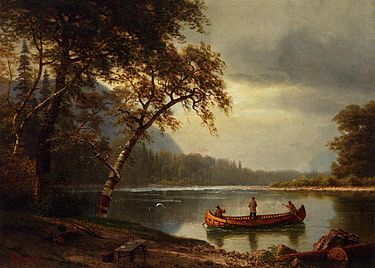
Salmon Fishing on the Cascapédia River, by Albert Bierstadt


Mr. Reed was fishing on the Grand Cascapédia River in Quebec.

There is a blog dedicated to him: http://nathanielpreed.blogspot.com/
   
     There are many obituaries. The quotation by Mr. Reed’s son is from this one:
“Nathaniel Reed, 84, Champion of Florida’s Environment, Is Dead,”By Richard Sandomir
New York Times, July 13, 2018.
See also:
“Nathaniel P. Reed, Leader in Efforts to Protect Endangered Wildlife and Wetlands, Dies at 84," Matt Schudel, The Washington Post,  July 13, 2018.
"Nathaniel P. Reed, an environmentalist and onetime Interior Department official who was a key architect of the Clean Water Act and Endangered Species Act and who spearheaded efforts to preserve wildlife and open spaces from Alaska to his longtime home state of Florida, died July 11 at a hospital in Quebec City. He was 84....
     Mr. Reed was a courtly developer and investment banker born into wealth. His deep-seated appreciation for the environment had its roots in his mother’s efforts to block the development of an early Florida theme park.He went on to fight the state’s environmentally damaging sugar industry and led efforts to block the building of a barge canal across Florida and an airport that would have paved over much of the Everglades.“He was a transformational figure in Florida,” former senator Bob Graham (D-Fla.) said in an interview. “Florida’s a different place today than it would have been without him.”
     As one of the few Republicans prominent in the environmental movement, Mr. Reed served as an assistant Interior secretary from 1971 to 1977 under presidents Richard M. Nixon and Gerald R. Ford. In that role, he helped preserve millions of acres of wilderness in Alaska, banned dangerous pesticides and endured death threats from Western ranchers after he sent federal agents to stop the widespread killing of federally protected eagles.”


Tuesday, 31 July 2018

GRATITUDE

Say it in Writing


A short while ago a former colleague came by for dinner and very quickly after that a handwritten note arrived - even though it came by snail mail. It was in an envelope which had on it a stamp and, did I say, it was handwritten. Enumerated within, at some length, were expressions of gratitude for the drinks consumed, the food eaten and the hospitality received. They contained no emojis and there were no sentences such as this: “Thx 4 a gr8 din. Xxx.” Even though he is of Irish ancestry it is obvious he comes from good breeding since he had produced, what used to be known as a “thank you note”. 
     I had been thinking about thank you notes because I rarely produce one and was feeling bad about that. Particularly bad since a couple of relatives still promptly produce them. I was also thinking about them because I rarely receive any and often don’t know, for example, if gifts shipped were ever received. Still, I am not sure the subject of thank you notes would be taking up my valuable time and yours, as well as this valuable space, were it not for the fact that an article just appeared in the New York Times, bearing this headline: “You Should Actually Send That Thank You Note You’ve Been Meaning to Write.”
     In short, as that headline says, we should write thank you notes and not simply send tweets or messages. We will feel good when we do so and the people who receive them will greatly appreciate our expressions of gratitude. If you are not convinced by me or the Time’s article you should know that it is based upon a study done by a couple of psychologists and  is not more fake news. The study: “Undervaluing Gratitude: Expressers Misunderstand the Consequences of Showing Appreciation,”Psychological Science, June 2018.

Cursive and the "Collins"


   While putting down the material above I was reminded of the “Collins”. That is another name for, what is also known as a “bread and butter letter” and it is based upon a character in Pride and Prejudice. I became aware of the “Collins” because such letters and the agony involved in penning them were the subject of an essay in The Times and I discovered it when writing about “Fourth Leaders”
     The title of this particular “Fourth Leader” is “The Abhorred “Collins””, and it can be found in The Times on Feb. 23, 1914. The author writes about the difficulty of coming up with a “Collins” upon return from a visit to a country estate.  Think of the type of letter one might write to the Crawley family at Downton Abbey. In composing a “Collins” one has to worry about such things as being too effusive, or perhaps not appearing to have enjoyed enough the Beef Wellington. The strain of writing a perfect “Collins” was the reason for the use of the word “Abhorred” in the title and it was almost enough to make one refuse an invitation.
    Not everyone agreed with the author and The Times  published this letter of objection two days later. Here it is; a case made for the writing of thank you notes from over 100 years ago:

Sir: May I sound another, and differing, note on this subject? Are we not all growing less and less inclined to show gratitude for our friends’ hospitality and sympathy?
   Surely it is a very little thing to write a note of courteous thanks for entertainment, and yet this would seem to many people too great a trouble. One has only to recall the scrupulous courtesy of Mr. Gladstone to be reminded of another and better fashion than that which obtains today. The smallest service performed by another on our behalf ought to be acknowledged. But unfortunately it is the exception rather than the rule for this to be done. Boys and girls, young people, and older folks ought to find it no hardship, but a pleasure, to express gratitude either for the hospitality, or gifts, or service.  The detestable habit after the decease of a relative or friend of inserting four of five lines of thanks for sympathetic letters is only another instance of the growing sloth of people. As some one said the other day, it would take only a few hours to write briefly to each friend who has shown sympathy. The same criticism applies to the printed card with its chilly formula, applicable equally to the merest stranger as to the most intimate friend.
    We all pretend to be “too busy” for these old fashioned courtesies, but in reality it is just a matter, I believe, of thoughtlessness and lack of gratitude. “Think” and “thank” are allied terms. Let us revert to the days of sincere gratitude and express it when we have received hospitality.” Yours truly, David Williamson, The Times, Feb. 25, 1914.

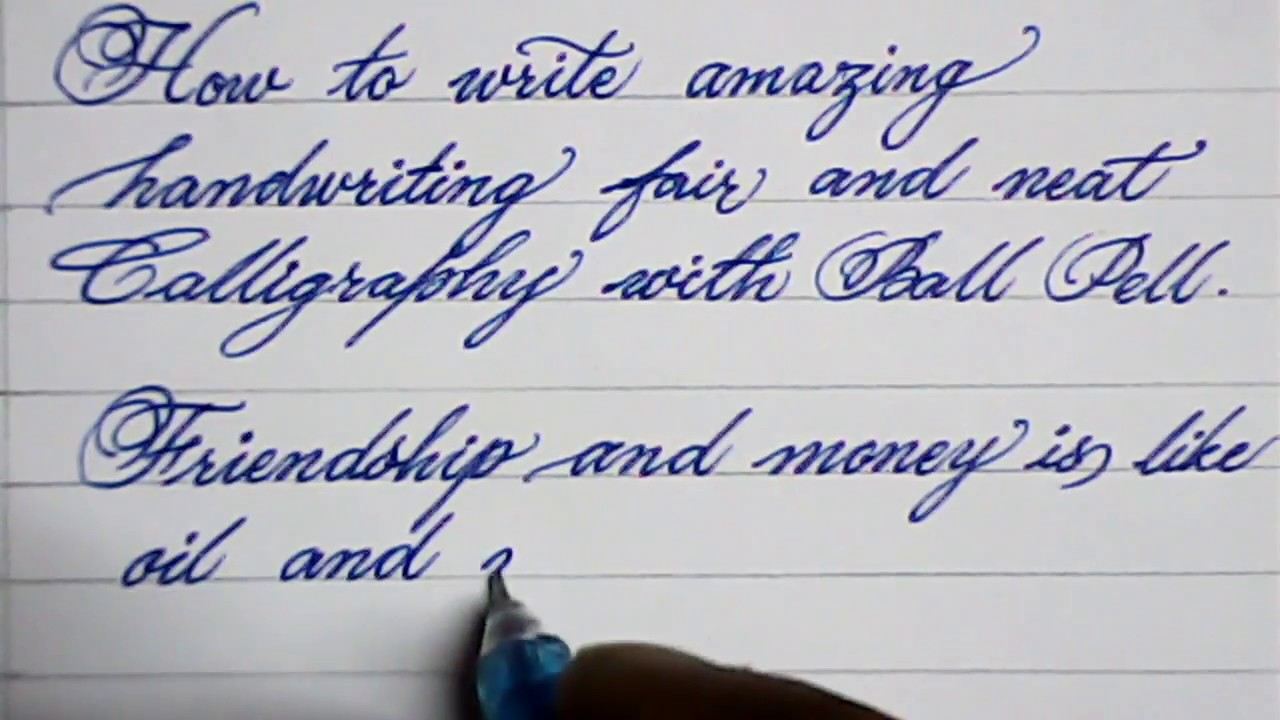
    We should all write thank you notes with pen and paper. Given that I rarely do what I say I am going to do, I plan to buy the instrument pictured above. It is a MontBlanc Meisterstuck and it costs more than some computers ($825 US).  Such an investment should serve to motivate me, even if it won’t improve my penmanship. My birthday is in August, so I better start practicing soon. 

Sources:

"You Should Actually Send That Thank You Note You’ve Been Meaning to Write," Heather Murphy, New York Times, July 20, 2018.
For my earlier post on "Fourth Leaders" see here.

Tuesday, 24 July 2018

CULLINAN


Cullinan is the name of a town in South Africa and it is also the name of a very large diamond which was found there. Now it is also the name of an automobile manufactured by Rolls-Royce and an inordinate number of them can be found in Vancouver. That city was chosen for the launch recently of this tough and expensive SUV. Six were sold on the first day. Each costs about $400,000.
Sometimes the assumptions we make turn out to be true. When visiting Vancouver one quickly gets the impression that the city has more than its fair share of fine vehicles, many of them driven by Asians who look to be adolescents. The fact that they are indeed young is verified somewhat when there is a large N affixed to the rear of the $250,000 car (indicating that a 'Novice" is behind the wheel). According to a Roll's dealer, over 70% of his customers are Asian, One of them has 14 Rolls- Royces. Many clients are female and many of those under 30 buy either the Wraith coupe or the Dawn convertible.
  To park such thoroughbreds a new car condo is being constructed. They will be secure in the gated building which supposedly provides good views and air conditioning. According the the Chinese-English website, 80% of the units are booked.


UBC - The University of Beautiful Cars

McLaren MP4-12C Convertible
UBC, Vancouver

     When they are not driving around the city, some may be studying at UBC where such large numbers of exotic cars have been spotted that the initials of that university have been altered.  The one above is a McLaren and I can assure you that it is more expensive than any vehicle made by Mitsubishi.

Sources:

     "Rich Moms and Millennials Make Canada Hot for Rolls-Royce," Natalie Obiko Pearson, Bloomberg News, June 6,2018.
     "With the New Cullinan, Rolls-Royce Reveals a Diamond in the Rough," Brendan McAleer, The Globe and Mail, May 28, 2018.
     There are a couple of websites about the University of Beautiful Cars. See for example:
http://universityofbeautifulcars.tumblr.com/u

Post Script
     Such expensive vehicles are causing problems for the provincial insurer. Minor fender-benders cause major expenditures.

     I suppose the marketing people at Rolls were not overly worried about the postcolonial implications of choosing a name which is derived from the diamond magnate - Thomas Cullinan.

    I would imagine that Western would be lower in the car ranking category than UBC.  I remember , however, conversations here in London about the luxury vehicles noted on the campus parking lots, particularly at one of the affiliated colleges.  My impression is that Western is quite strong on this scale and that impression was buttressed when I came out of Weldon Library on a Sunday this spring and a car like this one was parked next to mine. I had to go home and look it up to identify it.


Sunday, 8 July 2018

COLES CANADIANA COLLECTION

Coles Books

     Loyal readers will know that I have referred to and quoted from Major W. Ross King’s, The Sportsman and Naturalist in Canada: Or Notes on the Natural History of the Game, Game Birds and Fish of that Country which was published in 1866. Western University has a copy from that year, but I borrowed the reprint from 1974 which is the facsimile edition from the Coles Publishing Company and one of the titles in their Coles Canadiana Collection.

Coles Bookstores


     Oldsters will remember the stores as being gaudier than Chapters. Coles was for books somewhat like Lastman’s Bad Boy Superstore is now for furniture. When ‘The World’s Biggest Bookstore’ was opened in Toronto, William French offered this description: “As in all Coles stores, the lighting is brilliant enough to permit a surgeon to perform a cornea transplant right in the aisle, if he weren't too distracted by the rippling red neon and flashing white bulbs that frame some of the display stands, or by the chanteuse who was trilling a ballad on the piped-in music.” 

Coles Canadiana Collection


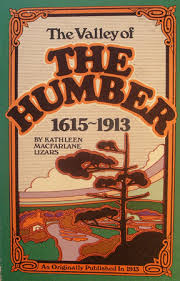
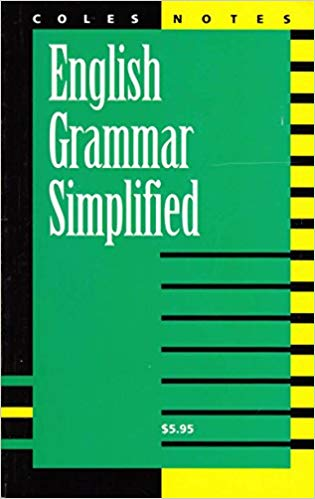
     Apart from the stores you will probably most remember the Notes. But, Coles did publish older historical and literary works such as those pictured above. In promoting one of the earlier titles, Sketches of Upper Canada, by John Howison, Esq., an advertisement in the Globe and Mail (April 25, 1970) states: “Introducing Coles Canadian Collection - Exact Duplicates of Valuable Old Canadian Books! “Here is an amazing series different from anything you have ever seen before. Rare old Canadian books have been faithfully reproduced by modern scientific printing methods, capturing all the fragile age and charm of the originals. Even the mature aging of the paper has been duplicated exactly.”

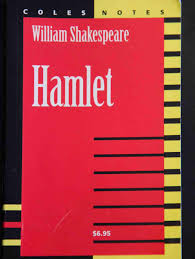
Coles Notes


These are surely recognized  and are likely still used by the youngsters (perhaps not the one about the slide rule). They would have sold well even if called "Colofsky Notes" (Jack and Carl’s real name).


Sources:
     For a good account of Coles Canadiana Collection see:
“Vintage Toronto Ads: Gems of Canadiana (and Toronto the Good): Before the Internet Archive, the Coles Canadiana Collection Revived out-of-print Historical Works," Jamie Bradburn, Torontoist, Feb. 14, 2012.

‘The World's Biggest Bookstore Clearly Lacks a Certain Element of Breeding and Class: World's Biggest Bookstore a Tale of Modern Retailing," William French, The Globe and Mail, Nov. 11, 1980.
     In an earlier column, French discussed the new trend of publishing old books and notes that “the leading practitioner of resurrection is the Edmonton publisher, Mel Hurtig, who now has about a dozen titles in his Canadiana Reprint Series and hopes to add at least six every year, if he doesn’t run out of attics and archives. The Hurtig series concentrates on exploration of the West and the Arctic. It includes such titles as Alexander Henry’s Travels and Adventures in Canada and the Northwest Territories Between the Years 1760 and 1776: and Wanderings of an Artist Among the Indians of North America, by Paul Kane.” “Books & Bookmen”, The Globe and Mail, Jan. 10, 1970

French retired as literary editor in 1990 and was not replaced. “About 3,000 Book Reviews Later, William French Retires,” H.J. Kirchhoff, G&M, April 5, 1990.


Canadiana Reprint Series (Hurtig)


Obituaries:
Carl Cole: "Founded Giant Chain of Book Stores: Carl Cole," G&M Dec. 15, 1994

Jack Cole: “Toronto Bookseller Famous for Coles Notes: Jack Cole," G&M, Jan. 25, 1997
"His real name Jack Colofsky. Opened the World’s Biggest Bookstore in 1980."

“Lives Lived: Jack Cole,” Roger Robin, G&M, Feb. 13, 1997
“ His goal was to make a fortune, but there was something more. He wanted to beat “them” at their own game, whether they were pompous literati genuflecting before books, or whiny Canadian publishers begging for grants, or dull competitors flogging tired tactics. Jack was the P.T. Barnum of the book business, always ready to learn from the folly of others.”

Post Script:
 It is interesting to recall that back in the last century one couldn’t shop on Sundays, even for books. In the early 1990s the Ontario legislation became a little more liberal and allowed small bookstores to be open if they were really small and employed less than three staff. This meant that the large Coles stores could not open and Coles objected. See: “Coles Asks Shoppers to Join Protest,” Stephen Smith, G&M, Aug. 14, 1991.

While King’s Sportsman and Naturalist… was published by Coles, his earlier book has recently been re-issued by the Cambridge University Press. Campaigning in Kaffirland, or, Scenes and Adventures in the Kaffir War of 1851–2 is now available and should be of value to those in Postcolonial Studies who need more evidence of the damage done by imperialism.