Showing posts with label Georgia. Show all posts

Sunday, 31 March 2024

Literary Landscapes

   This post is for those intending to go to the United States and who would like some literary guides. It is also meant for anyone who has no intention to go to the States, but would like to read about some of the more exotic locales from the safety of the couch.
   The literature related to particular places can be very interesting and useful for the travellers passing through them. The descriptions in fiction of the local areas visited are generally better than we can provide and reading them helps revive the memories of trips taken long ago. Local histories supply the background needed if one bothers to explore beyond the interstate intersections which are now all the same. If you are thinking of a road trip, Blue Highways by William Least Heat-Moon will put you in the proper mood. If you are staying home, settle in and read about such places as this one, which is the title of a book by Wallace Stegner about the west: Where the Bluebird Sings to the Lemonade Springs.
   
More such books are found below. The first source will direct you to over a thousand novels. The other sources also include works of non-fiction. Many are related to the southeastern U.S., around where I grew up and will soon revisit. The northwest is not neglected, however, and we also hope to go in that direction when we can. 


Start From Here: "1,001 Novels: A Library of America," by Susan Straight. 
   No matter where you are, and whether you are leaving by car or staying on the couch, begin with this website. You can click on a map and quickly find the books and/or authors relating to a particular region. There are eleven of them which are nicely named and two are illustrated above. Some of the others: 
“Pointed Firs, Granite Coves and Revolution”, which relates to, Vermont, Maine, New Hampshire, Massachusetts, Connecticut, and Rhode Island, and “Golden Dreams & Sapphire Waves”, which is about California and Hawaii. Here is a description from: "Mapping USA Via Novels, Not Left and RIght Politics," Giuliana Mayo, KCRW, Los Angeles, June 29, 2023:
"Partnering with ArcGIS Story Maps, Straight began putting together novels that spoke to a broader America....The interactive map allows people to zoom in on locations where novels are set all over the country. “[Story Maps] made it so easy to navigate the map. You click on one of the dots, and you see the exact GPS location [where the book takes place], and then the book cover comes up,” she explains. She also wrote two-sentence thumbnail descriptions for all 1,001 books.


Heading South

 You have missed this year's New Orleans Book Festival, but you can take the SOUTHERN LITERARY TRAIL, to learn about the places lived in, related to or written about by authors from Alabama, Mississippi and Georgia. Among them you will find: Shelby Foote, Lilian Hellman, Harper Lee, Truman Capote, Tennessee Williams, Eudora Welty and Margaret Mitchell, about whom I have posted. 


There is also a Facebook page for the SLT, and for Alabama, more information is found in the Encyclopedia of Alabama. For Mississippi see the "Southern Literary Trail Gallery" at Mississippi State University Libraries. 


Heading Southeast
 Additional information about Georgia is found on the "Guide to Georgia's Literary Landmarks" which provides links to the Georgia Writer's Museum, Flannery O'Connor's Homes, Martha Mitchell's House and others. If you are really interested in O'Connor, see the book: A Literary Guide to Flannery O'Connor's Georgia. I wrote recently about Erskine Caldwell and you can learn more about him by visiting Moreland, Georgia. It is also the home of Lewis Grizzard and if you come by my house I will give you my copy of "Don't Bend Over in the Garden, Granny, You Know Them Taters Got Eyes, for reading this far. 
   For South Carolina, see Libby Wiersema's, "Six South Carolina Literary Landmarks" for information about: James Dickey, Pat Conroy and some other local authors.
   North Carolina's Literary Trails can be explored by ordering a three volume set which covers all the areas of the Tar Heel State, the east, the Piedmont area and the mountains.


   "The Mountains volume brings together more than 170 writers from the past and present, including Sequoyah, Elizabeth Spencer, Fred Chappell, Charles Frazier, Kathryn Stripling Byer, Robert Morgan, William Bartram, Gail Godwin, O. Henry, Thomas Wolfe, F. Scott Fitzgerald, Anne Tyler, Lillian Jackson Braun, Nina Simone, and Romulus Linney. Each tour provides information about the libraries, museums, colleges, bookstores, and other venues open to the public where writers regularly present their work or are represented in exhibits, events, performances, and festivals."


  "In the Piedmont volume featured authors include O. Henry, Doris Betts, Alex Haley, Langston Hughes, Zora Neale Hurston, John Hart, Betty Smith, Edward R. Murrow, Patricia Cornwell, Carson McCullers, Maya Angelou, Lee Smith, Reynolds Price, and David Sedaris."

"The third volume focuses on the eastern portion of the state. Georgann Eubanks has organized the manuscript into three “trails”: "The Southeastern Corridor" from Raleigh to Wilmington, "The Middle Corridor" from eastern Wake County to Carteret County, and "The Northeastern Corridor" from Wake Forest to the northern Outer Banks. Each trail is further broken down into several tours of half-day segments. Each tour features a map detailing how to get from site to site, brief biographies of the writers included in the trail, passages from the writers that refer to the places along the trail, reading lists, and web addresses linking to further information about sites and authors."

More Books About Regional Books

The Ideals Guide to Literary Places in the U.S Paperback – January 1, 1998
by Michelle Prater Burke (Author)
"Here is a travel book with a difference! For the armchair traveler, there are fascinating descriptions, sketches, and quotes from the authors. For the more adventurous, there are maps, directions, and information on how to ger there and the features of each place. And there are over 50 places included, each associated with one of America's greatest writers. Clearly and logically presented, this is a beautiful book that is fun to read as well as a practical guide to America."

Traveling Literary America: A Complete Guide to Literary Landmarks Paperback – January 1, 2005
by B. J. Welborn
"Readers and travelers are guided to more than 200 homes and historic sites of America’s greatest writers—from the Jack London Ranch in northern California to William Faulkner’s home in Oxford, Mississippi. Clear driving directions and visitor instructions are combined with unique tidbits about each site and author, such as the story of Jack London’s custom-made furniture and the roll top desk and Dictaphone on display in his study. Literary enthusiasts are guided to the site of Thoreau’s bean field, where they can poke around an exact replica of his cabin. They can drop in on Margaret Mitchell’s recently restored Atlanta apartment or visit John Steinbeck’s haunts in the cozy California seaside town of Pacific Grove. This family-oriented, user-friendly guide teaches literary folk about writers' work, their philosophies, and the forces that compelled them to write. All 50 states are represented, and the literary sites are divided by geographic regions."

A Literary Tour Guide to the United States: Northeast, Paperback – May 1, 1978
by Emilie C. Harting (Author)
"A comprehensive guide to visiting the homes and haunts of American writers and the settings of their works in the U.S. Northeast."


Northwest Passages: A Literary Anthology of the Pacific Northwest from Coyote Tales to Roadside Attractions, Bruce Barcott.
"Northwest Passages, an anthology of approximately 90 short pieces and excerpts from longer works published over the last two centuries, is by far the more exhaustive treatment of the region. Its selections, from the legends of native tribes to the stories and poems of the freshest transplants, provide a remarkably complete history of the Northwest. As for what the area is like, the answers to be gleaned from works by Rudyard Kipling, Chief Joseph, lack Kerouac, Theodore Roethke, and Raymond Carver, to name just a few, are as varied as a landscape that includes deserts, mountains, fertile valleys and plains, forests, beaches, and water in unparalleled abundance. The only unanimity is inspired by the weather. The explorer William Clark reported "rain falling in torrents," and, on the evidence of these pieces, the sky has scarcely cleared since. As Seattle poet Denise Levertov notes, "Gray is the price/of neighboring with eagles, of knowing / a mountain's vast presence, seen, or unseen."

Local London Readers
  As I mentioned above somewhere, I am willing to part with my copy of Grizzard's book about Granny. Almost by accident, I suppose, I have acquired other books of regional interest, which I am quite willing to lend if you want to come by and pick them up. Without looking around much, I can think of:
About ten books by Reynolds Price (North Carolina.) 
About the same number by RIchard Russo (New York State.)
A few by Pat Conroy and Padgett Powell (South Carolina)
A few about the Northwest - e.g. Notes From the Century Before, Passage to Juneau and Far Corner.
If you wish to leave the continent, there are more books, such as this one about some remote islands in the Indian Ocean - Kings of the Cocos. 
Just remember, I used to work in libraries and there will be fines. 

Thursday, 15 April 2021

The Canadian Masters

    I see that I have not posted in ten days and part of the reason for that is I spent a fair amount of time watching the Masters, which is very American. You probably did as well, even if you are not interested in golf, just as you likely would have watched the Rose Bowl, even though not interested in college football.  It is a fine thing to see roses in January and it is a relief, up here, to see azaleas in April, which give us hope that in a few months something colourful will sprout in Ontario. 

   You are likely to be unaware of the 'Canadian Masters', unless you are thinking about that athletic event for the elderly, but that is not my subject for today. Before I get to the 'Canadian Masters', I will offer some information about the American one, because it is hard to come by. It will also be contrarian in nature, as is usually the case. I always realized that I would not be getting a green jacket as a golfer and knew that if recommended as a member, I would surely be black-balled.  But, what is even worse, I seem to have been rejected by their random lottery system, which allows a chosen few to mingle among the magnolias every April in Augusta. So I now have a dimmer view of this colourful event which we all know is, "an environment of extreme artifice, an elaborate television soundstage, a fantasia of the fifties, a Disneyclub in the Georgia pines." 

   Since you are eager to know more about the Canadian Masters, I will present quickly some Factlets, a term loyal readers will be familiar with, before I get to our main subject for today. 

   * In the old days, the only Black folks allowed on the course were caddies and perhaps a few in the kitchen. Now many of the caddies are millionaires and none of them are black. This year, Lee Elder, the first Black golfer to compete in the tournament, was honoured. There is no indication that the tournament will change its name, although the word 'masters' is now problematic. Although the All Star Baseball game was removed from Atlanta, I don't think there was any attempt to move the Masters from Augusta.

   * Women are now allowed membership and one of them is even a Black Woman - Condoleezza Rice. Back, just a few years ago, when the lack of women became a feminist issue, the members decided to hold the Masters without sponsors, to save them from embarrassment. I don't know if Dr. Rice is allowed to use bikini wax while on the premises (see below.)

   * If you behave badly, the Pinkertons will pitch you out. A spectator was jailed for stealing a cup of bunker sand in 2012 (it is not really sand, but feldspar and the bird sounds are often piped in and some grass tinted green.)
      Back in 1994 when golf commentator, Gary McCord said, "They don't cut the greens here at Augusta, they use bikini wax," he was banned from the broadcast.
      This year, Gary Player's son, Wayne, was banned after he tried to upstage the Elder ceremony by holding up a sleeve of branded golf balls.

   * I recently offered a couple of posts about major landowners and Augusta National is another one of them. If you are attempting to offer a 'Technicolor fantasyland" you need to make the surrounding territory presentable and the National is doing that: 

In the areas immediately surrounding golf's most exclusive club, there are generally only two types of properties: the ones Augusta National has acquired -- and the ones it will acquire....In the last 20 years, the club has spent around $200 million to buy more than 100 pieces of land totaling no fewer than 270 acres, according to a Wall Street Journal analysis of property and tax assessor records and interviews with people familiar with the transactions....The extent of the land grab, which vastly exceeds any previously reported estimate, has been obscured by the club's use of limited liability companies. Rather than buying land in its name, the club has instead done so using more than a dozen LLCs, which have no other known purpose. The National is a very private, for-profit operation.

   * The press building on the course is described as the "Taj Mahal of media mollycoddling" and the ink-stained wretches leave it only reluctantly to actually visit the course outside.

   * Another structure somewhere along a fairway is described as an  "Oz within Oz". Known as 'Berckmans Place', the 90,000 square feet contains five restaurants and for an entry fee of around $10,000 you can graze through each of them.  Like most of the things at Augusta National, including the golf course, it is used only a few days throughout the year.

Unlike Any Other


   The tag line you have heard Jim Nantz utter over the years - "A Tradition Unlike Any Other" - could be spoken in French along the St. Lawrence in Quebec where what I am calling, "The Canadian Masters" is held.  The equivalent of Augusta National in Canada is Les Quatre Ventes, in Malbaie, Que.  Just like Augusta it has bridges. The one Georgia.
The one in Quebec.

Just like Augusta National, Les Quatre Ventes is private and only open to the public for a very few days each year. Unlike Augusta, however, the flowers, gardens and birdsongs are all real. The only thing missing is the golf. 

Sources:
   The gardens at Les Quatre Vents were created by Francis H. Cabot and they are regarded as among the most beautiful in the world and if you go to this website you can take a virtual tour. Tours are allowed for small groups over a few days each year, but they may not be offered in 2021 because of the pandemic. 


   This beautiful book is available and it contains almost 400 photographs along with a history of each garden.  I happen to have a copy so don't attempt to buy one. On the Amazon website, one sees this: 

I think at the website offered above you will find a more reasonably priced copy.
   The Canadian Broadcasting Corporation offered a very good documentary - The Gardener - which you may be able to access.  It is about 45 minutes long and is offered on CBC Gem.

For most of the quotes in this post see: "Unlike Any Other," the very good account by Nick Paumgarten in The New Yorker, June 24, 2019 and "Augusta National Makes a Land Grab --- The home of the Masters has expanded its territory by more than 75%, paying massive sums for surrounding properties," Brian Costa, The Wall Street Journal, April 11, 2019. 

Post Script:
   Unfortunately I have to admit that, just as Augusta National is an enclave for very wealthy Americans, Les Quatre Ventes is owned by very wealthy Americans. Francis H. Cabot, who died in 2011, was a Boston Brahmin. His grandmother was given the Malbaie property as a wedding gift in 1902.

The Bonus:
  One of the founders of Augusta National was Clifford Roberts. In the 1970s he had a stroke and made the decision to exit  on his own terms:
"Roberts organized his suicide with the same attention to detail he had applied to the club and the tournament. On his last day, he got a haircut from the club barber and asked a receptionist to buy him a new pair of pajamas in town. He asked a waiter to help him walk from his room to the first tee, where he looked at the trees behind the first green to assure himself that the house that had once stood there - the only result of an early club plan to sell home sites - was indeed gone. He took dinner alone in his room.
Late that night, he called security to report hearing something outside his room, and a watchman came and helped him load the .38- caliber Smith & Wesson pistol he kept there.
His body was found the next morning on the club's par-3 course, near Ike's Pond. There was a single gunshot wound to the temple. He was wearing slippers, the new pajamas (with trousers pulled on over the bottoms) and a raincoat.
Roberts was the second suicide in his family. His mother, Rebecca Scott Key Roberts (a relative of Francis Scott Key, who wrote the national anthem), had killed herself with a shotgun in 1913."
"The Man Who Made the Masters," Alan Tays, Palm Beach Post, April 4, 2001. 

Friday, 12 January 2018

BATS


Bats

Ontario Bats

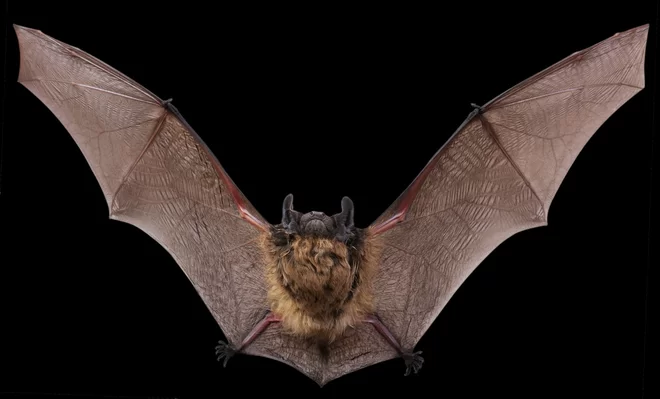
    Although I did recently mention bats (oddly enough in the post about food) I will do so again because I just read this:

     “When our family took up residence in a summer cottage in Muskoka we found a very large colony of bats lodged in a spacious recess between chimney and rafters. Prodded by a stick the creatures flew out in a cloud and circled around the adjacent lamplit room. Father and I both took up a position like a batter at the home plate, vigorously swinging broomsticks and landing nets. At the end of the bout the tally was forty-four bats. (“In the Day of the Wild Pigeon,” Chapter 9 in Part 3 of The Bruce Beckons, by W. Sherwood Fox.)

    That episode reminded my of my own bat experiences, of which there have been many. Living in an old brick house, bats were often seen as much inside as out. On one occasion I fell from a stool while attempting to scoop one off the ceiling and the result was a broken wrist. At that point, like Mr. Fox and his father, I took a more aggressive approach and my squash racket was the weapon of choice. Mr. Fox, by the way, was a well-educated classicist and president of the university where I studied and worked. He was also an mild-mannered naturalist and although his bat attack occurred in less enlightened times (c1910), I am sure he was not inclined to kill one of nature’s more useful creatures. Nor was I. But, at some point I guess, we all have the capacity to act like mugged liberals.

Georgia Bats


    Those episodes reminded me of another which makes the “very large colony” of forty bats in Muskoka, Ontario seem very small compared to the one in Tifton, Georgia. It consisted of an estimated 20,000 which were found in the abandoned home pictured above. The smells issuing from the house in the summer were apparently appalling. The solution was not obvious:
    “But what to do? Bats are protected by federal and state law, so you can’t just out and out kill them. They can be moved, but that method has its challenges when you’re talking thousands. The trick, said a local wildlife specialist, Rusty Johnson, is to seal every little crack and install tubes called excluders. The bats fly out, but they can’t fly back in. The theory is that after a couple of frustrating days, the bats will figure things out and move on. But for a few months come May, when they reproduce, you can’t use the devices at all because they might separate the moms from the babies.”

The house was demolished.

Bat Bombs

    
Those bat stories reminded me of another which is even more sensational. You may remember the reports about the C.I.A. and the attempts to assassinate Castro by using such devices as exploding cigars. Well apparently the O.S.S. was just as creative. After Pearl Harbor a plan was developed to use thousands of bats to set fires in cities in Japan.

You can learn more about it from this article in The New Yorker and the letter that follows:
“Following up on a suggestion passed along by F.D.R. himself, it [the O.S.S.] pursued a plan that involved strapping incendiary devices to bats, which would be dropped from airplanes over Japanese cities, on the theory that the bats would nest in the wooden houses in which most Japanese lived and set them on fire. Waller says that when the specially equipped bats were released from a plane in a test run, the animals dropped to earth like stones, and the project was abandoned. (Much later, the United States did fire bomb Japanese cities, in the conventional way, with devastating results.)” “Wild Thing:Did the O.S.S. help win the war against Hitler?”, Louis Menand, The New Yorker, Mr. 14, 2011.

The letter:
“Batty: A Letter in Response to Louis Menand’s Article” (March 14, 2011) in the April 11 issue
“Louis Menand describes an amusing incident during the time of Major General William (Wild Bill) Donovan’s O.S.S., in which a trial involving bats strapped to incendiary devices, meant to be dropped over Japanese cities, failed when they instead “dropped to earth like stones” (Books, March 14th). An eyewitness, Jack Couffer, gave a fuller backstory in his book “Bat Bomb,” which asserts that “the accidental incineration of Carlsbad Auxiliary Army Airfield by incendiary bats was both a high and a low in the fortunes of Project X-Ray.” It ascribes responsibility for this tragicomic incident to the vanity of the Harvard chemistry professor Louis Fieser, who invented napalm. According to Couffer, Fieser’s insistence on an aggrandizing photo shoot initiated a chain of timing errors that led to the napalm-loaded bats bursting into flame as they flew into the air field’s control tower and barracks.”
Anthony G. Oettinger
Research Professor of Applied Mathematics and Information Resources Policy
Harvard University

Sources:
  For the Tifton bat house see: “No Belfry, Just a House With 20,000 or So Bats,” by Robbie Brown & Kim Severson, The New York Times, Mar. 30, 2011.
  The picture is from the Tifton Gazette, March 28, 2011.
  Bat Bomb: World War II’s Other Secret Weapon, by Jack Couffer is published by the University of Texas Press. You can read part of it here. A copy is available locally at the London Public Library.

Post Script:
    Animals and birds have been used by humans in warfare. A scarier scenario involves the potential of birds to wage war on their own. It sounds far-fetched, but it has just been reported that birds have apparently been deliberately setting fires in order to flush out prey.

“Australian Birds Have Weaponized Fire Because What We Really Need Now is Something Else to Make Us Afraid,” Richard Warnica, The National Post,  Jan. 9, 2017.
“Raptors, including the whistling kite, are intentionally spreading grass fires in northern Australia, the paper argues. The reason: to flush out prey and feast.
The concept of fire-foraging birds is well established. Raptors on at least four continents have been observed for decades on the edge of big flames, waiting out scurrying rodents and reptiles or picking through their barbecued remains.
What’s new, at least in the academic literature, is the idea that birds might be intentionally spreading fires themselves. If true, the finding suggests that birds, like humans, have learned to use fire as a tool and as a weapon.”

The paper referred to is:
“Intentional Fire-Spreading by “Fire Hawk’ Raptors in Northern Australia,” Mark Bonta, et al, Journal of Ethnobiology, Vol. 37, No.4, 2017