My purpose here is to point you to an article which explains why we have run out of TP. In it, the author notes that “The economics and logistics of the problem are a bit controversial,” so controversial in fact, that some of the theories offered are substantial enough to be broken into parts. The article is found in the Washington Post and that is all I am saying, because you should pay for good journalism and, by now, even Jeff Bezos probably needs some money.
I anticipate your disappointment and will provide some older examples of how academics have long been studying our various bodily functions. I will also attempt to allay your anxiety since solutions to problems with all of them should soon be near.
Here is an example from several years ago about another kind of TP problem. I will only say that I could have taken two screen shots to illustrate how complicated this issue is.

An article about peeing:
ABSTRACT: "Tested the hypothesis that personal space invasions
produce arousal in a men's lavatory where norms for privacy were
ABSTRACT: "Tested the hypothesis that personal space invasions
produce arousal in a men's lavatory where norms for privacy were
salient, where personal space invasions could occur in the case of
men urinating, where the opportunity for compensatory responses
to invasion were minimal, and where proximity-induced arousal
could be measured. Research on micturation indicates that social
stressors inhibit relaxation of the external urethral sphincter, which
would delay the onset of micturation, and that they increase
intravesical pressure, which would shorten the duration of micturation
once begun. 60 lavatory users were randomly assigned to 1 of 3 levels
intravesical pressure, which would shorten the duration of micturation
once begun. 60 lavatory users were randomly assigned to 1 of 3 levels
of interpersonal distance and their micturation times were recorded.
In a 3-urinal lavatory, a confederate stood immediately adjacent to
an S, one urinal removed, or was absent. Paralleling the results
of a correlational pilot study, close interpersonal distances increased
the delay of onset and decreased the persistence of micturation.
Findings provide objective evidence that personal space invasions produce physiological changes associated with arousal."
In a 3-urinal lavatory, a confederate stood immediately adjacent to
an S, one urinal removed, or was absent. Paralleling the results
of a correlational pilot study, close interpersonal distances increased
the delay of onset and decreased the persistence of micturation.
Findings provide objective evidence that personal space invasions produce physiological changes associated with arousal."
Middlemist, R. D., Knowles, E. S., & Matter, C. F. (1976).
"Personal Space Invasions in the Lavatory: Suggestive Evidence for Arousal", Journal of Personality and Social Psychology, 33(5), 541–546.
"Personal Space Invasions in the Lavatory: Suggestive Evidence for Arousal", Journal of Personality and Social Psychology, 33(5), 541–546.
Sources:
"Flushing out the True Cause of the Global Toilet Paper Shortage Amid Coronavirus Pandemic," Marc Fisher, Washington Post, , April 7.
"The Toilet Paper Problem," Donald E. Knuth, The American Mathematical Monthly
Volume 91, 1984 - Issue 8.
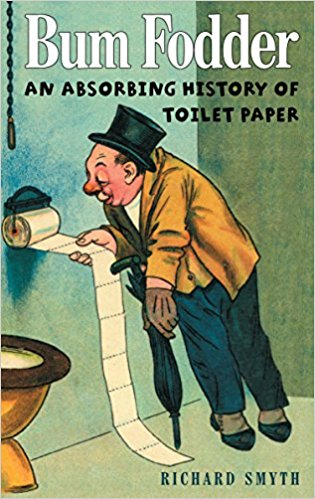
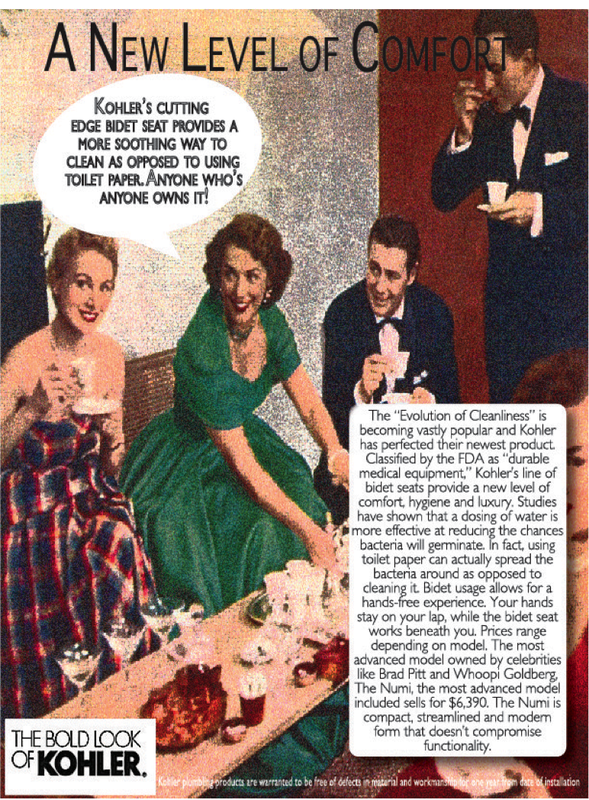
Two whole books for those of you who are really, really interested:


No comments:
Post a Comment