Showing posts with label resolutions. Show all posts

Friday, 7 January 2022

The Cold Turkey Question


 We are six days into the new year and I am not my usual garrulous self, since I have "gone cold turkey." Finding myself in a situation where such a term is applicable, I thought I would try to find out what it meant.  Basically, going ""Cold turkey" refers to the abrupt cessation of a substance dependence and the resulting unpleasant experience, as opposed to gradually easing the process through reduction over time or by using replacement medication. That is the first sentence from the Wikipedia entry and I agree that it is an "unpleasant experience." The entry is a good one, including a bit about the etymology of the words and I will say no more about it, except that it can also be a term of exclusion, as in "giving someone the cold turkey treatment."
   The question is, when you go cold turkey, are you on or off the wagon? I knew what "cold turkey" meant, although I wasn't sure where the expression came from. I was less sure about the wagon issue and also didn't know about its origin. Since I am sober, I will keep this short: if you are "on the wagon", you are sober; if you are "off the wagon" you are drinking. Perhaps thinking of it this way, will help: "A cold turkey is on the wagon."
   I am not talking turkey here (i.e speaking with little preparation) and will say a bit more about now being on the wagon since there was no Wikipedia entry for that expression. Here is an explanation straight from the horse's mouth (Hendrickson's, The Encyclopedia of Word and Phrase Origins:
The original version of this expression, 'on the water wagon' or 'water cart,' which isn't heard anymore, best explains the phrase. During the late 19th century, water carts drawn by horses wet down dusty roads in the summer. At the height of the Prohibition crusade in the 1890s men who vowed to stop drinking would say that they were thirsty indeed but would rather climb aboard the water cart to get a drink than break their pledges. From this sentiment came the expression 'I'm on the water cart,' I'm trying to stop drinking, which is first recorded in, of all places, Alice Caldwell Rice's Mrs. Wiggs of the Caggage Patch [1901], where the consumptive Mr. Dick says it to old Mrs. Wiggs. The more alliterative 'wagon' soon replaced cart in the expression and it was eventually shortened to 'on the wagon.' 'Fall off the (water) wagon' made its entry into the language almost immediately after its abstinent sister."

Six days is a long time and I am sure that soon I will be three sheets to the wind. 

Sources:
 
It was unfair to end it there. Those of you interested in idioms should look at the U.K.s,  The Phrase Finder, or read this short explanation for, "three sheets to the wind."
The term comes from sailing ships and refers to the sheet, or rope, that controls the sail. If a sheet is allowed to flap freely in the wind, the sail also flaps about and the vessel proceeds on a tottering course, like that of an intoxicated person. The more sheets are loose, the shakier the course. Dickens used the expression figuratively in Dombey and Son (1848): “Captain Cuttle, looking . . . at Bunsby more attentively, perceived that he was three sheets in the wind, or in plain words, drunk."

Wednesday, 9 January 2019

Intellectual Resolutions - 2019


The Meaning of Life: A Very Short Introduction Other editions
      By now you have probably abandoned any attempts at elevating your level of fitness for 2019 and have grown very tired of all those advertisements for machines and gyms designed for that purpose. Perhaps your goal now is improving your brain which is a more realistic option in that it can be done inside where it is warm. You probably don’t have a lot of time and I am quickly running out of it so I will offer here some shortcuts to smartness.

     They come in the form of books which are short and lighter than dumbbells. Brevity is not necessarily achieved by eliminating substance. Some of the subjects covered in these brief books are heavy indeed. I am not referring to the many titles that begin with  ….For Dummies and here will offer you works produced under the imprimatur of a scholarly publisher.


Very Short Introductions - Oxford University Press

     The folks at Oxford produce a large number of intellectual self-help books, all of which conveniently mention in the title, Very Short Introduction…. There are over 600 in this series arranged into six broad subject areas: Arts & Humanities, Dictionaries & Reference, Law, Medicine & Health, Science & Mathematics, and the Social Sciences. Those broad categories are broken into many narrower ones ranging from Agnosticism  and Adam Smith to Viruses and Zionism. I chose to skip, Ageing: A Very Short Introduction since I feel like I know something about that subject and, as I mentioned, am increasingly short of time. Additional details are offered below.


30 Second Books - Ivy Press


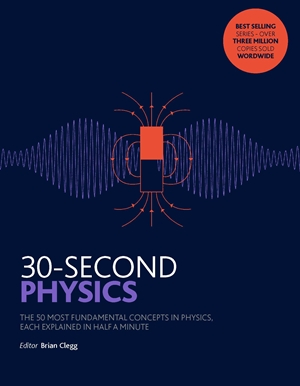
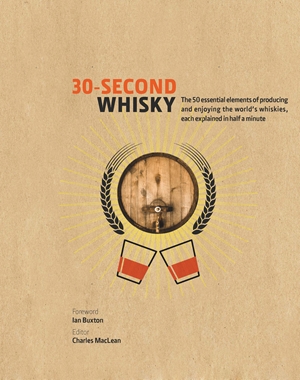
30-Second Physics The 50 most fundamental concepts in physics, each explained in half a minute       30-Second Whisky The 50 essential elements of producing and enjoying the world's whiskies, each explained in half a minute

     If you don't even have enough time to read a very short introduction to a subject, you may be able to spare a few minutes to glance at these books which are produced by Ivey Press. Although not a university press, it does appear to be based in the U.K., which should be good enough. According to them, the 30 Second series is internationally acclaimed and has been translated into 30 languages. More details below.

Sources:
OUP
If you are looking for a very short introduction to something see the OUP website.
The entry for the series on Wikipedia is also helpful.
IVY
Ivy Press is part of the Quarto Group and the website is here.
The 30 Second titles are more easily found here. 

Post Script:
If you live in the London, Ontario area over 65 Very Short Introduction...are available up at Western. (Other institutions of higher learning offer these shortcuts; see this guide and description from the University of Michigan.)
There are also around 10 titles in the London Public Libraries. One of them is devoted to Derrida, about whom we no longer need to know.
I only located one 30 Second book, but it is a good one if you want to figure out philosophy:
30 Second Philosophies: The 50 Most Thought-Provoking Philosophies Explained in Half a Minute.