Showing posts with label autodidacts. Show all posts

Monday, 23 June 2025

The Good Life

   In the past, Mulcahy's Miscellany has offered book suggestions for those interested in intellectual self-improvement and here is another one (for earlier examples, see: "More Aids for Autodidacts" and "MIT Press - Additional Aids for Autodidacts.")
   Those wishing to live a "good life" are likely surprised when they look for books in a library and do not find them grouped under the subject heading, "the good life". Those who rely on Wikipedia, probably give up and end up watching "The Good Life", the British TV series to which Wikipedia directs them. Searching for books about such a nebulous concept is difficult, but this suggestion from the research staff at MM may help. 
  Simply go to the website of Oxford University Press where books about the good life are easily found. A dozen of them are listed below along with the brief description provided by the OUP. 
  Given that June is "Indigenous History Month", and to provide Canadian content, a bonus book is included. It is published by JCharlton which is located in Vernon, B.C.

                                    A Beginner's Baker's Dozen

1. The Good Life
Unifying the Philosophy and Psychology of Well-Being
Michael A Bishop
Proposes a new approach to the study of well-being and an original theory of well-being
Redefines Positive Psychology and connects it to the philosophical study of well-being
Explains philosophy and positive psychology's respective literatures on well-being in understandable, straightforward, and concise language, bringing them into dialogue in innovative and productive ways

2. A Good Life on a Finite Earth
The Political Economy of Green Growth
Daniel J. Fiorino
Studies in Comparative Energy and Environmental Politics
Provides an accessible overview of ecological policy
The first book to offer a systematic analysis of the concept of green growth
Disrupts the assumed conflict between economic and environmental goals, arguing that they can be complementary

3. A Guide to the Good Life
The Ancient Art of Stoic Joy
William B. Irvine
A refreshing presentation of Stoicism that shows how this ancient philosophy can still direct us toward a better life.
Uses psychological insights and the practical techniques of the Stoics, offering a roadmap for anyone seeking to avoid the feelings of chronic dissatisfaction
Readers learn how to minimize worry, how to let go of the past and focus their efforts on the things they can control, and how to deal with insults, grief, old age, and the distracting temptations of fame and fortune
Shows readers how to become thoughtful observers of their own lives.

4. Happiness and the Good Life
Mike W. Martin
Integrates philosophy with the new branch of psychology called "positive psychology"
Draws substantially on fiction, memoir, and film
Accessible to a wide audience in practical and applied ethics

5. A Minimally Good Life
What We Owe to Others and What We Can Justifiably Demand
Nicole Hassoun
Explores and asks what we owe to others as a basic minimum
Challenges opposing accounts of the basic minimum and the limits of our obligations
Argues that concern for our common humanity requires helping others live minimally good lives

6. Morality and the Good Life
Edited by Thomas L. Carson and Paul K. Moser

7. Nature, Reason, and the Good Life
Ethics for Human Beings
Roger Teichmann
Presents an original and provocative account of ethical thought
Engages with a range of philosophical disciplines, including philosophy of mind and philosophy of language
Critiques contemporary trends of thought that exist both in academic philosophy and in wider culture
Written for a broad readership, beyond as well as within academic philosophy

8. Organizational Ethics and the Good Life
Edwin Hartman
The Ruffin Series in Business Ethics
In this book, Edwin Hartman argues that the real world of experience, rather than abstract theory, is the source of principles for business ethics. Hartman explains how ethical principles derive from what employees learn in good organizations and argues that an ethically good company is one that creates the good life for those who work in it.

9. Plato on Pleasure and the Good Life
Daniel Russell
Daniel Russell develops a fresh and original view of pleasure and its pivotal role in Plato's treatment of value, happiness, and human psychology. This is the first full-length discussion of the topic for fifty years, and Russell shows its relevance to contemporary debates in moral philosophy and philosophical psychology. Plato on Pleasure and the Good Life will make fascinating reading for ancient specialists and for a wide range of philosophers.


10. Pleasure and the Good Life
Concerning the Nature, Varieties, and Plausibility of Hedonism
Fred Feldman

11. Pursuing the Good Life
100 Reflections on Positive Psychology
Christopher Peterson
Compiles short essays by one of the founders and leaders of positive psychology
At times humorous, at times serious, Peterson deftly traverses a varied landscape of emerging research, personal perspectives, and big ideas

12. The Quest for the Good Life
Ancient Philosophers on Happiness
Edited by Oyvind Rabbas, Eyjolfur K. Emilsson, Hallvard Fossheim, and Miira Tuominen
New perspectives on a key philosophical topic
Illuminates the complexity of ancient ethics in fascinating ways
Shows how the ideas of ancient thinkers are relevant to contemporary debate

The Bonus and CANCON: 

13. Pimatisiwin : The Good Life, Global indigenous knowledge Systems, Settee, Priscilla.
   "Drawing upon her own life, scholarly work and an in-depth review of the relevant literature, Priscilla Settee delivers a perspective of what it means to be alive while, at the same time, furthering Indigenous-based struggles for decolonization, social justice and intellectual thought." For more see:
"Mino-Pimatisiwin is an Indigenous traditional teaching that describes how the emotional, physical,mental, and spiritual parts of a person, or the heart, body, mind, and spirit, come together in balance to lead the good life. This is a lifelong endeavour where one comes to understand how to live in relationship with oneself and others as part of the natural world with respect, reciprocity, and interconnectedness. The teaching and understanding of Mino-Pimatisiwin is deepened through continuing work with Indigenous communities, Indigenous Elders and Knowledge Keepers. Through this ongoing work, these perspectives and Indigenous phrases expressing values have become a part of how we describe the good work we do for all students in Manitoba." From: "Mino-Pimatisiwin: The Good Life," Province of Manitoba.

Wednesday, 10 August 2022

MIT Press

    Additional Aids for Autodidacts


    My last post about University Presses was provided back in June (see: "Wolverines, Spartans and Books.") Before that, I offered you entertaining entries which were designed for lone wolf learners who wish to tackle tough subjects from their recliners.  For example, in early 2019 I helped you make some "Intellectual Resolutions" by suggesting that you could bone up on weighty subjects by reading the slim books in the "Very Short Introduction...series produced by Oxford University Press, or the even shorter ones in the "30 Second Books" offered by Ivy Press. That was followed during the dog days of August by "More Aids for Autodidacts" which discusses Yale's "Why X Matters Series" and the "Little Histories" which will make you appear to know a lot. Now you will learn about another university press series which offers a short cut to enlightenment.


                                          Essential Knowledge Series


   I suppose one could quibble a bit about what constitutes "Essential Knowledge", but I will not, since"MIT" stands for the "Massachusetts Institute of Technology" and the folks typically found there are much more knowledgeable than I. This is what they say about this series:

The MIT Press Essential Knowledge series offers accessible, concise, beautifully produced books on topics of current interest. Written by leading thinkers, the books in this series deliver expert overviews of subjects that range from the cultural and the historical to the scientific and the technical. In today's era of instant information gratification, we have ready access to opinions, rationalizations, and superficial descriptions. Much harder to come by is the foundational knowledge that informs a principled understanding of the world. Essential Knowledge books fill that need. Synthesizing specialized subject matter for nonspecialists and engaging critical topics through fundamentals, each of these compact volumes offers readers a point of access to complex ideas.’


  Ninety-two titles are currently listed in categories ranging from Architecture to Technology. Two are found under "History" and they are: Hunting: A Cultural History and Nuclear Weapons. There are thirteen related to "Political Science." Some are highly topical: 


Here are some other samples: 

Whiteness, by Martin Lund.
"The socially constructed phenomenon of whiteness: how it was created, how it changes, and how it protects and privileges people who are perceived as white.
"This volume in the MIT Press Essential Knowledge series examines the socially constructed phenomenon of whiteness, tracing its creation, its changing formation, and its power to privilege and protect people who are perceived as white. Whiteness, author Martin Lund explains, is not one single idea but a shifting, overarching category, a flexible cluster of historically, culturally, and geographically contingent ideals and standards that enable systems of hierarchical classification. Lund discusses words used to talk about whiteness, from white privilege to white fragility; the intersections of whiteness with race, class, and gender; whiteness in popular culture; and such ideas as “colorblindness” and “reverse racism,” which, he argues, actually uphold whiteness."

Hate Speech, by Caitlin Ring Carlson.
"Hate speech can happen anywhere—in Charlottesville, Virginia, where young men in khakis shouted, “Jews will not replace us”; in Myanmar, where the military used Facebook to target the Muslim Rohingya; in Capetown, South Africa, where a pastor called on ISIS to rid South Africa of the "homosexual curse.” In person or online, people wield language to attack others for their race, national origin, religion, gender, gender identity, sexual orientation, age, disability, or other aspects of identity. This volume in the MIT Press Essential Knowledge series examines hate speech: what it is, and is not; its history; and efforts to address it.
Author Caitlin Ring Carlson, an expert in communication and mass media, defines hate speech as any expression—spoken words, images, or symbols—that seeks to malign people for their immutable characteristics. Hate speech is not synonymous with offensive speech—saying that you do not like someone does not constitute hate speech—or hate crimes, which are criminal acts motivated by prejudice. Hate speech traumatizes victims and degrades societies that condone it. Carlson investigates legal approaches taken by the EU, Brazil, Canada, Germany, Japan, South Africa, and the United States, with a detailed discussion of how the U.S. addresses, and in most cases, allows, hate speech. She explores recent hate speech controversies, and suggests ways that governments, colleges, media organizations, and other organizations can limit the spread of hate speech."
   
   As you will see from the samples I have chosen, the books in this series offer "Essential Knowledge" about "topics of current interest." Some of them may prove to be more ephemeral than essential, but they will be useful nonetheless. 

Sources:
  The books in the MIT "Essential Knowledge" series can be found here.
   MIT publishes many other books. See mitpress.mit.edu. 
   One topic included is "Content", which seems like a rather amorphous subject to me. To see what the author is up to, look at this essay by her which is adapted from Content, by Kate Eichhorn: " "Content" Erases Wall Between Fact & Fiction," Kate Eichhorn, Public Books..." 8/2/22. 


The Bonus: 
   I mentioned "dog days" above, which has more to do with astronomy than with dogs panting in the hot sun. See: "Here's Why We Call This Time of Year the 'Dog Days' of Summer," Becky Little, National Geographic, July 16, 2021.
"These punishingly hot summer days get their name from an ancient belief about the brightest star in the sky—not from dogs’ tendency to laze around in the heat."

Thursday, 15 August 2019

More Aids for Autodidacts

     At the beginning of this year I offered some useful suggestions for those who wished to improve the mind rather than the body. Short cuts to intellectual success were provided in the form of book series such as 30 Second Books and Very Short Introductions (see Intellectual Resolutions - 2019). 
     We are now more than halfway through the year and it is likely that my diligent readers have quickly burned through these very slim volumes. As a reward, I will now point you to some books that will let you know what really matters, and to some others that provide a little history. In keeping with the bespoke nature of this blog, the recommendations are loftier than the Whatever for Dummies...type books and appear under the imprimatur of a University Press - in this case, Yale.
     Although you sluggards should not be rewarded, I will remind you of a post that provides an excuse for those who buy books and do not read them, and a suggestion for the one book you should purchase: How To Talk About Books You Haven't Read. (see: TSUNDOKU)


Why X Matters

"Yale University Press presents the Why X Matters series, in which passionate authors present concise arguments for the continuing relevance of important people or ideas.The Why X Matters series aims to champion the cause of important disciplines and influential thinkers that are perhaps under-represented in modern discourse."


The Titles 


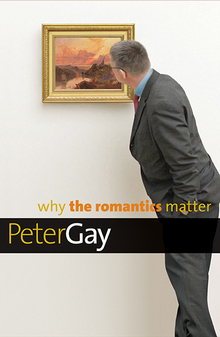
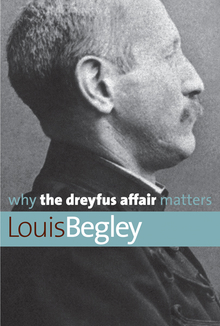
Why Architecture Matters Why Acting Matters Why Arendt Matters Why Baseball Matters

Why the Constitution Matters
Why the Dreyfus Affair Matters
Why Niebuhr Matters
Why Poetry Matters
Why Preservation Matters
Why the Romantics Matter
Why Translation Matters
Why Trilling Matters


Little Histories

"The Little Histories are vivid storybook introductions for the young and old alike. Inspiring and entertaining, each short book lays out our greatest subjects in deceptively simple, engaging tones. With charming and personal insights each expert gently takes the reader from ancient times to the present through bite size chapters, ideal as bedtime reading or on the journey to work."

The Titles 

A Little History of Economics
A Little History of the World
A Little History of Religion
A Little History of Philosophy
A Little History of the United States
A Little History of Literature
A Little History of Science

Sources: 
   The "X Series" is easily found on the Yale University Press site along with additional information about each title. A rationale for the series is offered in the blog post of the London branch of YUP: "Introducing Yale's Why X Matters Series."
   The "Little Histories" are found here: littlehistory.org.
   In some cases, podcasts and video interviews are available. 
Post Script:
   If you feel a little embarrassed about telling people you are reading A Little History of the World, mention that it was written by E. H. Gombrich and memorize the German title: Eine kurze Weltgeschichte für junge Leser. By the way, it was written in 1935.