Friday, 21 September 2018

A Trumpian Aperçu


The insightful remark below is about Trump, of course, not by him. I think the first part is true and the second just about sums up everything that needs to be said.
“Greenwald told me, ‘I don’t think that, once Trump leaves office, we’re going to have a revolution in law where rich and powerful people are going to be held accountable in the way that poor people are.” Trump is a criminal, he said, surrounded by ‘fifth-tier grifters’ who, under normal circumstances, would be ‘generating PowerPoints to defraud pensioners.’”
 
Source: 

“Profiles: The Bane of Their Resistance: Glenn Greenwald’s War on the Democratic Elite,” Ian Parker, The New Yorker, Sept. 3, 2018, p.38.

Sunday, 9 September 2018

Libraries and Space


     In several posts I have indicated that I am not in agreement with the tendency of  the Western Libraries to increase the space devoted to students and activities while reducing the area allotted  for books and periodicals. I have also pointed out that other university libraries are doing the same thing and another example is provided by the Robarts Library at the University of Toronto. Here is the recent headline in the University of Toronto News (Aug.28, 2018): “Library Spaces for Families, Reflection: Robarts Library is Constantly Finding New Ways to Make its Architecturally Stunning Space Work Better for the People Who Use It.” The article is like many others on this subject.

Beginning this year, students, staff and faculty now have access to a newly renovated reflection room on the eighth floor. It's meant to be used for religious, spiritual and secular practices – including prayer, meditation, yoga and mindfulness – and comes equipped with yoga mats, prayer mats and meditation cushions and benches. There are even noise-cancelling headphones and iPods loaded with mindfulness meditations available on two-hour loan at the Course Reserves desk on the fourth floor.
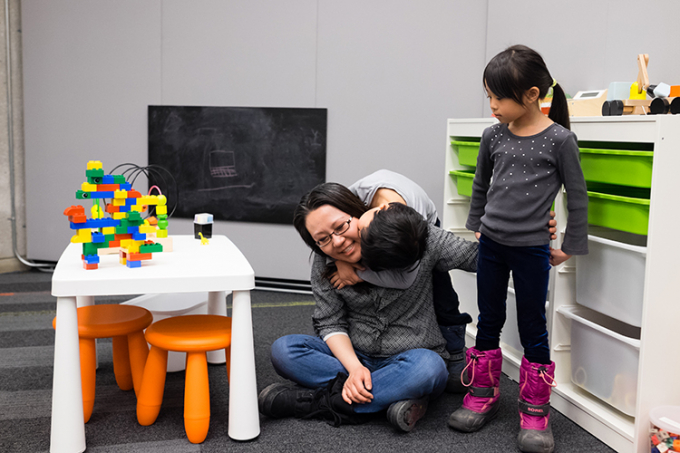
Robarts is also home to a family study space – believed to be the first of its kind in Canada. The room, which opened earlier this year on the ninth floor, is designed to make life easier for student parents or faculty and staff with young children. For kids, the sound-proofed room comes stocked with toys like building blocks and plastic dinosaurs, as well as a screen for watching videos. For their parents, there are work stations, child-sized furniture and nearby washrooms with nursing and baby-changing facilities. “

     I suppose you are thinking that, if the ‘flagship’ university library system in the country is going in this direction, perhaps I should fold my tent and get out of the way of progress.  Actually, I don’t mind at all that the U. of T. is providing such space and who could object to making life easier for parents and their children. The space is on the 8th floor of Robarts and there are 43 other libraries in the U. of T. system, including the excellent Thomas Fisher Rare Book Library. 

    The libraries at Western are somewhat shorter and fewer in number and some have closed and the bigger ones have been hollowed out. The space that remains should be for scholars and students who are studying, surrounded by the material they need and from which they can learn. Other activities would be better placed in the new Western Health and Wellness Centre which “will serve as "a single point of entry for health and wellness services on our campus." Western Libraries has more to offer than space.

Post Script
  I was pleased to see that the Western Libraries is honouring Barnett and celebrating books. For details see here
  I mentioned the Thomas Fisher Rare Book Library and their website is well-worth visiting.
(One of their recent exhibitions was on: "Mixed Messages: Making and Shaping Culinary Culture in Canada."

If you are interested in Food History see my recent post on that subject.)

Thursday, 6 September 2018

Western University Names

Naming Names


    The slightly odd construction, ‘naming names’, is generally associated with bad behaviour and those so-named are usually implicated in something awful like, for example, a communist conspiracy. Here I will attempt to name some names related to Western University and to do so for a positive purpose. That purpose being: 1) to more clearly identify and define those whose names we see when we visit campus, either physically or electronically, and 2) to propose that a registry be constructed so that they can be easily found.

    Such a project is already underway and provides the impetus for this one. Just recently the folks at Research Western began to place plaques and link them to digital profiles of those who have contributed to the research endeavours of the University (for details see below). That seems like a very good idea to me. There are others who have contributed in other ways and some of their names are already on campus and there are many yet to be identified. Who are these people? Is the name on a building associated with someone who taught within it, or to a person who paid to have it built? Apart from acknowledging the person, a description surely would be useful for the highly transient student population, some of whom probably wonder who Paul Davenport was when they file into ‘his’ theatre.

    I know some of you are thinking that the construction of a biographical name registry is a bad idea and that it is ironic that the one suggesting it ranted, in a year-end post a couple of years ago, that we should abandon the practice of naming buildings and constructing statues for reasons that are now so obvious. As this is being written, the name ‘Trutch” is being removed from a building at UVic and today’s philanthropist could be tomorrow’s felon. As well, even the names of scholars can become suspect if, for example, they wrote something positive about a prime minister, or cranial size and criminality, or even used improper pronouns.

     A Western Biographical Register could get around these problems. As we become more enlightened and censorious we could continue to remove names from buildings and rooms and Chairs, but keep the registry. In it, an alteration could be made to a name that was rendered unsuitable to indicate exactly when we became ‘woke’ and, as well, ‘signal our virtue’.


     Research Western asked for suggestions and nominations related to the research mission of the university. The ones provided below are names that are already somehow associated with Western and some are related to research since they are encountered when using the Western Libraries. Others come from buildings and rooms; still others relate to scholars, donors, lectures and historical figures important to the University. All should be checked.

     In those cases where I easily found information, it is provided. Often information can be found when a naming occurred or a donation was made, but such information needs to be gathered in a central place to be easily located.

The List
[Update - 2021: I noticed that some embedded links no longer work. They are another reason for a more permanent home for them.]

 
3M Centre


(Okay, this is not a personal name, but still one might want to know why the Centre has such a label, other than the fact that  Minnes
ota Mining and Manufacturing Company probably wouldn't fit.)

Alexander Charles Spencer Engineering Building
(see also below - Thompson Engineering Building)

The Alexander Norman Collection of Comic Books
(A collection in the Western Libraries)

Alice Munro Chair in Creativity
("The Alice Munro Chair in Creativity will recognize and honour our Nobel laureate, inspire student writers and foster creative expression of all kinds. Alice Munro is counted among the University’s most extraordinary alumni."  For more see here. )

Allyn and Betty Taylor Library
(“The Allyn and Betty Taylor Library was officially opened on November 22, 1991, with the design and construction of the new library funded through the Renaissance Campaign (1989 –1994). At the time of the Library’s opening, Dr. Allyn Taylor (Western’s Chancellor from 1976 to 1980) was quoted as saying: “My long association with Western is very close to my heart. Betty and I are proud and thankful indeed to have our names linked with this fine, new library, and can only say how grateful we are to the anonymous benefactor responsible.” The $11.8 million three floor addition to the north side of the Natural Sciences Building had a total seating capacity of 1,000 in 1991.”)
see also the J. Allyn Taylor Building below.

Arthur & Sonia Labatt Health Sciences Building

The Arthur Labatt Family School of Nursing
(“Western opens innovative new home for Arthur Labatt Family School of Nursing, June 8, 2017”
“Arthur and Sonia Labatt, long-time donors to health education at Western University, opened the building Thursday with a ribbon-cutting and tour. They were awarded honorary doctorates from Western in 2012 and Arthur Labatt was Western University chancellor from 2004 to 2008.  Both are well-known philanthropists whose volunteer work includes arts, culture, health care and environmental causes.”)

Beatrice Hitchins Memorial Collection of Aviation History
(A collection in the Western Libraries)

C. B. “ Bud” Johnston Library
(At the time this Library was named, I had some association with it. Assuming that people would want to know who “Bud” was, I created a profile and bibliography. It is no longer available on the Western Libraries website.  I have a copy and it holds up well if you want to borrow it.)

Claudette Mackay-Lassonde Pavilion
“The Claudette MacKay-Lassonde Pavilion (CMLP) officially opened its doors on Saturday, October 3, 2009.  It is a 45,000 square-foot, $20-million facility, featuring advanced environmentally sustainable construction technologies and methodologies.  The CMLP houses research geared towards green technologies, processes and materials. This description also has a good link to the Lassonde Family Foundation”.)

Collip Building
(The assumption here is that it was named after Dr. J. Bertram Collip. A good profile of him is
here.)

Conron Hall
Most likely named for Dr. A.B. Conron.

DAN Department of Management & Organizational Studies

The D.B. Weldon Library

Dr. Don Rix Clinical Skills Learning Building
The Dr. Don Rix Protein Identification Facility
(“Named after Western medical school graduate Don Rix, who donated $2 million to assist in the construction of the laboratory, the Dr. Don Rix Protein Identification Facility has established Western as a leading proteomics research hub in Ontario.”) For a good account see: "What's in a Name: Dr. Don Rix Clinical Skills Building," Paul Mayne, Western News, Oct. 10, 2013.

Don Wright Faculty of Music
(“The name became the Don Wright Faculty of Music in October 2002 following a generous donation by alumnus, musician and philanthropist Dr. Donald J. Wright.”)

The Dr. Eddy Smet Collection of Comic Books
(A collection in the Western Libraries).

Elborn College

Fowler Kennedy Sport Medicine Sport Medicine Clinic

(One can find on their site a "History of the Fowler Fellowship".  Another profile and picture of Fowler is found on the site of the JP Metras Sports Museum.)

Fraunhofer Project Centre for Composites
(“The Fraunhofer Project Centre for Composites Research is a joint venture between Western University and the Fraunhofer Institute of Chemical Technology (ICT) in Pfinztal, Germany").

The G. William Stuart Jr. Collection of Milton and Miltoniana
(A collection in the Western Libraries).

Gibbons Lodge

The Gordon J. Mogenson Building

Gregory Clark Piscatorial Collection
(A collection in the Western Libraries).

The Hannah Collection on the History of Science and Medicine
(A collection in the Western Libraries).

Hellmuth Prize for Achievement in Research
One could start here.

The Hume Cronyn Memorial Observatory


(“The observatory was presented by Mrs. Frances Amelia Labatt Cronyn in memory of her husband (Hume Blake Cronyn) who had considerable interest in science even though he worked in the financial world as general manager of the Huron & Erie Savings and Loan Company (later to become the Canada Trust Company), and president of the Mutual Life Insurance Company.” See here. )


Ian O. Ihnatowycz Institute for Leadership
A description is here.

The J. Allyn Taylor Building

 (see the Allyn & Betty Taylor Library above.)

J. Gordon Thompson Recreation and Athletics Centre

The James Alexander and Ellen Rea Benson Special Collections
(“In 1999, Special Collections benefited from an endowment provided through the estate of Lillian Benson, a retired thirty-seven year employee and friend of Western Libraries. Ms. Benson had been Assistant Librarian, Administration, to Western Librarian, Dr. James J. Talman. In recognition of her gift, Special Collections was renamed The James Alexander and Ellen Rea Benson Special Collections in honour of Ms. Benson's parents.”)

The J. J. Talman Regional Collection

Joanne Goodman Lectures

John & Dotsa Bitove Family Law Library

John George Althouse Faculty of Education
(“1965 - The provincial Department of Education opens two new teacher training colleges in Ontario, one in Kingston and the other in London - Althouse College named after John George Althouse.” A good profile and picture are provided here.

John Labatt Visual Arts Centre

Josephine Spencer Niblett Law Building

The Joyce C. Garnett Innovation Fund
(Ms Garnett was  University Librarian from 1998-2013.
The information needed is provided in: “Gift Builds 'Bridge' to the Future,” by Crystal Lamb, Western News, September 14, 2016).

JP Metras Sports Museum
(“The athletic history at The University of Western Ontario covers a wide range of sports spanning well over 100 years. Between 1935-72, Western’s athletes prospered under the guidance of JP Metras as coach and athletic director. To preserve his legacy and Mustang history, the JP Metras Sports Museum opened in Alumni Hall").

J. W. Little Memorial Stadium
See here.

Kresge Building
“Pennsylvania-born businessman Sebastin Kresge met with Western President Ed Hall and Board of Governors member Jack White to discuss a possible donation for the nursing building. The meeting was successful, as Kresge donated $200,000 to the project. In recognition of his generosity, the new building was named the Kresge School of Nursing.”
From this very good link, complete with pictures:

Lawrence National Centre for Policy and Management
(“The Lawrence Centre was established in 2002 with a generous gift from Canadian businessman, Jack Lawrence, HBA '56, who was a strong proponent on behalf of business playing an active role in Canadian public policy.”)

The Laurene O. Paterson Building, Western Science Centre

Lawson Hall Residence
Lawson Research Institute

McIntosh Gallery
(Here is the information from: The Art of London, 1830-1980, Nancy Geddes Poole, 1984.
p. 103.
“While the Art Museum opened its doors in the autumn of 1940, the following June the cornerstone was laid for a second art gallery in the city, the McIntosh Memorial Gallery at the University of Western Ontario. Wilhelmina Morris McIntosh, when she died, left a bequest to the University in memory of her husband John Gordon McIntosh. The bequest not only included her personal art collection, but also provided funds to build the “English Renaissance-style” gallery at a cost not exceeding $50,000, as well as an endowment to provide for the upkeep of the building and for additional acquisitions for the collection.”)

McKellar Room

Paul Davenport Theatre
(“Renovations to Talbot Theatre were completed in August 2009 and the hall was renamed in honour of retiring university president Paul Davenport.”)

Pierre L. Morrissette Institute for Entrepreneurship
A profile of Morrissette is here.

Richard Ivey Building

Robarts Research Institute 


SCHOLARSHIPS
(Named scholarships could be problematic, in that there are probably a large number of them.. I did not quickly find a list of scholarships at the Office of the Registrar. They are often found at the department level; there are for example, at least three Professor Kenneth Hilborn ones listed by the History Department. Perhaps all of the scholarships could be subsumed under that heading and divided by faculty.)

Siebens Drake Research Institute
 (Might also wish to consider “The Haeryfar Lab  [which] is located in the Siebens-Drake Research Institute (SDRI) at Western University, under the Schulich School of Medicine & Dentistry and within the Department of Microbiology & Immunology.”)

Somerville House

Spencer Hall

Stevenson Hall

Stevenson-Lawson Building

The Stiller Centre

Sydenham Hall Residence

TD Waterhouse Stadium

Thompson Engineering Building
(see above Alexander Charles Spencer Engineering Building)

The Valberg Educational Resource Centre (VERC)
(for Dr. Leslie S. Valberg, Dean of the Faculty of Medicine)
See here.

Von Kuster Hall
(Named in honour of Clifford von Kuster, the first dean of the Faculty of Music, the recital hall is located in the Music Building with the entrance off the main lobby.)

William J. Cameron
(The name was attached to the William J. Cameron Reading Room in what used to be known as the Graduate School of Library and Information Science. Many of the books once located there show up in the Western Libraries catalogue, with his name attached.)

Sources: 
For information about the Research Western project see: "Plaques Celebrate Rich History of Research," by Paul Mayne, Western News, Nov. 9. 2017.
Information about the Heritage Plaques is found on the Research Western website.
A useful list of Western University buildings is found here. 

For a good example of how such a list could be done for the buildings see UCLA's BuildingName Origins. 

For a better one that honours philanthropists see this example of how the Canadian de Gaspe Beaubien family was featured when they made a large donation to the Baker Library. Click on the entries on the left to see other examples : A Campus Built on Philanthropy. 

Post Script
If Western ever encounters a situation where a donor wishes to have his/her name attached to a building already named they can again look to Harvard for solutions. When Mr. Bloomberg asked to have the name of his father on the Baker Library, he was accommodated. It is now know as the Baker Library/Bloomberg Center.

It seems to me that this would be a good project for those in the Western Libraries, working inter-departmentally with their colleagues over in Advancement Operations. The former have access to the university records and internal contacts with the scholars. The latter would know about the external donors and have access to the cash. Perhaps they could hire a hagiographer to write glowing bios and attract even more donors.

The Affiliates also have some names that could be named as does Fanshawe where one finds, The Lawrence Kinlin School of Business, the Donald J. Smith School of Building Technology and the Norton Wolf School of Aviation Technology.

In re-reading the above, I noticed that I used the word 'we'. I should make clear that, although I studied and worked at Western and retain some affection for the place,  I am now retired and the University is in no way responsible for these ramblings.

Saturday, 1 September 2018

Impeachment?

Lock Him Up?


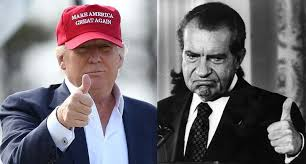
   We gather, from way up here, that many Trump supporters chant loudly, ‘Lock Her Up’, whenever they gather. While it appears that many Americans think Hillary should be in jail, we have heard rumours that the tiny group of Trump opposers think, perhaps the President is the felonious one.  Although he recently attacked Canada, I do think we should stay north of the partisan fray and seek professional advice. Apparently that advice is found in a book that was mentioned in a recent article in the New Yorker.  The book was mentioned, however, the title was not provided. As a public service I will provide it here so you can get the book and determine the degree of his guilt for yourself.

    On the last occasion (well, one of the last) of presidential malfeasance,  “In May, 1974, John Doar, the special counsel to the House Judiciary Committee, called the Yale historian C. Vann Woodward into his office and asked him to figure out just how badly Presidents had behaved in the past, and how they had answered accusations against them.” In order to assess how bad Nixon was compared to his predecessors, Woodward assembled fourteen historians who “dropped everything for the project.” They completed the project quickly, but Nixon resigned and the work was not published.

     Woodward, however, decided to produce “A whole book devoted exclusively to the misconduct of American presidents and their responses to charges of misconduct”. It was published, but the political attention span being what it is, it was not much noticed. Apparently the copy in the Widener Library at Harvard has only been signed out twice since 1974.

   All of this information is offered by the historian, Jill Lepore, in the article: “Measuring Presidents’ Misdeeds: During Watergate, Historians Helped Catalogue Accusations Made Against Past Presidents; Their Findings May be Useful Again.” New Yorker, Sept. 3, 2018

   Agreeing with her that such a study would be useful, I went looking for it in the Western Libraries here in London. Since the title was not provided, I searched for the book by author (the C. is for Comer, by the way) and was pleased to find it. If you are really interested in presidential misdeeds see: Responses of the Presidents to Charges of Misconduct  (A study undertaken for the Impeachment Inquiry Staff of the House Committee on the Judiciary, with an added intro. Includes bibliographical references.)

Post Script
   The article in the print edition is found under “The Talk of the Town” on p.15. Even if you can grab it for free, you should get a subscription since Conde Nast, like most magazine publishers, is in trouble.
    The book is still in the library (in storage). Having provided the public service, I will leave it up to you to carry on from here.

University Presses

Penn State University Press

     In the neighbouring state across the lake, Penn State has a press and one of the series they publish is called, fittingly enough, "Keystone Books".  There are over 50 different series published ranging, alphabetically, from Africana Religions to World Christianity.  There are books about Chinese thinkers (Collection of Critical Biographies of Chinese Thinkers) and some about one Scottish thinker (Edinburgh Edition of Thomas Reid). The usual serious subjects are covered (e.g. Refiguring Modernism; Re-Reading the Canon) and one on humor is planned (Humor in America).  Keystone Books is chosen here because they" are intended to serve the citizens of Pennsylvania. They are accessible, well-researched explorations into the history, culture, society, and environment of the Keystone State as part of the Middle Atlantic region."  This is, I think, a laudable goal.

Keystone Books

     Rallying the scholars to produce some products for the civilians is not a bad idea. I am not sure how many other university presses may have done this, but I will let you know in future posts on the subject of university publishing if any are found.  You may have noticed that many scholarly books are now unreadable, even if they are covering subjects which we have lived (modern history) or experienced (popular culture).  They are also often only about subjects of concern to those within the academy and, even more frequently, of interest only to those sequestered in the basements of a few humanities departments.  Publishing a few 'practical' books without mentioning once the word 'praxis' should to nothing to reduce the skills of those who produce them and deans should be encouraged to reward such efforts.

     Selected below are some Keystone Books.  Given that Pennsylvania is close by, even the state and regional ones may be of interest and a couple will be useful if you plan to visit.  Many other subjects are covered and some Keystone Books will be found up at Western, should you wish to have a look. At list is provided at the end.


Pennsylvania: A History of the Commonwealth, Edited by Randall M. Miller and William A. Pencak
“From Quaker rule to the devastating decline of the steel industry, Pennsylvania: A History of the Commonwealth chronicles political, cultural, and economic developments that have shaped the Keystone State. Edited by Saint Joseph’s University history professor Randall M. Miller and William Pencak, a historian at Pennsylvania State University, this lucid and comprehensive history includes contributions from archivists, historians and other academics on such subjects as the state’s role in the Underground Railroad and the folklore of the Pennsylvania Dutch. The first part of the handsomely illustrated volume is a straightforward chronological history, while the second is divided into thematic chapters on such subjects as the geography, archaeology and literature of the state.” —Publishers Weekly


Pennsylvania Overlooks: A Guide for Sightseers and Outdoor People, Art Michaels
“With descriptions of nearly 50 impressive overlooks in the Keystone State, this book is an invaluable guide for planning spring getaways. For a romantic weekend trip for two, or a quick day trip with the whole family, the locations detailed in Pennsylvania Overlooks yield fantastic opportunities to get out of the house and take in some of the most remarkable sights Pennsylvania has to offer.” —Tribune

The Best Places You've Never Seen:Pennsylvania's Small Museums: A Traveler's Guide,
Therese Boyd
“Although the Philadelphia Museum of Art, with its famous Rocky staircase and Thomas Eakins masterpieces, is a must-see for most Keystone State visitors, the rest of the state’s museums are largely unknown to outsiders. Writer Boyd has visited small museums throughout Pennsylvania and found 42 she says are worth detouring for; she details these little gems in this handy guide organized by region. In the Poconos, visitors should check out the Houdini Tour and Show, where they can see the padlocks the great escapist used, or Yuengling Brewery, dubbed ‘America’s Oldest Brewery.’ While trucking through the Alleghenies, drivers might make a pit stop at Mr. Ed’s Elephant Museum, a nondescript wooden building that features a range of ‘elephantania,’ from plaster elephants to elephant salt and pepper shakers. And in an around Philly, there’s the Mummers Museum, which pays tribute to the city’s version of Mardi Gras; the Shoe Museum (displaying South African clogs and a size 18 shoe); and more. It’s a quirky travel guide that will undoubtedly be a godsend to anyone faced with a long drive on Route 80.” —Publishers Weekly
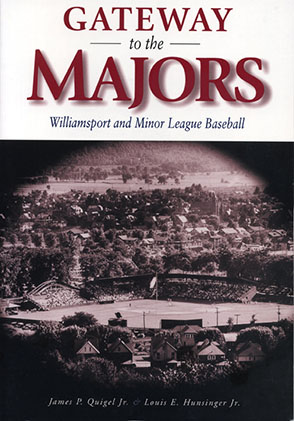
Gateway to the Majors: Williamsport and Minor League Baseball, James P. Quigel, and Louis E. Hunsinger
“Lou Hunsinger Jr. and Jim Quigel dig deep into baseball’s roots in North-central Pennsylvania and bring to life details of the events and individuals who have kept America’s National Pastime going strong into the 21st century.” —Jim Carpenter, Williamsport Sun-Gazette


American Shad in the Susquehanna River Basin: A Three-Hundred-Year HistoryRichard Gerstell
“Gerstell employs government reports, deed records, and newspaper accounts to reconstruct the size of the catches, methods employed by fishermen, and legislative attempts to check the inexorable decline of shad after 1830. Estate inventories yield lists of tools related to fishing, adding specificity and interest to this unpretentious but enlightening account of the once-abundant Susquehanna shad.”

Down the Susquehanna to the Chesapeake, Jack Brubaker
“Captures the charm—and violence—of the Chesapeake Bay’s only indispensable tributary. . . . Doubly welcome, for its own considerable virtues and for filling in so many of the blanks in our knowledge of a river that plays a far larger role in this part of the country than most of us realize. . . . Brubaker’s meticulous and loving description of the river should do much to heighten our appreciation of this secret treasure. . . . University-press publishing at its absolute best.” —Jonathan Yardley, Washington Post Book World

The Monongahela: River of Dreams, River of Sweat, Arthur Parker
"The Monongahela River in western Pennsylvania, one of three rivers that meet at the Golden Triangle in Pittsburgh, has a rich history associated with the westward expansion of the nation during the colonial era and with the development of America as an industrial power beginning in the nineteenth century."


Twilight of the Hemlocks and Beeches, Tim Palmer
“The noble beech and the mighty hemlock help define the forest I’ve spent my life wandering; that they are now facing ruin is one more sadness in the great sadness settling over the planet. One is enormously grateful to the author for capturing their meaning and beauty; we should do all that we can to keep them healthy.” —Bill McKibben, author of The End of Nature


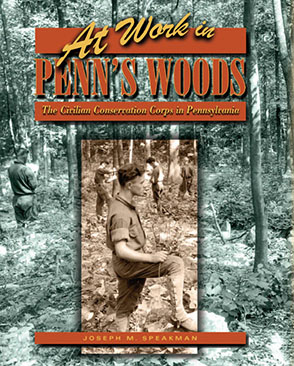
At Work in Penn's Woods: The Civilian Conservation Corps in Pennsylvania, Joseph M. Speakman
“An excellent study of state history with national themes.” —P. D. Travis, Choice
The Civilian Conservation Corps was one of the most popular programs of President Franklin D. Roosevelt’s New Deal. Over the nine years of the program, from 1933 to 1942, over two and one-half million unemployed young men found work on conservation projects across Depression-stricken America. “Roosevelt’s Tree Army,” as the CCC men were sometimes called, planted billions of trees, fought forest fires, did historic preservation work, and constructed recreational facilities in state and national parks. At Work in Penn’s Woods offers a rich and compelling portrait of Pennsylvania’s CCC program."


Keystone Books in the Western Libraries

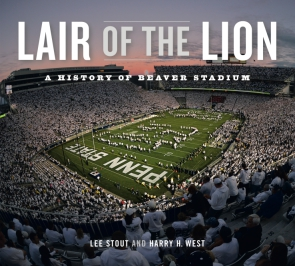
Lair of the Lion : A History of Beaver Stadium , Lee Stout, Harry
“Football is an unmistakable part of the culture of Penn State, though the experience of a Nittany Lions home game—from the crowds and tailgates to the spectacle of the game itself—has changed significantly over the years. This richly illustrated and researched book tells the story of the structure that has evolved along with the university’s celebrated football program: the iconic Beaver Stadium.”

 
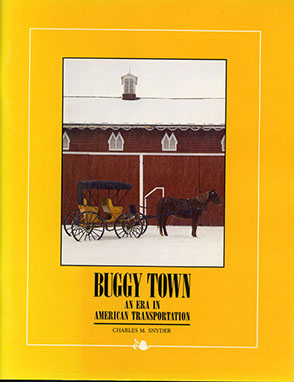
Buggy Town : An Era in American Transportation, Charles M.  Snyder.
“Horse and buggy transportation originated in New England and edged westward through Pennsylvania to center later in the Middle West. The buggy was a very light, high-wheeled carriage unique to the United States. This vehicle created a centralized trade concentrated in such towns as Mifflinburg, Pennsylvania, identified near and far as "The Buggy Town." This book is an illustrated story of "The Buggy Town," its shops, vehicles, and customs as they reflected an era of transportation in America.”

Holidays : Victorian Women Celebrate in Pennsylvania , Nada Gray.
“Women in rural Pennsylvania played an important role in family celebrations of Christmas and Easter during the late nineteenth and early twentieth centuries. This book focuses on that role by examining their crafts related to the tree and the egg. Guided by the editors of ladies magazines, they strove for fashionable holiday decorations created from readily available materials.”

Rivers of Pennsylvania, Tim Palmer.
“An introduction to Pennsylvania's usable streams—45,000 miles of them—this book is designed to stimulate interest, enjoyment, and concern. Together with pleasurable reading, information is provided for the active or prospective canoeist, kayaker, boater, or rafter; the hiker or camper; the nature or history buff; the angler or conservationist.”
Other Summers : the Photographs of Horace Engle, Edward Leos ; Foreword by Alan Trachtenberg.
“This rare cache of early photographs, salvaged and printed by the author, reveals an authentic view of life in the late 19th century America with a photographic vision that was fifty years ahead of its time. An unposed, candid record of people and activities in rural areas and towns of Pennsylvania and Virginia in the 1880's, these images have a quality of unstrained honesty and freshness that is in marked contrast to the stilted, formal portraits of the period.”
 A Pennsylvania Album : Picture Postcards, 1900-1930, George Miller.
“The 270 photographs reproduced in this volume constitute a unique view of everyday life in each of Pennsylvania's counties during the period from 1900 until 1930. Taken from picture postcards, each photograph is accompanied by a short, informative caption.”

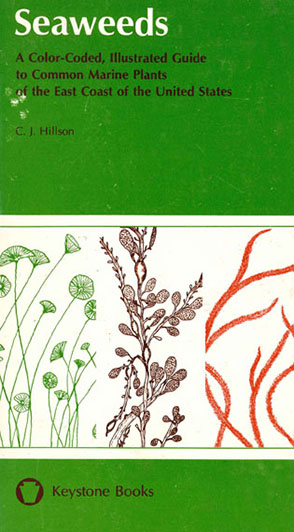
Seaweeds : A Color-coded, Illustrated Guide to Common Marine Plants of the East Coast of the United States, C. J. Hillson.
“Automobiles, interstate highways, shorter work weeks, longer vacations, and higher salaries have all combined to bring the seashore closer to man. Where once a visit to the shore was only a dream for many, or a once-in-a-lifetime trip for others, the varied oceanic life that has held man's interest for centuries is now just beyond the garage doors of the American family. The same curiosity that stirs the beach combing instincts of coastal dwellers is possessed by inlanders, and now a midwesterner too can do something about that curiosity.”

Sources: 
Penn State University Press

Post Script

    It is interesting that the Penn State University Press is under the auspices of the University Libraries. Here is the full mission statement taken from the Strategic Plan.
1. Mission
"The Pennsylvania State University Press, reporting to the Dean of University Libraries and Scholarly Communications, publishes original scholarly, peer-reviewed research (books, journals, and other forms of research) in the arts, humanities, and social sciences for worldwide scholarly   communities. The Press disseminates this research to international libraries, institutions, and scholars at affordable prices and at the highest quality. The Press also serves the citizens of Pennsylvania by publishing on topics related to the history, culture, literature, society, politics, and future of Pennsylvania and the mid-Atlantic region."

  It is also interesting that some of the titles are 'unlocked' (i.e. open access).

Sunday, 26 August 2018

Senator John McCain


Image result for mccain navy
   
     It would be difficult to find anyone, other than the current President of the United States, who did not think that Senator John McCain was an honourable man who dedicated his life to serving his country. From one of the obituaries I read today, I have extracted a small portion which relates to his military career and an unfortunate event he experienced prior to the very unfortunate one he lived as a prisoner of war for over five years.

     “Sen. McCain requested and got orders to do a Vietnam combat tour, joining a squadron on the supercarrier Forrestal in the Tonkin Gulf. On July 29, 1967, having flown five uneventful bombing runs over North Vietnam, he was preparing for takeoff when a missile accidentally fired from a nearby fighter struck the fuel tank of his A-4 Skyhawk, Sen. McCain wrote in his memoir. It set off explosions and a fire that killed 134 crewmen, destroyed more than 20 planes and disabled the ship so severely that it took two years to repair.
     His own injuries being relatively — and miraculously — minor, Sen. McCain, then a lieutenant commander, volunteered for dangerous duty on the undermanned carrier Oriskany. He joined a squadron nicknamed the Saints that was known for its daring; that year, one-third of its pilots would be killed or captured.

(“John McCain, ‘Maverick’ of the Senate and Former POW, Dies at 81," By Karen Tumulty, Washington Post, August 26, 2018.)

     The name “Oriskany” reminded me of a review I wrote over 30 years ago of a book about that carrier and the experience of those who served on it. The review is presented below and the book will be of interest to those who want to learn more about the pilots, like McCain, who fought in the air war in Vietnam. The review is found in the Canadian Review of American Studies, Vol. 18, No.4, Winter, 1987. p.562.


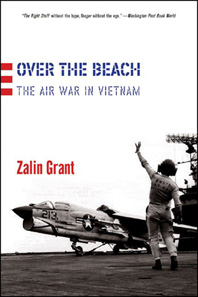
Zalin Grant. Over the Beach: The Air War in Vietnam. W.W. Norton & Company, 1986.


     The author of Over the Beach served in Vietnam and then reported from there as a journalist for Time and The New Republic. While working on a story in 1966, Mr. Grant met the members of Squadron 162 who flew off the carrier Oriskany. Intrigued by the exploits of the Naval aviators, the author kept in touch and, in 1971, located the surviving members and interviewed a number of them. The time was not right and readers were not ready, however, at least in his judgement, for the type of story that Mr. Grant wanted to tell, so the project was delayed until 1984, when the author again traced down the pilots and further recorded their experiences. So the book that has resulted is based on research, some of which was conducted twenty years ago, on the recorded reminiscences of the participants and on an analysis of some of the scholarship that was produced in the intervening years. It is partly an oral history, partly an exercise in the “New Journalism,” and it is totally satisfying.

     Over the Beach recounts the history of one squadron of Naval pilots who flew F-8 Crusaders off the deck of the Oriskany as she cruised in an area known as “Yankee Station” in the Gulf of Tonkin during the period 1966 to 1972. Personal experiences are emphasized, and the reader learns a great deal about how the aviators were trained, how they viewed combat, how they lived within the confined space of “officer’s country” and how they behaved while on liberty or when captured by the enemy. Scattered throughout the book are the words of wives and, in particular, the moving recollections of the wife of one pilot who was shot down and killed. Those who approach this book expecting prose overwhelmed by military acronyms and the jargon typically uttered by men who say “Negative” when they mean ”No” will be pleasantly surprised by the eloquence of the testimony.

     Although the author’s primary purpose was to tell the personal stories of pilots and “to write about them in human terms,” he does not ignore the larger political and military issues. The basic goal of the air war was to stop the flow of men and supplies into South Vietnam. However, it was not quite this simple. The strategies that were designed by military officers and politicians to accomplish this goal often differed from each other. Grant does a good job of discussing how the political restrictions that were imposed affected the course of air operations and the lives of the pilots who actually had to fly missions at particular times against particular targets, both of which were chosen by politicians thousands of miles away.

     One is impressed when reading the book by the complexity of air operations and the courage it takes to perform them. It is not easy to coordinate the activities of several floating cities and it takes considerable skill to drive a huge piece of machinery off the deck of an aircraft carrier. It also takes considerable nerve to fly from a carrier and return to it at night through the rain, clouds and mist of a monsoon and land on a very small deck pitching and rolling in a heavy sea. And it takes still more courage and skill when one misses and misses again, to fly back into the night and find a tanker and refuel so one can once more try to land. The number of deaths recorded in this book from accidents alone is staggering and one does not have to be an actuary to realize that Naval aviators were involved in a very risky profession.

     About ten years ago, Tom Wolfe also wrote about Naval carrier pilots in an interesting essay titled,  “The Truest Sport: Jousting With Sam and Charlie,” which was reprinted in Mauve Gloves & Madmen, Clutter & Vine and in The Purple Decades. It was his goal, he wrote elsewhere, “to give the full objective description, plus something for which readers had always to go novels and short stories; namely, the subjective or emotional life of characters.” The author of Over the Beach would, I think, agree with this statement. In any case, he has written a book about those who possess “the right stuff” and anyone interested in contemporary American Studies is certain to enjoy it. Jerry Mulcahy
Canadian Review of American Studies, January 1987, 18(4), p.562

Post Script
McCain is not mentioned in Over the Beach, but the author,  Zalin Grant, does offer a good account of McCain's naval experiences here: http://www.pythiapress.com/wartales/McCain-Shootdown.htm

McCain's father and grandfather were admirals and he requested a tour in Vietnam.  I did not and then refused to serve there. It should not seem odd, however, that I can admire the man and do. As far as I am concerned, candidate Trump's remark about McCain should have ended his run for office and I remain surprised that so many Republican patriots were silent (and still are).

In the review, Tom Wolfe is quoted and he is now also gone.  Among other things he should be remembered for giving us 'radical chic",  long before 'virtue signalling' became fashionable.

Wednesday, 22 August 2018

For Book Reviewers


     I would imagine that the audience for this post will be minuscule given that book reviews, particularly in newspapers, have largely disappeared from print publications. Should you get the call, however, you will find below some material you may use (I did). It will be especially useful if you need filler for a long review and if you want to entice the reader with some good prose, before you offer some of your own.

    Among the debris I am discarding I found material relating to a book review I produced. I will spare you and not recycle the entire review which was of a festschrift for a retired librarian. It seems to me that the introduction to the review is worth sharing, however, especially the portion by Macauley:

“After reviewing the three-volume life of Lord Burleigh, Macauley wrote the following:

“Compared with the labour of reading through these volumes, all other labour, the labour of thieves on the treadmill, of children in factories, of negroes in sugar plantations, is an agreeable recreation. There was, it is said, a criminal in Italy, who was suffered to make his choice between Guicciardini and the galleys. He chose the history. But the war of Pisa was too much for him. He changed his mind and went to the oar.”

This is how the review begins: 
      "There are those, I am sure, who would expect that it would be wiser to choose the oar straight away than to agree to review a book on reference services and library education. They would be wrong in this instance, however, for the book under consideration contains some interesting and informative essays.”

Sources:
     The review actually exists and can be found here: "Reviewed Work: Reference Services and Library Education: Essays in Honor of Frances Neel Cheney by Edwin S. Gleaves, J. M. Tucker. Review by: Jerry Mulcahy, Canadian Journal of Education / Revue canadienne de l'éducation
Vol. 9, No. 1 (Winter, 1984), pp. 108-111.
     It should be noted that Ms Cheney was quite a reviewer. She produced almost 6,000 of them for the Wilson Library Bulletin, while also reviewing for the Nashville Banner, and over 2,000 more can be found in Reference Services Review.
    The person in the picture above also actually exists. He is Ron Charles who reviewed books for the Washington Post and you can learn more about him and the decline of book reviewing here:
"For Your Consideration: Ron Charles, Video Book Reviewer," Dan Ozzi, Publishers Weekly, Feb, 14, 2011.