Sunday, 29 October 2017

INSECT ELEGY


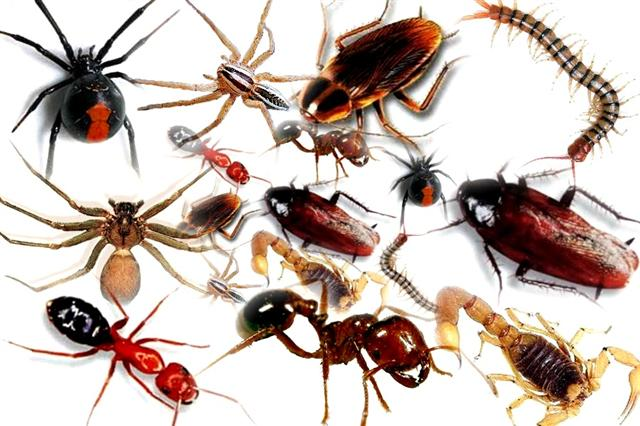
    I indicated yesterday (see the post below) that I would attempt to get back to this blogging business. So, in case you missed it, here is some information about a news item that was widely circulated in late October. It has to do with the dramatic decline in the number of insects.


Something Else to Worry About


    Even those not concerned with environmental issues could hardly avoid the many articles written over the last few years about bees, Colony Collapse Disorder and neonicotinoids. A new scientific study indicates that bees may not be the only insects in danger of elimination. In short, it may not be a good idea to encourage your kids to major in entomology since there may soon be a shortage of specimens to study.


    The recent news stories are based on this article which is found in a respected journal that is freely available to you: “More Than 75 Percent Decline Over 27 Years in Total Flying Insect Biomass in Protected Areas,” Caspar A. Hallmann, et al. PLOS ONE, Oct. 18, 2017.
I will provide at the bottom of this post some samples of the reactions to this report.


The Windshield Phenomenon
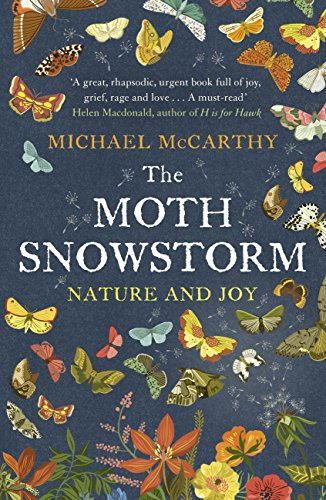


   If you are not inclined to slog through a scientific study then you should have a look at this book which tells the same story in a very effective and readable way. I happened upon it a few years ago, probably because I had read the author’s Say Goodbye to the Cuckoo. (see my earlier post back in late May on the subject of cuckoos.) It has been widely circulated among my friends who have all enjoyed it and, of course, my friends are all sophisticated and discerning readers.


    Still, you are likely not convinced that a book about moths would be very interesting and I agree that it would probably be more popular if the title was Butterfly Ballet, The Majesty of Monarchs or especially The Birds and the Bees. Even the author notes that “Moths have long been unloved.” (p.100.) Trust me and my friends and have a look at it. Here is a sample that explains the title and which also basically indicates that the subject of the book has to do with the disappearance of insects.


“This means, of course, that in the dark there are far, far more moths out and about than ever there are butterflies during the daytime; it’s just that we don’t see them. Or, at least, we didn’t, until the invention of the automobile. The headlight beams of a speeding car on a muggy summer’s night in the countryside, turning the moth’s into snowflakes and crowding them together the faster you went, in the manner of a telephoto lens, meant that the true startling scale of their numbers was suddenly apparent, not least as they plastered the headlights and the windscreen until driving became impossible, and you had to stop the car to wipe the glass surfaces clean. (I know there are many other insects active at night as well, but let the moths stand proxy for the rest.) Of all the myriad displays of abundance in the natural world in Britain, the moth snowstorm was the most extraordinary, as it only became perceptible in the age of the internal combustion engine. Yet now, after but a short century or existence, it is gone.” p.102


Sources:
“Warning of 'Ecological Armageddon' After Dramatic Plunge in Insect Numbers: Three-quarters of Flying Insects in Nature Reserves Across Germany Have Vanished in 25 Years, With Serious Implications for all life on Earth, Scientists say,”  Damian Carrington, The Guardian, Oct. 18, 2017
“The abundance of flying insects has plunged by three-quarters over the past 25 years, according to a new study that has shocked scientists.”
“Insects are an integral part of life on Earth as both pollinators and prey for other wildlife and it was known that some species such as butterflies were declining. But the newly revealed scale of the losses to all insects has prompted warnings that the world is “on course for ecological Armageddon”, with profound impacts on human society.”
“The research, published in the journal Plos One, is based on the work of dozens of amateur entomologists across Germany who began using strictly standardised ways of collecting insects in 1989. Special tents called malaise traps were used to capture more than 1,500 samples of all flying insects at 63 different nature reserves.”
“The fact that the samples were taken in protected areas makes the findings even more worrying, said Caspar Hallmann at Radboud University, also part of the research team: “All these areas are protected and most of them are well-managed nature reserves. Yet, this dramatic decline has occurred.”

"Flying Insects Are Disappearing From German Skies: The Country Has Lost Three-quarters of its Aerial Insects  Since 1989’” Nature, Oct. 18, 2017


‘This is Very Alarming!’: Flying Insects Vanish From Nature Preserves," Ben Guarino, Oct. 18, The Washington Post, Oct. 18, 2017
“Biologists call this the windshield phenomenon. It's a symptom, they say, of a vanishing population.”
“If you like to eat nutritious fruits and vegetables, you should thank an insect. If you like salmon, you can thank a tiny fly that the salmon eat when they're young,” Black said. “The whole fabric of our planet is built on plants and insects and the relationship between the two.”


“Insects Are In Serious Trouble: In Western Germany, Populations of Flying Insects Have Fallen by Around 80 Percent in the Last Three Decades”, Ed Young, Atlantic, Oct. 19, 2017


Here is a Canadian sample:
“Inside the Mysterious Decline of Earth's Insects: Insects are by far the Most Populous Species on the Planet, But They Seem to be Disappearing. Why Aren't More People Concerned?”,  Leslie Anthony, Canadian Geographic, Oct. 21, 2017.


This is an article by the author of The Moth Snowstorm:
“A Giant Insect Ecosystem is Collapsing Due to Humans. It's a Catastrophe
Insects Have Triumphed for Hundreds of Millions of Years in Every Habitat but the Ocean. Their Success is Unparalleled, Which Makes Their Disappearance all the more Alarming,"
Michael McCarthy, The Guardian,  Oct. 21, 2017.


“Furthermore, insects form the base of thousands upon thousands of food chains, and their disappearance is a principal reason why Britain’s farmland birds have more than halved in number since 1970. Some declines have been catastrophic: the grey partridge, whose chicks fed on the insects once abundant in cornfields, and the charming spotted flycatcher, a specialist predator of aerial insects, have both declined by more than 95%, while the red-backed shrike, which feeds on big beetles, became extinct in Britain in the 1990s.”


“It has taken us a lot of time to understand this for two reasons: one cultural, one scientific. Firstly, we generally do not care for insects (bees and butterflies excepted). Even wildlife lovers are fixed on vertebrates, on creatures of fur and feather and especially the “charismatic megafauna”, and in the population as a whole there is even less sympathy for the fate of the chitin-skeletoned little things that creep and crawl; our default reaction is a shudder. Fewer bugs in the world? Many would cheer.”


Secondly, for the overwhelming majority of insect species, there is no monitoring or measurement of numbers taking place. It is a practical impossibility: in the UK alone there are about 24,500 insect species – about 1,800 species of bugs, 4,000 species of beetles, 7,000 species of flies and another 7,000 species of bees, wasps and ants – and most are unknown to all but a few specialists. So their vast and catastrophic decline, at last perceptible, has crept up on us; and when first we began to perceive it, it was not through statistics, but through anecdote.”


“The earliest anecdotal impression of decline was through what is sometimes termed the windscreen phenomenon (or windshield if you live in the US): time was, especially in the summer, when any long automobile journey would result in a car windscreen that was insect-spattered. But then, not so much. Two years ago I wrote a book focusing on this curious happening, but I gave it a different name: I called it the moth snowstorm, referring to the moths which on summer nights in my childhood might cluster in such numbers that they would pack a speeding car’s headlight beams like snowflakes in a blizzard.”


“But the point about the moth snowstorm was this: it had gone. I personally realised it had disappeared, and began writing about it as a journalist, in the year 2000; but it became obvious from talking to people who had also observed it that its disappearance dated further back, probably to about the 1970s and 1980s. And the fact that an entire large-scale phenomenon such as this had simply ceased to exist pointed inescapably to one grim conclusion: though unnoticed by the world at large, a whole giant ecosystem was collapsing. The insect world was falling apart.”

Saturday, 28 October 2017

A Note From the Chief Cunctator


    That would be me.
    It has been exactly one month since my last post which means that I need to get back to work if I want to provide any for October. The problem is not just procrastination. There is an ill family member who requires some time and attention. As well, there has been, of late, an Indian Summer which is really the only summer we had this year. It was far nicer to be outside than in. There was also a trip to Vancouver visiting with family. All of the above explains my blogging inactivity and will serve to remind me later of why I was so unproductive.

    It has been a little over one year since I started this blog so I will say a few words about it. From the "About this blog" section I learned that apparently one purpose for it was to assist me in improving my memory. I can't say that it has helped much. When I look at older entries I remember doing them, but I can't say that I would be able to tell you much about them if you were sitting with me on the patio.
   As for the 'subjects' of the posts I can only say that they were largely unplanned and unpredictable. Andreski was in the last one and this is likely the only blog of the bazillions out there that mentions both Noam Chomsky and Tex Cobb. None of these gents were on my blogging-to-do-list. That I discuss Mother Teresa and Matthias Buchinger as well as bed-pushing is a surprise to me. That there are so few personal things covered, such as the brief mention of the ill relative and Vancouver trip, is also rather strange, but it is likely the case that you are more interested in Tex Cobb than your are in me or an ill relative.

    Given such subjects it is not surprising that this blog has attracted no interest at all. It is still the case that I have not attempted to promote it and just about every friend and family member is unaware of it. On the rare occasion that I have pushed a post out to someone who is likely to be interested in the topic, I can't say that they have suggested that I come out of retirement to offer my wisdom to the masses.

   Still I will persist and now that I have limbered up a bit I will try to offer some short posts to ramp up the October number. After that the weather should get worse and my offerings should get better.
Post Script:
I apologize for writing 'Indian Summer' and am not quite sure if I should replace it with 'Indigenous Summer'. Let me just say that we had some unusually nice weather.


Thursday, 28 September 2017

STANISLAV ANDRESKI


    There are not many subjects about which I know a lot so when I find one about which I know a little and it is covered in jargon I get irritated.  Rather than focus on the subject of my irritation I will introduce you to someone who was irritated about all of this 45 years ago. Since the wiki entry for him is short and given that he died 10 years ago this month I thought it worth calling him and his work to your attention.
   Stanislav Andreski wrote quite a bit about different subjects, but I have only read Social Sciences as Sorcery. You can judge the tenor of this tract from these sample chapter headings:
“Why Foul One’s Nest?”, “The Uses of Absurdity”, “Evasion in the Guise of Objectivity”, Hiding Behind Methodology”, “Quantification as Camouflage”, “Ideology Underneath Terminology” and “The Law of Lighter Weights Rising to the Top.”
  I had another look at it and these quotations are from Chapter 6: “The Smoke Screen of Jargon”.
“The attraction of jargon and obfuscating convolutions can be fully explained by the normal striving of humans for emoluments and prestige at the least cost to themselves, the cost in question consisting of the mental effort and the danger of ‘sticking one’s neck out’ or ‘putting one’s foot in it’. In addition to eliminating such risks, as well as the need to learn much, nebulous verbosity opens a road to the most prestigious academic posts to people of small intelligence whose limitations would stand naked if they had to state what they have to say clearly and succinctly. Actually, the relationship between the character of a jargon-mongerer and the amount of his verbiage can be expressed in the formula below, which I propose to call THE EQUATION OF JARGON-MONGERING.” [those interested in the equation should see pp.82-83.]

“The usage of mumbo-jumbo makes it very difficult for a beginner to find his way; because if he reads or hears famous professors from the most prestigious universities in the world without being able to understand them, then how can he know whether this is due to his lack of intelligence or preparation, or to their vacuity? The readiness to assume that everything that one does not understand must be nonsense cannot fail to condemn one to eternal ignorance; and consequently, the last thing I would wish to do is to give encouragement to lazy dim-wits who gravitate towards the humanistic and social studies as a soft option, and who are always on the lookout for an excuse for not working. So it is tragic that the professorial jargon-mongers have provided such loafers with good grounds for indulging in their proclivities. But how can a serious beginner find his way through the verbal smog and be able to assess the trustworthiness of high ranking academics?” [for you beginners he answers the question by offering a way to test your brain power, see pp.85-86].

He offers some consolation later in the book:
“The reason why human understanding has been able to advance in the past, and may do so in the future, is that true insights are cumulative and retain their value regardless of what happens to their discoverers; while fads and stunts may bring an immediate profit to the impresarios, but lead nowhere in the long run, cancel each other out, and are dropped as soon as their promoters are no longer there (or have lost the power) to direct the show. Anyway, let us not despair.”


Post Script


Stanislav Leonard Andreski (Andrzejewski) was born in 1919 and died Sept. 26, 2007. He wrote about several subjects. Here are some reviews of Social Sciences as Sorcery and a couple of obituaries:
Reviews:
“Social Sciences as Sorcery,” by Stanislav Andreski, Review by: John Woods
Source: Canadian Journal of Political Science / Revue canadienne de science politique, Vol. 7, No. 2 (Jun., 1974), p. 371
“For all its breadth, Social Sciences as Sorcery achieves a fine unity of treatment.
It is also an eminently readable and, above all, ingenious and amusing….
Much of the book concerns the postures we adopt. It debunks the fraudulent and
punctures the stuffy with skill and zest. As much concerned with manners and morals as with method, it derides social science "sorcerers" for passing comfortable and un-productive careers in airy word-castles of jargon, securely founded on the bedrock of the obvious. It is high-style coffee-table reading, as well as a book of considerable substance.”
[It should be noted that Wood does say some negative things]

“Social Sciences as Sorcery.” by Stanislav Andreski, Review by: Murray Hausknecht
Contemporary Sociology, Vol. 3, No. 3 (May, 1974), pp. 204-206

“Social Sciences as Sorcery,” by Stanislav Andreski, Review by: G. Duncan Mitchell
The British Journal of Sociology, Vol. 26, No. 3 (Sep., 1975), p. 364

“The Social Sciences as Sorcery,” by S. Andreski, Review by: I. C. Jarvie, The British Journal for the Philosophy of Science, Vol. 24, No. 2 (Jun., 1973), pp. 193-199.

“Muddledom and Mumbo-Jumbo in Sociological Jargon: Book World,” Reviewed by John Weightman. The Washington Post, Times Herald, July 13,  1973: B4.

“Clouting the Clerks, Peter Worsley, The Guardian, Sept. 14, 1972.


Obituaries:
“Stanislav Andreski: Forthright Founder of Reading University Sociology Department,”
Kazimierz Sowa, The Guardian, Nov. 20, 2007.
“Andreski's most popular book is Social Sciences as Sorcery (1972). This work brought Andreski international recognition but did not please many fellow sociologists due to his indictment of the "pretentious and nebulous verbosity" endemic in the modern social sciences.”
On women:
“Later, Andreski turned his attention to the role of women in the development of civilisation, his thesis being that the more access women have to public life within a society the greater the social and scientific development that society is likely to enjoy. Sadly, his book on this subject remains incomplete.”

“Professor Stanislav Andreski: Sociologist Whose Wartime Escape From Poland informed His Later Work on Military Organisation,” Christie Davies,  Independent, October 8, 2007.
Stanislav Andreski, Professor Emeritus of Sociology of Reading University, was an outstanding figure in the first generation of British sociologists.
“Andreski always wrote a clear, impeccable and attractive English that was a pleasure to read. He held in contempt those social scientists who were obscurantists and jargon-mongers, and in 1974 published an attack on them in his best-selling Social Sciences as Sorcery. It was very popular with the public but infuriated those of his colleagues whose careers were based on concealing behind verbiage the fact that they had nothing to say. Andreski was equally contemptuous of bureaucracy and when he received an absurd questionnaire from the Social Science Research Council asking him what method he used, he replied "thinking".”

“Andreski was a character, a man whose keen brain, encyclopaedic knowledge, fluency in five languages and ability to read others, enabled him to attain a commanding position in comparative sociology. Few British sociologists have matched him for originality or have had such a range of achievements.”

University Marketing


    It is unfortunate that so much effort has to be expended on marketing and ‘branding’ by those involved in higher education. One can understand why such efforts must be undertaken, however, since colleges and universities do constitute a market, one which is now highly competitive.
    One might assume that such endeavours would reflect a higher degree of clarity and honesty than is typically found in the commercials and advertisements displayed in the lower realms of commerce. Such is not the case. Most universities play in the rankings and ratings game, for example, and eagerly promote high rankings of dubious value while understandably ignoring the lower ones mentioned in ratings of higher quality that reflect measurable and meaningful data.
    I noticed recently on the website of a university I attended the following promotional puffs. I also worked at the same university which is, in fact, a good one that has plenty of accomplishments and people of which to be proud. In this instance, however, it receives a failing grade of 50%. The examples below are presented in descending order in terms of honesty and clarity and the last two could be easily replaced.


Saturday, 2 September 2017

School Days and Labour Day

It is highly likely that there is considerable anxiety in those households containing small children since school is about to begin. Even in the houses without children there is likely to be some residual dread and, besides, Labour Day even for those of us who no longer work, makes us realize that we have to face the fall.
    This year, unfortunately, we can all remind ourselves that things could be worse and we could be in Houston. If you have children and that argument is not convincing and you are running low on new anecdotes about the hardships of your own school days when you had to walk miles to a school where you were certain to be bullied and also beaten by the teachers, here is some additional ammunition.
    I have been reading the works of John Muir who was beaten at school and thrashed thoroughly at home. You might as well benefit from my hard work. Dispense with all trigger warnings and simply read these excerpts to your kids to  toughen them up.


Muir on Well Digging (p.111)
     You can use this example to convince them that there are worse things than school - work, for example. Young Muir spent months in a hole and almost died from poisonous gas.
We called our second farm Hickory Hill, from its many fine hickory trees and the long gentle slope leading up to it. Compared with Fountain Lake farm it lay high and dry. The land was better, but it had no living water, no spring or stream or meadow or lake. A well ninety feet deep had to be dug, all except the first ten feet or so in fine-grained sandstone. When the sandstone was struck, my father, on the advice of a man who had worked in mines, tried to blast the rock; but from lack of skill the blasting went on very slowly, and father decided to have me do all the work with mason's chisels, a long, hard job, with a good deal of danger in it. I had to sit cramped in a space about three feet in diameter, and wearily chip, chip, with heavy hammer and chisels from early morning until dark, day after day, for weeks and months. In the morning, father and David lowered me in a wooden bucket by a windlass, hauled up what chips were left from the night before, then went away to the farm work and left me until noon, when they hoisted me out for dinner. After dinner I was promptly lowered again, the forenoon's accumulation of chips hoisted out of the way, and I was left until night.

One morning, after the dreary bore was about eighty feet deep, my life was all but lost in deadly choke-damp,--carbonic acid gas that had settled at the bottom during the night. Instead of clearing away the chips as usual when I was lowered to the bottom, I swayed back and forth and began to sink under the poison. Father, alarmed that I did not make any noise, shouted, "What's keeping you so still?" to which he got no reply. Just as I was settling down against the side of the wall, I happened to catch a glimpse of a branch of a bur-oak tree which leaned out over the mouth of the shaft. This suddenly awakened me, and to father's excited shouting I feebly murmured, "Take me out." But when he began to hoist he found I was not in the bucket and in wild alarm shouted, "Get in! Get in the bucket and hold on! Hold on!" Somehow I managed to get into the bucket, and that is all I remembered until I was dragged out, violently gasping for breath.

One of our near neighbors, a stone mason and miner by the name of William Duncan, came to see me, and after hearing the particulars of the accident he solemnly said: "Weel, Johnnie, it's God's mercy that you're alive. Many a companion of mine have I seen dead with choke-damp, but none that I ever saw or heard of was so near to death in it as you were and escaped without help." Mr. Duncan taught father to throw water down the shaft to absorb the gas, and also to drop a bundle of brush or hay attached to a light rope, dropping it again and again to carry down pure air and stir up the poison. When, after a day or two, I had recovered from the shock, father lowered me again to my work, after taking the precaution to test the air with a candle and stir it up well with a brush-and-hay bundle. The weary hammer-and-chisel-chipping went on as before, only more slowly, until ninety feet down, when at last I struck a fine, hearty gush of water. Constant dropping wears away stone. So does constant chipping, while at the same time wearing away the chipper. Father never spent an hour in that well. He trusted me to sink it straight and plumb, and I did, and built a fine covered top over it, and swung two iron-bound buckets in it from which we all drank for many a day.

Muir on Bathing (p.13)
     If the little buggers are reluctant to bathe, read them this.

It appears natural for children to be fond of water, although the Scotch method of making every duty dismal contrived to make necessary bathing for health terrible to us. I well remember among the awful experiences of childhood being taken by the servant to the seashore when I was between two and three years old, stripped at the side of a deep pool in the rocks, plunged into it among crawling crawfish and slippery wriggling snake-like eels, and drawn up gasping and shrieking only to be plunged down again and again. As the time approached for this terrible bathing, I used to hide in the darkest corners of the house, and oftentimes a long search was required to find me. But after we were a few years older, we enjoyed bathing with other boys as we wandered along the shore, careful, however, not to get into a pool that had an invisible boy-devouring monster at the bottom of it. Such pools, miniature maelstroms, were called "sookin-in-goats" and were well known to most of us. Nevertheless we never ventured into any pool on strange parts of the coast before we had thrust a stick into it. If the stick were not pulled out of our hands, we boldly entered and enjoyed plashing and ducking long ere we had learned to swim.

Muir on the Self Esteem Thing (p.130)
     If your child is still upset that he/she didn’t get the gold participation medal for almost running one lap around the track last year, then tell them that they shouldn’t expect one and that their room is being rented out, one week after they turn 18.

When I told father that I was about to leave home, and inquired whether, if I should happen to be in need of money, he would send me a little, he said, "No; depend entirely on yourself." Good advice, I suppose, but surely needlessly severe for a bashful, home-loving boy who had worked so hard. I had the gold sovereign that my grandfather had given me when I left Scotland, and a few dollars, perhaps ten, that I had made by raising a few bushels of grain on a little patch of sandy abandoned ground. So when I left home to try the world I had only about fifteen dollars in my pocket.

Strange to say, father carefully taught us to consider ourselves very poor worms of the dust, conceived in sin, etc., and devoutly believed that quenching every spark of pride and self-confidence was a sacred duty, without realizing that in so doing he might at the same time be quenching everything else. Praise he considered most venomous, and tried to assure me that when I was fairly out in the wicked world making my own way I would soon learn that although I might have thought him a hard taskmaster at times, strangers were far harder. On the contrary, I found no lack of kindness and sympathy.

Muir on Early Rising (p.120)
     If your child wants to stay up late playing video games don’t follow the example of Muir’s father. He told young John that he had to go to bed and that if he wanted to read (!!), he had to get up early to do it. He started getting up at 1 a.m.

Father's strict rule was, straight to bed immediately after family worship, which in winter was usually over by eight o'clock. I was in the habit of lingering in the kitchen with a book and candle after the rest of the family had retired, and considered myself fortunate if I got five minutes' reading before father noticed the light and ordered me to bed; an order that of course I immediately obeyed. But night after night I tried to steal minutes in the same lingering way, and how keenly precious those minutes were, few nowadays can know. Father failed perhaps two or three times in a whole winter to notice my light for nearly ten minutes, magnificent golden blocks of time, long to be remembered like holidays or geological periods. One evening when I was reading Church history father was particularly irritable, and called out with hope-killing emphasis, "John, go to bed! Must I give you a separate order every night to get you to go to bed? Now, I will have no irregularity in the family; you must go when the rest go, and without my having to tell you." Then, as an afterthought, as if judging that his words and tone of voice were too severe for so pardonable an offense as reading a religious book, he unwarily added: "If you will read, get up in the morning and read. You may get up in the morning as early as you like."

That night I went to bed wishing with all my heart and soul that somebody or something might call me out of sleep to avail myself of this wonderful indulgence; and next morning to my joyful surprise I awoke before father called me. A boy sleeps soundly after working all day in the snowy woods, but that frosty morning I sprang out of bed as if called by a trumpet blast, rushed downstairs, scarce feeling my chilblains, enormously eager to see how much time I had won; and when I held up my candle to a little clock that stood on a bracket in the kitchen I found that it was only one o'clock. I had gained five hours, almost half a day! "Five hours to myself!" I said, "five huge, solid hours!" I can hardly think of any other event in my life, any discovery I ever made that gave birth to joy so transportingly glorious as the possession of these five frosty hours.

Muir on Inventions (pp.136-137)
    In spite of all the beatings and rough times and the lack of any esteem-raising endeavours, Muir, as you know, turned out okay. He was even a school teacher for a while. He was also quite inventive, designing a machine to oust him from bed early for his reading. He also invented a remote control fire-starting device which would certainly contravene our current safety laws.

One winter I taught school ten miles north of Madison, earning much-needed money at the rate of twenty dollars a month, "boarding round," and keeping up my University work by studying at night. As I was not then well enough off to own a watch, I used one of my hickory clocks, not only for keeping time, but for starting the school fire in the cold mornings, and regulating class-times. I carried it out on my shoulder to the old log schoolhouse, and set it to work on a little shelf nailed to one of the knotty, bulging logs. The winter was very cold, and I had to go to the schoolhouse and start the fire about eight o'clock to warm it before the arrival of the scholars. This was a rather trying job, and one that my clock might easily be made to do. Therefore, after supper one evening I told the head of the family with whom I was boarding that if he would give me a candle I would go back to the schoolhouse and make arrangements for lighting the fire at eight o'clock, without my having to be present until time to open the school at nine. He said, "Oh, young man, you have some curious things in the school-room, but I don't think you can do that." I said, "Oh, yes! It's easy," and in hardly more than an hour the simple job was completed. I had only to place a teaspoonful of powdered chlorate of potash and sugar on the stove-hearth near a few shavings and kindling, and at the required time make the clock, through a simple arrangement, touch the inflammable mixture with a drop of sulphuric acid. Every evening after school was dismissed, I shoveled out what was left of the fire into the snow, put in a little kindling, filled up the big box stove with heavy oak wood, placed the lighting arrangement on the hearth, and set the clock to drop the acid at the hour of eight; all this requiring only a few minutes.

The first morning after I had made this simple arrangement I invited the doubting farmer to watch the old squat schoolhouse from a window that overlooked it, to see if a good smoke did not rise from the stovepipe. Sure enough, on the minute, he saw a tall column curling gracefully up through the frosty air, but instead of congratulating me on my success he solemnly shook his head and said in a hollow, lugubrious voice, "Young man, you will be setting fire to the schoolhouse." All winter long that faithful clock fire never failed, and by the time I got to the schoolhouse the stove was usually red-hot.

Source: The page numbers all refer to The Story of My Boyhood and Youth as found in the Library of America edition of John Muir: Nature Writings, ed. by William Cronon.

Sunday, 27 August 2017

THE JUKEBOX


    One rarely sees such contraptions these days. For the youngsters I will provide a picture of one, along with the best description you will ever find. Although I recall well the one in our parent’s restaurant, I would never have thought of the glass panels as being full of orangeade or Chartreuse...


    “The evening of our arrival ended in a bar on the waterfront, where, in a setting of vaults, chintz curtains and indirect lighting, a number of sailors were clustered in silent homage around a jukebox. It was the first time I had seen one of these wonderful machines. The barman called it a Wurlitzer Nickelodeum. It was a shrine of steel and bakelite and glass, six feet high, and a queue of sailors were waiting to insert their nickels. At the drop of a coin, an unerring steel hand inside the tabernacle grasped the chosen record from the shelf and placed it on a disc that rose like a magic carpet. A needle-bearing arm descended and unleashed a muted throbbing and the voice of a crooner. The air was filled with etherialized treacle. Glass panels were illuminated in shades of mauve and pink, and liquids that must have been orangeade and Chartreuse and Grenadine syrup bubbled and glowed softly through a maze of decorative glass-piping with the intention of attuning the listener’s bloodstream to the mood of the music. Sailor after sailor slipped their coins into this engine, their eyes becoming every second mistier with Sehnsucht and Heimweh. The Nickelodeum is in its infancy. When it is perfected it is to be armed with slowly turning rollers of satin and fur and plush for the palms of the hands, and a battery of little scent sprays, while, from a bakelite orifice, an inch of barley sugar or Turkish delight, antiseptically sheathed in cellophane, will emerge, in order that all five senses, and not only two, may be simultaneously gratified.”

Source:
This passage is found in Patrick Fermor’s The Traveller’s Tree: A Journey Through the Caribbean Islands. The journey was taken in the late 1940s and the waterfront bar is in St Thomas.
Post Script:
It looks like my Penguin paperback was picked up on an island - the Black Sheep book store on Salt Spring Island, BC. It is, by the way, a wonderful book.

PERIODICAL RAMBLINGS (3)


The VILLAGE VOICE
    I am not sure if I would have included this publication among my ramblings, but I will take time on this fine late summer morning to let you know that the print version of The Village Voice will soon cease to exist. Those of you who lean to the right and those with relatively ‘normal’ sexual proclivities are likely not to care much. It did certainly tend to tilt left and the back pages were filled with advertisements for various sexual services and devices that most found to be rather mysterious.
    Still, it was a major publication that published established and well-known authors. One of the founders was Norman Mailer. It was hardly parochial and covered subjects of interest to those who lived outside of Greenwich. One of its owners was Rupert Murdoch. It received some Pulitzers. If you don’t believe me, consider this:
    “The Village Voice was founded in 1955. It is one of the most successful enterprises in the history of American journalism. It began as a neighborhood paper serving an area about a tenth the size of the Left Bank, in Paris, and it became, within ten years, a nationally known brand and the inspiration for a dozen other local papers across the country. By 1967, it was the best-selling weekly newspaper in the United States, with a single-day circulation higher than the circulations of ninety-five per cent of American big-city dailies. It survived the deaths of four other New York City newspapers and most of its imitators, and it has had a longer life than the weekly Life. But, in books about the modern press, it is given a smaller role than it deserves.”   “It Took a Village: How the Voice Changed Journalism,” Louis Menand, The New Yorker, Jan. 5, 2009.

     Although the website remains it is unfortunate that the print version will disappear. I think the passing of such publications deserves at least a passing mention.  I am heading to Vancouver soon and I will let you know if the Georgia Straight is still around. It was last year and, like The Village Voice, it still had ‘those’ ads.

Post Script

    The “death” of the print version of The Village Voice was announced in August 2017. See, for example:
“After 62 Years and Many Battles, Village Voice Will End Print Publication, John Leland and Sara Maslin Nir, The New York Times, Aug. 22, 2017

“GENERATIONS OF VILLAGE VOICE WRITERS REFLECT ON THE PAPER LEAVING THE HONOR BOXES:THE END OF AN ERA. Luke O’Neil, Esquire, Aug. 23, 2017.

“10 EX–VILLAGE VOICE STAFFERS SHARE WHAT THEY LEARNED—AND WHY THE PAPER MATTERED,” Zach Schonfeld, et al, Newsweek, Aug. 25, 2017.

    Here is the website for The Village Voice. I could not determine how far back the archive goes, but I did some searches and found articles from over a decade ago.

   The London Public Library did not get it, but Western University did, although the subscription was cancelled. It is available in the Weldon Library on microform for the years 1996-2015. Those associated with Western can access some years via various electronic vendors.

All is not lost. One can read a couple of compilations:

The Village Voice Anthology (1956-1980) : Twenty-five years of Writing From the Village Voice, edited by Geoffrey Stokes.
The Village Voice Reader : a Mixed Bag From the Greenwich Village Newspaper, Daniel Wolf.
Music Downtown : Writings From The Village Voice, Kyle Gann.

For two books about The Village Voice see:

The Great American Newspaper : The Rise And Fall Of The Village Voice,  Kevin Michael McAuliffe.
Writing The Record : The Village Voice And The Birth Of Rock Criticism, Devon Powers.

For over forty years The Village Voice was also the place one could find the cartoons of Jules Feiffer who won a Pulitzer in 1986.