Thursday, 23 July 2020

Entomophagy

Cricket Farming

   The fancy word I used to get your attention has to do with the eating of insects. That is our subject for today. I raise it because I read a good related article yesterday in the London Free Press. The article also actually contained some good news and it was good in that it was done by one of the last surviving local reporters. 

   Norman De Bono (the reporter) revealed that, London will become home to the world’s largest indoor cricket farm with Aspire Food Group opening a 100,000-square-foot plant here that will act as a launch pad to bring bugs, as food, to the North American market....At the plant, crickets will be hatched and grown on-site and will become a tasteless, odourless protein powder that will be sold as a food additive, and will also be used to make protein bars. I do think that attracting such a company is a good thing  and I am glad that London seems to be focussing on the food sector as an area for economic development, even as the city continues to expand onto good agricultural land. If we can't grow food, perhaps we can at least process and manufacture some.

   I will provide more information below about the raising of crickets for food. There is, for example, another cricket farm in Norwood, Ontario and you can already buy their cricket powder at local grocery stores. I know all of this because I did some investigative reporting of my own. I did so because I was aware of a use for a major by-product of cricket raising and I wanted to see if it was mentioned. It was not, but I am sure these new food entrepreneurs must be aware of the potential profit to be made from the poop of crickets.

Kricket Krap

   The hobby of my last father-in-law was raising tomatoes. Starting them from seeds under lights in the basement in the early Canadian spring, he nurtured them through the summer and talked about them throughout the entire year. It was for that reason that I gave him as a present some high grade organic fertilizer. This stocking stuffer came in the form of a package of cricket crap from Georgia. Perhaps the choice of such a gift explains why I had more than one father-in-law. In any case, that is why I noticed the article about the new London cricket farm.

   Although I did not find any mention of cricket crap in any of the current articles I did learn that the company in Georgia which provided my father-in-law with Kricket Krap back at the end of the last century is still producing it in this one. If you are interested in crickets as food or as the producers of fertilizer read on.

Sources:
   The article about the local cricket business: "Edible Insects: London's Agri-Food Sector Lands Unique Factory," Norman De Bono, London Free Press, July 21, 2020. 
   The website of the Aspire Food Group is here.  The company also has an operation in Austin, Texas and for some additional information about the company see: 
"How To Breed a Tasty Cricket," Phil McCausland, The Atlantic, Sept, 24, 2015. and
"This Giant Automated Cricket Farm is Designed to Make Bugs a Mainstream Source of Protein," Adele Peters, Fast Company, Aug. 17, 2018.

   The other Ontario cricket producer is Entomo Farms. For additional information see: "Bugs As Livestock? A Canadian Insect Farm is Taking Cricket Powder Mainstream," CBC, Mar. 9, 2018 and "Family of Cricket Farmers Tries Not To Take Their Work Home," Donovan Vincent, Toronto Star," Mar. 31, 2018.
   To buy your own cricket poop go to Bricko Farms in Augusta, Georgia.  Articles about Kricket Krap were circulated by Knight-Ridder back in 1991. See: "Jiminy Cricket! Droppings Make Great Fertilizer," Baltimore Sun, Nov. 3, 1991 and "They Call It What It Is and Sales Haven't Been the Same Since," Orlando Sentinel, Oct. 6, 1991.
   Wikipedia has an entry for Entomophagy and a good piece about it was produced by the folks at University of California, Riverside: Entomophagy (Eating Insects). 
   To grow your own, buy: Cricket Breeding Made Easy or Cricket Farming: The Ultimate DIY Guide. 

The Bonus: 
   Think you would never eat insects - you already are:
However, many westerners unwittingly eat insects or insect parts every day without knowing about it!! It has been estimated that the average American eats about two pounds of dead insects and insect parts a year. These bugs are in vegetables, rice, beer, pasta, spinach and broccoli. The US Food and Drug Administration has allowable insect parts per certain food types. For example, beer which is made from hops, can contain up to 2,500 aphids per 10 grams of hops!!! (From the UC Riverside piece noted above.) 
 

Thursday, 16 July 2020

The Old Philosopher

Encouraging Words For The Discouraged

  We live in troubled times and even those who have been only marginally inconvenienced by the current pandemic are depressed by it. I have been searching for words of solace to offer, but found none which were satisfactory among the writings of real philosophers and positive psychologists. Then I recalled some from the past which are heard on a 45 RPM and which were delivered regularly by the “Old Philosopher” via AM radio stations back in the mid-1950s.

Eddie Lawrence

  Eddie (the Old Philosopher) was really a comedian and his record made it to the Billboard Top 40. If you lived during those less troubled times, you will probably remember it unfondly. It was one of those novelty tunes, like The Purple People Eater, which was played too many times on the few radio stations and it would never have been chosen for the last dance.

   Still, it is worth listening to today and I will provide a link to it below. It begins slowly with soft music and a short list of lamentations offered by Lawrence who sounds “sort of like a crying Jolson.” Then the chorus provides a loud Sousa-like tune with the following words which I present here for those of you who heard them too many times and don’t want to listen to them again. 

      Lift your head up high! Take a walk in the sun with that dignity and stick-to-it-iveness and you’ll show the world, you’ll show them where to get off. You’ll never give up, never give up, never give up - that ship!

Hang in there.

Sources:
There is a Wikipedia entry for Eddie Lawrence.
He died 2014 and an obituary is found in the NYT. That is where I found the Jolson quote. See:
“Eddie Lawrence Dies at 95: Comedy’s ‘Old Philosopher” - “Encouraging Words For Life’s Predicaments From A Character on Records and TV,” William Yardley, New York Times, Mar. 31, 2014.
The song can be heard here - The Merry Old Philosopher. 

The Bonus Stuff:
   The motif of the song was used to promote a number of products. According to the obituary, John Lennon got Lawrence to produce one to promote a record by Harry Nilsson. Here is how the pitch began:
   “Hiya pussy cat: You say you opened up a bicycle wash and the first six customers drowned, and they picked you up in the wax museum for trying to score with Marie Antoinette? Is that what's got you down pussy cat?...Ta da…. Well rise up, get yourself Harry Nilsson’s new record, “Pussy Cats” produced by John Lennon.”

Angela Madsen (R.I.P.)

      This post is interesting and should be inspirational. It is not about me. Even though we are living during the time of the Great Flu, many of us probably do too much whining (or whinging or even whingeing) about problems or issues that result in inconveniences that are often very minor ones. My toe hurts, for example, and it is raining, but this is not about me.

   It is about Angela Madsen and she was the one who is interesting and can inspire us to be a little tougher. I write ‘was’ because I only learned about her in her recent obituary. She died at the age of 60, alone in the Pacific where she had been rowing for about 60 days. Her legs didn't work. She had no breasts.

   The obituary begins this way and only gets worse:
Angela Madsen was a healthy young Marine who was playing basketball when she suffered a serious back injury in 1981. When she had back surgery a dozen years later, at 33, she woke up paralyzed from the waist down. She lost her job, her partner cleaned out her bank account and left her, and for a time she lived on the streets, sleeping in her wheelchair in front of Disneyland.

In case you can’t get behind the firewall I will itemize some of the other difficulties she faced and provide additional sources. She got pregnant while still a junior in high school. Apart from the injury and the botched surgery and the paraplegia, she broke a leg and some ribs in a car accident. She fell from her wheelchair onto the tracks of the San Francisco, subway, injuring her brain, but “even cancer and a double mastectomy did not slow her down.”

  None of those things slowed her down. Apart from the Pacific she also rowed across the Atlantic and the Indian Oceans and around the United Kingdom. She also won gold medals as a Paralympian in rowing and other medals in events such as throwing a javelin and putting a shot. In short, she is worth reading about and we should all complain less and do more.

Sources:
   The obituary: "Angela Madsen, Paralympian Rower, Dies on Solo Pacific Voyage at 60, Katharine Q. Seelye, New York Times, June 30, 2020.
   See also: "Paralympian Angela Madsen Found Dead While Trying to Row From California to Hawaii, " Allen Kim, CNN, June 26, and  “Paralympic Rowing Star Dies During Solo Crossing of Pacific, "Tom Lutz, The Guardian, June 24, 2020.

   Apparently Madsen went overboard in an attempt to fix a problem as a typhoon approached. She was found attached to her boat. Details are provided at the website The Row of Life and on Explorersweb.com - "What Happened to Angela Madsen?".

  This was not her first problem at sea. In one account a huge container ship almost resulted in her drowning during a rescue attempt. There are several YouTube accounts about her. She is typically poised and well-spoken. See, for example, the interview with Jennifer Longdon - "Angela Madsen: Rowing Against the Wind."

The Bonus
   Another tough woman without legs is also in the news these days. Senator Tammy Duckworth (Illinois) lost hers during the Iraq War as a pilot of a Black Hawk helicopter. She also was not slowed down and became a U.S. Senator and mother - the first to give birth while serving in the Senate. 
   She was attacked by Tucker Carlson on Fox News, apparently for hating America. I gather her husband doesn't know that since he is also an Iraq War veteran.
See: "Tammy Duckworth Confronts Nativist Smears From Tucker Carlson," Reid J. Epstein," New York Times, July 8, 2020.
  For more about Senator Duckworth see the Wikipedia entry and her Senate biography. 


Monday, 13 July 2020

Brock's Monument

Statues Again

    In an attempt to ignore, and avoid commenting upon, the continuous contemporary kerfuffles over things like words and statues, I grabbed from the shelf a copy of Dicken’s American Notes for General Circulation. It is the “Cheap Edition” published in 1850 and it was withdrawn and discarded by the Library in which I used to work.  Even in a book originally published over 175 years ago, however, the subject of statues and the destruction of them could not be avoided. 

    After travelling through the States, Dickens detours to Canada on his way home. Upon reaching the Niagara Peninsula he sees the huge statue of General Brock, which had been partially destroyed for political reasons. Here is his description which includes his opinion of what should be done.

From American Notes:

   On the most conspicuous of these heights stood a monument erected by the Provincial legislature in memory of General Brock, who was slain in a battle with the American Forces, after having won the victory. Some vagabond, supposed to be a fellow of the name of Lett, who is now, or who lately was, in prison as a felon, blew up this monument two years ago, and it is now a melancholy ruin, with a long fragment of iron railing hanging dejectedly from its top, and waving to and fro like a wild ivy branch or broken vine stem. It is of much higher importance than it may seem, that this statue should be repaired at the public cost, as it ought to have been long ago. Firstly, because it is beneath the dignity of England to allow a memorial raised in honour of one of her defenders, to remain in this condition, on the very spot where he died. Secondly, because the sight of it in its present state, and the recollection of the unpunished outrage which brought it to this pass, is not very likely to soothe down border feelings among English subjects here, or compose their border quarrels and dislikes.

   General Brock died in the Battle of Queenston Heights during the War of 1812. The monument to him was blown apart in 1840, most likely by Benjamin Lett who hated the British and Brock was a British General. The monument was replaced in the 1850s.

    Generally, General Brock has been regarded as a hero and there are towns and streets named after him. There is another statue of him not far from Niagara on the campus of Brock University. Now, however, sentiments are shifting and his statue and the things named to honour him, may soon be scrutinized by those who wish to erase all the horrible things in history. 

Sources:
   There are Wikipedia entries for Isaac Brock, Brock's Monument and Benjamin Lett.
American Notes is available electronically over the Internet and is an enjoyable read. 
   The picture above is provided by Niagara Tourism and for now the monument is still standing.

The Bonus Stuff:
   The issue of potentially problematic university names was touched upon in my prescient, but unread year-end post back in 2017. I did not include Brock University, but I did mention some other Canadian ones and several in the U.S. In answer to the question I posed - "Do Larger Problems Loom?" I suggested that these universities might consider setting up a "New Name Committee".

The larger issue relates to the complete university not just the structures on the campus. What if the name applied to the entire university is tainted? I feel that it is my duty to alert you to some possible problems. In short, you would short the following colleges and universities if they were stocks or securities. The alphabetical list by institution includes the name of the person along with the alleged ‘crime’. 

Alcorn State (James L. He was a Confederate. Alcorn is largely black!)
Austin Peay  (Austin Peay. Like Jefferson, fathered a black child.)
Clemson ( Thomas Green. Married Calhoun’s daughter - see Yale above.)
Drake (Francis Marion. Killed a few Pawnees.)
Duke ( James Buchanan. Tobacco.)
Furman (Richard. The slave thing.)
George Mason (George Mason. The slave thing. See my related post - ASSOL)
Hofstra (William S. Lumber business - open to the charge of despoliation.)
Lamar ( Mirabeau Buonaparte. Slave trader AND Cherokee/Comanche killer.)
Marshall (John. His papers are online at the UVA. Find the problem yourself.)
Rice (William Marsh. Guy was a capitalist and died a rather messy death.)
Stanford (Leland Jr. The son of a robber baron.)
Tulane (Paul. Confederate donor.)
Vanderbilt (Cornelius. Rich - “unmannered brute.”)
Yale (Elihu. Corruption charges. Elis may become as rare as Jeffs.)

    Many colleges in the U.S. were founded by religious leaders and those named for such figures may be assumed to be safe from onomastic scrutiny (Wesleyan, for example) or maybe not (Oral Roberts). Otherwise if you are sending your sons or daughters off to college and you want them to have a ‘safe space’ , then perhaps you should consider a plainly-named land-grant university like the University of Iowa where the students are also likely to be less flighty. 

    As far as Canada goes, less work is required if you are trying to choose or avoid a university because of its name. Select one with a geographically-based name like ‘Toronto’, or  ‘Western’ which could exist anywhere and is surely not offensive. You could simply avoid any college that is named for a person unless she is Emily Carr. In the east, for example, I would not choose Dalhousie without thoroughly vetting the Earl. In the far west the choice is easy.  Go to UBC. It is clear that you should avoid Simon Fraser which will likely be attacked in the near future for reasons that are obvious. 
 
     I know I said I would keep this short, but I have failed and am still going. But, as an aside to the aside above I can’t help but wonder about what happened to Sir George Williams University in Montreal. Was it erased because Sir George was guilty of something? I recall a riot there and the takeover of the Henry F. Hall building. Was it because of the name of the building? I seem to remember that it had something to do with racism (see Ryerson above). I will leave it to you to sort this all out while I move on. 
The entire lengthy post is found here

Wednesday, 24 June 2020

The Old Sam Shitstorm

   
   The folks at the far eastern tip of the continent have 'awakened' and some of them who are employed by The Newfoundland and Labrador Liquor Corporation decided that Old Sam needed a closer look. The image is "commonly perceived to be a laughing, elderly Black man", which doesn't seem offensive to me and I have noticed more smiling Black people in commercials lately, which I thought was a good thing. When I looked at the Old Sam company website, I found that "Sam was a man who demanded much of himself, his workers and his rums, but brimmed with generosity for guests and friends." 
   I recognize, however,  that the illustrations per se, of Aunt Jemima and Uncle Ben are also not offensive and that context is everything, and just about everything is offensive these days.  As this is being written, the employees of the NLC are "exploring the history of the product and whether changes are needed." I am sure they are.
   Our colonial past is soaked in rum and we probably shouldn't drink any brand of it. Plus, Captain Morgan is surely problematic and I imagine horrors happened at Appleton Estates. Mount Gay appears to be okay since the name relates to the Mount Gilboa Plantation, but then again, it was a plantation.


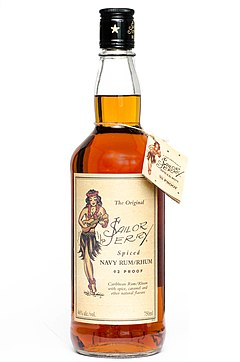
   I have my own reasons for being upset about Sailor Jerry and the employees at the NLC may object to the improperly appropriated hula person pictured. They will need a very strong drink if they investigate further. The current company website shows a black woman blowing a bubble announcing that the new "Savage Apple" Rum is now available. If other brands and types of liquor are studied, it is likely that only a few bottles of Screech will be left on the shelves.

  I suppose it is a good thing to have socially conscious employees determining what it is that those of us who are less enlightened can drink. Recently I recall that some other progressive staff members here on the mainland made a decision about something we should not see. It was a documentary about Jordan Peterson.

Post Script:
   I should stay away from these current controversies and I am sure you agree. Before I return to obscure and obsolete matters I cannot resist making another contrarian observation.
  I do so only because of an accidental discovery. When I thought of the Peterson documentary controversy, I decided I would check and see how he is doing since I recalled reading about his recent health problems. It seems he is okay, or at least he is still writing.

   Unfortunately I read his recent, rather robust piece which is the reason I am straying further into current and controversial territory.  I also just read portions of another recent report that issued from Western University: The President's Anti-Racism Working Group Final Report.  It is instructive to read the two reports together.

   According to the Western Report, things are grim at that institution. Here is how bad it is:

"For the past four months, we have heard from hundreds of community members about the insidious, often violent, nature of racism at Western and its devastating impact on their mental and physical health, and on their sense of well-being and belonging. The stories we heard and the data we gathered affirmed for us that there are systemic problems embedded within the University’s colonial history, traditions, structures, practices and policies that normalize “whiteness,” that “other” racialized groups, and that perpetuate racism."

   It may even be worse:

"Contrary to the principles of a meritocracy, we heard stories that point to
an institutional 
culture that privileges certain groups over others. 

We wonder about the stories we did not hear—but know are out there—
because some people 
are too fearful to speak up."

   I was surprised that the racism is systemic, was unaware of the violent nature of the environment and disappointed to learn that people without merit were successful generally because of their 'privilege'. I used to study and work there, but am white and generally oblivious to what is really going on.

  Then I read Professor Peterson's report which relates very much to the issues of diversity and merit in the university setting. Although it is not about Western, I do think that Peterson would very likely be highly skeptical of the conclusions reached in the Western report. There may also be some at Western who feel that way, but "are too fearful to speak up." 

  The title of the Peterson report may be all you need to read, but I will offer a bit of the introduction:

                "Missives of Appalling Idiocy and Envy Embarrassing to Behold"

"I have observed the colleges and universities of the Western world devour themselves in a myriad of fatal errors over the last two decades, and take little pleasure in seeing what I knew was inevitably coming manifest itself in an increasingly comprehensive manner. It is of course a self-destructive and unfortunate tendency of human reason, with all its limitations—as well as ego, with all its pretensions—to wish or otherwise agree to serve as Cassandra, and to derive a certain satisfaction in watching the ship whose demise was foretold breach its hull on rocks hidden from all other observers. The self-righteous pleasure of “I told you so,” is, however, of little comfort when the icy water wends its way around ankle, knee and thigh, threatening to swamp everything still retaining its incalculable and unlikely value, even if it simultaneously makes short shrift of the ignorance and willful blindness that is frequently part and parcel of the death of something once great.

It is also necessary to note that the catastrophic failures of process and aim which I am about to relate were by no means hidden from the public view by the persons and institutions in question. They were instead positively trumpeted to all by multiple attempts to harness the powers of social media and announced, more traditionally, in press releases designed to indicate the success of some great and laudable moral striving. It is nothing less than a dire day when the proud revelation of vices of deadly and multifarious seriousness serve to substitute for announcements of genuine and valuable achievement, but that is where we are at—make no mistake about it."

The entire report can be read here and it is worth doing so, even if you don't agree with it. That used to be what people did - read something in order to be able to discuss it.

Sources:
   I don't usually use slang obscenities (in this blog), but "shitstorm" does seem appropriate here. It occurred around the middle of June and plenty of articles can be found. Here is one:
"Newfoundland and Labrador Liquor Corp. Reviewing Old Sam Rum Over Racist Branding Concerns," By The Canadian Press, Fri., June 19, 2020.

  A link is provided to the Jordan Peterson website and the Western report is easily found at Western and much more will certainly be written about the horrors that exist there.

  Although there is considerable contrarian content in the Peterson article, here I will provide another contrarian source, which is about gender, but relates to race and quotas.  That's my job. Here are some snippets from:
"Stop Counting Women:Quotas and Tallies Won't Bring Real Progress on Gender Parity,” Katherine Mangu-Ward, New York Times, Feb.23, 2019.
 "However, the notion that the lack of perfectly equal representation is obvious evidence of injustice is wrongheaded and counterproductive.
"By focusing on having equal numbers [or erasing images] you  -are more likely to provoke resentment than to convert the reluctant."
Keeping those running tallies of gender [racial] imbalance is like other emotional labor: It’s exhausting and distracts from more substantive work, and some people are skeptical it needs to be performed at all.
 

Sunday, 21 June 2020

Campuses, Creative Destruction and the Coronavirus

    We are in the midst (we hope) of the Great Flu and are all wondering when, how, or if we will recover. Those most anguished seem to be the individuals who have been unable to get a pedicure, tattoo or good workout at their health club. There are also very real concerns that many small businesses might not reopen, large malls may stay closed and that many jobs will be lost. This angst is being felt even in the academies of higher learning. No one knows for sure what the fall will bring or if the students will return.

   While I have not been blogging much I have been reading some. Trying to avoid politics, about which we know too much, and articles about the coronavirus, about which we know too little, I rely on a bespoke site which unfailingly directs one to material that is worth reading. While I was just typing up the post about some small liberal arts colleges in Canada and the problems they may face because of the current pandemic, I was reminded of a very good piece about higher education that was recommended.


   The point being made is that the pandemic will cause considerable disruption, if not disaster, for many colleges and universities. The person making it is Scott Galloway. Rather than risk corrupting his thoughts and ideas, I will provide examples and sources so you can decide for yourself.

   The first article I was led to is by James D. Walsh and it appears in New York magazine on May 11, 2020 and has the title: "The Coming Disruption Scott Galloway Predicts a Handful of Elite Cyborg Universities will soon Monopolize Higher Education."

 Prior to asking Mr. Galloway some questions, one finds this brief introduction:

   "In 2017, Scott Galloway anticipated Amazon’s $13.7 billion purchase of Whole Foods a month before it was announced. Last year, he called WeWork on its “seriously loco” $47 billion valuation a month before the company’s IPO imploded. Now, Galloway, a Silicon Valley runaway who teaches marketing at NYU Stern School of Business, believes the pandemic has greased the wheels for big tech’s entrée into higher education. The post-pandemic future, he says,  will entail partnerships between the largest tech companies in the world and elite universities. MIT@Google. iStanford. HarvardxFacebook. According to Galloway, these partnerships will allow universities to expand enrollment dramatically by offering hybrid online-offline degrees, the affordability and value of which will seismically alter the landscape of higher education. Galloway, who also founded his own virtual classroom start-up, predicts hundreds, if not thousands, of brick-and-mortar universities will go out of business and those that remain will have student bodies composed primarily of the children of the one percent.

At the same time, more people than ever will have access to a solid education, albeit one that is delivered mostly over the internet. The partnerships he envisions will make life easier for hundreds of millions of people while sapping humanity of a face-to face system of learning that has evolved over centuries. Of course, it will also make a handful of people very, very rich. It may not be long before Galloway’s predictions are put to the test."

The first question asked and part of the answer:
Colleges and universities are scrambling to figure out what to do next year if students can’t come back to campus. Half the schools have pushed back their May 1 deadlines for accepting seats. What do you expect to happen over the next month?

   "There’s a recognition that education — the value, the price, the product — has fundamentally shifted. The value of education has been substantially degraded. There’s the education certification and then there’s the experience part of college. The experience part of it is down to zero, and the education part has been dramatically reduced. You get a degree that, over time, will be reduced in value as we realize it’s not the same to be a graduate of a liberal-arts college if you never went to campus. You can see already how students and their parents are responding."

More samples:
When will there be a reckoning? It has to come before classes begin this fall?

   "Over the next six weeks, when we realize that the deposits and registrations for the fall are down 10 to 30 percent. The better universities are fine in the short term because they just fill spots from the waiting lists. The kid who’s going to Boston College will get into MIT. But if that snakes down the supply chain, and you start getting to universities that don’t have waiting lists, those are the ones that get hit."

How many schools will collapse between now and next year?

"It will be like department stores in 2018. Everyone will recognize they’re going out of business, but it will take longer than people think. There will be a lot of zombie universities. Alumni will step in to help. They’ll cut costs to figure out how to stay alive, but they’ll effectively be the walking dead. I don’t think you’re going to see massive shutdowns, but there’s going to be a strain on tier-two colleges."

Who Is Scott Galloway?
    Naturally, Galloway's views attracted considerable attention and that question was asked by those at The Chronicle of Higher Education. Here is a portion of the article:

"Higher Ed’s Prickliest Pundit: Scott Galloway is Suddenly Everywhere, Slaying Academe’s Sacred Cows," By Tom Bartlett June 12, 2020.

Scott Galloway believes higher education is overdue for a reckoning. Sky-high tuition leaves too many students drowning in debt. Tenure guarantees lifetime appointments to subpar professors. Elite colleges hoard their vast endowments and brag about how many applicants they reject, while kids from humble backgrounds are left behind...."

  Lately Galloway’s stock seems to be on the rise. The Wall Street Journal recently profiled him, noting his ambition to become “the most influential thought leader in the history of business.” At the end of an interview on CNN, Anderson Cooper declared Galloway’s insights on the coming reshuffling in higher ed “the most interesting five minutes I’ve had in a long time.” He has a new show on Vice TV, which is essentially Galloway ranting and gesticulating against a white background. The show's title matches the vibe: No Mercy/No Malice.

What has the pandemic exposed about higher education?

  "It's pulled back the curtain. Like any consumer product, it's created additional transparency around the value-to-price ratio, what people are actually getting for their money. You could have 50 percent of international students not show up and 20 percent of domestic students not show up in the fall. So it's demand destruction. These Zoom classes that everyone has been doing, I would argue it's not as much that people are disappointed in the Zoom classes, it's that they're disappointed in what the Zoom classes have revealed. Everyone knows that Zoom classes are not as good as the real thing, but people understand we're in a crisis. I think what people are most disappointed in, as parents have collectively said, "That's what I've been paying for?"

   ...So it's created two things: demand destruction and a moment in time where families are pausing and asking tough questions about whether or not pricing has finally escalated to the point where many college experiences are no longer worth it."

Sources:
   The profile in the Wall Street Journal: "Prof. Scott Galloway Wants to Be 'the Most Influential Thought Leader in the History of Business", Lane Florsheim, WSJ: The Magazine From the Wall Street Journal, June 8, 2020.

   The CNN interview is very interesting: "Prof. Scott Galloway Talks to Anderson Cooper: How the Pandemic Could Disrupt Higher Education," May 22, 2020. You can watch it on YouTube.

There is a Wikipedia entry for Mr. Galloway and he does podcasts and Ted Talks.
The image above is from his blog - No Mercy/No Malice.

Bonus Material:
   Galloway was asked about Tenure:
Tenure is easy to attack. The reality is, though, that the majority of real cost explosion has happened at the administration level, in what I call positions and centers and classes around things like leadership and ethics that have absolutely no measurable outcome.

  He was also asked this question. You have to like the guy!
Is there anything you do to prevent burnout or does that not really affect you?
"Alcohol and exercise. I think alcohol gets a bad rap. I think that we assume that the entire world is bad drinkers, that everyone who drinks is bad at it. I'm very good at it. It is a feature in my life, not a bug. It helps me relax. I'm a better version of me after a few drinks. So I'm very good at drinking and I use it to my advantage. And I also try and exercise everyday."


Canadian Maple League Universities

    
   I realized that I have not posted in just over a month, so I will begin with a short one about a Canadian higher education entity of which I was unaware. It exists in the eastern part of the country in four locations in three different provinces and is known as the "Maple League of Universities." Perhaps you also did not know about it.

  The League members are: St. Francis Xavier, (Antigonish, Nova Scotia); Mount Allison, (Sackville, New Brunswick); Acadia, (Wolfville, Nova Scotia) and Bishop's University, (Sherbrooke, Quebec). The Maple League moniker is somewhat catchier than "The U4", which is how they were referred to in years past. 

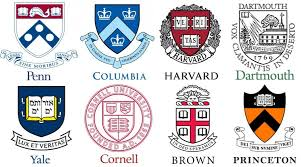
   You may have guessed that these universities are consorting not because of a shared interest in the academic discipline of botany, but rather because the new brand under which they are united reminds you of the elite institutions located farther to the south. There are eight of them, which are identified here:
   

   I read about the members of the Maple League in an article which discusses the difficulties they are likely to face in the post-pandemic period, whenever that may be. The headline and opening paragraph indicate the source of their concerns: 

“For Maple League Universities, Shift to Online Education Threatens Close-Knit Appeal That They Rely On,” Joe Friesen, The Globe and Mail, June 2, 2020.
“The universities of the Maple League, with their historic red brick architecture and wide lawns, have long based their appeal on small classes,  a close-knit campus of dorms and clubs, and a level of attention from professors not always available at larger institutions.” 
   
   The concerns have spread beyond the campuses: “A fall without students could pose a grave threat to the local economy in university towns.” Such concerns have also spread like Covid across the country and are not restricted to the small liberal arts colleges.

Sources:
  The place to begin is at the website of the Maple League of Universities where links are provided to the four universities involved.  There is a short Wikipedia entry.
  There is a good piece in University Affairs, from which the following is taken. See" "Four Small Universities in Eastern Canada Rebrand as The Maple League," Moira MacDonald, Nov. 6, 2016.

"First coming together in 2013 under the less catchy banner of the “U4,” Acadia, Bishop’s, Mount Allison and St. Francis Xavier universities are now touting their pastoral, “small by design” campuses more loudly as an alternative to the larger, urbanized university experience many Canadians are familiar with.
The new name is “a little bit of a nod at the Ivy League,” acknowledged Michael Goldbloom, president of Bishop’s in Quebec’s Eastern Townships. “We’re not claiming that we’re Harvard or Princeton or Yale. But we do think that we share that same aspiration for excellence.”

"Why a Group of Small Universities Believes the Future is Theirs: Known as The "Maple League", the Four Universities Promote the Advantage They Have Over Big-City Schools: An Intimate Undergraduate Experience," Jennifer Lewington, Maclean's, March 14, 2017.

There are also some articles to be found at the institutions. See:
From Bishop's - "The Four Maple League Universities Sign Historic Agreement That Encourages Inter-Institutional Student Mobility," Bishop's University.
From Mount Allison - "What is the Maple League?" Laura Skinner, The Argosy, Feb. 6, 2019.
"Dr. James Devine, department head of politics and international relations at Mt. A, said that the Maple League shows potential: “It’s building a brand about small, primarily undergraduate institutions, which I think in Canada are a bit of a rarity.”

The Bonus Stuff: 
   You already know enough about the Ivy League. Perhaps you know less about the 
Public Ivies or the Hidden Ivies.  
    There is an Ivey here in London, but it is in a different league.
     There is also a university for women here in London - Brescia. It appears to be doing quite well and is apparently the only such institution of higher education in Canada. If, at some point, more aggressive 'branding' is required they could follow the example of the Maple Leaguers and try to figure out some way to associate themselves with  the "Seven Sisters",  which essentially were the elite, 'Ivey League-type' schools for women. It seems that only five of them continue to serve females only - Barnard, Bryn Mawr, Mount Holyoke, Smith and Wellesley.