Wednesday, 10 July 2019

Boston Mills Press

Summer Vacation Reading

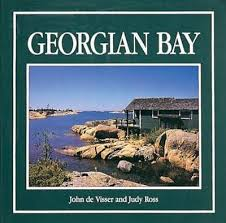
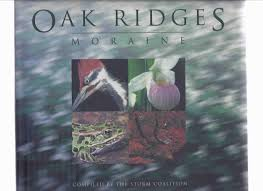
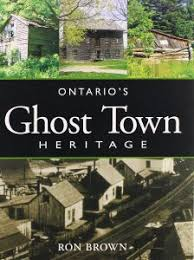
     If you are looking for an Ontario get-away, or if you know where you are going, but want to read about the place or the area, then you might consider looking at the books that were published by Boston Mills Press. You have seen them, I'm sure. They are often about subjects such as "Cottage Country" and they were frequently seen on coffee tables.
     Boston Mills had some financial problems when its parent company, Stoddart Publishing, went bankrupt early in this century. Fortunately the inventory was picked up by Firefly Books and you can still order many of the titles from them. Used copies of Boston Mill's titles are found on AbeBooks and they can be located by doing a keyword search. The public libraries also have many of the books, particularly the ones relating to the local areas in which they are located.
     All of these titles are older and none are current. I am not sure if any of the tea rooms Melody Wren recommends exist now and some of the "Top 50 Tourist Attractions" may be long gone. Georgian Bay and Lake Erie are still here, however, and you can still spend the night at Windermere in Muskoka. If you are not going anywhere, you can relax and enjoy the books which are usually full of good photographs.
     Here are some sample titles and at the end, the usual useful tidbits.


The Annex : the story of a Toronto neighbourhood / Jack Batten. 2004
At the mouth of the Credit / by Betty Clarkson. 1977
The boardwalk album : memories of the beach / Barbaranne Boyer.1985
Castles and Cottages: River Retreats of the Thousand Islands, Fischer & Mollica.


Changing landscapes of southern Ontario / Virgil Martin
Country inns : Ontario's best getaways / Donna Carpenter.
Daytripper : 50 trips in and around southwestern Ontario / Donna Gibbs Carpenter
Erindale at the crook of the Credit / by Jean Adamson. 1978
Explore Muskoka / by Susan Pryke;
Fifty unusual things to see in Ontario / Ron Brown.
Guelph : take a look at us! / Donald E. Coulman. 1977
Heritage buildings of Norfolk : a sampling of pre-Confederation buildings in Norfolk County, Ontario : based on an inventory undertaken by the University Women's Club of Norfolk / edited
 by Hylda Howes.1985
The Hike Ontario guide to walks in Carolinian Canada / Brad Cundiff.1998
Huntsville, pictures from the past : Lake of Bays. 1986
Huron : Grand Bend to Southampton / Sandra Orr.1993
Kirkland Lake : Michael Barnes ; photographs by Lynne Birnie and Eddie Duke. 1994
Long Point : last port of call / Dave Stone 1988
Main street : a pictorial history of Erin village / Jean Denison. 1980
Maitland : a very neat village indeed / by Stephen A. Otto


Melody Wren's Tea rooms of Southern Ontario.1997
Memories of Toronto Island : 10 minutes and 1,000 miles away / M.J. Lennon.
Milton : welcome to our town / William E. Cook.1977
Mount Forest : the way we were / by William J. Edwards.1979
Muskoka's grand hotels / Barbaranne Boyer 1987
Northern steamboats : Timiskaming, Nipissing & Abitibi / Richard Tatley.1996
Oakville : a small town, 1900-1930 / Frances Robin Ahern 1981
Old relics and charming retainers of rural Ontario / by Jack Brooksbank. 1977
Over the hills to Georgian Bay : a pictorial history of the Ottawa, Arnprior and Parry Sound      Railway / by Niall MacKay. 1981
Owen Sound : steamboat days / by Andrew Armitage.1981
Parry Sound : logging days / by John Macfie. 1987
Port Carling : the hub of the Muskoka lakes / Richard Tatley 1996
Port Sydney past / by George H. Johnson. 1980
Postcard memories of Muskoka / Allan Anderson and Ralph Beaumont. 1978
A river rat's guide to the Thousand Islands / Shawn Thompson 1996
Seaforth beginnings / by Dean Robinson.1987
St. Clair Tunnel / Clare Gilbert. 1991
The steamboat era in the Muskokas / by Richard Tatley.1984
A Stratford album : memories of the Festival City / by Mary Jane Lennon.1985
Stratford / photography by Richard Bain 1998
Travel Ontario : Ontario's 50 most popular tourist attractions. 1987
Trees of the Carolinian forest : a guide to species, their ecology, and uses / Gerry Waldron.
Up the creek : a paddler's guide to Ontario / Kevin Callan.1996
Windermere House: The Tradition Continues, Susan Pryke


Sources:
The old website for Boston Mills.
The list of Boston Mills titles on Firefly Books
Among the useful titles for those who are staying at home.


Post Script
The book about logging in Parry Sound is an oral history and one learns from the old timers, two words from the glossary that will be useful when you are around the camp fire or at the cottage on Georgian Bay. You can tell them that Booyaw is an "impromptu feast, usually boiled fowl, sometimes stolen" and that Raganooter Lake is probably named that because Raganooter refers to "a fallen tree which lies partly in the water of a lake or river."

Monday, 1 July 2019

'American Rivers' Day

Canadian Rivers Day

    For most of this century there has been a "Canadian Rivers Day" held on the 2nd Sunday of June. I don't think there is an official "American Rivers Day", but I will inaugurate one here since I intend to discuss a few 'local' rivers, some of which are located in the United States. It was my intention to have 'rivers' be a frequent topic in this blog, but I have failed to deliver, just as I have been unable to offer much about anything over the past few weeks.  Here, quickly, I will attempt to catch up by providing mercifully short entries (for a change).

The Cuyahoga River

If you look closely at the label above you will see that it is branded as the Burning River Pale Ale which is, it seems to me, an odd choice for the marketing people to make. It was 50 years ago that the Cuyahoga caught fire and for that reason there have been many anniversary articles about the event. 1959 was the year of the last fire on the Cuyahoga so the news is generally good. The marketing people who are attempting to sell Cleveland now have a much easier job.
Sources:
"A Gleaming Cuyahoga River Helps Tourists Flow to Cleveland," Scott Suttell, Cleveland.com June 7, 2019. "Jim Ridge, the founder of Share the River, a nonprofit group that heightens awareness about the Cleveland waterfront, said the Cuyahoga River has achieved something that few could have imagined decades ago. It's a destination. Seeing recreational aspects on the body of water that ignited the environmental movement is a game-changer for locals, but also for folks well beyond our ZIP code who are going, 'Wait, that's not the Cuyahoga River I had in mind,' " he said.

"From 5 Rowers to 1,500, How the Cleveland Rowing Foundation Shares the Cuyahoga River with the City," Laura Johnston, cleveland.com ,June 11, 2019.

"Rough (but clean) Water Ahead: Cuyahoga Falls Embraces Cuyahoga River's Return to Nature," Grant Segall, The Plain Dealer, June 12, 2019.
"Just upstream, high schoolers are sitting along a boardwalk, sketching the scenic river.
Fifty years ago on June 22, Cleveland’s stretch of a gunky, stinky Cuyahoga had its best-known fire, spurring the Clean Water Act and a half-century of cleanup. Now a resurging river and its corridor teem with fish, turtles, herons, paddlers, hikers, diners and more."
"A Cleveland River Once Oozed and Burned. It’s Now a Hot Spot." By Erik Piepenburg June 7, 2019, New York Times.
"Then there's this striking example of how a river that once was so toxic that it bubbled and oozed like a caldron is producing edible marine life: the Ohio E. P. A. announced in March that fish from the Cuyahoga River, including catfish and common carp, are safe to eat."

The Thames River


The riparian situation here in London is rather murkier, both above and below the forks of the Thames. The failure of a dam downriver has reduced the more robust activities of rowing and boating, although the fishing may have improved. The promotion of a waterfront promenade is rather difficult given that it will overlook not much more than a muddy stream because of the dam upriver. In terms of the health of the river it can be said that: "While combined efforts in the watershed have been great over the past two decades, the outcome has shown only small environmental improvement."
Sources:
You locals will not need any. For the quote above see the report card offered by The Upper Thames River Conservation Society,

The Chicago River

 
The recent reviews about the Chicago River are somewhat mixed. Reports from upstream are better, which is usually the case. The river is green in the above picture because it was taken around Saint Patrick's Day when the water is dyed that colour. The good news here is that everyone everywhere agrees that that holiday is one that should be celebrated.
Sources:
"In Chicago, A River Revitalized — But Not for Everyone," Kari Lydersen June 22, 2019, Washington Post.
"The river’s water is cleaner than it has been in decades. New amenities, including four new boat houses, riverside restaurants and the Riverwalk, a pedestrian promenade downtown, line its banks. Revitalizing the river was a major priority of Mayor Rahm Emanuel (D), who left office May 20. The spot in the river where the rowers launch could be seen as the dividing point between the two sides of the Chicago River system. Just upstream is a lush park with a Chinese pagoda, and beyond that, the skyscrapers of downtown. Downstream, the river becomes increasingly industrial and filled with detritus...[it gets worse].

The Buffalo River


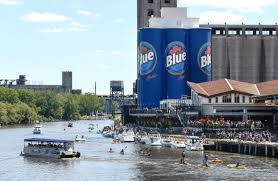
The situation in Buffalo is so good along the rivers that some Canadian beer marketing folks obviously thought old industrial silos were perfect platforms for their brand. The city promoters say that Buffalo should be your "Port of Call" and that Canalside is a good place to kayak and party. They can also say "Sail Into Summer" and "Make a Splash in Buffalo" because there is another river - the Niagara River - and Lake Erie is close by as is the Canal. The water resources so important for trade and industrialization are being revitalized for recreational purposes.
Sources:
See: The Buffalo Touring Guide.

Fishing (!/?)

We were in Buffalo in early May, allured by the arts not the water. It was still a little chilly for waterfront wandering, but I did notice in the Buffalo paper an entire page devoted to fishing and the major headline was: "WNY[Western New York] Fisheries Show Off for National Media" and apart from two pictures of huge fish (a lake trout and a king salmon) there were remarks such as these: "Outdoor media from around the country arrive every spring to take advantage of the world class bass and walleye fishing on Lake Erie. The Niagara River spring trout fishery is outstanding too...." "Being from Michigan, I was a little slow to discover the world class trout and salmon fishery Lake Ontario offers...." "Lake Erie's Eastern Basin is well known as a walleye destination...." Year end and year out, spring offers some of the best multi-species fishing in the Lower 48 in and around the Niagara River." Buffalo News, May 9, 2019.
I was surprised by the extent of the fish coverage and the apparent success of the fisherpeople. I live on a river between Lake Erie and Lake Huron and don't read much about fishing and I don't think one reads much about the subject in the Toronto press. A quick search of Toronto-area papers didn't catch much. A short one for the Cleveland area landed:"If You Aren’t Catching Walleye on Lake Erie, You Aren’t Trying:" June 14 Fishing Report, Cleveland.com May 14 and "Anglers Eager for 2019 Lake Erie Fishing Season: Ohio Anglers, Get Ready for Another Phenomenal Lake Erie Fishing Year." Laura Johnston, Jan. 25, 2019.
   My impression about the fish coverage may be incorrect, but, if not, among the questions that could be asked are these two: Is the fishing better below the invisible border line in the lakes or are the Americans just better at fishing (or marketing)?

Post Script:
   Near the end of the 19th century the flow of the Chicago River was reversed and no longer emptied into Lake Michigan which provides Chicagoans with their drinking water. The sewage is now sent south. 
  Not all the news is good. The Maumee River which empties into Lake Erie at Toledo is a major reason for the algae bloom the develops in that lake. The Cleveland slogan "A Green City on a Blue Lake" may soon need a slight change.
  Bonus tourist tip. If you are going to Buffalo I recommend that you stay in the insane asylum, now known as The Richardson Hotel (formerly The Henry.) From there you can walk to the Albright-Knox Art Gallery and the Burchfield Penney Art Center.

Wednesday, 19 June 2019

The Human Suffering Index


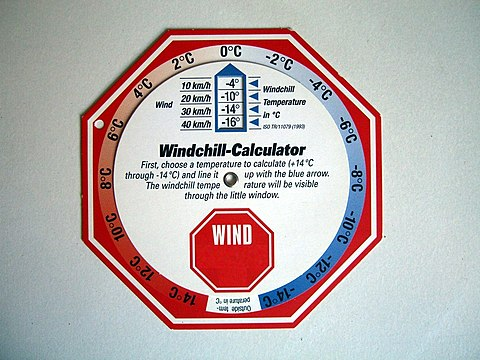
     We have yet to get through "our severest winter commonly called spring." Although the meteorologists here have stopped warning us about the Wind Chill Factor, they will soon be sounding the alarm about the Humidity Index. Those at the Weather Channel have only been able to get through these drab doldrums by, either suggesting that great storms are on the horizon, or by showing us terrible weather from elsewhere. My wife has suggested that we need a new index - the Human Suffering Index - which will better measure the extent of our meteorological misery. It offers the extra benefit of allowing those of us who have experienced these dull and damp days to identify as "Victims" or "Survivors" so we can be like everyone else.


CODE RED 

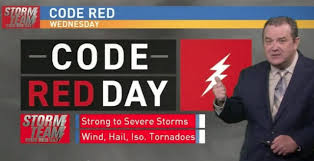
     I thought it was just the weather people on the Mother Channel (the CBC for my southern readers) who issued dire warnings about being wizened by the wind chill or scorched by the sun if the temperature was a degree-or-two below or above the number on the thermostat. Apparently, however, the practice of dramatizing the weather is widespread. We prefer our weather alerts to be alarming, just as we want our news to be breaking. Of course, the bosses at headquarters know this, even though most of them aren’t meteorologists. Recently, those in charge at the Sinclair Broadcast Group sent a memo to the stations they own suggesting that labelling most of the Weather Alerts as “Code Red", would surely be a good idea. Ratings metrics may have played more of a role than meteorology in the decision making.


     The weather guy at the Sinclair station in Springfield, Illinois is either a fan of Chicken Little, or a reader of Aesop’s Fables. Or perhaps he is just an honest weather guy who thinks that constantly crying wolf is not in the public interest. The good news is that he told his viewers the truth. The bad news is that he was fired.

Sources:
"A TV Meteorologist Objected to Management’s ‘Code Red’ Orders in on-air Apology. He Might Be Out of a Job", By Matthew Cappucci Washington Post, June 7, 2019.
"More Criticism for Sinclair Over 'Code Red' Weather Warnings, David Zurawik,
The Baltimore Sun, June 17, 2019.
"The Baltimore-based Sinclair Broadcast Group has been in the news the last two weeks for the controversial firing of a meteorologist at one of its stations who called out the company on-air over what he characterized as the hyped use of “code red” weather warnings.
But the use of “code red” as described by Crain seems an especially egregious way to use fear to try to drive ratings, and it goes to the heart of what journalism is and isn’t supposed to do."

Post Script:
    The clever quote about spring is from Cowper as loyal readers will know. See "The Dead of Winter."
   My wife insists she thought of the Human Suffering Index and apparently she did. A search found an International Human Suffering Index, but it is unrelated to the weather.

   Speaking of "indexes": A while back, I came up with the "Pajama Index" which indicates that seeing a lot of mid-30s citizens at mid-day in PJs sitting at a Tim Hortons is not a good thing, economically speaking. I searched to see if such an index existed and found one. I probably read the article so some other Irish person likely deserves the credit for creating the PJ Index: "The Irish Economy’s Rise Was Steep, and the Fall Was Fast," Landon Thomas, New York Times, Jan.3, 2009. “Social workers in Moyross refer to the “pajama index”: the more men and women one sees who do not take the time and care to dress for the day, the worse the economic situation tends to be.”
   The sinister Sinclair corporation owns a large number of U.S. broadcast stations. If you are conservative, you should be happy about that.

Canadian Content - The Humidex is a Canadian creation. Perhaps it is yet another thing we should apologize for, in that the humidity is one thing Canadians cannot tolerate and because it gave rise to the too oft-heard whine, "It's not the heat, it's the humidity."


Saturday, 1 June 2019

The University of the Unusual (5)

Spontaneous Human Combustion

   This subject has been sitting on my back burner for a while, but two recent mentions of it have given me cause to offer you two unusual subjects in a row. The first occurrence is noted in this quotation: “By the time the 2020 election kicks into highest gear, Trump will have been president for more than three years, barring his impeachment, his resignation or his spontaneous combustion (with him, you never know).” The second reference to SHC is found in the introduction to an article which bears the intriguing title, "The Lucrative Black Market in Human Fat." You are probably thinking that I read only the tabloids, but the quotation is from the New York Times and the article is found in The Atlantic. Now you are probably wondering if you could suddenly burst into flames or are perhaps hoping that Trump will.
   It is highly unlikely that Trump will ignite, nor will you unless you choose to self-immolate in Lafayette Square as an act of protest. It is likely, however, that you are familiar with SHC if you read fiction (Bleak House) and you may have encountered historical accounts. The article about fat noted above begins with this one:
"One night in 1731, Cornelia di Bandi burst into flames. When the 62-year-old Italian countess was found the next morning, her head and torso had been reduced to ash and grease.
Only her arms and legs remained intact. After examining what was left of her body, a local physician concluded, in a report cited years later, that the conflagration “was caused in her entrails” by the variety of combustible materials to be found there, including alcohol and fat, “an oily liquid … of an easily combustible nature.” An early instance of what would come to be known as “spontaneous human combustion..."

One also occasionally runs across references to SHC in the current news; there was a recent case in Edmonton.

   Does spontaneous human combustion happen? I suggest to you that it does not. I could go on, but once again, the Wikipedia entry is very good and I will provide other references. You can decide for yourself while I go looking for an unusual subject that is not covered in Wikipedia.

Flames and Flatulence


   Before you relax and return the fire extinguisher you should know there is some truth to the stories your buddies told about fart lighting. Some of us do produce "combustible levels of methane" and there are cases where there have been minor explosions when patients are undergoing surgery. Coffins also have been known to explode. 

   Even though I am continually scooped by Wikipedia I can at least offer you unusual and interesting subjects and provide the sources to back them up. I will even offer below a literature review of colonic gas explosions to ensure you are getting your money's worth.

Sources: 
The quotation about Trump is from Frank Bruni and is found in the NYT, Jan.13, 2019. The article in The Atlantic is found on May 26, 2019 and is adapted from a forthcoming book by Chrisopher E. Forth: Fat: A Cultural History of the Stuff of Life. The recent Canadian example: "Man Woke Up on Fire: Edmonton Police," Kevin Maimann, Edmonton Sun, July 19, 2014.

Apart from the Wikipedia entry see: "How Dickens Fueled Spontaneous Combustion, Truthers," Sam Kean, Mental Floss, Dec. 4, 2014 and “A Fiery Death: Murder Or ‘Spontaneous Combustion’? Joe Nickell From: Skeptical Briefs, Volume 22.3, February 4, 2013.

For a recent 'surgical explosion' see: "A Japanese Woman Passed Gas During Laser Surgery: She Was Badly Burned," Travis M. Andrews, Washington Post, Nov.1, 2016.

For the promised literature review:

-Spiros D Ladas, George Karamanolis, and Emmanuel Ben-Soussan, "Colonic Gas Explosion During Therapeutic Colonoscopy With Electrocautery," World J Gastroenterol. 2007 Oct 28; 13(40): 5295–5298.

“A systematic review of the medical research published in English language from 1952 to October 2006 was performed, by using MEDLINE, SCOPUS, SCIRUS, and EMBASE to obtain studies published on colonic gas explosion. The search terms included were combinations of "colonic explosion" or "gas explosion" with "surgery", "electrocautery", "polypectomy", and "argon plasma coagulation".

A total of 20 cases of colonic gas explosion were identified.

Post Script:
There have been unusual reports about an Indian infant who has combusted a few times. See: "Doctors Suspect Rare Disease Might Have Afflicted Indian Child," Anupama Chandrasekaran, and there have been additional follow-up articles.

For those of you who are hypochondriacs, I discovered a series of books covering all kinds of maladies and ailments that you will need to buy.  The one pertinent for this post (and all the others begin with "Curbside Consultation...):


Tuesday, 28 May 2019

The University of the Unusual (4)

Anthropodermic Bibliopegy


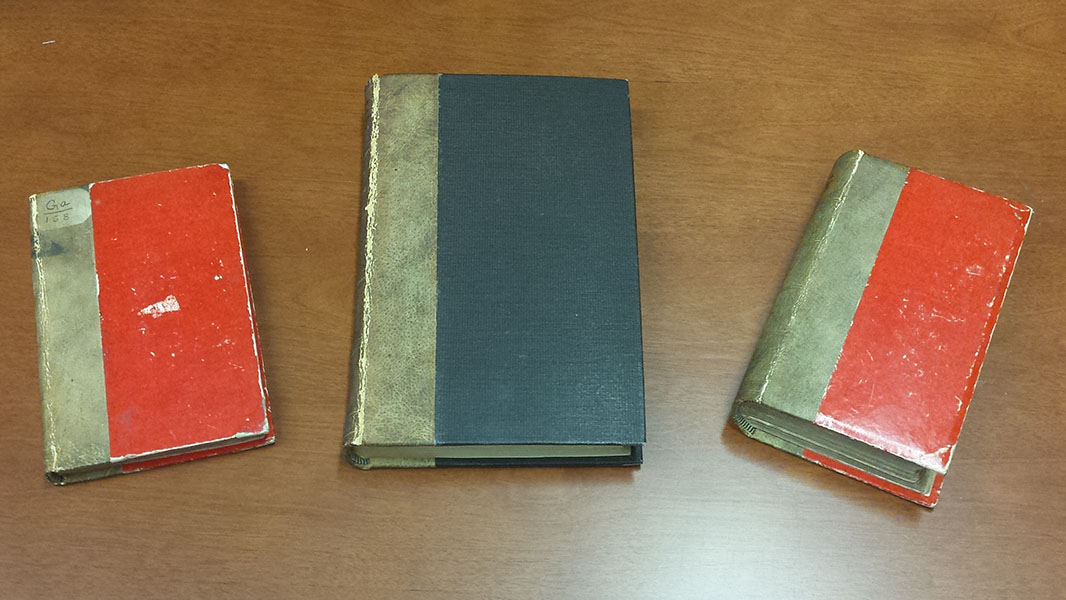
Three books bound in human skin. Photo from Fugitive Leaves(the blog of the Historical Medical Library of the College of Physicians of Philadelphia)

  Those of you who bothered to read the fine print above will realize that the subject of this post is a touchy and somewhat sensitive one: books bound in human skin. A few years ago when some of them were found in the stacks at Harvard, I was going to discuss 'anthropodermic bibliopegy', as one of my unusual subjects, but never got around to it. Now that you know what this particular type of leather-bound book binding is called you can quickly learn all about it in the Wikipedia entry. There is also a very good resource devoted specifically to the subject. So I will simply provide the very basics and the essential sources. Then I will switch to a related subject which is even more unusual; it has to do with tattoos.
   Books bound in human skin do exist. There have been a large number of books discovered in libraries and private collections that contain the inscription, 'bound in human skin", but most of them were not. A new technique - Peptide Mass Fingerprinting - makes it easier and less expensive to determine whether the tome is bound in human, cow, goat or pig.
   There are many reasons why pages are held together in such a manner and you will learn all about them by examining the sources provided. Often they relate to the medical profession and one author notes that “Scratching the surface of the history of any real human-skin book usually reveals a doctor was the one wielding the knife.” The largest collection so far confirmed is found in the Historical Medical Library of the College of Physicians of Philadelphia.


Tattoo Preservation

   In some cases books were bound in the skin of a loved one, or at the request of the owner of the skin to be used. What if you wanted to leave behind, when you died, all of the fine art etched on your body. Could you do so? That is not an unreasonable question to be asked since we now see many more people wearing tattoos than reading books, and it was recently asked by a tattoo artist in Saskatoon. The short answer to it is "Yes".
   The heavily tattooed gentleman from Saskatchewan died recently and requested that his wife save the art. She agreed and the Cleveland company - Save My Ink Forever - did so. The process is a complicated one and your mortician may have reservations, but I will provide the information you need.

Sources:
For the books:
The book image is found in: "The Skin She Lived In: Anthropodermic Books in the Historical Medical Library," Beth Lander, Fugitive Leaves, Oct. 1, 2015.
For a thorough account see: "In the Flesh? Anthropodermic Bibliopegy Verification and Its Implications," Jacob Gordon, RBM: A Journal of Rare Books, Manuscripts and Cultural Heritage, Vol. 17, No.2, Fall, 2016. A copy is available here
The site dedicated to the subject is The Anthropodermic Book Project. 
The quote about doctors is from: "A Book By Its Cover: The Strange History of Books Bound in Human Skin," Megan Rosenbloom, Lapham's Quarterly, Oct. 19, 2016. Ms Rosenbloom is involved in the Book Project noted above.

For the tattoos:
"Dead Saskatoon Tattoo Artist's Skin Removed, Preserved to Honour His Work," The Canadian Press, Nov. 14, 2018.
"Kyle Sherwood, the company’s chief operating officer, went to Saskatoon to surgically excise Wenzel’s skin from 70 per cent of his entire body and preserve it with a special formula in a frame.
The entire job will cost about $80,000 and take about three months.
Cheryl Wenzel was in the room with Sherwood when he began removing the skin. I was able to point out which tattoos (Chris) wanted.”

"Saskatoon Widow Has Her Husband's Tattoos- And the Skin They're On- Preserved," Guy Quenneville, CBC News, Nov. 15, 2018. [The tattoo image above is Mr. Wenzel and it is from this article.]
For an update: "We're Back Together: Honouring His Dying Wishes, Wife Preserves Husband's Tattoos," Bryan Eneas, CBC News, April 15, 2019.
If you want to learn more about the process, it is described by the company: Save My Ink Forever. 

Postscript:
I indicated that it was the books at Harvard that I first read about. The subject was approached there with some humour. One article about it has the title "The Skinny on the Harvard Collection" and another has the words "caveat lector" in the web address: See: "The Science of Anthropodermic Binding."
While reading a recent book review about The Millionaire and the Bard (NYT May 22, 2015 I noticed this example of the use of the skin from calves:“There are many beautiful books in the world. The contemporary British collector Alfred Henry Huth, who possessed a First Folio that Folger coveted, also owned a ravishing “Book of Hours” illuminated in the late 15th century by the Flemish master Simon Marmion. Fashioned from the creamiest of vellum — parchment made from the skins of calves, in this case probably stillborn calves, whose skins were the smoothest and whitest of all — the luminous, one-of-a-kind Huth “Hours” looks like a possession fit for a prince of exquisite taste and limitless wealth.”

For other samples in this blog under the category of the university of the unusual see: The Guinea Worm and The Ingestion of Foreign Objects. 

Monday, 27 May 2019

Satan In Cincinnati

The Devil is in the Details

[Additional proof that stupidity and silliness were around before this century and prior to the invention of the Internet]


   While waiting in a line recently I noticed the logo above that you will recognize and remembered the other one which you probably don't. For years it was the trademark of the Procter & Gamble Company which is based in Cincinnati. Supposedly it represented the man in the moon and the cluster of stars stood for the 13 colonies. In the 1980s, however, it looked sinister to some, particularly if you stared at the logo in a mirror and saw 666 in the curls of the moon man's beard. This symbol of Satanism and the sign of the Antichrist was found throughout households on products ranging from Pampers to the box of Ivory Snow and clearly there was reason for concern.  The Satanic rumour spread quickly and people were urged to boycott P&G, which apparently many at the competitor Amway thought was a great idea. The switchboard in Cincinnati was receiving 5,000 queries a month about the logo and although P&G fought hard and spent a lot of money, it was ultimately abandoned.

Sources: [for those who think I make stuff up]
   Most of what you will want to know is found in the Wikipedia entry for P&G under "Logo Myth".

"P&G Drops Logo: Cites Satan Rumors: Man in the Moon Loses Job" Sandra Salmans, New York Times, April 25, 1985.
"P&G Trying to Exorcise the Devil Rumor," Pamela Moreland, Los Angeles Times, Jan. 22, 1982.
"Rumor in Minnesota Says 'Moonies' Run Procter & Gamble,"Lawrence Ingrassia, The Wall Street Journal, Mar. 26, 1980.

I could go on. The marketing nightmare lasted into this century: "Amway Loses Appeal in Case With Rival P&G," The Globe and Mail, Oct. 2, 2001.

There are also rumours about the Siren in the Starbucks logo, but I will leave it to you to find them. If you go to Snopes and search for Starbucks you will see they have suffered a number of their own marketing nightmares.

Post Script: (the spot reserved for editorializing)
Peeing in Philly: 
Among the  Starbucks marketing problems there is the one that arose in Philadelphia when two black men were arrested in a Starbucks for doing nothing. They were waiting for a friend and asked to use the bathroom. As an elderly white guy, I would probably not have been arrested, but I don't think they would have let me use the facilities. Perhaps the Starbuck's staff overreacted to the black men's request just as Starbucks overreacted in their response to the bad publicity. They said that they now would treat anyone who walked in as a customer even if they did not buy anything (as if there were already not enough of them sitting there using their laptops.) And, they closed stores for employee training which, one imagines, might have upset many of the employees who were already 'woke' and some of whom would have been 'of colour'. Bad ideas, both of them.
"Mandatory Implicit Bias Training Is a Bad Idea: It's All the Rage. And It's Seriously Counterproductive," Lee Jussim, Psychology Today, Dec. 2, 2017.
  As an old white guy with an aging bladder, I admit I am likely to benefit from all of this and look forward to the elimination everywhere of signs such as this one.
Image result for no public restroom sign

Thursday, 16 May 2019

"The American Lakes" - Book Series

     This is another post about books that are published in a series. Part of the purpose of such a post is to call attention to interesting books which otherwise may be overlooked.

     The ten books in The American Lakes Series were published by Bobbs-Merrill in the 1940s. The first five cover all of the Great Lakes. The next five concern thirteen other lakes which are scattered throughout the United States. The titles of the books are provided along with some sample reviews.

The Great Lakes


     We are on the eve of a long weekend to celebrate what is known (for now) as “Victoria Day”. In the area surrounding the Great Lakes it is likely to be cool and rainy, so reading about the lakes will be more enjoyable than swimming in them.

    These books were written in the 1940s by professional historians for popular consumption. The academic historians of today are generally forced to produce books suitable only for professional consumption by other members of the academies.

    It is highly likely that you will find something of interest about either the condition of the lakes or the attitudes of the historians as you read these books which were written about 75 years ago. If you happen to be a university student, be warned that the word “savage” was spotted in one volume when the author is discussing the early indigenous occupants of this continent.

  It should be noted that the books are also about the land and people around the lakes. One of the reviewers of the book about Lake Pontchartrain suggests that it is mostly about New Orleans. Perhaps the most interesting chapter in Landon’s Lake Huron is the one about an amazing medical experiment involving the exposed intestines of a voyageur. (See: Chapter 13: “William Beaumont: ‘Backwoods Physiologist’,”). The author, Professor Landon, was the University Librarian and a member of the history department at the University of Western Ontario. The copy of Lake Huron I borrowed from the Western libraries is signed by him.

Lake Huron

Lake Huron, Fred Landon, Bobbs-Merrill, 1944

“Here is history, biography, legend, anecdote, mystery and economic and social text. Lake Huron is the first volume in the “American Lakes Series, edited by Milo M. Quaife. Fred Landon has provided his successors with a model which will cost them blood, sweat and tears to equal.” "Lake Huron, First Volume in 'The American Lakes Series': Lake Huron by Fred Landon," Oscar Cargill, New York Times, March 26, 1944.

“He just makes the past and the present of the central Great Lake so full of color and drama that the reader’s only consciousness of the author is the occasional wish that he would expand some incident further.” “Fred Landon’s History of Huron Inaugurates Great Lake Series,” William Arthur Deacon, Globe and Mail, June 17, 1944.

“It is good news that at last the Great Lakes are to be the subject of a series of books by an accomplished group of historians....” “Here is history warmed by love of the land and the water. More of Lake Huron lies in Canada than in the United States, and it is fitting that a Canadian historian should have told this story.” “Huron First in Series of Lake History, Walter Havighurst, Chicago Daily Tribune, Mar. 26, 1944

[Havighurst is the author of another book on the Great Lakes - The Long Ships Passing - which you can still order from the University of Minnesota Press.]


“To supply a very real historical need [for histories of the Great Lakes], then, Dr. Quaife has planned the American Lakes Series, and fortunately he has persuaded Professor Landon, sometime freshwater sailor, veteran journalist, and member of the history department of the University of Western Ontario, to write the first volume.” Edward P. Alexander, Pacific Historical Review, Sept. 1944 Vol. 13, No 3.

"The editor of the series, Mr. M. M. Quaife, hopes to appeal to the general public; and accordingly Professor Landon omits the critical apparatus of professional historical books and chooses the most dramatic happenings for his narrative, including the experiments of Dr. William Beaumont of Mackinac on the partly open stomach of Alexis St. Martin in the eighteen-twenties. He has used the reports of early travellers on the lakes and some publications of local societies but makes no claim to exhaustive research." W.B. Kerr,  The Canadian Historical Review, 1944, Volume 25, Issue 4.

“Those who have never gazed upon its limitless horizons cannot read this book without feeling that they have missed something very much worth while, and those to whom some of Huron's vast area at least is familiar will feel the haunting desire to return.” Lawrence J. Burpee, Minnesota History, 01/1944.

Lake Superior

Lake Superior, Grace Lee Nute, Bobbs-Merrill, 1944.

“Altogether a book to be highly recommended, to the serious student as well as the general reader." Lawrence J. Burpee, The American Historical Review, Vol. 50, No. 3 (Apr., 1945), pp. 553-554.

Lake Michigan

Lake Michigan, Milo Milton Quaife, Bobbs-Merrill, 1944.


“The story set forth in both Lake Michigan and Lake Superior is a breath-taking tale of vanishing men and vanishing things.” Oscar Cargill, New York Times, Aug 27, 1944.
[Both the Superior and Michigan books are discussed  in this review.]

"Third to appear in the "American Lakes Series," this is the very readable work of the editor and may be viewed as the pattern for the group. Neither geography nor travel guide, the book is rather a regional history designed apparently for popular consumption but not without a substantial foundation of research. Like its river counterparts, it is not so much the history of a lake as of a locality…” American Historical Review, Vol.50, No.3, April, 1945.

Lake Ontario

Lake Ontario, Arthur Pound, Bobbs-Merrill, 1945.

 “Many American readers will enjoy most the chapters devoted to Ontario’s Canadian shores.”Mr. Pound sketches its story from the day in 1615 when Etienne Brule first saw the lake right down to the contemporary war boom in a volume which successfully combines geology, history, biography, statistics and folklore.” "The Story of Lake Ontario," Carl Bridenbaugh, New York Times, June 17, 1945.

This reviewer writes that "this is the best book written about Lake Ontario," but he notes that it seems to have been written for an American audience and that much of the Canadian material will be familiar to Canadians.  “How Lake Ontario Stretches from Quebec to Mississippi," William Arthur Deacon,' The Globe and Mail, July 14, 1945.

Lake Erie

Lake Erie, Harlan Hatcher, Bobbs-Merrill, 1945.

"Lake Erie completes the American Lake Series as far as the Great Lakes are involved. Those who are interested in the great inland seas of North America may well take pride in the fact that their history has been done in a way which should be acceptable both to the historian and the general reader.  These five volumes will for many years be both the basic outline and the point of departure of the history of the Lakes and their environs.” R. Carlyle Buley,  Indiana Magazine of History, Vol.2, No 2, June, 1946.
[Hatcher also wrote a general history of all of these lakes. See: The Great Lakes, Harlan Hatcher, Oxford University Press, 1944. For a review see:  The American Historical Review, Vol. 50, No. 4 (Jul., 1945), pp. 817-818.]

The Other Lakes 


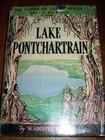
Lake Pontchartrain

Lake Pontchartrain, W. Adolphe RobertsBobbs-Merrill Co., 1946.

“The striking thing about this volume on Lake Pontchartrain - one of the American Lakes series - is that it contains so little about the lake. Most of its pages are given over to the city of New Orleans - its founding, its growth, its charming ways and its unusual attitudes.”
“W. Adolphe Roberts Writes Vivid New Orleans Story,” Avery Craven, New York Times, Oct. 20, 1946.

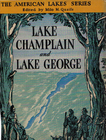
Lake Champlain and Lake George

Lake Champlain and Lake George, Frederick F. Van de Water, Bobbs-Merrill Co. 1946.

"Lake Champlain and Lake George is consistently a good book, with no dull passages or chapters to mar the pleasure of the reader.” Stephen H.P. Pell, New York History, Vol. 28, No.2, April, 1947, pp. 214-217.


The Great Salt Lake

The Great Salt Lake, Dale E. Morgan, Bobbs-Merrill Co., 1947.

The well respected Wallace Stegner had this to say about this work: 
“Even from a book from a popular series one may expect accuracy in the important facts of history. One does not usually expect precision and definitiveness, especially when the book in question must cover centuries of time. It is therefore something of a tour de force that Dale Morgan has accomplished, for The Great Salt Lake is both panoramic and precise, both popularly readable and historically important.” Pacific Historical Review, Vol. 16, No. 3 (Aug., 1947), pp. 330-331.

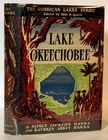
Lake Okeechobee

Lake Okeechobee: Wellspring of the Everglades, Alfred Jackson Hanna and Kathryn Abbey Hanna, Bobbs-Merrill Co. 1948.

“The Hannas have written a book which will have a wide appeal, and their treatment of the subject matter is excellent.” Junius E. Dovell, The Journal of Southern History, Vol. 14, No. 4 (Nov., 1948), pp. 567-568.

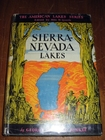
Sierra-Nevada Lakes

Sierra-Nevada Lakes, George and Bliss Hinkle, Bobbs-Merrill Co. 1949.

"This book is about 8 lakes, but is particularly good about Lake Tahoe -”Eight Western Lakes: Sierra-Nevada Lakes,” George R. Stewart, New York Times,  April, 17, 1949.

“It would be difficult to find any couple - or anyone - better versed in the lore of this hinterland than the Hinkles." John Walton Caughey, The Mississippi Valley Historical Review, Vol. 36, No. 4 (Mar., 1950), p. 714 

“The book is well written, and the point of view is often fresh and stimulating.” August Fruge, Pacific Historical Review,Vol. 18, No. 4 (Nov., 1949), pp. 524-525.

Sources:
    None of these books are yet available for reading via the Internet. All are available through book dealers such as AbeBooks, although purchasing the set would be expensive. The entire book series and all of the other titles mentioned above are found in the Western Libraries.
   Interesting information about Grace Lee Nute, the author of Lake Superior, is found at the Minnesota Historical Society

Post Script: (the usual bonus stuff)
   If you were intrigued by the reference to the medical experiment at Mackinac see the Wikipedia entry for William Beaumont ("the Father of Gastric Physiology").
   Milo Quaife, the editor of the American Lakes Series and author of the volume on Lake Michigan, was killed in a car crash near Sault Ste. Marie in 1959. See: "Historian Dies in Crash: Milo Quaife, 79, Specialized in Midwestern Subjects," New York Times, Sept. 4, 1959.
   Enjoy these lakes while you can. Last summer it was reported that even Lake Superior is experiencing algae blooms. Things are likely to get worse. It has just been announced that copper mining will be allowed in the Boundary Waters Wilderness area in Minnesota. See: "Trump Administration Opens Minnesota Wilderness Area to Copper Mining," Valerie Volcovici, Reuters, May 15, 2019.