Showing posts with label Sparrows. Show all posts

Wednesday, 20 April 2022

Starling Revisionism


   One of the four readers of this blog indicated to me once that at least I provided sources in most of my posts. He was implying, I think, that they were the readable bits and that from them one might learn something and be able to actually figure out what I was rambling on about. Given the importance of sources to him and my extensive use of them, I will provide here, additional sources to correct a factoid I presented a while back.  A 'factoid', you will recall, is "an assumption or speculation that is reported and repeated so often that it becomes accepted as fact."

   The oft-repeated assertion which was repeated by me was put this way: "One gentleman, Eugene Schieffelin, was responsible for importing starlings and other birds which appeared in the works of Shakespeare, but were missing in America." The Schieffelin/Shakespeare connection is well known among birding folklorists, but it is a factoid rather than a fact. Schieffelin did, in fact, release starlings in New York City in 1890, but not likely because he was a fan of the Bard. He was a chairman of the American Acclimization Society and the members of such a group deliberately imported various species to the United States, for a variety of reasons unrelated to Shakespeare. Sparrows also were brought to North America and a "sparrow war" resulted. 

   The origin of the Schieffelin/Shakespeare connection has been traced back to Edwin Way Teale and I will, of course, provide the source.  Although I admit to being a Teale fan, I think it is correct to say that his connection of Shakespeare to Schieffelin is a rather innocent one. There was (and still is) a Shakespeare Garden in Central Park which contained plants mentioned in his plays and Teale seems to think that Schieffelin had a similar motivation. There were many readers of Teale's books and essays, but the connection between Shakespeare and the starlings was make known to more people when an essay was published in 1947 in Sports Illustrated - "A Plague of Starlings," by Robert Cantwell.

   That a lover of the literature of Shakespeare sought to populate the United States with the birds mentioned by the Bard provides an interesting anecdote. “If true, it would suggest that a long-dead dramatist totally reshaped the ecosystem of a foreign continent, which is a fascinating connection between literature and science,” One could argue, for example, that the crash of a Lockheed L-188 Electra taking off in Boston in 1960 was caused by the large number of starlings hitting the plane's propellers and, indirectly, because of Shakespeare. 

   Perhaps the anecdote can now be put to rest. The arguments about starlings and sparrows and "invasive species" and the consequences of their introduction continue and you can learn more about them below.

Sources:
   
This starling story was prompted by this article: "The Shakespearean Tall Tale That Shaped How We See Starlings: 
Researchers Debunked a Long-repeated Yarn That the Common Birds Owe Their North American Beginnings to a 19th-century Lover of the Bard. Maybe This Ubiquitous Bird’s Story is Ready for a Reboot." Jason Bittel, New York Times, April 11, 2022.
 
 If you cannot read the article in the NYT, the one by the researchers is accessible and readable even by non-academics. An abstract is provided. John MacNeill Miller  with Lauren Fugate “Shakespeare’s Starlings: Literary History and the Fictions of Invasiveness.” Environmental Humanities Vol. 13, No. 2, 2021, pp. 301-322. 
"Scientists, environmentalists, and nature writers often report that all common starlings (Sturnus vulgaris) in North America descend from a flock released in New York City in 1890 by Eugene Schieffelin, a man obsessed with importing all the birds mentioned by Shakespeare. This article uses the methods of literary history to investigate this popular anecdote. Today starlings are much despised as an invasive species that displaces native birds and does almost a billion dollars worth of damage to agriculture annually. Because of the starling’s pest status, the Schieffelin story is considered a cautionary tale about the dangers of ecological ignorance. Diving into the history of the Schieffelin story reveals, however, that it is almost entirely fictional. Tracing how its elements emerged and changed over a century of retelling clarifies how the story came to shore up uncertainties in the bird’s environmental history and to distract from the lack of data supporting the starling’s supposedly disastrous impacts. In explaining how a fiction repeated over time attained the status of fact in debates about invasive species, this literary history suggests humanistic methods can serve as useful tools for understanding the value-laden narratives underpinning environmental attitudes and practices today."

   Although I am not a 'birder' and can barely tell a cardinal from a crow, I will stand by my "Sparrows" post and the sources in it. 
   For Teale see: "Edwin Way Teale (1899 - 1980).    

Tuesday, 15 March 2022

Aptronyms


   There was an article in the New York Times yesterday about tree planting. It indicated that the tree planting now being done, may not be a good thing unless trees of different types are planted. Diversity in all things. 
   One of the people mentioned in the article has a name that is suited to his profession. Forrest Fleischman is a professor of environmental policy at the University of Minnesota. I knew that there was a name for such nomenclature, and it is 'aptronym.' I had to look it up, but I shouldn't have had to do so. 
   Apart from learning about tree planting and aptronyms, I learned that this blog is not working as it was supposed to - as a memory aid for me.  As I read up on aptronyms (again) I slowly began to remember that I was an authority on this subject back in 2018.  You should learn from this that, not only should you read this blog, you should also read the Post Scripts when provided. If you go back and look at my long disquisition about SPARROWS, you will find at the bottom a very interesting discussion about aptronyms and inaptronyms and a bit more relating to nominative determinism  and even nominative contradeterminism. In my defence the Post Script was not really a digression, since two of the people writing about our feathered friends were, Leonard Wing and George Bird Grinnell. If you are still not interested in going back to the sparrow story which contains good stuff about aptronyms, I will just say that in it I mentioned Anthony Weiner. 

Sources: 
 
The article: "Tree Planting is Booming. Here's How That Could Help, or Harm, the Planet," Catrin Einhorn, New York Times, , May 14, 2022.
   The Wiki entries for both aptronyms and nominative determinism are very good and if you click on this link to learn about the latter, you will see that I am using a version called Wikiwand. 

The Bonus:
   
There is an article in this month's Atlantic written by someone with a name that is perfectly suited, as you will see from the title: "Margaret Atwood on Envy and Friendship and Old Age," by Jennifer Senior.

Sunday, 16 August 2020

For The Birds

       I have a new e-bike which allows me to roam farther with less effort. Apart from the bike paths along the Thames, the campuses of Western and the Affiliated University Colleges provide good places to ride, particularly during the pandemic.

   Although I essentially resided on the Western campus for years, I can't say that I ever explored the areas on the west side of Western Road over where the Saugeen-Maitland and Bayfield Halls are located. Near them, down behind the Support-Services Building is where I found the building pictured above. It is the home of the Advanced Facility for Avian Research (AFAR). 

 Sparrows in a Coal Mine


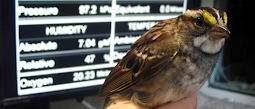
   The campus is quiet and there are not many people around. Still, there is some activity and research continues to be done. Earlier this month there was an interesting article in Western News about a sparrow study conducted at the AFAR. The facility is a unique one where various climate conditions can be simulated. In this case, the sparrows were subjected to 'storms' in an attempt to determine how they may adjust to the changing climate. (For you bird lovers: Perhaps 'subjected to' sounds a little too severe; it is pointed out that the sparrows were not subjected to a great deal of suffering.)

   After discovering the AFAR and reading about the sparrow study, I did a bit more research. It is clear that Western is lucky to have such a facility and the very talented researchers working within it. Although there are not many students on campus, one hopes they read the article from afar or learn more about it upon returning. 

Sources:
   The article about the study is done by Debora Van Brenk, "Sparrows' Storm Stress a Harbinger of Climate-Change Impact," Western News, August 7, 2020.
   The study was conducted by Andrea Boyer and Scott A. Macdougall-Shackleton. See:
"High Rates of Exposure to Simulated Winter Storm Cues Negatively Affect White-Throated Sparrow Energy Reserves," Front. Ecol. Evol., July 14, 2020.
FROM AFAR - see these very useful links:
Check out the Facilities - https://birds.uwo.ca/facilities/index.html (be sure to look at the FLIER - Field Laboratory for Integrative Ecological Research).
AFAR is a world-class facility at the University of Western Ontario for interdisciplinary studies of bird physiology, neurobiology and behaviour.
Researchers at AFAR come together from a variety of disciplines to explore how birds work, and how they respond to their environment. 
AFAR is home to the world’s first hypobaric climatic wind tunnel for bird flight - allowing research into the physiology and fluid dynamics of bird flight in high altitude conditions.  In combination with specialized indoor and outdoor holding rooms and cutting edge experimental and analytical facilities, AFAR is a leading centre for the study of avian neurobiology, physiology and behaviour.
There have been some articles in the LFP. See, for example, this earlier study about sparrows and fear: John Miner, "Being a Sparrow is No Cakewalk," LFP, Dec. 9, 2011. 
For an early article about the funding of the AFAR see: "McGuinty Government Supports Cutting-Edge Research," Canada Newswire, April 24, 2007.

Information about the various activities at the AFAR is readily found in academic journals.

Bonus Information:
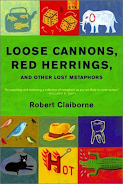
   The expression "For the Birds" is generally a negative one and the origin of it is found in this book. My use of it is more positive, in that I am suggesting that this research is done for the benefit of the birds (and the rest of us). 
"According to Robert Claiborne in Loose Cannons and Red Herrings, it refers to city streets as they were before cars. "When I was a youngster on the streets of New York, one could both see and smell the emissions of horse-drawn wagons. Since there was no way of controlling these emissions, they, or the undigested oats in them, served to nourish a large population of English sparrows. If you say something's for the birds, you're politely saying it's horseshit."

Chimney Swift Factoids
  I just received an email (Aug.15) from the folks at Nature London. Here is what they had to say about the Swift situation here in London: 
Chimney Swifts Take Flight
 For Chimney Swifts, fall migration is now in full swing and Nature London volunteers are tracking their numbers. We encourage club members to visit a swift chimney and enjoy the spectacle of large numbers of twittering, swirling swifts descending into a chimney.  Most swift entries occur between 10 mins before sunset and 20 mins after. Find a safe public place where you can view the swifts from your car or lawn chair.  Enjoy!  On August 4, 402 swifts entered 13 chimneys for the night; on August 11, the total was 542.  On August 11, three London chimneys held more than 100 swifts each.
         Smith Fruit: 22 Maitland Street (south end of street near the river)
         Huron College, O’Neil/Ridley Hall: 1349 Western Rd (big octagonal chimney, best seen from west/rear of building)
         Old Hunt’s flour mill behind Nova Craft Canoe: 471 Nightingale Ave(east London near old Kellogg’s plant)
Since swifts sometimes switch roost chimneys, visit soon while these chimneys are still their favourites.  For more information about Swifts and Nature London’s program click the link:  http://www.naturelondon.com/chimney-swifts-resources/

Friday, 12 January 2018

SPARROWS

Preambling

     At the beginning of last year you were presented with a novel-length post that should have been titled “Jerry’s Jeremiad”, in that I ranted on about things I thought ludicrous and found irritating. Since those things - WORDS that should not be used, NAMES  that should not be called, and STATUES that should never have been erected - are still very much in the news, you will be spared my braying on about them. Don’t forget, however, that I did raise the Lenin-like question “What Is To Be Done?”  in relation to the problems those things cause and offered some answers. I stand by them and you can find them here (just scroll through the first few thousand words to the conclusion). 

     We are several days into this new year so I will not offer any blogging resolutions, particularly since I have not been so resolute about the others I made. I will also not present excuses for my failure to provide a post-a-day since many of them were covered in my “Chief Cunctator” post and will undoubtedly apply as we move forward. I will, however, try to keep the  promise I made in the jeremiad which was to avoid as much as possible the ludicrousness of the present. I hope we all have a good year. We will begin softly with the subject of sparrows.


Sparrows


     Sparrows are not at all spectacular, but we are not fortunate enough, here in southern Ontario, to have a loyal flock of Painted Buntings around our feeder. So we will work with what we have. I have observed that they are sociable and, like some of our neighbours, seem to have adapted very well to life on the pogey. 

     I thought I would try to learn more about them, but learned, about myself, that I would never be much of a birder. I had a look for the word ‘sparrow’ in the index of Peterson’s Eastern Birds and under it found around thirty kinds ranging from Bachman’s and Baird’s through Harris’ and Henslow’s all the way to White-crowned and White-throated. The list under ‘sparrows’ is also long in the National Audubon Society’s Field Guide to Birds: Eastern Region and one finds Botteri’s and Cassin’s which don’t appear in Peterson’s. The list is even longer in Wikipedia and one encounters many other related words like ‘passerines’ and ‘petronias’. Apart from learning about all these varieties, think about identifying them. One can just about double the number since the males and females often look different and the male of one type might look like the female of another. Depending, of course, on the time of the year.


Invasive Species 

    Abandoning pure ornithology in favour of a more historical approach I soon discovered again that the subject of sparrows is not so simple. As you are aware, however, I am behind in my blogging so I will have to keep this short and simply direct you to sources you can use if you want to learn more and start your own blog.    

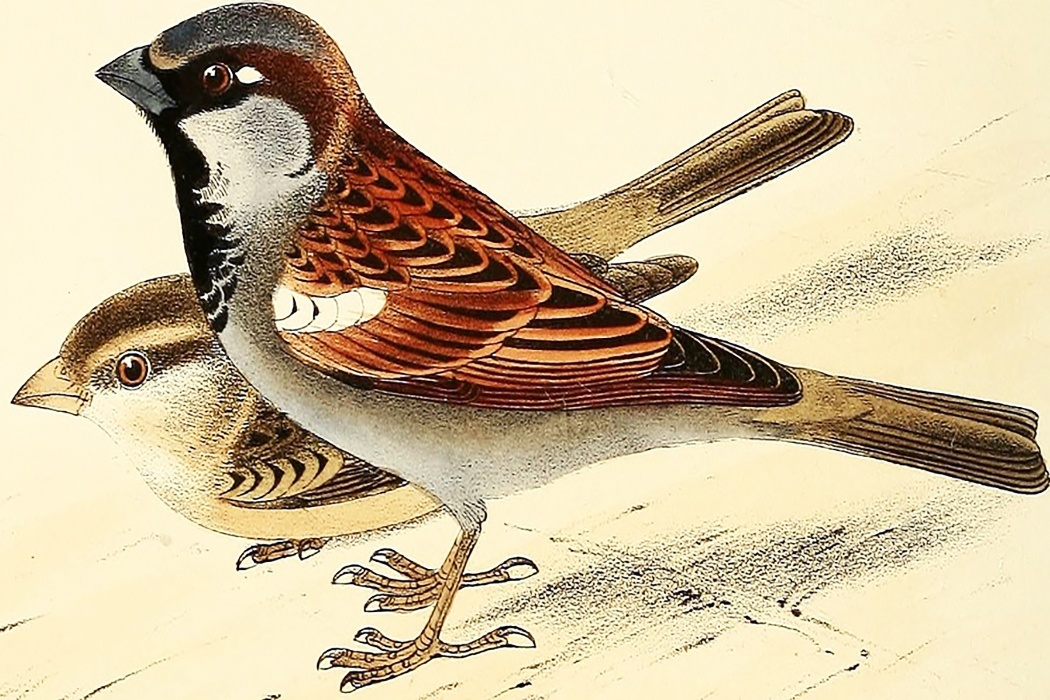
     The sparrows I am supporting do not come from stock that originated in North America. Sparrows were imported into some cities in the eastern United States during the period from the 1850s to the 1890s and they were exported (and otherwise spread) to other cities and areas on the continent.  

  
     The sparrows were brought over from England and Europe for aesthetic as well as utilitarian reasons. Settlers apparently missed the birds they grew up with and, apart from nostalgia, offered the rationale that sparrows could be useful in ridding the cities of various insects. As an aside, there was another aesthetic purpose. One gentleman, Eugene Schieffelin, was responsible for importing starlings and other birds which appeared in the works of Shakespeare, but were missing in America.

     When these new immigrants flourished and multiplied some citizens began to see this introduced species as an invasive one. A familiar story. It was suggested that the aggressive sparrow was taking over and replacing native songbirds and that they were eating more fruits and crops than insects. It was argued that “Without question the most deplorable event in the history of American ornithology was the introduction of the English sparrow.”


   Not all citizens agreed, nor did the ornithologists who formed warring camps. Some suggested that sparrows should be eliminated even though there was a growing concern that too many other birds were being destroyed.  One positive result of the war was that each side began collecting a lot of data to try to learn if the introduction of the sparrow had been harmful biologically or economically. 


    I was surprised to learn that the rather bland sparrow had attracted so much attention and was the cause of such controversy. The ones here seem to be doing well. On the other hand, ironically enough, I have learned that the ones in the other London are disappearing at a rapid rate.


Sources:


     As mentioned, the sparrow war produced a lot of information. For some older sources (which are available to you) see:
Barrow’s The English Sparrow in North America… [This U.S. Dept. of Agriculture Bulletin is over 400 pages long.] 
Thomas G. Gentry, The House Sparrow at Home and Abroad, With Some Concluding Remarks Upon Its Usefulness, and Copious References to the Literature of the Subject. 
Edwin Richard Kalmbach, Economic Status of the English Sparrow

     If you want to learn in detail how the sparrows and starlings moved across the continent see: “Spread of the Starling and English Sparrow”, Leonard Wing, The Auk, Vol. 60, No.1, 1943, p.74.

     For a good account: “Elliott Coues and the Sparrow War,” Michael J. Brodhead
The New England Quarterly, Vol. 44, No. 3 (Sep., 1971), pp. 420-432
    For a longer study of the battles between ornithologists: “Sparrows for America: A Case of Mistaken, Identity,” Robin W. Doughty, Journal of Popular Culture, Vol. 14, No.2, Fall, 1980.
   About the starlings see: ‘What if We Had All the Birds From Shakespeare in Central Park,” Juliet Lamb, JSTOR Daily, June 9, 2016.
   For a larger perspective see: American Perceptions of Immigrant and Invasive Species: Strangers on the Land, by Peter Coates - especially Chapter 2: “The Avian Conquest of a Continent”. It is from this source that the quotation about “the deplorable event” is taken.

    The decline in the number of sparrows in London, England is discussed in the book about the decline of moths in England - The Moth Snowstorm, Michael McCarthy,  pp.110-112.


Post Script:

     Once again I have saved some of the interesting bits which, once again, are totally unrelated to the subject at hand. You will note above that one of the authors mentioned  is Leonard Wing. Another frequently encountered in the sources cited is George Bird Grinnell. Not generally that close a reader, I did still notice that each man’s name had some relationship to their chosen career or area of interest. 

      Aware of the old tradition that people often had surnames related to their occupations (Masons and Carpenters), I wondered about those who ended up taking a job related to the name they were given. Would Mr. Wing or “Bird” Grinnell have been, say undertakers or circus performers, if not for their names? Is that why Margaret Court was a tennis player or why Francine Prose is a novelist? Did Jude Law flunk out of law school? What about Anthony Weiner? How does one answer such questions?


     Well, to save you the time that I wasted go directly to the subject of “Nominative Determinism” - the entry about it in Wikipedia is a good place to begin and that is where I found this brief definition: “Nominative determinism, literally "name-driven outcome", is the hypothesis that people tend to gravitate towards areas of work which reflect their names.” There appears to be some debate over whether someone with a name like Sue Yoo was destined to become a lawyer or if the choice was simply a matter of coincidence rather than causality. 

     
     You can dig even deeper by looking for more under the subject of Aptronyms. And if you want to avoid whatever it is your attempting to write about you could always delve into Inaptronyms or Nominative Contradeterminism, which apply when there is a contradiction between the name and the occupation: Dr. Kill or Cardinal Sin or Don Black, the white supremacist, are some examples. I could go on.