Showing posts with label Extinction. Show all posts

Saturday, 1 July 2023

Periodical Ramblings (13)

 National Geographic


  A "Happy July 1st" and a "Happy July 4th" to all of you. We should celebrate such occasions while we can since they soon may be cancelled and we soon may be gone. 
   It would be fitting if my first post in July was a celebratory one, but being contrarian I will instead chronicle another extinction, or near extinction. Although the National Geographic may be around for a bit longer, it is like Martha, the last passenger pigeon, likely to be soon extinct. 
   The last sightings are found in three recent articles which will be excerpted below since the passing of the National Geographic is worth noting. You will not be surprised that corporations played a role in this extinction and that the cast of characters includes Walt Disney and Rupert Murdoch. 

1. "National Geographic Lays Off Its Last Remaining Staff Writers: The magazine, which remains among the most read in the U.S., has struggled in the digital era to command the kind of resources that fueled the deep reporting it became known for," Paul Farhi, Washington Post, June 28, 2023.
"Like one of the endangered species whose impending extinction it has chronicled, National Geographic magazine has been on a relentlessly downward path, struggling for vibrancy in an increasingly unforgiving ecosystem.
On Wednesday, the Washington-based magazine that has surveyed science and the natural world for 135 years reached another difficult passage when it laid off all of its last remaining staff writers.
The cutback — the latest in a series under owner Walt Disney Co. — involves some 19 editorial staffers in all, who were notified in April that these terminations were coming. Article assignments will henceforth be contracted out to freelancers or pieced together by editors. The cuts also eliminated the magazine’s small audio department.
The layoffs were the second over the past nine months, and the fourth since a series of ownership changes began in 2015. In September, Disney removed six top editors in an extraordinary reorganization of the magazine’s editorial operations.
Departing staffers said Wednesday the magazine has curtailed photo contracts that enabled photographers to spend months in the field producing the publication’s iconic images.
In a further cost-cutting move, copies of the famous bright-yellow-bordered print publication will no longer be sold on newsstands in the United States starting next year, the company said in an internal announcement last month....
The magazine’s current trajectory has been years in the making, set in motion primarily by the epochal decline of print and ascent of digital news and information. In the light-speed world of digital media, National Geographic has remained an almost artisanal product — a monthly magazine whose photos, graphics and articles were sometimes the result of months of research and reporting.
At its peak in the late 1980s, National Geographic reached 12 million subscribers in the United States, and millions more overseas. Many of its devotees so savored its illumination of other worlds — space, the depths of the ocean, little-seen parts of the planet — that they stacked old issues into piles that cluttered attics and basements.
It remains among the most widely read magazines in America, at a time when magazines are no longer widely read. At the end of 2022, it had just under 1.8 million subscribers, according to the authoritative Alliance for Audited Media.
National Geographic was launched by Washington’s National Geographic Society, a foundation formed by 33 academics, scientists and would-be adventurers, including Alexander Graham Bell. The magazine was initially sold to the public as a perk for joining the society. It grew into a stand-alone publication slowly but steadily, reaching 1 million subscribers by the 1930s....
The magazine’s place of honor continued to dim through a series of corporate reshufflings that began in 2015 when the Society agreed to form a for-profit partnership with 21st Century Fox, which took majority control in exchange for $725 million. The partnership came under the Disney banner in 2019 as part of a massive $71 billion deal between Fox and Disney."

  Those of you who thought that the "television versions" were sometimes inferior to the print ones are correct:
"The magazine was eventually surpassed for profits and attention by the society’s video operations, including its flagship National Geographic cable channel and Nat Geo Wild, a channel focused on animals. While they produced documentaries equal in quality to the magazine’s rigorous reporting, the channels — managed by Rupert Murdoch’s 21st Century Fox — also aired pseudoscientific entertainment programming about UFOs and reality series like “Sharks vs. Tunas” at odds with the society’s original high-minded vision."
I do confess that both my wife and I enjoyed, "Restaurants at the End of the World," which were found in very remote areas. The program aired on the National Geographic channel. 
Comments:
  Many Post readers commented about the article. Here are a few samples:

The National Geographic went from a board of directors comprised of World renowned Scientists, Explorers, Educators, Photographers and Adventurers to a Corporate Board beholden only to the raw banality of bottom line Capitalism.

Thank you for this post. I will be cancelling my Nat Geo subscription. The writing has been declining (probably because they don’t have enough staff writers). Disney’s desire to create a low quality product as a profit engine is one I will not support with my money. I stand in solidarity with the writers. Disney won’t get another penny out of me.

When Rupert Murdoch bought it, I cancelled my subscription.

2. "National Geographic Lays Off More Writers: The company did not specify how many were shed and said that the magazine, known for its focus on discovery and exploration, would continue to be published on a monthly basis," Jesus Jimenez, New York Times, June 29, 2023.
"National Geographic, the science and nature magazine that for more than a century has sent its writers and photographers to explore and document some of the most remote corners of the Earth, shed more writers and other staff members this week in a round of layoffs that had been announced in April...."
The magazine is still well-read at a time when other magazines have lost subscribers or folded their print publications entirely. Through the end of last year, the magazine had more than 1.7 million subscribers, according to the Alliance for Audited Media, which audits publications."

3. "The Virtual End of National Geographic Magazine”, Jim Geraghty, National Review, June 29, 2023.
"On the menu today: This is going to sound like an extended version of an appeal to support our webathon, but the news that the illustrious magazine National Geographic has laid off all of its last remaining staff writers is a demonstration that we, as a society, have largely chosen to stop paying for news or entertainment, with far-reaching consequences for our lives. The belief that we’re entitled to high-quality information in almost every form — and will accept lower-quality stuff if it is free — is one big reason that the current state of American discourse looks and sounds like a WWE match among insane-asylum inmates held in a sewer.
What Happens When We Stop Paying for Quality?....
The rest of the article is worth reading and paying for. 


  Unlike passenger pigeons, old issues of the National Geographic can still be found. The October 1912 issue pictured above can be purchased at Attic Books here in London, Ontario for $25.00


 For now, at least, old issues can also be found for free in libraries. Western University has, for now, at least, many print volumes in storage and some on microfilm. 

Periodical Ramblings
  You have now been provided with a "Baker's Dozen" of posts about old magazines. The first is "Periodical Ramblings (The Series) and in it I mentioned that my sister had magazines stacked everywhere and many of them were National Geographics. As a subscriber her husband appreciated that that made him  a member of the National Geographic Society. The twelfth "Periodical Rambling" was about the Saturday Evening Post, which, you may be surprised to know, still exists. The one before that was about Look, which does not.

Friday, 8 February 2019

The Plight of the Pangolins


Pity the Pangolin
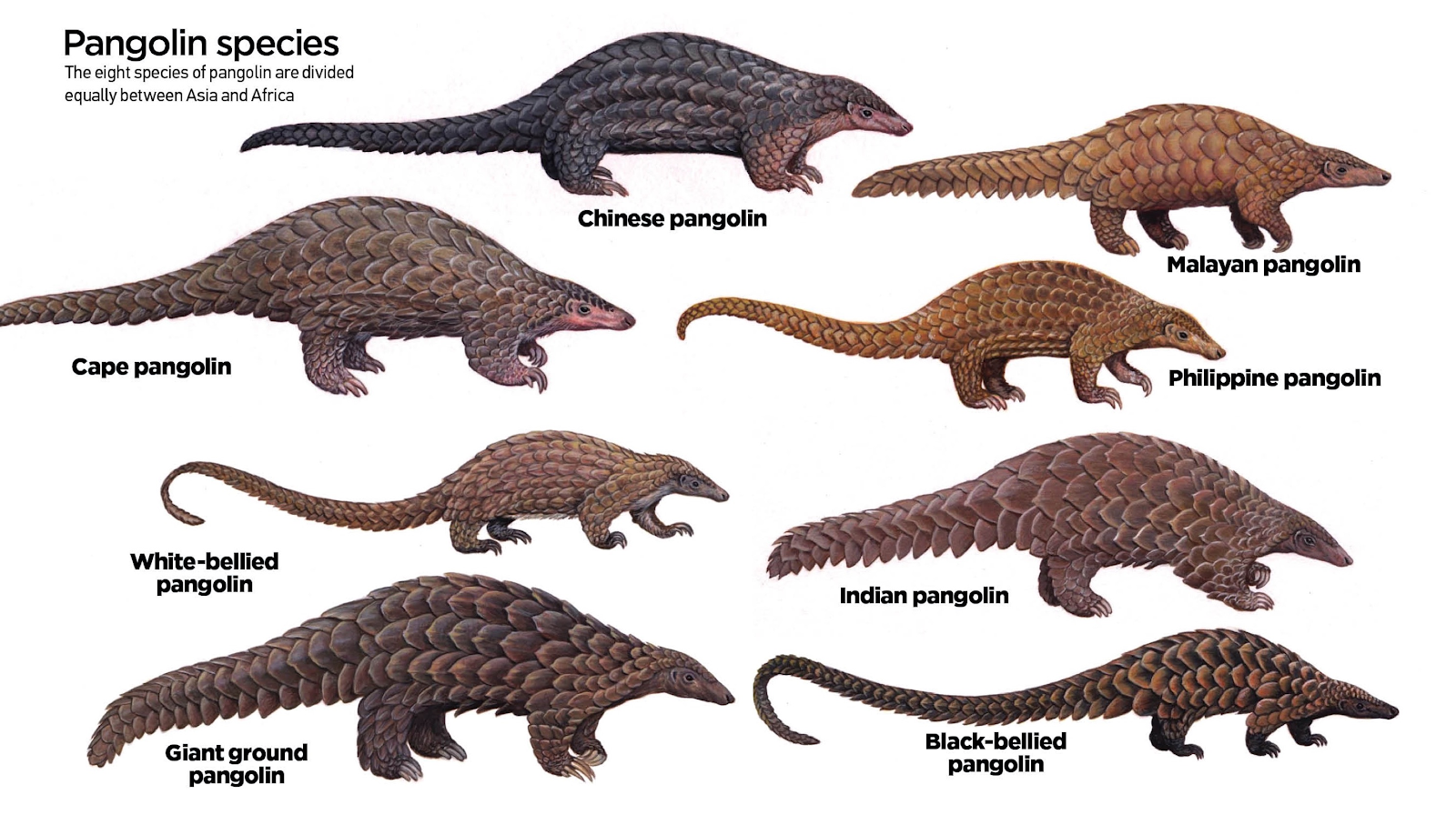
I recently wrote about endangered species and have posted about the "insect apocalypse" and the passing of the passenger pigeons. Now I will move on to consider pangolins which I did not know existed and soon won't. After that I will
offer a few words about totoabas.
Pangolins are anteater-like mammals that are (soon to be were) found in Asia and Africa and I don’t think I had ever seen the word until I read that 9 TONS of their scales have just been seized from one ship in Hong Kong. Apparently the 9 tons represents around 14,000 of the little critters.I guess I missed the article from 2013 about a ship carrying 22,000 pounds of pangolin which hit a reef in the Philippines.
   I should mention that, perhaps acting as ballast, there were also 1,000 elephant tusks in the same shipment.


Totoabas


Totoabas are fish that are found in increasingly decreasing numbers and only in the Gulf of California. Recently, “Chinese customs officials have confiscated 444 kilograms (980 pounds) of totoaba swim bladders, estimated to be worth about $26 million.” Note, that weight is just bladder weight; I am not sure how many totoabas were involved.
In both cases the main reasons for the slaughter are ‘medicinal’ ones and the Chinese are involved. Apparently the Chinese apothecary profession is not as advanced as the one producing the 5G communication networks.
It is unfortunate indeed that, while we are losing so many species simply as collateral damage, others are being deliberately destroyed for medicinal reasons without merit.
Sources:

The Wikipedia entries for both species are very good.
I learned about the poaching of the pangolins from: "9 Tons of Pangolin Scales Are Seized in Hong Kong, Tiffany Mat, New York Times, Feb. 1, 2019. For earlier articles see: "A Struggle to Save the Scaly Pangolin," Erica Good, New York Times, Mar. 30, 2015 and "No Species is Safe From Burgeoning Wildlife Trade," Bettina Wassener, Mar. 12, 2013.

For the totoaba see the website of the Intercultural Center for the Study of Deserts and Oceans (CEDO) and the entry for "Totoaba". For a recent smuggling case see: "China Seizes Totoaba Swim Bladders Worth $26 Million, Arrests 16," Mongabay.com, Dec. 29, 2018.


Saturday, 1 December 2018

Little Toller Books


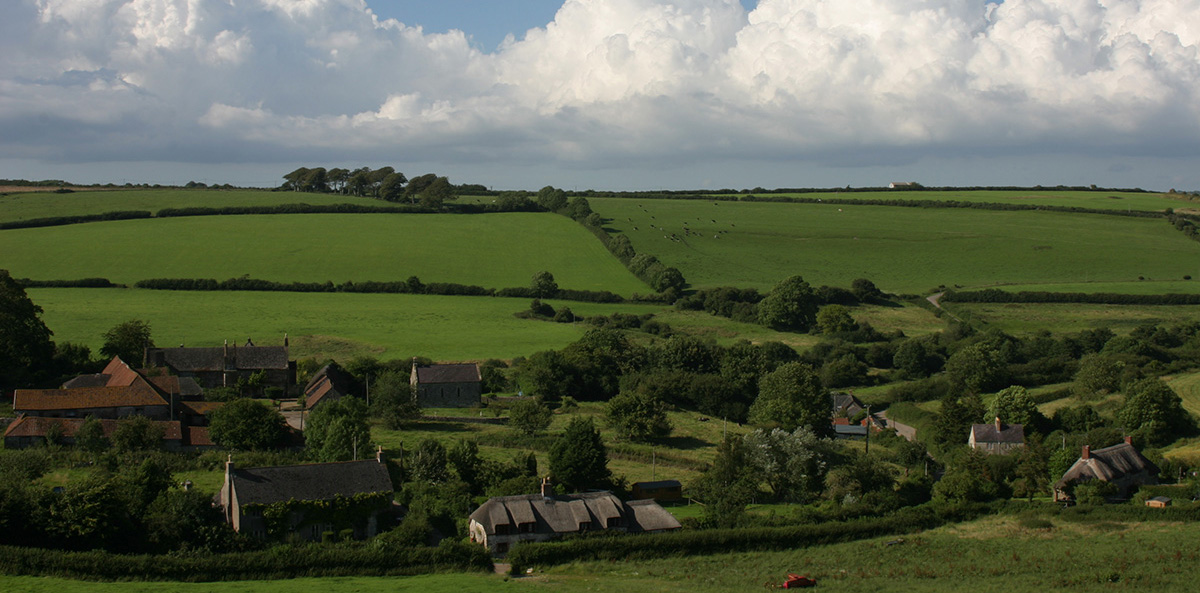
Little Toller Books is a little publisher located in West Dorset and if you choose to go walking in England you can stay at their shop. If you are looking for new or classic books relating to nature, visit the Little Toller website. Here is a recent endorsement from Michael Ondaatje:


Michael Ondaatje, "By the Book," New York Times, June 14, 2018.
“What was the last truly great book you read?"
“Actually I am still reading it. Gilbert White’s “The Natural History of Selborne,” published by the wonderful Little Toller Books in Dorset, which keeps great books on nature in print. Written in 1798, it has the atmosphere and many of the qualities of a great English novel, except that the Bennet family has been replaced by weather and landscapes, as well as the seasonal arrival of visiting insects, all of them faultlessly described. White’s writing, with his depiction of a returning rainstorm or the slow wanderings of his tortoise, is great literature at a perfect pace, every creature dressed and portrayed in quick-witted adjectives; and he enthralls us with his knowledge of crickets, who are a “thirsty race,” who “open communications from one room to another” and who can sometimes foretell the death of a near relation or the approach of an absent lover. The book is a classic and has never been out of print since its first publication.”

The title of one of Little Toller's new books was puzzling to me: Orison For A Curlew. 'Orison' is an archaic word for 'a prayer' and the subtitle of the book is, In Search of a Bird on the Brink of Extinction.

If you go to the Little Toller website you can order a set of their books and probably get them in time for Christmas. If you would like to sample the wares first, go to their site and read some of the essays in The Clearing, their online journal.

Post Script
Unfortunately the curlew is not the only bird on the verge of extinction. If you choose to read The Clearing you will find within it a very good essay by Anita Roy: "Vultures on the Brink." You may recall that I posted about this subject a while back. See: "Vanishing Vultures."


Sunday, 4 February 2018

Passenger Pigeons


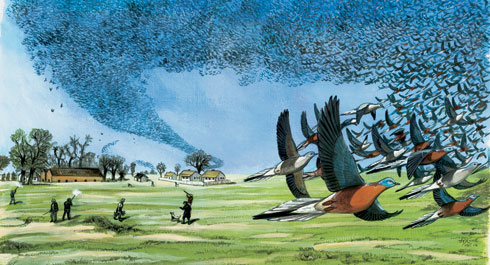
     Back in 2014 the passenger pigeon was much in the news because the last one had died 100 years before. Martha was her name and she died in the Cincinnati Zoo (George was already gone). Like the parrot in the Monty Python sketch, she was dead, deceased, had ceased to be, was bereft of life and was no more. She was an ex-passenger pigeon. They are all extinct and there are no more.

     Even if you are not interested in birds you probably read some of those news accounts or you may have come across stories about how, many years ago, the flocks of passenger pigeons were sometimes so large they blocked out the sun and took days to pass. I just ran across one of those stories and it reminded me of the 2014 centenary of the extinction. This story takes place in Ontario and since I have not seen any references to it, I will present it here.

Pigeons on The Bruce

    W. Sherwood Fox was a classics scholar and a president of the University of Western Ontario. He was also very interested in nature which is why he was mentioned in my recent post about John Muir, about whom he wrote an essay in The Bruce Beckons: The Story of Lake Huron’s Great Peninsula. He also wrote one about the passenger pigeon in the same book - “In the Day of the Wild Pigeon,” (Chapter 9). Here is how it begins: 

     “Of the many gifts that Nature bestowed upon The Bruce [ the Bruce Peninsula] one in particular will never be seen there again. Indeed, it has vanished from the face of the earth. It is known now only in museums, in slim dockets of old records, and in the memories of a very few men of exceedingly great age.( p.94)

    The prevalence of the pigeon is noted by his father who arrived on The Bruce in the early 1870s:

     “A picture of his entry into this frontier household was vividly stamped on his memory by two events of the first day: as he stepped from the steamer to the shore and walked to his summer quarters a vast flock of pigeons were flying from the east to their nesting area on the Peninsula and were casting a dark, swiftly moving cloud over the land. At his very first meal, supper, he was served adult wild pigeon. At breakfast the next morning this was the main dish, and for dinner too and then again for supper; indeed, it was the only piece de resistance - and a tough one at that.” (p.95)
 
     The size of the roost was substantial even if one factors in a bit of local pride:

     “The people of the region took pride in believing that the Peninsula was ideal country for the pigeons. It was common opinion around Colpoy’s [Bay] - an opinion based solely on rumour - that the nesting and roosting colonies were so numerous as to form virtually an unbroken chain running northward to a point not far short of Tobermory. Of course, that was not quite true, but to express doubts about it was counted in the new settlement as disloyalty to the wonderful greatness of the Peninsula. However, the only colony that Father himself saw was very long indeed: it began near Chief’s Point on Lake Huron just north of the Sauble River and extended in a broad sinuous line north to within a couple of miles of Lake Berford. That is, it ran from the west side of Amabel Township to a point two or three miles within Albemarle and slightly less than that distance north of Wiarton….” That the colony covered several square miles was all too obvious, but how many one could only guess without making a special expedition to determine the exact figure.” (pp.95-96)

     Here is how the essay ends:

   “But never again will anyone, in The Bruce or elsewhere in North America, know a surfeit of the passenger pigeon. It has gone forever. In The Bruce its numbers began to dwindle rapidly in the last three years of the seventies; by 1885 the birds were scarce indeed. A resident of Red Bay whom I knew saw his last pigeon near there in 1893. As far as the whole Georgian Bay region is concerned the last word of the race’s obituary is this: in May of 1902 three pigeons - a pair and a single bird - were seen near Penetanguishene, Simcoe County.” (p.106)

Pigeons Over Fort Mississauga

   
    There is another Ontario account that indicates just how plentiful the pigeons were in the late 19th century.  It is easier to understand why there are no longer any passenger pigeons in the areas around metropolitan Toronto, however,  since there is not much evidence now of any nature at all and few trees in which any kind of bird could roost. Around 1860 the area was not so barren. This description is from Ross R. King’s The Sportsman and Naturalist in Canada (1866):

     Early in the morning I was apprised by my servant that an extraordinary flock of birds was passing over, such as he had never seen before. Hurrying out and ascending the grassy ramparts, I was perfectly amazed to behold the air filled, the sun obscured by millions of pigeons, not hovering about but darting onwards in a straight line with arrowy flight, in a vast mass a mile or more in breadth, and stretching before and behind as far as the eye could reach.
     Swiftly and steadily the column passed over with a rushing sound, and for hours continued in undiminished myriads advancing over the American forests in the eastern horizon, as the myriads that had passed were lost in the western sky.
     It was late in the afternoon before any decrease in the mass was perceptible, but they became gradually less dense as the day drew to a close… The duration of this flight being about fourteen hours, viz. From four a.m. to six p.m., the column (allowing a probable velocity of sixty miles an hour) could not have been less than three hundred miles in length, with an average breadth, as before stated of one mile.
   During the following day and for several days afterwards, they still continued flying over in immense though greatly diminished numbers, broken up into flanks and keeping much lower, possibly being weaker and younger.

     There are other accounts of large flocks, so many of them in fact, that at least some of them must have been witnessed by reasonable observers who had no need to dramatically exaggerate. This particular account by King has been subjected to some scrutiny which is provided here:

     King never offered a numerical estimate, but Schorger, assigning two birds per square yard and a speed of sixty miles per hour, concludes that the flight involved an amazing 3,717,120,000 pigeons. At least three different scientists have each worked King’s data in recent years and come up with the same results as Schorger, although doubting that the pigeons would be flying at 60 mph as a normal speed during migration….Ken Brock of Indiana University Northwest created a graph showing the numbers of birds at speeds from 35 to 60 mph. But even at 35 mph, closer to the speed at which mourning doves fly, which is more unlikely given that the passenger pigeon was a far more accomplished flier than the dove , King witnessed over a billion birds passing over Fort Mississauga during the period of his observation.

Sources:

This is the place to begin: Project Passenger Pigeon. It is a tremendous website that is continually updated. There is a map one can click on to find information related to the area in which you reside. Canada is included and I learned that there are passenger pigeon skins, skeletons or mounts nearby at Western University and Medway High School.

This book is as good as its title: A Feathered River Across the Sky: The Passenger Pigeon’s Flight to Extinction. Joel Greenberg. Anyone will find it interesting. I was going to get a copy for my grandkids to show them what has been lost, but the story is too sad and there are too many “carnivals of slaughter.”

The Sportsman and Naturalist in Canada is available in its entirety over the Internet. You will find the Fort Mississauga account at the beginning of Chapter VI, on p.121. See also A Feathered River… where several other descriptions are provided. The analysis of the report by King is found on p.6.

If you are really interested see Margaret Mitchell’s The Passenger Pigeon in Ontario. Although it was published in 1935, the University of Toronto Press has made it available over the Internet. Beginning on p.132 you will find a list of the “Last Reported Appearances in Ontario.” The last passenger pigeon reported in Middlesex County was in 1888 (p.135).